
Recreation

How many wildlife officers or wardens have died in the line of duty?
Q: The annual Peace Officer’s Memorial ceremony is happening soon. How many wildlife officers or wardens have died in the line of duty?
A: While the memorial contains more than 1,600 names of California officers who died in the line of duty, 16 of those names belong to wildlife officers. The first death (Bert Blanchard) came in 1913 in Contra Costa County. The most recent were two officers who died in 1984. They were Lt. Robert Flynt, killed in a vehicle accident in El Centro, and Lt. Roy Reed, killed in an accident while pursuing another vehicle near Bakersfield. Two officers died in the same 1916 investigation of fishing violations in the Sacramento-San Joaquin Delta, Raymond Heacock and Richard Squires.
The California Peace Officers’ Memorial Monument is located in Sacramento on State Capitol grounds. Ceremonies to honor fallen officers happen each year in the first week of May. President John F. Kennedy proclaimed May 15 as National Peace Officers Memorial Day in 1962. Ceremonies have taken place in Sacramento since 1977.
This year’s remembrance takes place over two days with a candlelight vigil happening Sunday, May 5, starting at 8:30 pm. The enrollment ceremony (to unveil the names of 2023 fallen officers) happens the next morning, May 6, beginning at 10:30. The enrollment ceremony is a ticketed event for designated family members and guests. Additional seating is provided so all may view the ceremony on an adjacent large-screen television.
Fishing tournaments
Q: A friend was telling me about fishing tournaments in California. How can I get involved?
A: Hundreds of fishing tournaments and contests are scheduled in California for the rest of 2024. You can search the type of contest, location, date and sponsor name at Fishing Contests. Please make sure to be in touch with the sponsor organization to register, since CDFW does not host these events.
Most of the contests target black bass, but some involve other species such as trout, kokanee and striped bass. Contests take place all year, but most occur in the spring, summer and fall. Diamond Valley Lake (Riverside County), Clear Lake (Lake County) and the Sacramento-San Joaquin Delta are among the most popular locations for anglers to compete against each other. Fishing is mostly from motorized boats, but there is a growing popularity for the shore-based and kayak contests.
“Many people enjoy fishing for the chance to be alone in nature. It’s their time away from the busy parts of our lives,” said Senior Environmental Scientist Supervisor Flower Moye. “Fishing contests can give people that same feeling, but also provide a space for camaraderie and healthy competition. They offer folks another way to enjoy the sport. In fact, some people get into fishing because of the tournament scene.”
Since 1975, CDFW has required tournament organizers to have permits for their events. The regulation enables the department to ensure responsible use of resources. CDFW does not make money from the contests. Usual fishing regulations apply meaning winners are determined not by the number of fish caught, but by the weight or length.
A full explanation of CDFW contests, tournaments and derbies is available at Fishing Contests, Tournaments and Derbies.
Raccoon visits
Q: With so much discussion about human-wildlife conflicts, can something be done about nuisance raccoons in my neighborhood?
A: Raccoons are found throughout most of the state (except alpine and desert regions) and are lured by the same attractants that bring other wildlife to our communities: pet food and trash. Their diverse diet also includes fruit, nuts, birds, eggs and small mammals.
But raccoons also present a potential health issue for humans because of their droppings. Raccoons are known to carry a number of internal parasites, including Baylisascaris procynois, a roundworm found in racoons. Infection spread can happen to both humans and pets when contact is made with raccoon feces.
Raccoons often leave their droppings in the same spot, often called raccoon latrines. Cleaning a latrine should be done carefully, while wearing disposable rubber gloves and rubber boots. Gently shovel or scoop the droppings into a heavy-duty garbage bag, then clean and disinfect the clothing and tools thoroughly.
As with other wildlife, humans can play a big role in preventing conflict. Remove access to any sources of food, including garbage and pet food. Clear brush, cover sandboxes, remove any fruit on the ground from fruit trees, and cut back branches that hang over a roof. Also, be sure your pets are properly vaccinated to mitigate this threat.
Extensive information on the behavior of raccoons and the risk they prevent is at Human-Wildlife Conflicts: Raccoons.
- Details
- Written by: California Department of Fish and Wildlife
Is this year’s trout opener in the eastern Sierra Nevada likely to be impacted by weather?
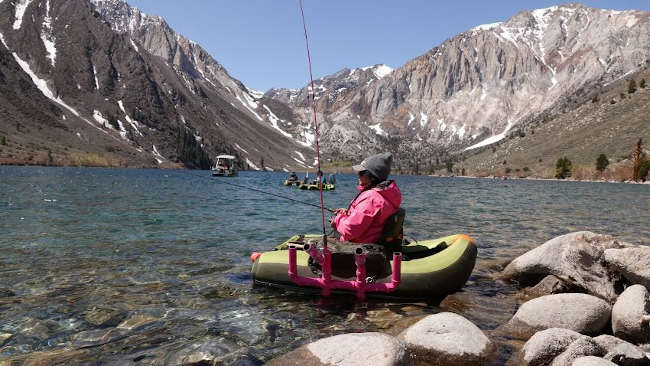
Q: Is this year’s trout opener in the eastern Sierra Nevada likely to be impacted by weather, like it was last year?
A: CDFW is not expecting the same weather conditions that made the 2023 opener virtually impossible to experience. A year ago, it was a record snowpack that made many lakes and streams inaccessible.
Though the Sierra Nevada mountains still received plenty of snow in 2024, the snow isn’t nearly as dense, and temperatures in the valley have been warmer. Crowley Lake, which is known for excellent trout fishing at nearly 7,000 feet, never completely froze in 2024. That milder weather also allowed CDFW to reach and stock almost all our usual stocking locations this year.
By the way, the trout opener is always the last Saturday in April, which this year is April 27.
Wild turkey taste and texture
Q: How different is the taste and texture of wild turkey compared to store-bought turkey?
A: This is an excellent time to explore this question, with the popular spring wild turkey hunts about to begin. One recent national survey showed wild turkey as the third most popular wild game species, following deer and other small game.
It’s probably not surprising to learn that the taste and texture of a wild turkey compared to a domestic (store-bought) turkey is quite different. That’s due to wild turkeys having more developed muscles than turkeys raised on a farm where physical activity is limited. A wild turkey also has less fat and will end up drier after cooking. It’s important to prepare the wild turkey properly and understand when the cooking is finished.
Dan Skalos isn’t just a 10-year employee at CDFW who currently oversees the department’s upland game and waterfowl programs, which include turkey, he’s a serious cooking hobbyist who is happy to share his best tips for successful wild turkey preparation.
Because wild turkey can be tougher at the time of consumption, a good brine is necessary according to Skalos. Brine is a mixture of water and salt, which helps with flavoring and increasing moisture. Skalos suggests a brine treatment of at least two days, and a basic mixture that includes one gallon of water and a cup of salt.
But his preferred recipe involves far more ingredients like brown sugar, vegetable stock and candied ginger just to name a few items. After all that, his final tip involves time and temperature. Because an overcooked wild turkey can become too dry if it reaches 170 degrees Fahrenheit, Skalos said it’s important to have a meat thermometer in use, and to make sure the bird is removed from the oven promptly when it reaches 165 degrees Fahrenheit.
For wild turkey and other wild game recipes visit California’s Wild Kitchen.
Wildlife rehabilitation facilities
Q: What role do wildlife rehabilitation facilities play in bringing care to injured animals?
A: Wildlife rehabilitation facilities serve an incredibly valuable role in the care of wildlife that are sick, injured or orphaned. Between 100 and 125 thousand animals are treated annually at facilities that are licensed by CDFW. There are more than 80 permitted facilities, and roughly 500 satellite facilities that are permitted under the primary permittee. Satellite facilities assist with neonate (less than four weeks of age) care for round the clock feeding or preparing an animal for release.
Birds are the most common form of wildlife to be seen by rehabbers in California, followed by mammals, and then reptiles and amphibians.
Rehabilitation facilities are a great help to CDFW when it comes to learning about disease outbreaks. They might see a large number of sick animals from a particular area, which can alert CDFW to a possible disease outbreak.
The CDFW website contains a county-by-county list of these wildlife rehabilitation facilities that includes information on which species they’re able to accept. If you come across a sick or injured animal do not drop it off at one of the locations, without notifying an employee and given directions on what to do.
It can be costly operating a wildlife rehabilitation facility. For a single large bear, food alone can reach costs of over $1,000 a month.
Information on how to make tax deductible donations is available at CDFW tax donation.
- Details
- Written by: California Department of Fish and Wildlife





 How to resolve AdBlock issue?