 How to resolve AdBlock issue?
Recreation
- Details
- Written by: Lake County Sheriff's Activities League
A fishing clinic, a morning of archery, and kayaking are planned for June as well as a day of disc golf in late September.
Boxing is available from September to June.
All activities are at no cost to families. All equipment is provided.
Junior Giants, a free summer league of baseball and softball, is accepting registration now for participants and volunteers.
Go to the website gojrgiants.org and follow the prompts to locate the Kelseyville League.
This is a comprehensive, eight-week program that uses team sports to foster overall development with regard to leadership, team work, confidence and integrity. It also promotes summertime reading, healthy choices and respect for diversity.
The program is for ages 5 to 16 and youth volunteers are also welcome and can earn volunteer hours.
Players are assigned to a team as long as there are sufficient volunteers, so check out the volunteer opportunities to ensure that as many students who want to play, can.
Call Commissioner Liz McElroy for more information 707-972-1952.
The Lake County Sheriff's Activities League is a 100% volunteer operation with no paid staff, dependent on community support for its funding. Be a hero and volunteer today. A free background check is provided for all volunteers.
To find out more about free summer activities for children and families, please watch for announcements on our Lake County Sheriff's Activities League Facebook page or visit the website.
- Details
- Written by: Elizabeth Larson
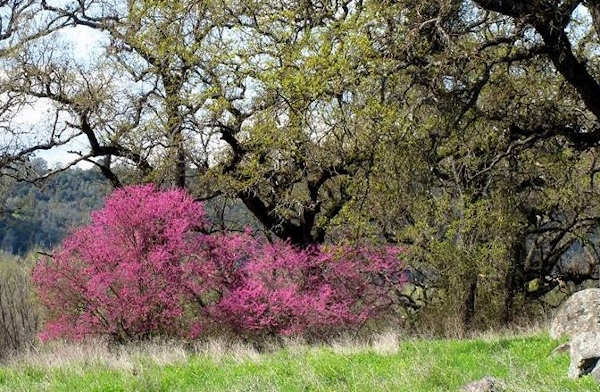
LOWER LAKE, Calif. — The next monthly Guided Nature Walk at Anderson Marsh State Historic Park will be held on Saturday, May 11, beginning at 8:30 a.m.
Come and see what spring is bringing to the park. The May nature walk will be led by Roberta Lyons, a volunteer State Parks docent and president of Anderson Marsh Interpretive Association.
The route taken on the walk will depend on the condition of the trails. The hike should last between one and a half and two hours.
Bring binoculars and meet in the parking lot at 8:15 a.m. for time to experience the early morning wildlife that can be found in the Ranch House and Barn complex yard.
The walk will begin at 8:30 a.m. Sturdy shoes, a hat and water are also suggested.
There is no charge for the Guided Nature Walk and parking is free for those attending.
Anderson Marsh State Historic Park is located on Highway 53, between Lower Lake and Clearlake.
For more information about the guided walk, email
- Details
- Written by: California Department of Fish and Wildlife
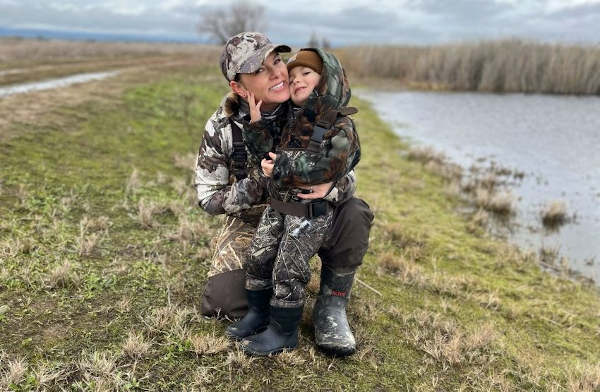
Taking a child hunting
Q: Is it possible to take a 5-year-old duck hunting in California?
A: Yes, it is legal to take your 5-year-old duck hunting in California. It is ultimately up to the parent or guardian to decide what age is appropriate to take their kids along on a hunt and at what age they are mature enough and have the reading comprehension skills necessary to take and pass hunter education. Many kids begin their hunter education journey between age 10 and 12. Before then, unlicensed youth observers are welcome into the field at any age.
If you are interested in introducing someone young to a lifelong skill like waterfowl hunting, starting them off in a positive and encouraging way is key. Here are some tips to consider. Bring properly fitting hearing protection for their size, consider purchasing or borrowing youth clothing that matches the conditions (including waders), bring sunscreen, snacks and quiet activities for the blind (like a photobook of birds they can seek out). Very young kids can also have fun with a duck or goose call.
It’s a good idea to commit to flexibility and the idea that you’re there to introduce a child to the activity and not the hunt itself. That usually means making shorter trips, adjusting to the conditions and stamina of the child and being willing to interrupt a hunt based on the attention span and needs of the child. A few questions to ask before making plans: Are they okay waking up early? How far of a walk and what terrain will be crossed to get to your blind? How will you keep them occupied while waiting for a blind on public refuges? Is it cold, dark and raining? How will you keep them engaged and safe while putting out your decoy spread? Will they need a life jacket or personal floatation device? Are they able to walk through water, mud and muck while keeping their balance? Another recommendation is to have them assist throughout the hunting experience. Have them hold the flashlight, help push the decoy cart or pull the sled, help them build a blind or brush in your pit or tank or even invite them into the pond with you to retrieve birds if they’re tall enough and strong enough to withstand the pond or water conditions and terrain. Remember, taking your kids out on their first hunting experience should be about the kids, not the hunt.
As a reminder, 12 is the minimum age to hunt big game in California. Youth hunters under the age of 12 may hunt small game, like squirrels and rabbits, upland game, such as turkeys and doves and waterfowl. A hunting license is required to hunt regardless of age. Some National Wildlife Refuges and state wildlife areas also have youth ponds available for licensed junior hunters. To find more information about youth ponds, visit the specific lands area or wildlife refuge webpage you wish to visit for more information.
Mussel fee stickers for boats
Q: I’m new to boating. Why do I need to purchase a mussel sticker?
A: The mussel fee sticker supports quagga/zebra mussel infestation prevention efforts throughout the state to protect the environment, recreational access and the economy. CDFW and other agencies’ prevention efforts include outreach and education, early detection monitoring, installation and staffing of watercraft inspection stations and boat cleaning and decontamination stations.
DMV-registered vessels (boats) must display a current mussel fee sticker unless they are only used in marine coastal waters. Law enforcement can cite watercraft for not having the current decal, and marinas may deny launching vessels that do not display a current sticker.
The revenue generated from the sale of the stickers is administered by the California State Parks Division of Boating and Waterways (DBW). The Department of Motor Vehicles (DMV) handles the sticker purchase process, and CDFW provides biological expertise to support DBW’s grant program and supports water agencies in their development of mussel prevention programs.
The mussel fee sticker payment of $16 is available through the DMV website, or by visiting DMV field offices or AAA offices for members.
Wolverine or badger?
Q: I came upon a dead animal in Santa Barbara County that I first thought was a wolverine. It turned out to be a badger. Is that a common mistake?
A: From a distance it could be possible to make that mistake, but a closer look reveals the big differences between the two animals. First, wolverines are substantially larger, weighing up to 60 pounds, and can grow beyond three feet in length. Badgers are roughly two thirds the size of a wolverine and much lighter in weight. Wolverines have been described as looking like a combination of a bear and a dog, while badgers have shorter bodies and a distinctive white stripe running from their snout up and over its forehead.
Their habitats would also assist in identifying the animal. While badgers can be found living in deserts, grasslands and mountains, wolverines are fond of cold areas and are usually found in alpine settings.
Wolverines are also rare in California. The most recent wolverine sighting in California was in winter 2023 when what appeared to be the same animal, was spotted several times high in the Eastern Sierra. The previous confirmed wolverine sighting in California was in 2018. Prior to that, a wolverine hadn’t been seen in California since the 1920s.
CDFW appreciates sightings reported to our Wildlife Incident Reporting site or to regional offices, as the information can assist biologists in their research.
- Details
- Written by: Anderson Marsh Interpretive Association
The April nature walk will be led by Henry Bornstein, a volunteer State Parks Docent and Certified California Naturalist.
The route taken on the walk will depend on the condition of the trails.
The walk will begin at 8:30 a.m. and will last between one and a half and two hours.
There is no charge for the guided nature walks and parking is free for those attending.
No pets are permitted on the park trails.
Bring binoculars and meet in the parking lot at 8:15 a.m. for time to experience the early morning wildlife that can be found in the Ranch House and Barn complex yard. The walk will begin at 8:30 a.m.
Everyone is invited to take a walk in the park and experience the benefits of getting out into nature for some healthy exercise.
Anderson Marsh State Historic Park is located on Highway 53, between Lower Lake and Clearlake.