 How to resolve AdBlock issue?
Recreation
- Details
- Written by: Elizabeth Larson
The March nature walk will be led by Roberta Lyons, a volunteer State Parks docent and president of the Anderson Marsh Interpretive Association, or AMIA.
The route taken on the walk will depend on the condition of the trails. The hike should last between 1½ and 2 hours.
Bring binoculars and meet in the parking lot at 8:15 a.m. for time to experience the early morning wildlife that can be found in the Ranch House and Barn complex yard. The walk will begin at 8:30am. Sturdy shoes, a hat and water are also suggested.
There is no charge for the guided nature walk and parking is free for those attending.
Anderson Marsh State Historic Park is located on Highway 53, between Lower Lake and Clearlake.
For more information about the guided walk, email
- Details
- Written by: Elizabeth Larson
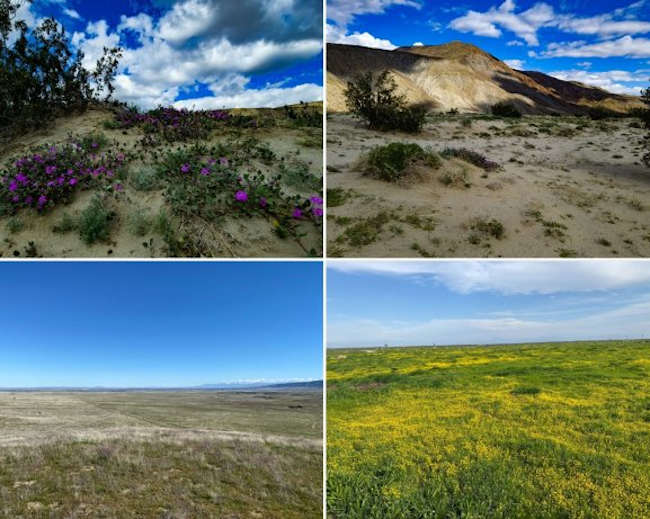
This spring, California’s desert state parks could potentially be adorned with a sea of rainbow colors as the wildflower season is expected to be an impressive one, and California State Parks is asking all visitors to enjoy them responsibly.
“In recent years, California has been lucky to see spectacular wildflower blooms in many public lands, including in state parks,” said State Parks Director Armando Quintero. “We welcome all Californians and visitors from around the world to experience this natural phenomenon and ask all to keep the ‘Beauty in the Bloom’ by staying on designated trails and taking only photos, not flowers.”
In 2017, 2019 and 2023, wildflowers carpeted state parks like Antelope Valley California Poppy Reserve SNR, Anza-Borrego Desert SP and Ocotillo Wells State Vehicular Recreation Area, or SVRA, attracting hundreds of thousands of people from around the world to view this rare occurrence in nature.
These wildflower blooms vary from year to year based on multiple factors: Precipitation levels, the timing of that precipitation, amount of sunlight, humidity levels and seasonal temperature patterns can all affect both the bloom timing and number of flowers seen across the region.
Since California was fortunate to receive more rain last fall and this winter, public land managers are expecting a “good” to “better-than-average” wildflower blooms in spring, depending on the continued weather conditions.
Current bloom situation
Depending on the park, visitors may see colorful lupine, coreopsis, desert sunflowers, evening or brown-eyed primroses, desert bells, desert poppies or desert lilies.
Anza-Borrego Desert State Park: Blooms are arriving in the heart of Borrego Springs along Henderson Canyon Road, the lower sandy dune portions of Coyote Canyon and in the southern portion of the state park along Highway S2 southeast of Agua Caliente County Park. Additionally, areas near June Wash moving northeast toward Fish Creek and Arroyo Tapiado are beginning to show the early bloomers like primrose, phacelia, and wooly sunflower. If moving south along the Highway S2, four-wheel-drive vehicles are recommended on any unpaved park road.
Antelope Valley California Poppy Reserve State Natural Reserve: Sporadic individual poppies are already starting to bloom. From mid-March to May, this park expects a variety of wildflowers to bloom. Poppies, fiddleneck, and red stem filaree have sprouted throughout the Poppy Reserve in large, dense quantities. Live updates from this park are available through the PoppyCam live feed. If the weather remains mild, the bloom is expected to be better this year compared to last year. If the weather turns hot, this could affect the bloom in the next few months.
Red Rock Canyon State Park, Eastern Kern County Onyx Ranch State Vehicular Recreation Area, Chino Hills State Park, Hungry Valley State Vehicular Recreation Area, Fort Tejon State Historic Park: These parks are expected to have good wildflower blooms from mid-March to May, and into the spring season.
Detailed information, in Spanish and English, on this year’s potential wildflower blooms and park rules is available at www.parks.ca.gov/WildflowerBloom.
Recreate responsibly
For those wishing to visit areas where the blooms are popping, State Parks is providing visitors with tips on how to explore safely and responsibly, especially in the desert parks where the landscapes may have changed due to recent storms.
Understand the area
Cell coverage can be spotty or nonexistent in some parks — be prepared.
Read about your state park destination online and download a map prior to your visit, especially if you are visiting a desert. Many GPS and map apps will take you to dirt roads requiring four-wheel drive vehicles.
Know your vehicle’s limits. Know which areas allow off-highway vehicle recreation.
Visit the parks during the week and arrive early to beat the crowds.
Remember to pull off the roadway when viewing wildflowers, wildlife or to take photos. Please leave roadways clear for vehicle traffic.
Leave an itinerary of your trip with a family member or friend with information such as time of departure and expected return, site visit location and names of everyone in your group. This will ensure law enforcement personnel have a better understanding of your location in the event of a rescue.
Check the weather
While planning your trip, check weather conditions. Be prepared and plan for all types of weather.
Make sure your equipment and clothing are appropriate for the expected weather.
Respect the landscapes
Each park has unique landscapes. Stay on designated trails whenever possible. Tread lightly in the desert. Do not trample flowers.
When viewing the blooms, take only pictures. Flower picking is prohibited.
If dogs are permitted, they must remain on leash, on designated roads, in campgrounds and in picnic areas. Dogs are not allowed on hiking trails, in the backcountry or in the wildflower fields.
Do not leave dogs unattended in your vehicles — temperatures can reach lethal levels.
Drone use may be prohibited. If drone use is allowed, a filming permit from individual state park units must be requested.
Help keep the landscapes pristine, leaving it better than when you arrived by packing out anything you packed in—pack it in, pack it out.
Know your body limitations
Bring plenty of food and water. There are often no restaurants, gasoline stations or stores near the bloom areas.
Drink plenty of water prior to your visit to remain hydrated and avoid heat-related emergencies.
Outdoor conditions can change quickly, especially in the desert. Bring sunscreen, a hat, layers of clothing and closed-toe shoes to avoid injury.
Walk at a pace that allows you to talk easily. If you are too out of breath to speak, you are probably working too hard. Take a rest or stop exercising.
In the event of an emergency, call 911.
- Details
- Written by: California Department of Fish and Wildlife

Q: Why does CDFW build artificial fish habitat in California lakes?
A: There are several reasons for CDFW to install artificial habitat in reservoirs around the state. Structures can be placed next to spawning areas to provide protective cover for juvenile fish. These constructions also attract larger fish, providing prime fishing opportunities for anglers.
Artificial fish habitat come in all shapes and sizes, whether orange trees, wood structures or other artificial man-made materials. Manzanita shrubs, Juniper trees and even used Christmas trees have been used for habitat purposes. Softwood like avocado trees are avoided because they deteriorate faster in the water.
Biologists might sink as many as 100 structures at different depths in just one reservoir. Crews also place different types of habitat structures along the shoreline when reservoir levels are low, providing a good area for fish habitat once the waters rise. About two dozen reservoirs contain artificial habitat, from Sutherland in San Diego County to Whiskeytown Lake in Shasta County.
One example is the use of large PVC piping in several Southern California lakes. CDFW places circular pipes, 12 inches in diameter and three feet long, in water hoping to attract catfish. Catfish are known as cavity-nesters and once the males have prepared the pipe for spawning by clearing out any debris, females follow and lay their eggs. The males then return to guard the nest and use their fins to fan the eggs to oxygenate them. Biologists will return to the spots where they’ve placed habitat structures to determine their effectiveness.
With two strong rainy seasons in California, many of the state’s reservoirs are filled to historic water levels, which lessens the need to install artificial habitat. Heavy rains raise reservoir water levels which in turn inundates natural habitat along the shoreline. Although this is beneficial for now, our biologists are planning future projects to continue to improve fisheries habitat in times of drought to ensure fish populations stay healthy.
Identifying duck species
Q: As a new waterfowl hunter, how do I learn the difference between duck species?
A: This is a common question among beginning waterfowl hunters mostly because they don’t want to run afoul of the law, but some hunters with good identification skills also select preferred duck species to harvest, or they may try to harvest primarily males vs. females.
California hosts 39 species or subspecies of waterfowl, so it can be challenging to learn to identify them. Experience is the best teacher and February is a great time in California to learn duck identification by direct observation.
Our recommendation is to visit any of CDFW’s wildlife areas or national wildlife refuges that are managed for waterfowl habitat, or perhaps wherever there is access to hunt waterfowl during the waterfowl season. Visit those places after the close of waterfowl season while the birds are still around. Bring a good pair of binoculars, a waterfowl identification book and maybe a knowledgeable friend who can help. Not only can you help learn to identify the birds from looking at them, but you’ll also begin to learn to distinguish the birds by their flight patterns and sounds they make.
Fun fact, most waterfowl don’t quack, they whistle or chirp in some form or another.
For more information, visit CDFW’s waterfowl program page. It includes links to resources specific to waterfowl identification.
To find more information on CDFW Lands and their operating hours, please visit the CDFW Lands webpage. Also be sure visit the Emergency Closures page before visiting a CDFW office, facility or property.
Hibernation adjustments
Q: Do bears adjust their hibernation location when heavy weather conditions arrive?
A: Researchers throughout North America have reported that black bears can awaken and travel to new locations when disturbed and the same can be said for black bears that inhabit California. Sows with cubs can move the tiny young into an alternate den if the disturbance is at an unacceptable level or if there is some danger – like a flood or landslide.
Hibernation is an adaptation for some mammals and reptiles, which allows them to survive the winter season. In many areas, winter can be unforgiving. Food is hidden beneath the snow, water sources are frozen over and frigid temperatures can have deadly consequences. By hibernating, an animal’s body temperature, heart rate, breathing and other metabolic activities slow down significantly to conserve energy.
In areas with mild winters, such as in Southern California, most bears do not hibernate, because they have adequate resources and the ambient temperature is survivable. Biologists have found that only pregnant sows (female bears) den up for the entire winter.
Black bears are thought to hibernate for about four months in other parts of California. They can hibernate for many months because their body temperature reduces to approximately 88 degrees Fahrenheit, which is within 12 degrees Fahrenheit of normal. By contrast, the body temperature of smaller animals such as marmots, chipmunks and ground squirrels may drop below 40 degrees Fahrenheit. Small mammals must awaken every few days and raise their body temperatures to normal levels so they can eat stored food, and pass waste. Bears can maintain their suspended state because their warm fur allows them to retain body heat.
- Details
- Written by: Elizabeth Larson
This week OHV recreation staff have conducted maintenance on several trails while the weather dried out.
The weather forecast for Stonyford shows continued dry weather through the weekend.
Please note Forest Order 08-24-07 for Upper Lake Ranger District is still in effect.
Deer Valley Campground and OHV trails on that district remain closed due to storm damage.
More information about trail damage and repair progress will be provided in the coming weeks.
Trail users can check the precipitation data online before traveling to the forest.
When closures occur, information will be posted on the forest website and social media @MendocinoNF.