How to resolve AdBlock issue?
Recreation
- Details
- Written by: BoatUS
SPRINGFIELD, Virginia – Boaters across the country are getting ready to put their boats to bed for a long winter’s nap, but not every boat owner knows all the secrets of winterizing a recreational boat.
Boat Owners Association of The United States, or BoatUS, shares some quick tips to ensure safe storage until next season.
1. California, Florida and Texas have the most engine winterizing claims. Boaters in northern climates know to winterize but all it takes is one deep freeze in a normally balmy state to cause major damage to your boat. Unless you’re in an area that never freezes (like Key West or Hawaii) you probably need to winterize.
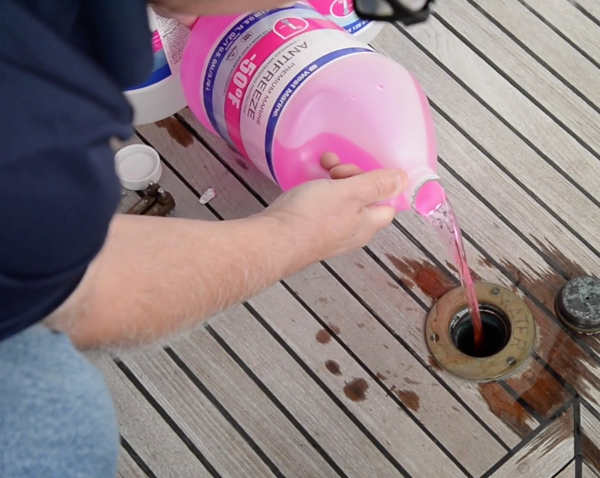
2. Water expands almost 10 percent by volume. That expansion means that any water left in your engine, potable water system, or refrigeration system can do some major damage over the winter. Even an engine block can crack open during cold weather. The key is making sure all water gets drained out or replaced by antifreeze.
3. Batteries are happier at home. Remove your batteries, bring them to the garage or basement and use a trickle charger to keep them topped off to protect them and extend their life.
4. It’s easier to prevent mold than to stop it. Without some air circulation, your boat’s interior can build up condensation, which can lead to a moldy mess next spring. Solar-powered vents and boat covers that lets air circulate can help keep mold at bay.
5. Waxing the hull now makes spring clean-up much easier. The grunge of sitting all winter at a boatyard comes off a lot quicker if you apply a coat of wax before you put your boat to bed.
6. There are two types of antifreeze. Ethylene glycol – the kind in your boat’s cooling system works fine for engines, but it’s very toxic. Propylene glycol is safe for potable water systems and is also fine to use for the raw side of engine cooling systems – check the label. Make sure antifreeze is rated to protect down to the lowest possible expected temperatures.
7. Add fuel stabilizer before you fill your tank. That helps mix the stabilizer so it protects all of the gas. Running your engine for a few minutes after mixing it up will get some stabilized gas in the engine’s fuel system, protecting it over the winter.
8. If enough water enters your fuel tank, gas with ethanol can phase separate over the long winter storage period. For boats with portable gas tanks, try to use up fuel now. Any remainder can be used (if unmixed with two-stroke oil) in your vehicle. If your boat has a built-in gas tank, fill the tank almost to the top, leaving a little room for expansion. This will minimize condensation on tank walls, stopping phase separation in its tracks. Never plug a fuel tank vent.
9. Write down what you did or had your shop do. That way, next spring you won’t wonder if the lower unit lube was changed or the spark plugs replaced.
10. Take home any removable electronics, small outboards and even alcohol. The dark days of winter are when boats are most frequently broken in to. Not every thief is a professional – some may just want to raid your boat’s liquor cabinet.
11. Remove all food. Not only might it spoil, but it can attract rodents and other pests, leaving you with a nasty spring surprise.
12. Using a heater as alternative to winterizing is a really bad idea. Not only can the power go out during a big winter storm leaving the boat unprotected, the heater, extension cord or connections can (and do) overheat and cause a fire.
13. In addition to snowstorms knocking-out power to heated indoor boat storage facilities, do-it-yourselfers sometimes make mistakes when winterizing. Either way, for boaters who live in northern states, protecting yourself with ice and freeze coverage insurance may be a smart option. It’s often very affordable, but there’s a deadline to purchase, typically by the end of October.
For more information on how to properly store a boat over the winter, including how to cover a boat, winterize plumbing, store ashore or in the water, and to get a free downloadable BoatUS Boater’s Guide to Winterizing checklist, go to http://www.boatus.com/seaworthy/winter/ .
- Details
- Written by: Mendocino National Forest
The stay limits apply to developed campgrounds and dispersed camping locations.
As of Sept. 20, visitors may camp in the same developed recreation campground for 14 days within any 30-day period but no more than 28 cumulative days in any 12-month period.
For dispersed recreation areas, visitors may camp in the same location outside a one-mile radius of a developed recreation site for 14 days within any 30-day period but no more than 28 cumulative days in any 12-month period.
Forest Supervisor Ann Carlson explained, “We feel that these stay limits enable our visitors to enjoy great camping experiences in our developed recreation campgrounds and in more rustic locations while lessening the environmental impacts associated with long-term established camps and reducing the public safety incidents related to unauthorized residential camping.”
Please call the Mendocino National Forest office nearest your destination for current information.
Forest Order No. 08-19-05 (Developed recreation camping stay limits) and Forest Order No. 08-19-06 (Dispersed camping stay limits) are posted here: https://www.fs.usda.gov/detail/mendocino/home/?cid=FSEPRD509485.
- Details
- Written by: Elizabeth Larson
Campground closure: The seasonal closure of JDSF Camp One, Dunlap and Horse campgrounds are in effect as of Monday, Sept. 30. Big River campground will remain open until which time it is deemed necessary to close.
Trail closure: Beginning Oct. 1, the “Trestle Trail” between Camp 8 and JDSF Road 1070 will be closed to mushroom gathering and other recreational activities. This trail is closed October through May as a precautionary measure in an attempt to slow the spread of Phytophthora ramorum, the invasive pathogen that causes sudden oak death.
Each year, seasonal openings/closures occur. Refer to the Jackson Demonstration State Forest website or contact the office for current information.
The office is located at 802 North Main St., Fort Bragg, telephone 707-964-5674. Office hours are Monday through Friday, 8 a.m. to 5 p.m. the office is closed from noon to 1 p.m.
- Details
- Written by: Nadine Strauss

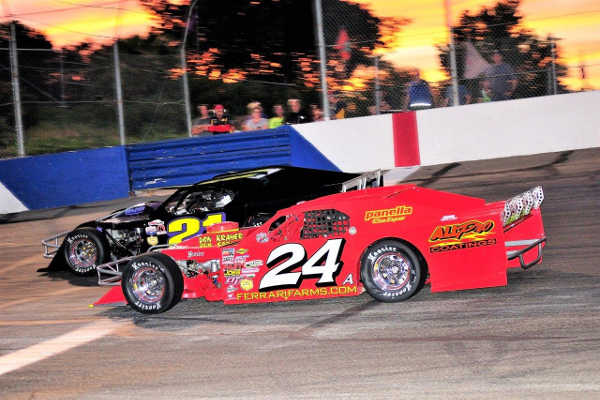
ANDERSON, Calif. – The North State Modified Series, presented by Protect the Harvest, will run its 2019 grand finale at Shasta Speedway this Saturday night.
It will be the final points race for the NSMS drivers. They will be competing for $1,500 to win in the fourth annual “Lloyd Burton Against the Wind Modified Challenge” plus a custom designed wooden eagle trophy courtesy of Burton’s brother-in-law, Mort Houston.
The event is co-sponsored by Kaleidoscope Coffee, Northern California Auto Racing Alumni, Mort Houston and the Burton family.
Lloyd Burton, a long-time supporter of auto racing in the Redding-Chico area, was the head official at Shasta Speedway when the facility was promoted by Bob Carrel in the 1990s.
He also served as head official at Lakeport Speedway for five years and officiated at several other race tracks in Northern California.
A native of Shasta County, Burton was involved in racing and promoting his entire adult life, He was also the founder of the Northern California Auto Racing Alumni, or NCARA.
Burton's nephew and past Shasta Speedway track champion, Randy Houston of Medford Oregon, will be piloting his #9 NSMS modified in this event in memory of his uncle.
This memorial event first ran in 2016 with Jason Philpot of Sacramento the winner. In 2017 Darrin Sullivan of Kelseyville took home the first place money and the trophy. 2018 saw Kris Price of Sacramento come out on top. These driver's names are engraved on the four foot tall hand-caved custom perpetual trophy and resides in the North State Modified Series office in Lucerne, California.
The North State Modified Series is presented by: Protect the Harvest, Lucas Oil, Hoosier Tire West, Sunoco Race Fuels, Naake Suspension, Five Star Bodies, Racer Bling, Keyser Racing Products, Scribner Plastics, and Franks Radios.