 How to resolve AdBlock issue?
Recreation
- Details
- Written by: Nadine Strauss
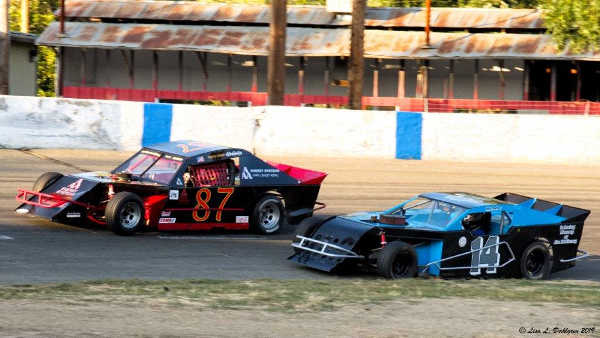
LAKEPORT, Calif. – Two new faces and one familiar face visited the winners circle Saturday night during the Northern California Racing Association’s auto races at the Lakeport Speedway.
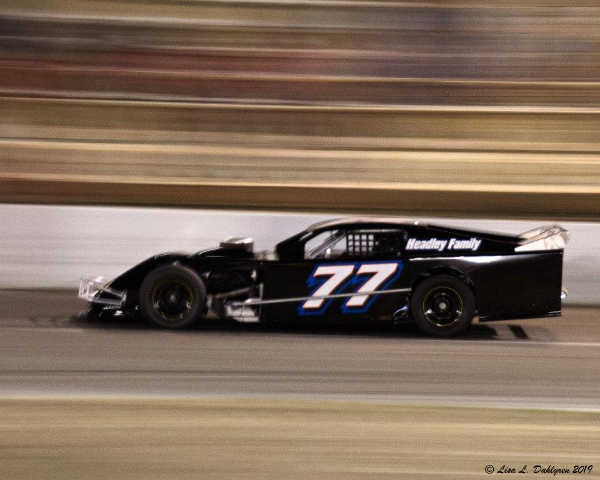
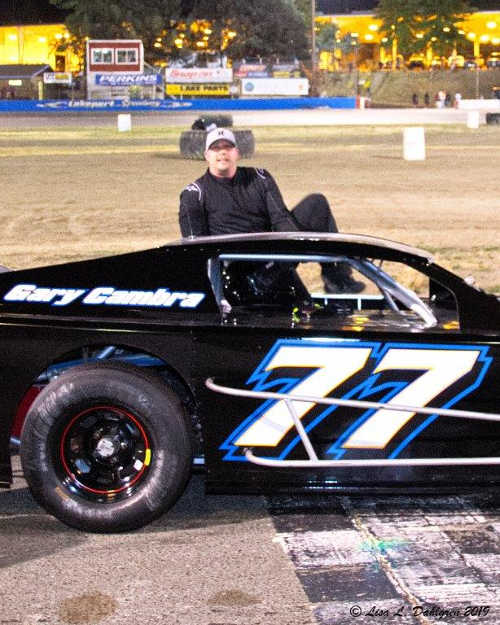
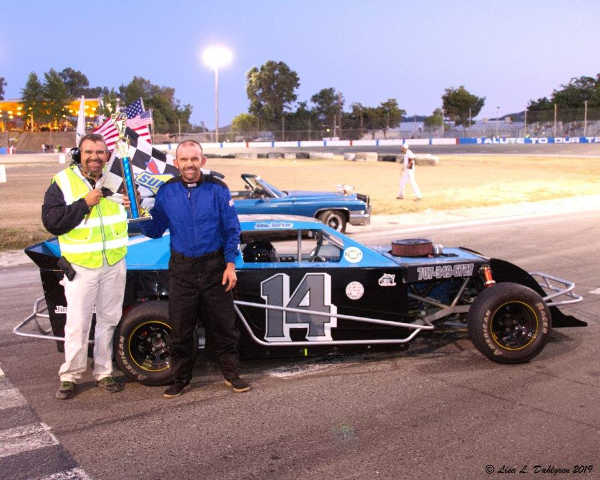
In the modified class it was Jeremy Nowlin of Kelseyville who set fast time of 12.720 and went on to collect his second season victory in NCRA’s premier division.
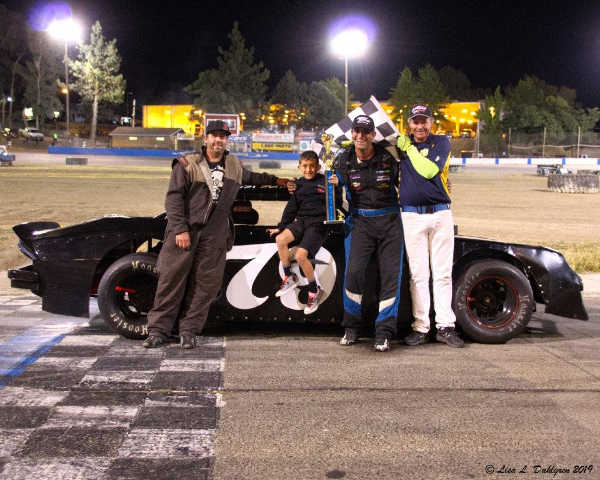
Forrest Kuecker of Lakeport also set fast time of 14.083 in the Taco Bell Bombers, started at the back of the pack, and crossed the finish line first to take home his first win of the year.
And on his inaugural outing in 2019, Johnny Barker of Upper Lake led wire-to-wire to bring home the bacon in the AAA Energy Systems Pro-4 Modifieds.
Plus the Pro Drifters put on a spectacular show with their out-of-control display of horsepower, handling and speed.
With Robert Schmidt electing to start in the rear, Visiting North State Modified Series driver Rick Avila of Pleasanton started on the pole of the modified feature, but it was outside starter Ian Elliot who took the early lead followed by Kevin Coburn and Chris Salmina.
Coburn moved his mount to the high side and assumed the lead from Elliott on lap four. Nowlin came from seventh to third quickly and swapped places with Elliot on the fifth go-round. Nowlin continued his outside run until he found himself out in front on lap seven. Salmina followed Nowlin’s line and drove around Coburn the following round.
The only yellow flag came on lap 11 when Anthony Esberg spun in turn two. When racing resumed Nowlin charged forward as points leader Eric Johnson moved into fourth place. Johnson moved to the outside lane, and at the half-way point of the 30 lapper, Johnson inched by Coburn to take over third. Next Johnson set his sights on Salmina where the duo ran side-by-side for three laps before Johnson completed the pass for second.
Nowlin and Johnson ran the remaining distance nose-to-tail with Nowlin the happy winner. Johnson finished second ahead of Salmina, Coburn, Elliott, Schmidt, Darrin Sullivan, Anthony Esburg, Avila and Thomas Esburg. Heat wins went to Elliot and Sullivan. Johnson won the trophy dash.
Taco Bell Bomber points leader Lauren Snider jumped into the John McCullough bomber after his orange #6k broke a crankshaft in hot laps. But that didn’t slow him down much as he stole the lead away from Evan Smith on lap five of the bomber feature. But Kuecker was on a mission and drove around Snider for the lead two rounds later.
The race was slowed on lap 12 when Mike Sullivan, driving the RJ Randall bomber, was leaking fluid on the track. Donovan Cox drove under Snider for second on the restart. Four laps later the yellow flew again when Trevor Abella, also in a borrowed car, lost power and stalled on the front stretch.
Rick Jelton drove by Snider in the final circuits, and at the checkered flag if was Kuecker, Cox, Jelton, Snider, Smith, Seth Chew, Amber Portlock, Abella, Sullivan and Davey Jones. Kuecker also won the fast heat race. Smith was the other heat winner and Cox took home trophy dash honors.
In Pro-4 action Barker forged ahead of pole setter Ron Portlock as the drop of the Johnny Miskill green flag, and for the first 20 laps was challenged on every lap by heat race winner Chris Straka, driving the Curt Lewis #87. However, Straka lost control and spun his car on lap 22 to bring out the yellow flag. At the same time Portlock’s car lost a rear-end which started a small engine fire.
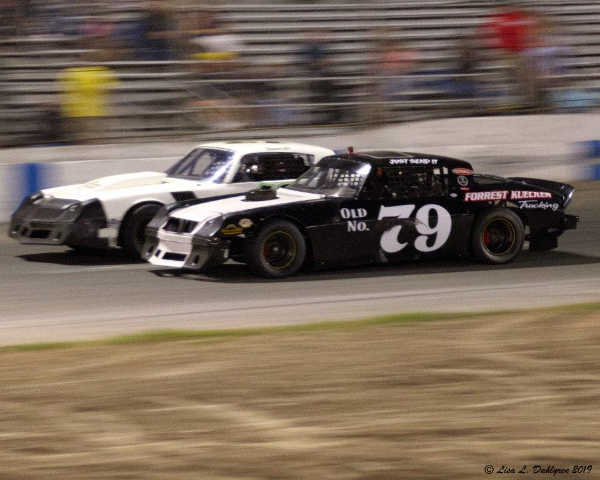
Straka rapidly moved back to the front, but was no longer a threat to Barker who claimed the win. Straka finished second ahead of fast qualifier (13.567) Andy Leuzinger, Mike Peterson, Portlock and Doug Rivera. Ashley Aceves broke in the heat race and did not start the main event. Portlock won the trophy dash.
The next event at the Lakeport Speedway will feature the popular “Boat Races.” It will be the final points race of the 2019 season for the NCRA modifieds and the Taco Bell Bombers. Also on the racing card will be the Legends Cars and Bandoleros. Gates open at 5 pm with racing at 6 pm.
NCRA races at Lakeport Speedway are presented by Hillside Honda, Anderson Logging, Taco Bell, D & P Pools, Lake County Tribal Health, Lake Parts, Carlton Tires, Don Anderson Law Firm, Clearlake Redi-Mix, Steve Taylor Construction, Detail Plus, KXBX 98.3 FM, Lake County Welding, Perkins Pumps, Sheldon Signs, and 707 Graphics.
- Details
- Written by: California Department of Fish and Wildlife
The CWHP provides technical guidance and economic incentives to private landowners who agree to manage their properties in accordance with a wetland management plan developed cooperatively by CDFW biologists and participating landowners.
In response to the loss of wetland habitat in California, the Legislature passed the California Waterfowl Habitat Preservation Act in 1987.
This act established the CWHP, a multi-faceted wetland incentive program designed to improve habitat conditions for waterfowl on private lands.
Consistent with its primary waterfowl habitat objectives, the program also endeavors to enhance habitat for shorebirds, wading birds and other wetland-dependent species.
The program has remained very popular with existing enrollees, but lack of adequate funding has limited CDFW's ability to enroll new properties since the mid-2000s. The passing of Proposition 68 in 2018 approved $10 million in new funding for the program.
The program is designed to contribute to large-scale conservation objectives by helping private landowners overcome many of the challenges associated with wetland management in California.
Approximately two-thirds of the managed wetlands in the Central Valley are privately owned, and many of these landowners are not trained in the science, policy or regulation of wetland management.
In addition to guidance offered by CDFW biologists, landowners also receive an incentive payment following the successful implementation of work plans.
The program offers $30 per acre for the management of seasonal wetlands ($60/acre in the Tulare basin) and $60 per acre for the management of semi-permanent wetlands statewide.
"Partnerships with private landowners, such as those developed through the California Waterfowl Habitat Program, are critical to ensuring our waterfowl and other wetland dependent species habitat objectives are met," said CDFW's Comprehensive Wetland Habitat Program Coordinator Brian Olson. "We truly value the relationships developed with private landowners, and appreciate their efforts in helping provide for the needs of California's fish and wildlife."
Landowners have until Aug. 30 to apply.
For more information on the program, or to submit an application, please visit www.wildlife.ca.gov/lands/cwhp/private-lands-programs/waterfowl-habitat .
- Details
- Written by: Nadine Strauss
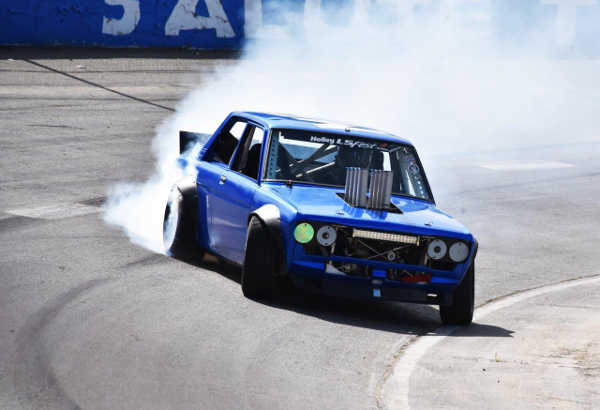
LAKEPORT, Calif. – It’s “Back-to-School Night” at the Lakeport Speedway this Saturday night, and back by popular demand will be the Pro-Drifters.
Drifting is a driving technique where the driver intentionally oversteers, with loss of traction in the rear wheels or all tires, while maintaining control and driving the car through the entirety of a corner.
With an overabundance of horsepower, the drifters appear to be out of control all the way around the track while running inches away from the crash wall.
The Nor-Cal Pro-4 Modified drivers are hosting the “Back-To-School Night” by giving all the kids school supplies and personal autographs.
Then just before the Pro-4 Modified 30 lap main event two bicycles will be given away as well as two back packs loaded with school supplies.
Plus the points season continues with the NCRA Modifieds, The Taco Bell Bombers, the D&P Pool Legends Cars, and the Anderson Logging Bandoleros.
Gates open at 5 p.m. with racing at 6 p.m. Admission prices are only $10 for adults and $5 for kids ages 6 to 11. A special family pass is available for $30 which admits two adults and three kids. Children age 5 and under get in free.
For more information on the races, visit NCRA – Lakeport Speedway on Facebook or call the business office at 707-274-1662.
- Details
- Written by: California Department of Fish and Wildlife
Hunters are reminded that nonlead ammunition is now required for hunting doves and taking wildlife anywhere in California with a firearm.
The first half of the split dove season will be open statewide from Sept. 1 to 15. The second half will be open statewide from Nov. 9 through Dec. 23.
For mourning dove and white-winged dove, the daily bag limit is 15, up to 10 of which may be white-winged doves. The possession limit is triple the daily bag limit. There is no limit for spotted dove or ringed dove, but the season dates are the same as for mourning dove and white-winged dove. Eurasian collared-dove is the only dove species that can be hunted year-round, with no bag or possession limit.
Several dove hunting opportunities are available by drawing only throughout California for the upcoming dove season as part of CDFW’s Upland Game and SHARE programs.
Special drawings for public land dove hunting opportunities through the Upland Game Bird Hunting program will be available at the following locations:
– Merced and Stanislaus counties: North Grasslands Wildlife Area (China Island and Salt Slough units), Los Banos Wildlife Area.
– Sacramento County: Cosumnes River Preserve.
– Fresno County: Pilibos Unit of the Mendota Wildlife Area.
– San Diego County: San Felipe Wildlife Area.
– San Luis Obispo County: North Chimineas Ranch, Carrizo Plains Ecological Reserve.
Drawings for limited public access to private lands through the SHARE Program will be available at the following locations:
– Santa Barbara County: Harrington Farms, Jones Ranch and Sleepy Creek Ranch.
– Tulare County: Hart Ranch.
Hunters can apply for these opportunities online, at CDFW license sales offices, through retail license agents or by calling 800-565-1458.
Additional information can be found at www.wildlife.ca.gov/hunting/upland-game-birds/hunts and www.wildlife.ca.gov/hunting/share .