 How to resolve AdBlock issue?
Recreation
- Details
- Written by: California Department of Fish and Wildlife
But returns for Sacramento River fall run Chinook – the main stock of salmon supporting California's ocean and Central Valley river fisheries – have been low for the third consecutive year, pushing them into "overfished" status.
In order to meet conservation goals for Sacramento River fall run Chinook, some ocean salmon seasons have been shortened and the daily bag and possession limits for Central Valley river fisheries have been reduced.
"The goal is to get even more fish back to the spawning grounds this fall than would be required in a normal year," said California Department of Fish and Wildlife Fisheries Branch Chief Kevin Shaffer.
In an effort to hasten the rebuilding process, the Pacific Fishery Management Council constructed conservative ocean salmon seasons for 2018, in the hopes of producing higher numbers of returning spawners.
The California Fish and Game Commission set similar ocean seasons.
The 2018 recreational ocean salmon season for the California coast is as follows:
– In the Klamath Management Zone, which is the area between the Oregon/California border and Horse Mountain (40°05'00" N. latitude), the season will open June 1 and continue through Sept. 3.
– The Fort Bragg and San Francisco areas, which extend from Horse Mountain to Point Arena (38°57'30" N. latitude) and Point Arena to Pigeon Point (37°11'00" N. latitude), respectively, will open June 17 and continue through Oct. 31
– The Monterey area between Pigeon Point and the U.S./Mexico border opened on April 7 and will continue through July 2.
The minimum size limit is 20 inches total length in all areas north of Pigeon Point and 24 inches in all areas south of Pigeon Point. The daily bag limit is two Chinook salmon per day. No more than two daily bag limits may be possessed when on land.
On a vessel in ocean waters, no person shall possess or bring ashore more than one daily bag limit. Retention of coho salmon (also known as silver salmon) is prohibited in all ocean fisheries off California.
The 2018 recreational inland salmon season for California inland waters is as follows:
Seasons for Central Valley fishery start on traditional dates on all sections of all rivers. Only one salmon per day may be retained and the possession limit is two salmon.
In the Klamath River the season will open Aug. 15 and continue through Dec. 31. The Trinity River season will be open from Sept. 1 through Dec. 31. The daily bag limit is two salmon no more than one over 22 inches. The possession limit is six salmon, no more than three over 22 inches.
Regulations approved by the Commission since the 2017 season created a positive effect for the upcoming Central Valley salmon season.
The new regulations – including a complete closure of Nimbus Basin on the American River to all fishing due to construction, a reduction in the daily bag and possession limit for the Central Valley, and a shortened leader length regulation intended to reduce snagging – were pivotal in setting seasons on the Sacramento River fall Chinook because they helped reduced potential harvest to meet stock rebuilding goals.
The 2018 sport seasons, dates, locations and bag limits will be published in the 2018-2019 Sport Fishing Regulations Supplement, which will be posted on the CDFW website in May.
Additional season information can be found on CDFW's ocean salmon webpage or by calling CDFW's ocean salmon hotline at 707-576-3429 or the Klamath-Trinity River hotline at 800-564-6479.
- Details
- Written by: Editor
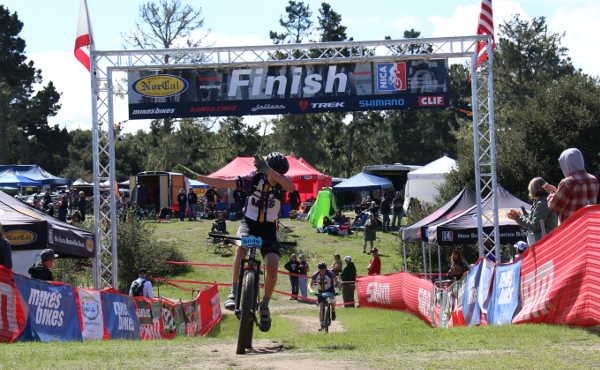
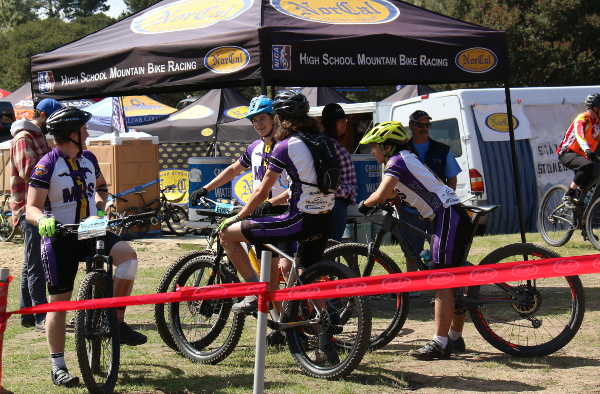
MIDDLETOWN, Calif. – The Middletown High School Mountain Bike Team, composed of six racers, has completed several races and are at the halfway point for the 2018 racing season.
Three of the races were held in Monterey, where – luck would have it – the sun shined appropriately bright for this rambunctious, fun group of high school riders.
As the team goes into the second half of the season riders are positioned and ready to reach their next set of goals.
At last check racers were positioned as follows JoeJoe Bloomquist, sophomore, ninth place; Chris Fischer, sophomore, 14th place; Devon Heubel, sophomore, 17th place; Connor Muelrath, sophomore, 26th place; Carson Schaffer, sophomore, 42nd place; and Kieran McSween, freshman, 40th place.
“I have the utmost respect and pride for our racers and the effort it takes to reach their personal goals each race,” said Coach Deb Bloomquist of her riders.
Bloomquist coaches the team alongside her husband, Chris Bloomquist, and volunteer parent Eric Schaffer.
“These stouthearted kids amaze me with their ability to turn racing challenges into racing successes,” she said.
Middletown is one of three Lake County high school mountain biking teams; they join Clear Lake High and Kelseyville High on race courses all over Northern California.
Races are produced by the Norcal High School Cycling league where paid staff and numerous volunteers make racing happen in a fun, safe and all-inclusive environment. For more information on the league visit www.norcalmtb.org .
“Riding with the Middletown High School Mountain Bike Team has been one of the healthiest decisions I have made. Just keeping up with the high school riders has forced me to push myself physically,” said Schaffer.
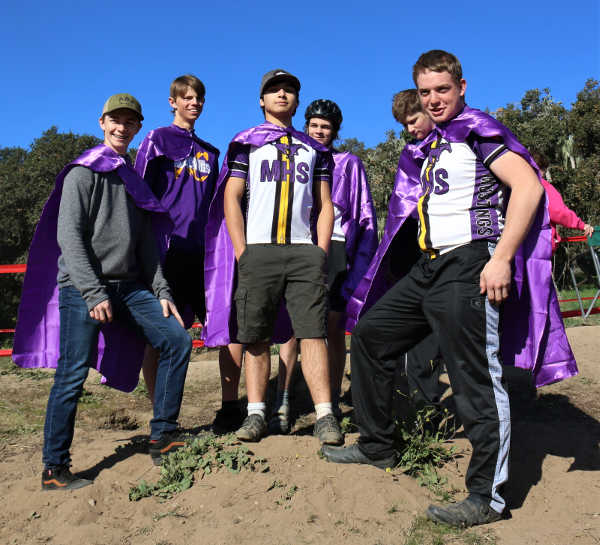
He added, “The entire team – from coaches to riders – are always supportive and positive. It's been amazing to witness these young men push themselves during the races, overcoming crashes, weather and improving their ranking. It has been a lot of fun.”
On Saturday in Granite Bay sophomore racers mashed out 18 miles of racing while the freshman hammered down 12 miles of single-track fun.
Lake County will next its local race known as The Six Sigma Slinger on May 5 and 6 at Six Sigma Ranch & Winery.
The Six Sigma Slinger is also the Norcal championship race and final race before Norcal riders go up against SoCal riders in the state championships.
Races are free to spectators so come out and enjoy some wine and watch lake county high school kids race on their home course.
The season will then end with state championships in Petaluma on May 20. Qualified racers will compete against racers from all over California.
Want to see what Middletown riders are up to? Follow them on Facebook, where you can also follow the Clear Lake and Kelseyville high schools mountain biking team.
California Outdoors: Needing a fishing license to take a bullfrog, lost hunter education certificate
- Details
- Written by: California Department of Fish and Wildlife
Question: Why do I need to have a fishing license to take a bullfrog? They are a non-native species, have voracious appetites, eat many of our native species and should be removed wherever we can. (Robert, Merced)
Answer: The California Legislature has defined "fish" in section 45 of the California Fish and Game Code. "Fish" means a wild fish, mollusk, crustacean, invertebrate, amphibian, or part, spawn or ovum of any of those animals. A bullfrog is an amphibian, so you must have a fishing license in order to take one.
More information on the take of frogs and other amphibians can be found in section 5.05 of the California Freshwater Sport Fishing Regulations.
The daily bag and possession limit for amphibians is four unless otherwise provided. There is no limit for American bullfrogs, Lithobates catesbeianaus. You will need a fishing license, but you may take as many bullfrogs as you want.
Lost hunter education certificate
Question: I passed my hunter safety course about 40 years ago but have lost the paperwork. If I wanted to get a hunting license now, how would I get a new copy of my "certification" or whatever it's called? Does the state have records that far back? (Keith Hamm)
Answer: As per Fish and Game Code, section 3050, you can obtain a new California hunting license if you have proof of having held a hunting license in California in a prior year, or a current or recent (no more than two years old) hunting license from another state or province.
If you've never had a hunting license before, then you need to present proof of having passed a hunter education certificate from California or another state or province.
Prior to 1989, Hunter Education Instructors maintained student records themselves. Therefore, CDFW does not have reliable records for this period. You may try contacting the original instructor, club or organization where the course was taught to obtain a duplicate.
If you are unable to obtain a duplicate certificate through these means, and you've never held a license, you will need to repeat the course. The requirement of hunter education is not exclusive to California, many states have this same requirement for obtaining a hunting license, and most of the courses are universally accepted.
If you find yourself having to repeat the course, we encourage you to go into it with an open mind. The courses are more comprehensive than ever and even seasoned hunters who find themselves having to repeat the course for one reason or another reported learning many new things.
This would also be a great opportunity to bring along your friend or family member who is interested in hunting but may be apprehensive about taking the course. Many wildlife officers and even hunter education instructors have taken the course multiple times and inevitably, they report learning something new every time.
CDFW has a Frequently Asked Questions page that covers a lot of information about hunter education.
Is it illegal to feed wildlife?
Question: This question has been bothering me for years. Is it legal to feed wildlife? Some people make it a habit to not only put out seed for the songbirds and nectar for the hummingbirds, and others go so far as to feed the ravens, wild turkeys, foxes and raccoons.
I am curious if such laws are enforced and what the penalties are for violating the law? At what point should Fish and Wildlife be notified if this is an ongoing problem? (Ken)
Answer: The California Code of Regulations Title 14, section 251.3, specifically states that it is illegal to feed big game mammals. For other species of wildlife, section 251.1 addresses feeding as "harassment" of animals.
"Harass," as defined in this section, is an "intentional act which disrupts an animal's normal behavior patterns, which includes, but is not limited to, breeding, feeding or sheltering."
Reasonable amounts of normally used small bird feeders generally do not create an issue of "disrupting normal behavior."
This section can (and has been) used as a tool to address situations where feeding animals has become problematic – for example, when such large amounts of food are being offered that wildlife no longer need to forage, hunt or sustain themselves naturally. Violation of these sections are misdemeanors.
If you have a question for the California Department of Fish and Wildlife, email
- Details
- Written by: California Department of Fish and Wildlife
The sub-bag limit for canary rockfish will increase from one fish to two fish within the RCG daily bag limit of 10 fish, effective Saturday, April 14, 2018.
Limited retention of canary rockfish in California's recreational fishery began last year as a result of the stock being declared rebuilt.
Because retention of canary rockfish had been prohibited in recreational fisheries off California for more than a decade, a one fish daily sub-bag limit was implemented as a matter of precaution. Catches were monitored weekly to ensure harvest limits were not exceeded.
"We saw great fishing in 2017 and higher than expected effort for rockfish," said CDFW Environmental Scientist Joanna Grebel. "Despite this, catches of canary rockfish under a one fish bag limit were less than predicted. We are excited to be able to offer additional opportunity in 2018."
Pursuant to California Code of Regulations Title 14, section 27.20(e), CDFW has the authority to make in-season modifications to the recreational fishery, including adjustments to bag and sub-bag limits.
CDFW encourages anglers to avoid known yelloweye rockfish hotspots when pursuing canary rockfish. Yelloweye rockfish cannot be retained and stringent annual limits on yelloweye rockfish bycatch mortality remain in effect for California's recreational groundfish fishery in 2018.
Bycatch mortality of yelloweye rockfish is monitored during the fishing season and modifications to regulations could be made if mortality amounts reach annual limits.
For more information regarding groundfish regulations, management, stock status information, fish identification tools and current catch trends, please visit the CDFW Marine Region Groundfish Central Web site at www.wildlife.ca.gov/Conservation/Marine/Groundfish .