 How to resolve AdBlock issue?
Regional
- Details
- Written by: LAKE COUNTY NEWS REPORTS
NORTH COAST, Calif. — A Santa Rosa man has been arrested for the killing last week of his mother.
Fletcher Pinkham, 39, is being held on $1 million bail for the murder of 75-year-old Linda Mercurio of Little River, according to the Mendocino County Sheriff’s Office.
At 7:40 a.m. Tuesday, personnel from the Mendocino County Sheriff's Office were requested at the scene of a structure fire in the 39000 block of Little River Airport Road in Little River, Capt. Quincy Cromer said in a Saturday report.
Cromers said the request for law enforcement was made by fire personnel who were attempting to extinguish a multiple-story structure fire where it was believed the resident may still be inside the home.
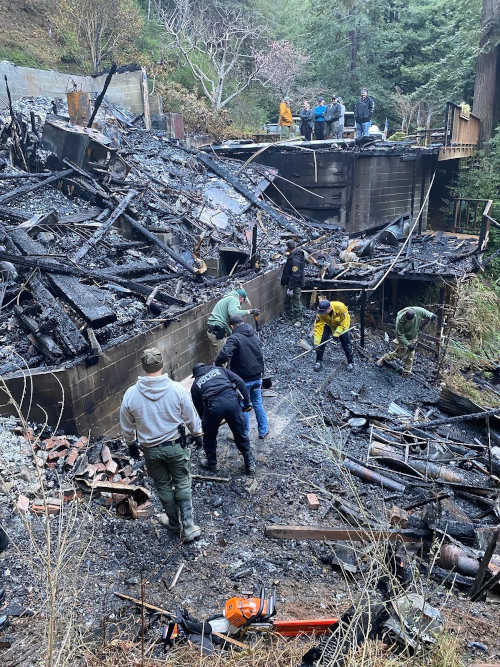
Representatives from the Mendocino Volunteer Fire Department were actively attempting to extinguish the fire when Sheriff's Office personnel arrived. Cromer said Mendocino County Sheriff's Office personnel were advised by the firefighters that the structure was unstable and too hot for search efforts to be conducted in the rubble.
The multiple-story residence collapsed on itself due to the fire, making it difficult to fully extinguish the fire to safely commence search efforts, Cromer said.
Fire personnel also informed the sheriff's office personnel they were familiar with the resident of the property, who they identified as Linda Mercurio. Cromer said the fire personnel stated Mercurio reportedly lived at the residence alone and her vehicle was at the scene and had burned during the fire.
Mercurio was believed to be missing and possibly inside the residence at the time of the structure fire, which prompted the request for sheriff's office personnel to respond, Cromer said.
Approximately five minutes prior to the arrival of sheriff's office personnel at the scene, fire personnel advised Mercurio's adult son had exited the nearby wooded area in an altered state and appeared to need medical attention, Cromer said.
Cromer said fire and medical personnel identified this subject as Fletcher Pinkham, who refused further medical treatment at the scene.
Due to the suspicious nature of the circumstances at the scene, Cromer said Pinkham was detained by sheriff's deputies while the incident was investigated.
During the initial investigation, sheriff's office representatives searched the wooded area where Pinkham was found by fire personnel. Cromer said sheriff's office personnel located firearms, ammunition, clothing and personal belongings, and a vehicle that were all believed to belong to Pinkham.
Based on the evidence located at the scene and nearby wooded area, investigators determined a violent interaction had occurred between Pinkham and his mother, Mercurio. It was also believed based on this evidence and statements provided by Pinkham that Mercurio was shot and killed and the fire was intentionally set to destroy evidence and conceal the violent nature of the crime committed against Mercurio, Cromer said.
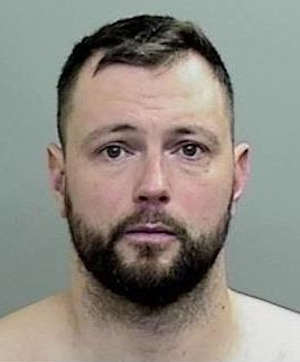
It was determined that probable cause existed to arrest Pinkham for murder and use of a firearm during the commission of a felony resulting in death. Cromer said Pinkham was ultimately transported to the Mendocino County Jail where he was to be held on $1,000,000 bail.
Further search efforts in the wooded area surrounding the residence were conducted with the assistance of the Mendocino County Sheriff's Office Search and Rescue team, Cromer said.
Cromer said the residence was described as a four-story wood-framed structure, on a cinder block perimeter foundation with a concrete slab. The structure had collapsed into the basement and a large amount of smoldering rubble was still burning at the scene.
Fire personnel estimated it would take numerous days of cooling and firefighting efforts to safely search through the debris for Mercurio's remains, Cromer said.
Sheriff's office personnel maintained scene security for multiple days and requested the assistance of additional fire personnel and experts from the Chico State University Forensic Anthropology Department to assist with searching through the rubble. Cromer said the sheriff's office also requested an arson investigator from the Ukiah Valley Fire Authority to also assist with this case.
On Friday morning, sheriff's office and fire personnel were able to safely search the remaining rubble of the structure with the help of experts from Chico State University, Cromer said.
After multiple hours of systematically searching the rubble, law enforcement personnel were able to locate and recover remains they believed were those of Mercurio. Cromer said additional testing and examination will be necessary to confirm the identification of the remains, but the legal next of kin for Mercurio was informed of the findings and circumstances of this investigation.
Cromer said the sheriff's office does not believe anyone else was involved or assisted Pinkham during the crimes committed against Mercurio during this investigation.
Anyone with further information regarding Pinkham or this case, is requested to contact the Mendocino County Sheriff's Office at 707-463-4086. Information can also be reported anonymously by calling the Sheriff's Office tip line at 707-234-2100.
The Mendocino County Sheriff's Office thanked the following organizations for their assistance with this investigation: Mendocino Volunteer Fire Department, Cal Fire, Cal Fire prevention officers, Mendocino County Sheriff's Office Search and Rescue volunteers, Ukiah Valley Fire Authority arson investigator and the Chico State University Forensic Anthropology Department.
- Details
- Written by: Elizabeth Larson
Every 10 years, supervisorial districts are redrawn so that each district is substantially equal in population.
This process, called redistricting, is an important part in the election process and helps to ensure that substantially the same number of voters are in each district.
After the ballots for this year’s election were mailed, Mendocino County officials learned that some voters whose district had changed were not mailed the ballot for their new district.
New ballots have been sent to those affected voters. Based on information provided by the Elections Office, it is estimated that less than 300 voters might be impacted.
“The districts were redrawn in 2021 and we are finding that some residents may not realize that they are in a different supervisorial district than the last time they voted,” said County Chief Executive Officer Darcie Antle. “There may be some confusion and we want to provide clear answers to voters, so we are urging them to check our website to verify which district they are located.”
To verify your voting district, you can go to the County website located at: https://gis.mendocinocounty.org/portal/apps/webappviewer/index.html?id=11e075ede3104623aa9458521b32538f.
It shows the boundaries of the Supervisorial Districts in which residents reside.
“We are receiving information that some voters may be confused by the fact that they are in a new district post the 2021 redistricting and that they have, in fact, received the correct ballot. To ensure this, we want everyone who has a question to visit the website and check the Supervisorial District number and match it with where they reside and vote,” Antle added.
She also encouraged anyone who wants to report an issue with their ballot to call 707-234-6819.
Antle said Mendocino County is continuing to work with the Mendocino County Elections Office which conducts all elections in the county.
She added that the Elections Office has informed the California Secretary of State’s Office of these issues.
Mendocino County continues to seek advice and guidance from the California Secretary of State’s Office as well as Mendocino County Counsel’s Office.
“Most importantly, we want to assure voters that they will receive and get the proper ballots and that every vote will be properly counted,” Antle said. “We are going to be working overtime to get to the bottom of what occurred and to ensure voters receive the proper ballots.
- Details
- Written by: Ukiah Branch Library
Join the Ukiah Branch Library on Friday, March 15, from 3 to 5:30 p.m.
Wool needle felting is a fun way to create imaginative and quirky creatures.
This event is for ages 12 and up, reservations are required, and the event is sponsored by the Ukiah Valley Friends of the Library and the Mendocino County Library.
To make your reservation or find out more information, please visit www.mendolibrary.org or contact the Ukiah Branch Library at
- Details
- Written by: Elizabeth Larson
The county of Mendocino was made aware on Wednesday of candidate and resident concerns that voters may be receiving ballots from the incorrect supervisorial districts.
The initial belief is that the 2021 redistricting may not have been correctly imputed into the voter files.
“We want to bring this new issue to the immediate attention of Mendocino County voters as soon as we learned of it,” said County Chief Executive Officer Darcie Antle. “We are investigating the issues with the Register of Voters Office and their vendor. We are seeking guidance from the State of California’s Secretary of State’s Office.”
Antle added, “Most importantly, we want to assure voters that they will receive and get the proper ballots and that every vote will be properly counted. We are going to be working overtime to get to the bottom of what has gone wrong and to ensure voters receive the proper ballots.”
The county of Mendocino is also seeking assistance from Renne Public Law group, one of the state’s top municipal government law firms, in determining next steps.