 How to resolve AdBlock issue?
Veterans
- Details
- Written by: Department of Veterans Affairs
The Veterans Coordinated Approach to Recovery and Employment (Veterans CARE) project was launched Oct. 3 by the Commonwealth of Massachusetts, the City of Boston, New York City partners and the nonprofit organization Social Finance, which stemmed from VA’s grant award to the organization, and will serve 480 veterans over three years in New York City; Boston and Brockton, Massachusetts; and Central and Western Massachusetts.
“This project demonstrates that supporting veterans depends on networks of collaborative partnerships, as well as great research and innovative ideas,” said VA Secretary Robert Wilkie. “Research and innovation are fundamental to improving the health care and benefits for our nation’s Veterans.”
According to research, PTSD interferes with a person’s ability to thrive in the workforce, and has been found to impact sustained employment and income negatively. In addition, a negative cycle exists between unemployment and PTSD – persistent unemployment often is linked to negative health conditions, including depression, which can exacerbate PTSD symptoms.
Further, VA research noted that up to 20 percent of veterans from recent tours of duty have PTSD, and a 2015 analysis found that veterans’ labor force participation had declined over the previous 35 years, in close correlation with a growth in service-connected disability.
The Veterans CARE project will involve local VA medical centers to deliver Individual Placement and Support (IPS), an evidence-based approach to supported employment, to program participants. The Tuscaloosa VA Medical Center (TVAMC) will oversee and monitor the project.
“The Veterans CARE project will take our work from the research arena into real-world settings where we plan to achieve the highest level of impact of IPS at full scale,” said Veterans CARE Study Chair Dr. Lori Davis. “Sustained meaningful work is a key part of the recovery plan for Veterans living with PTSD.”
Pay for Success is a public finance model that harnesses the power of the capital markets to address critical social and environmental challenges and improve the lives of those in need. In this Pay for Success project, BNP Paribas, Northern Trust, The Dakota Foundation, Deutsche Bank and Robin Hood Foundation provided $5.1 million in impact capital to fund the project.
“We are excited to launch the first Pay for Success project globally to support veterans, who have served our nation so honorably,” said Tracy Palandjian, CEO and co-founder of Social Finance. “The Veterans CARE project is about bringing the public, private and social sectors together to help Veterans with PTSD secure meaningful employment and lead healthier, happier lives.”
VA’s Center for Innovation and the Corporation for National and Community Service’s Social Innovation Fund are providing $3 million, which is matched by local government partners, to repay project investors if the project achieves measurable results for veterans.
For more information about the Veterans CARE project, including additional quotes from project partners and a fact sheet, go to http://socialfinance.org/focus-areas/workforce/veterans-care-project/.
- Details
- Written by: Department of Veterans Affairs
“With closer monitoring and increased medical center leadership and support we have seen solid improvements at most of our facilities,” said VA Secretary Robert Wilkie. “Even our highest performing facilities are getting better, and that is driving up our quality standards across the country.”
The Star rating designation is designed to help VA identify best practices of its top performing hospitals and share them across VA’s health care system to achieve system-wide improvements.
Compared with data from the same period a year ago, the release of VA’s Strategic Analytics for Improvement and Learning (SAIL) report shows 66 percent of VA Medical Centers (VAMCs) have improved in overall quality in the third quarter – with the largest gains seen in areas where there were VA-wide improvement initiatives, such as mortality, length of stay and avoidable adverse events.
Six VAMCs experienced a decrease in quality, and improvement activities are under way at each of these facilities.
Additionally, of the medical centers placed under the Strategic Action for Transformation program (StAT), an initiative that monitors high-risk medical centers and mobilizes resources to assist them, eight are no longer considered high risk and 80 percent (12 medical centers) show measurable improvements since being placed under StAT in January 2018.
“There’s no doubt that there’s still plenty of work to do, but I’m proud of our employees, who work tirelessly to move VA in the right direction for Veterans and taxpayers,” Wilkie said.
- Details
- Written by: Elizabeth Larson
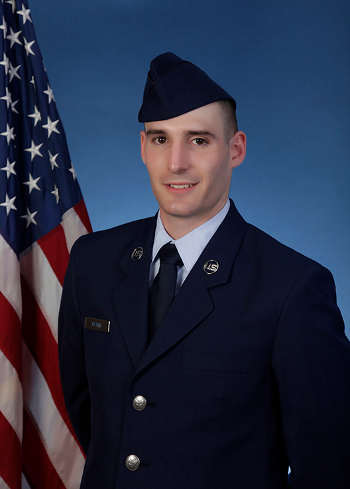
SAN ANTONIO – U.S. Air Force Airman 1st Class Jacob L. Pfann graduated from basic military training at Joint Base San Antonio-Lackland, San Antonio, Texas.
The airman completed an intensive, eight-week program that included training in military discipline and studies, Air Force core values, physical fitness, and basic warfare principles and skills.
Airmen who complete basic training also earn four credits toward an associate in applied science degree through the Community College of the Air Force.
Pfann is the son of Jerry Pfann of Kelseyville, Calif.
He is a 2015 graduate of Keseyville High School.
- Details
- Written by: Department of Veterans Affairs
Beginning this week (Sept. 23-29) and over the coming months, commemoration plaques to pay tribute to those who sacrificed their lives and the families they left behind are being placed at VA national cemeteries across the country.
“We are duty bound as a nation to the families of loved ones who gave their last full measure of devotion to protect our freedoms,” said VA Secretary Robert Wilkie. “Recognizing Gold Star Families by placing memorials on the graves of these heroes reminds us of their sacrifice and is a fitting tribute to their sacrifice for our freedom.
“VA commends the U.S. Senate on its passage earlier this month of Senate Resolution 522, designating a full week to honor the families of members of the armed forces who died in the line of duty,” he added.
Visitors to national cemeteries and other VA facilities may find other tributes to Gold Star Families, such as the recently dedicated Gold Star Families Memorial Monument at the Louis Stokes VA Medical Center in Cleveland, Ohio, and one at Washington Crossing National Cemetery in Newtown, Pennsylvania.
The term Gold Star Family references the service flag, first flown by families during World War I. The flag included a blue star for every immediate family member serving in the U.S. armed forces.
If that loved one died, the blue star was replaced by a gold star. The U.S. began observing Gold Star Mother’s Day on the last Sunday of September in 1936.
- Details
- Written by: Department of Veterans Affairs
The analysis is part of VA’s ongoing examination of non-veteran and veteran death records that is being used to evaluate and improve VA’s Suicide Prevention Program.
“Suicide prevention remains VA’s highest clinical priority. One life lost to suicide is one too many,” said VA Secretary Robert Wilkie.
The report yields several important insights:
From 2015 to 2016, the overall current and former service member suicide count decreased from 7,663 to 7,298 deaths (decrease of 365).
From 2015 to 2016, the veteran specific suicide count decreased from 6,281 to 6,079 deaths (decrease of 202).
From 2015 to 2016, the veteran unadjusted suicide rate decreased from 30.5/100,000 to 30.1/100,000.
Overall, the fact remains that on average about 20 current or former service members die each day, six have been in VA health care and 14 were not.
Rates of suicide were highest among younger Veterans (ages 18-34) and lowest among older veterans (ages 55 and older). However, because the older veteran population is the largest, this group accounted for 58.1 percent of veteran suicide deaths in 2016.
The rate of suicide among 18-34-year-old veterans continues to increase.
The use of firearms as a method of suicide remains high. The percentage of suicide deaths that involved firearms was 67.0 percent in 2015 and 69.4 percent in 2016.
Information regarding deaths among current service members is not included.
The 2016 VA National Suicide Data Report follows a new format, designed to be easier to understand and consume.
This report does not highlight the average number of suicides per day, a measure that is commonly misinterpreted as a rate. Unlike a rate, the count per day does not account for changes in population size.
VA’s goal is to present complex suicide data in the most actionable format and to convey the key findings in the clearest terms.
The “VA National Suicide Data Report 2005–2016,” and the accompanying state data sheets are available at https://www.mentalhealth.va.gov/suicide_prevention/Suicide-Prevention-Data.asp.
“Data are an integral part of our public health approach to suicide prevention,” Wilkie said. “These data offer insights that will help us build networks of support, interventions and research-backed suicide prevention initiatives to reach all veterans, even those who do not and may never come to us for care.”
VA is committed to ensuring that all Veterans receive the support they need, and it is working diligently to improve services every day. VA has undertaken substantial veteran suicide prevention efforts in recent years by:
Developing the National Strategy for Preventing Veteran Suicide to guide VA personnel and stakeholders – including other federal agencies, state and local governments, health care systems, and community organizations – so that we, as a nation, can reduce suicide rates among all veterans.
Implementing the Mayor’s Challenge to empower cities nationwide to build coalitions to prevent veteran suicide.
For more information on VA suicide prevention efforts, refer to “VA’s Efforts to Prevent Veteran Suicide: September 2018” fact sheet at https://www.mentalhealth.va.gov/suicide_prevention/Suicide-Prevention-Data.asp and visit www.mentalhealth.va.gov/suicide_prevention.
Veterans who are in crisis or having thoughts of suicide, and those who know a veteran in crisis, can call the Veterans Crisis Line for confidential crisis intervention and support 24 hours a day, seven days a week, 365 days a year. Call 800-273-8255 and press 1; send a text message to 838255 or chat online at www.VeteransCrisisLine.net/Chat.
- Details
- Written by: Elizabeth Larson
Those schools include the United States Military Academy at West Point, the United States Naval Academy, the United States Air Force Academy, and the United States Merchant Marine Academy.
“Each year I have the pleasure of getting to know some of the finest young people in our district and have the honor of nominating exceptional candidates to our country’s military service academies,” said Thompson. “The men and women who attend these schools go on to serve our nation and become our military leaders and I am excited to announce that this year’s nomination process is underway! I look forward to meeting this year’s class of candidates and encourage anyone interested to apply.”
Candidates must be between 17 and 23 years of age in the year they are admitted to the academy, a citizen of the United States and a resident of California’s Fifth Congressional District.
The deadline to submit applications to Thompson’s office is Monday, Oct. 15.
You can click here to apply or call Thompson’s Santa Rosa Office at 707-542-7182 for more information.
Thompson represents California’s Fifth Congressional District, which includes all or part of Contra Costa, Lake, Napa, Solano and sonoma Counties.
- Details
- Written by: Department of Veterans Affairs
Compared with data from the same period a year ago, the July 2018 release of VA’s Strategic Analytics for Improvement and Learning, or SAIL, report showed 103 (71 percent) VA Medical Centers have improved in overall quality – with the largest gains seen in areas where there were VA-wide improvement initiatives, such as mortality, length of stay and avoidable adverse events.
Seven (5 percent) VA Medical Centers had a small decrease in quality.
“This is a major step in the right direction to improving our quality of services for our veterans,” said VA Secretary Robert Wilkie. “Over the past year, we were able to identify our problems and implement solutions to fixing the issues at 71 percent of our facilities. I’m extremely proud of our employees and the progress they have made to raise VA’s performance for our nation’s heroes.”
Additionally, of the 15 medical centers placed under the Strategic Action for Transformation program, or StAT, an initiative that monitors high-risk medical centers and mobilizes resources to assist the facilities, 33 percent (five medical centers) are no longer considered high-risk and 73 percent (11 medical centers) show meaningful improvements since being placed under StAT in January 2018.
The quarterly SAIL report, which has been released publicly since 2015, assesses 25 quality metrics and two efficiency and productivity metrics in areas such as death rate, complications and patient satisfaction, as well as overall efficiency and physician capacity at 146 VA Medical Centers.
It is used as an internal learning tool for VA leaders and personnel to pinpoint and study VA Medical Centers with high quality and efficiency scores, both within specific measured areas and overall.
The data is also used to identify best practices and develop strategies to help troubled facilities improve.
- Details
- Written by: Elizabeth Larson
Attorney General Becerra sponsored the bill and worked closely with the bill’s author, Assemblymember Jacqui Irwin, to shepherd it through the Legislature.
AB 3212 extends the length of time that service members are protected against foreclosure, eviction, repossession, and default judgments.
It also extends to them interest rate protections for student loans and clarifies that students in the National Guard and Reserve have a right to academic leave when they are called to active duty.
The bill updates current law to close loopholes that have been used to take advantage of service members and extends the protections of California law to cover all service members in California.
Prior to this new law, some protections only applied to members of the Guard and Reserve who are called to active duty.
“If you put yourself in harm’s way to defend our freedoms, you more than deserve your protections as a consumer,” said Attorney General Becerra. “I am proud to have worked with Assemblymember Irwin to see Assembly Bill 3212 become law. This is another way we show all of our men and women in uniform that we appreciate their service and have their backs. My office collaborated with the military community to get this bill across the finish line. We won’t stop working to protect service members and military families.”
“We ask members of the armed forces to take great personal risk on our behalf, but the demands of military service go beyond the dangers of the battlefield,” said Assemblymember Jacqui Irwin. “A life in the military also means moving around frequently, moving your kids from school to school, updating addresses, and suddenly being called away to places where you may have uncertain access to the internet, or phones, or personal records. Because of this, we’ve long recognized the need to provide service members with specific protections under the law to insulate them from predatory business practices, unscrupulous creditors and the risk of falling into financial distress that comes with a life that demands so much. This bill will strengthen the protections California provides to those who protect us.”
- Details
- Written by: Department of Veterans Affairs
In doing so, VA’s Board of Veterans’ Appeals provided thousands of veterans with critical, life-changing decisions.
“The board’s historic achievement delivering results to veterans and their families reflects VA’s hard work and commitment to getting it right for our veterans under the leadership of President Trump,” said VA Secretary Robert Wilkie. “Together, we have achieved significant results for our nation’s veterans, as each of the more than 81,000 decisions produced by the board can make a real difference in their lives and for their families.”
The achievements come amid focused board efforts to prepare for the full implementation of the Veterans Appeals Improvement and Modernization Act of 2017, which is transforming a historically complex appeals process into a simple, timely and transparent process providing Veterans with increased choice and control.
Veterans who disagree with the initial claim decision have three options under the Act: Higher level review at the office of original jurisdiction, supplemental claim with the office of original jurisdiction and appeal to the board.
Once a veteran appeals to the board, he or she remains in control of the process by choosing one of three dockets best suited to the appeal: Direct review docket, evidence docket and hearing docket.
To support the various organizations preparing to help veterans navigate the new appeals process, the chairman of the board and her staff led numerous training sessions and panels held by national, state and local veteran service organizations and private legal organizations.
To maintain its momentum, the Board hired 186 new attorneys this fiscal year, and plans to add 30 more to the team by Sept. 30.
Additionally, the board is joining the Military Spouse Employment Partnership in October, and looks forward to participating in a program that helps bring the valuable insights and tremendous talent of military spouses to the board.
For more information about the board and its progress on appeals modernization, visit https://www.bva.va.gov.