 How to resolve AdBlock issue?
Veterans
- Details
- Written by: Editor
“We know that for a small group of veterans, a traditional approach to health care may not be the most effective,” said VA Secretary Dr. David J. Shulkin. “This is particularly true with certain chronic medical and mental health conditions. For veterans who don’t improve, we have to look for innovative, evidence-based approaches that may help them restore and maintain their health and well-being.”
Veterans with a history of mild to moderate TBI now have access to light emitting diode (LED) therapy contained in a lightweight frame that is placed on the head and a clip placed inside the nose.
Results of some studies show that LED improves brain function including attention and memory, emotions and sleep. LED therapy has begun at the VA Boston Healthcare System, Jamaica Plain campus, this month. LED also is available for veterans to use in their homes.
Providers at the Long Beach VA Medical Center have begun using stellate ganglion block (SGB) to treat veterans with PTSD symptoms. SGB is safe and may ease PTSD symptoms, such as the feelings of anxiety and constantly being on alert. It involves an injection, or shot, of medication into the neck to decrease the symptoms of PTSD.
VA remains a world leader in the development and use of innovative therapies, such as telehealth, yoga and other approaches to improve health and well-being.
For more information about other emerging therapies aimed at enhancing veterans’ physical and mental well-being, visit VA’s Center for Compassionate Innovation at https://www.va.gov/healthpartnerships.
- Details
- Written by: Editor
- Details
- Written by: Mass Communication Specialist 1st Class Eric Lockwood
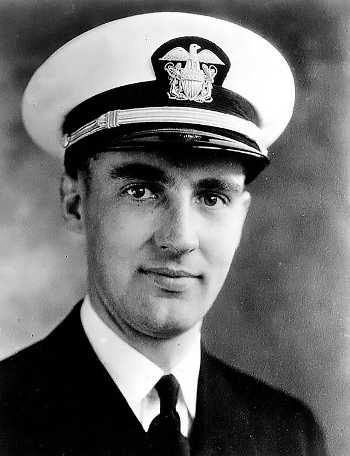
WASHINGTON, DC – The Navy recently authorized the posthumous award of a combat medal to a sailor who was present at Pearl Harbor during the Japanese attack of Dec. 7, 1941, officials announced Dec. 4.
Secretary of the Navy Richard V. Spencer awarded the Silver Star Medal to Chaplain Lt. j.g. Aloysius H. Schmitt for gallantry in action against the enemy while serving on the battleship USS Oklahoma (BB 37).
As Oklahoma was capsizing, Schmitt sacrificed his own life to assist many of his shipmates in escaping to safety.
Navy Chief of Chaplains Rear Adm. Margaret Kibben will present the Silver Star Medal to a member of Schmitt's family during a ceremony on the campus of Loras College in Dubuque, Iowa on Dec. 7.
The 8:45 a.m. (Central time) presentation ceremony will be preceded by a special Catholic mass in a campus chapel previously dedicated to Schmitt, and in which his remains are interred.
"The presentation of the medals is not only appropriate but simply the right thing to do," said Spencer. "One of my highest priorities is to honor the service and sacrifice of our Sailors, Marines, Civilians, and family members and it is clear that Lt. Schmitt and Petty Officer George are heroes whose service and sacrifice will stand as an example for current and future service members."
In addition to Schmitt's Silver Star, the secretary also awarded the Bronze Star Medal to Chief Boatswain's Mate Joseph L. George for action at while serving aboard the repair ship USS Vestal (AR 4).
In October 1942 Schmitt was posthumously awarded the Navy and Marine Corps Medal, the Navy's award for non-combat heroism.
The Navy later published a clearer definition of combat for award purposes, making Schmitt retroactively eligible for the Silver Star Medal, the military's third-highest personal decoration for valor in combat. Schmitt's family petitioned the Navy to upgrade his recognition to a combat valor award.
Schmitt's family is happy to celebrate the heroism of their loved one.
Dr. Steve Sloan is the great-nephew of Chaplain Schmitt. Although he never met Schmitt – who was known in the family as "Father Al" – Sloan says the story was a topic of discussion at every family holiday gathering when he was growing up.
"We would talk about what happened, how many sailors he helped escape, and what went on – we would kind of relive it every holiday and it became a bit of a tradition. So we're very excited about the medal,” Sloan said. “I think for the older people in the family it's a form of closure, but for the rest of us, our hope is that this is just the beginning of the story; that with the return of his remains and the presentation of the medal, his story will become known to a whole new generation."
According to the Navy's Nonresident Training Course History of the Chaplain Corps, Part 2, Schmitt was hearing confessions aboard Oklahoma when four torpedoes hit the port side of the ship.
As the vessel began to list to port, the crew tried to escape. Schmitt made his way with several others to a compartment in which an open porthole – a small, circular window in the outer hull of the ship – afforded a means of escape.
One by one, the sailors in the space, with Schmitt's help, crawled through the porthole to safety.
When they were all out, Schmitt attempted to get through the small opening. Even with the frantic assistance offered by the men who were already out, Schmitt struggled to get through the porthole.
During the attempt to escape, the chaplain became aware that others had come into the compartment from which he was trying to escape. Realizing that the water was rising rapidly and that even this one exit would soon be closed, Schmitt insisted on being pushed back to help others who could get through more easily, urging them on with a blessing.
As water poured into the ship, she gradually rolled over, and settled on the bottom of the harbor. More than 400 Oklahoma sailors, including Schmitt, lost their lives.
Named after the chaplain, USS Schmitt (DE 676) was commissioned July 24, 1943. The ship performed convoy escort missions in the Atlantic Ocean before being transferred to the Pacific. The ship also participated in combat operations off Balikpapan, Borneo in the summer of 1945. After conducting peacetime training and upkeep following the end of World War II, the ship was decommissioned on June 28, 1949.
For more news from Naval History and Heritage Command, visit www.history.navy.mil.
Mass Communication Specialist 1st Class Eric Lockwood serves with the Naval History and Heritage Command Communication and Outreach Division.
- Details
- Written by: Editor
Providers from the Eastern Oklahoma VA Health Care System and the VA Northern California Health Care System will partner with HBOT providers at the Tulsa Wound Care and Hyperbaric Center at Oklahoma State Medical Center in Tulsa, Oklahoma, and the David Grant Medical Center on Travis Air Force Base, California, respectively, to provide this care.
“There is nothing more important to us than caring for our nation’s veterans, and that care must include finding different approaches that work best for them,” said VA Secretary Dr. David J. Shulkin. “We have to explore every avenue, particularly for our most medically vulnerable veterans, and be open to new ideas and strategies for their optimal health and well-being.”
HBOT is a procedure that increases oxygen in the body, under pressure, to encourage healing.
Currently, HBOT is commonly used to treat carbon monoxide poisoning, divers’ sickness, enhanced healing of some wound problems, skin grafts, heat burns, crush injuries and other acute health-care issues that involve too little blood flow to a part of the body.
This use of HBOT for treatment of PTSD is considered an “off-label” use and will occur under the supervision of a trained physician.
Separately, VA and the Department of Defense are planning a multisite research study to examine more fully the use of HBOT for patients diagnosed with PTSD.
As health care leaders interested in innovative approaches to care, the VA Center for Compassionate Innovation, or CCI, is facilitating use of HBOT for a subset of veterans who have noticed no decrease of symptoms after receiving at least two evidenced-based treatments.
CCI uses innovative approaches to treat conditions where traditional methods have been unsuccessful.
VA will monitor the HBOT clinical demonstration project and the HBOT research study to help inform the potential for HBOT usage to treat a larger number of veterans with PTSD.
For more information about VA’s Center for Compassionate Innovation, visit https://www.va.gov/healthpartnerships/.
- Details
- Written by: Editor
This has been mandated through legislation since 2015 to honor veterans, and this rollout of the ID card fulfills that overdue promise.
Only those veterans with honorable service will be able to apply for the ID card, which will provide proof of military service, and may be accepted by retailers in lieu of the standard DD-214 form to obtain promotional discounts and other services where they are offered to veterans.
“The new Veterans Identification Card provides a safer and more convenient and efficient way for most Veterans to show proof of service,” said VA Secretary Dr. David J. Shulkin. “With the card, veterans with honorable service to our nation will no longer need to carry around their paper DD-214s to obtain veteran discounts and other services.”
The VIC provides a more portable and secure alternative for those who served the minimum obligated time in service, but did not meet the retirement or medical discharge threshold.
Veterans who served in the armed forces, including the reserve components, and who have a discharge of honorable or general (under honorable conditions) can request a VIC.
To request a VIC, veterans must visit www.vets.gov, click on “Apply for Printed Veteran ID Card” on the bottom left of the page and sign in or create an account.
Veterans who apply for a card should receive it within 60 days and can check delivery status of their cards at vets.gov.
A digital version of the VIC will be available online by mid-December.
- Details
- Written by: Editor
"Our thoughts and prayers are with the families of these Sailors," said Vice Adm. Phil Sawyer, commander of U.S. Seventh Fleet. "Their service and sacrifice will be lasting in Seventh Fleet and we will continue to stand the watch for them, as they did bravely for all of us."
USS Ronald Reagan (CVN 76) led combined search and rescue efforts with units from the Japan Maritime Self-Defense Force (JMSDF).
Over the course of two days of continuous search efforts for the sailors, ships and aircraft covered nearly 1,000 square nautical miles.
"The thoughts and prayers of the entire team onboard Ronald Reagan go out to the families and friends of our fallen shipmates," said Capt. Michael Wosje, commander, Carrier Air Wing Five (CVW 5). "We are thankful for our professional search and rescue teams and their incredible bravery. The entire Navy team is working together to investigate the cause of this mishap and we will remain focused on our mission to operate forward in a safe and professional manner to ensure peace and stability in the Indo-Asia-Pacific region."
Combs, a native of Florida, was assigned to the "Providers" of Fleet Logistics Support Squadron (VRC) 30 and embarked aboard Ronald Reagan as part of Carrier Air Wing Five. His previous duty assignments include the "Greyhawks" of Carrier Airborne Early Warning Squadron (VAW) 120, the Center for Security Forces Detachment Kittery Point, in Portsmouth, N.H., and Training Wing 4, in Corpus Christi, Texas. His awards include the National Defense Ribbon and the Navy Battle "E" Ribbon.
Chialastri, a native of Louisiana, was assigned to Ronald Reagan. His previous duty stations include USS America (LHA 6), Patrol Squadron Thirty (VP-30), the "Pro's Nest," in Jacksonville, Fla., and the Center for Security Forces Detachment Kittery Point, in Portsmouth, N.H. His awards include the National Defense Ribbon.
Grosso, a native of Florida was assigned to Ronald Reagan. His previous duty stations include the Naval Air Technical Training Center in Pensacola, Fla., and the Naval Recruit Training Center in Great Lakes, Ill. His awards include the National Defense Ribbon.
The C-2A Greyhound, assigned to VRC 30, crashed en route to Ronald Reagan Nov. 22 while operating in the Philippine Sea.
The aircraft was carrying 11 crew and passengers at the time.
Eight personnel were recovered on scene after the crash by U.S. Navy Helicopter Sea Combat Squadron (HSC 12).
An investigation is in progress.
- Details
- Written by: Editor
“With the passage of this provision, veterans who struggle with health problems resulting from toxic exposure in classified incidents will finally get the justice and resources they deserve,” said Rep. Thompson. “These veterans have served our nation honorably and today’s vote rectifies backwards policies that prevented them from getting the benefits they’d earned.”
Veterans who have health conditions that are linked to exposure to toxic substances during their military service are eligible to apply for disability benefits and health care from the Department of Veterans Affairs.
However, some military operations and projects that resulted in their exposure to toxic substances remain classified by DoD, despite having taken place decades ago.
The provisions from Thompson’s bill, H.R. 3327, the Jack Alderson Toxic Exposure Declassification Act, that were included in the NDAA require the Department of Defense to conduct a declassification review of documents related to any known incident in which no less than 100 members of the Armed Forces were exposed to a toxic substance.
Additionally, the Department of Defense yesterday responded to this letter from Reps. Thompson, Jones, and Marshall.
In the response, the Department granted their request for a comprehensive report detailing why a DoD contractor tasked with identifying servicemembers and civilian personnel that may have been exposed to toxic substances in classified incidents did not complete work on time and how the funds allocated to that contractor were spent.
- Details
- Written by: Editor
In the process, veterans learned about their eligibility for other benefits, and 28 percent applied for additional benefits. Thus far, an additional $17 million has been awarded retroactively and $31 million will be received by veterans statewide annually.
“There are 1.7 million veterans in California. Our hope is that each one of them has ready access to all of the benefits they have earned through their service to this country,” said CalVet Secretary Vito Imbasciani. “Getting them into a county Veteran Service Office is the first step to ensuring they do.”
A veteran designation on a driver license or ID card recognizes military service and makes it easier for veterans who don’t have a retired ID or a VA ID to access privileges and benefits without having to carry their military record with them.
As an added bonus, a veteran designation means a business can easily confirm veteran status when offering discounts on holidays such as Veterans Day.
The DMV and CalVet have vigorously promoted this program in conjunction with the county Veterans Services Offices and veteran service organizations statewide. While the program has been a success, there are still hundreds of thousands of eligible veterans in California who don’t know the program exists or are planning to participate when their current driver license is up for renewal.
Veterans can follow these three important steps to obtain their designation.
STEP 1 – Take your DD-214 to a CVSO to obtain a Veteran Status Verification Form (and check your eligibility for other benefits at the same time). To find a local CVSO, call 844-737-8838 or visit www.calvet.ca.gov.
STEP 2 – Go online or call DMV at 800-777-0133 for an appointment to visit a DMV field office. Present the completed and stamped Veteran Status Verification Form and driver license application to a DMV representative at your local DMV field office.
STEP 3 - Pay your $5 designation fee and related application or renewal fees.
Veterans are required to pay a one-time $5 designation fee, in addition to any other application fees associated with a renewal, duplicate, or original driver license and/or ID card. The designation fee is included in the legislative language contained within Assembly Bill 935.
The CalVet and the California DMV wants to remind veterans that they must first obtain a veteran status verification form from a county Veteran Service Office before visiting a DMV field office to apply for the designation.
- Details
- Written by: Editor