 How to resolve AdBlock issue?
Veterans
- Details
- Written by: Editor
SACRAMENTO – Assembly Bill 557, authored by Assemblywoman Mariko Yamada, was signed by Gov. Jerry Brown on Monday.
This legislation revises requirements for quarterly financial statements provided to members of California’s six veterans homes to ensure that the information provided in these statements is consistent with existing state law.
“AB 557 requires that the quarterly statements sent to residents are printed in a font that is 14-point or larger to assist residents in understanding the information necessary for residents to make informed financial decisions,” Yamada said. “It is a companion bill to AB 1823, legislation I authored and which was signed into law last year, requiring veterans home residents to be provided adequate information about their obligations to pay for unreimbursed costs of care.”
Both AB 557 and AB 1823 were proposed by the Allied Council at the California Veterans Homes at Yountville, an organization that advocates on behalf of the residents.
Two years ago, the widow of a former resident received notice from the state and had been largely unaware of existing law allowing for the recovery of unreimbursed costs of care.
AB 557 also provides technical changes to quarterly statements sent to veterans home members so they are clearly informed of CalVet’s ability to recover their finances and personal property held outside the premises of the veterans home in addition to assets held by the Home.
California’s six veterans homes provide essential care to disabled and elderly veterans. The homes charge veterans for the care provided according to the veteran’s ability to pay.
When an immediate family member survives the veteran, or the deceased veteran leaves an estate, the state may seek reimbursement from the heirs for the difference between the actual cost of the veteran’s care and the amount already paid.
- Details
- Written by: Editor
WASHINGTON – In response to President Obama’s Executive Order, the Departments of Defense (DoD) and Veterans Affairs (VA) highlighted the establishment of two joint research consortia, at a combined investment of $107 million to research the diagnosis and treatment of post-traumatic stress disorder (PTSD) and mild traumatic brain injury (mTBI) over a five-year period.
“VA is proud to join with its partners in the federal government and the academic community to support the president’s vision and invest in research that could lead to innovative, new treatments for TBI and PTSD,” said Secretary of Veterans Affairs Eric K. Shinseki. “We must do all we can to deliver the high-quality care our service members and veterans have earned and deserve.”
The Consortium to Alleviate PTSD (CAP), a collaborative effort between the University of Texas Health Science Center – San Antonio, San Antonio Military Medical Center, and the Boston VA Medical Center will attempt to develop the most effective diagnostic, prognostic, novel treatment, and rehabilitative strategies to treat acute PTSD and prevent chronic PTSD.
The Chronic Effects of Neurotrauma Consortium (CENC), a collaborative effort between Virginia Commonwealth University, the Uniformed Services University of the Health Sciences, and the Richmond VA Medical Center will examine the factors which influence the chronic effects of mTBI and common comorbidities in order to improve diagnostic and treatment options.
A key point will be to further the understanding of the relationship between mTBI and neurodegenerative disease.
Since Sept. 11, 2001, more than 2.5 million American service members have been deployed to Iraq and Afghanistan.
Military service exposes service members to a variety of stressors, including risk to life, exposure to death, injury, sustained threat of injury, and the day-to-day family stress inherent in all phases of the military life cycle.
To improve prevention, diagnosis, and treatment of mental health conditions, the President released an Executive Order directing the Federal agencies to develop a coordinated National Research Action Plan.
The Department of Defense, Department of Veterans Affairs, the Department of Health and Human Services (HHS), and the Department of Education (ED) came forward with a wide-reaching plan to improve scientific understanding, effective treatment, and reduce occurrences of Post-Traumatic Stress Disorder, Traumatic Brain Injury, co-occurring conditions and suicide.
The Administration’s new fact sheet on the National Research Action Plan for Improving Access to Mental Health Services for Veterans, Service Members, and Military Families can be seen here: http://www.whitehouse.gov/sites/default/files/uploads/nrap_fact_sheet_082013.pdf .
- Details
- Written by: Editor
WASHINGTON, DC – The Department of Veterans Affairs has launched an awareness campaign and a new website, www.va.gov/aca , to let veterans know what the Affordable Care Act means for them and their families.
Veterans receiving health care from the Department of Veterans Affairs will see no change in their benefits or out-of-pocket costs when portions of the Affordable Care Act take effect next year.
“VA wants all veterans to receive health care that improves their health and well-being,” said Secretary of Veterans Affairs Eric K. Shinseki. “If you are enrolled in VA health care, you do not need to take any additional steps to meet the health care law coverage standards. If you are not enrolled in VA health care, you can apply at any time.”
“VA encourages eligible Veterans who are not enrolled in VA’s health care system to take advantage of the world-class care we provide to the men and women who have served this nation in uniform,” Shinseki added.
Veterans can apply for VA health care at any time by visiting www.va.gov/healthbenefits/enroll , calling 1-877-222-VETS (8387), or visiting their local VA health care facility.
Full details on eligibility are available at http://www.va.gov/opa/publications/benefits_book.asp .
VA’s health care system for veterans has no enrollment fee, no monthly premiums and no deductibles. Most veterans also have no out-of-pocket costs, though some may have small copayments for some health care or prescription drugs.
“VA will continue to provide veterans with high quality, comprehensive health care and other benefits they have earned through their service,” said Dr. Robert Petzel, VA’s chief physician and under secretary for health.
The Affordable Care Act was created to expand access to coverage, reduce rising health care costs, and improve health care quality and care coordination. The Affordable Care Act creates new opportunities for coverage for uninsured Veterans and their families.
There are more than 1.3 million Veterans and more than 950,000 spouses and children of veterans without health insurance.
Most uninsured veterans are eligible for VA health care. For those who are not eligible for VA care – such as veterans’ family members – the law created a new health insurance marketplace.
In 2014, the marketplace will be a new way to shop for and purchase private health insurance. People who purchase insurance through the marketplace may be able to lower the costs of health insurance coverage by paying lower monthly premiums. For more information, visit www.healthcare.gov .
For information about VA health care and the Affordable Care Act, VA encourages veterans and family members to visit the new website at www.va.gov/aca, or call 1-877-222-VETS (8387), Monday through Friday from 8 a.m. to 10 p.m. or Saturdays from 11 a.m. to 3 p.m., Eastern time.
The new Web site includes a Health Benefits Explorer, where veterans can learn about the benefits they can receive if they enroll in VA care.
- Details
- Written by: Editor
LAKEPORT, Calif. – Veterans of Foreign Wars Post 2015 will hold a large rummage sale Friday, Aug. 2, through Saturday, Aug. 4.
The sale will be held from 9 a.m. to 5 p.m. at the Lakeport Armory, 1431 Hoyt Ave., located off Hill Road near the Lake County Jail.
In addition to the sale there will be hot dogs for sale featuring authentic Berliner saucerkraut.
- Details
- Written by: Editor
WASHINGTON, DC – Thursday, Aug. 1, marks the fourth anniversary of the Post-9/11 GI Bill.
VA has issued approximately $30 billion in Post 9/11 GI-Bill benefit payments since its inception in August 2009 and helped nearly 1 million servicemembers, veterans, and their families pursue their education.
“The Post-9/11 GI Bill has helped many of our nation’s veterans pursue their education and successfully transition to civilian life,” said Secretary of Veterans Affairs Eric K. Shinseki. “We’re proud that the Department of Veterans Affairs can administer this important benefit that makes such a big difference in the lives of nearly a million veterans and their families.”
The Post-9/11 GI Bill is the most extensive educational assistance program since the Serviceman’s Readjustment Act of 1944, more commonly known as the GI Bill, was signed into law.
The Post-9/11 GI Bill provides comprehensive educational support through tuition, books and housing allowance to people with at least 90 days of total service after Sept. 10, 2001, or people discharged with a service-connected disability after 30 days.
Approved training under the Post-9/11 GI Bill includes graduate and undergraduate degrees, vocational and technical training, on-the-job training, flight training, correspondence training, licensing and national testing programs, entrepreneurship training, and tutorial assistance.
VA is now processing benefit payments for currently enrolled students in an average of seven days, largely as a result of VA’s ongoing transformation to electronic claims processing.
The delivery of Post-9/11 GI Bill benefits has been automated and processing time cut in half through implementation of VA’s Long Term Solution, an end-to-end claims processing system that uses rules-based, industry-standard technologies.
“Since the end of World War II, GI Bill programs have shaped and changed the lives of veterans, servicemembers, their families and their survivors by helping them reach their educational and employment goals,” said Allison A. Hickey, Under Secretary for Benefits. “That is still true today.”
In April 2012, President Obama signed Executive Order 13607 which established the Principles of Excellence, offering guidelines that promote student success under the program and ensure accurate information about institutions and their courses.
More than 6,000 educational and training institutions have agreed to comply with these principles.
“The Principles of Excellence, further strengthened by Public Law 112-249, provide future student Veterans with greater consumer education” said Michael Dakduk, executive director of Student Veterans of America. “It is extremely important to have the right tools and information before making a decision on a post-secondary credential, degree program, or institution of higher learning.”
VA is working with schools, community organizations and other partners to ensure beneficiaries have all the information they need to use their education benefits, including:
- Education plans for all military and veteran education beneficiaries;
- A designated point of contact for academic and financial advice at each school; and
- An end to fraudulent and aggressive recruiting techniques and misrepresentation.
This summer, VA is launching new tools to help beneficiaries learn more about their vocational aptitudes and select an education institution.
- The ‘Factors to Consider When Choosing a School’ guide offers future students steps to take when researching, choosing and attending a school.
- CareerScope is a free, new tool featured on http://www.gibill.va.gov that measures a student’s aptitude and interests through a self-administered online test, identifying potential career paths.
- The new GI Bill Comparison Tool allows students to research and compare schools, including key indicators like average student loan debt and graduation rates.
“We will continue to work hard to improve VA’s benefits delivery process for Post-9/11 GI Bill beneficiaries and to ensure that Veterans and their families have the tools they need to choose the right education institution to help them build a foundation for the future,” Hickey added.
For more information on the Post-9/11 GI Bill and other Veteran education programs, visit http://www.gibill.va.gov .
- Details
- Written by: Editor
U.S. Reps. Mike Thompson (CA-5) and Pete Sessions (TX-32) announced that funding for their bipartisan legislation to improve treatment options for active duty soldiers with Traumatic Brain Injuries (TBI) and Post-Traumatic Stress (PTS) was approved by the House of Representatives.
The funding was approved through H.R. 2397, the Department of Defense Appropriations Act of 2014. The Traumatic Brain Injuries (TBI) and Post-Traumatic Stress (PTS) innovative treatment program was authorized in June 2013 through H.R. 1960, the National Defense Authorization Act (NDAA) for Fiscal Year 2014.
The funds will allow servicemembers to access innovative treatments offered outside military and veteran medical facilities.
“This funding will make sure that our troops get the very best care America has to offer,” said Thompson. “We know that oftentimes the best treatments for TBI and PTS aren’t available at military medical facilities, but rather at places like the Pathway Home in Yountville. By putting this funding in place, we will make sure that when our heroes return from combat they get the best care, no matter where it’s provided.”
“I’m pleased that our colleagues in the House have once again joined us in supporting our nation’s soldiers and veterans who return from combat suffering from TBI and PTSD,” said Sessions. “These brave men and women have sacrificed for our country and we have a solemn duty to ensure that they have access to leading-edge treatments.”
H.R. 2397 provides $10 million in funding for a new five-year pilot program created by Thompson and Sessions that allows military patients to receive treatment from health care facilities outside of the Department of Defense (DOD) that are utilizing an array of cutting-edge, successful therapies to treat TBI and PTS.
Under this pilot program, physicians and residential treatment centers like The Pathway Home in Yountville, Calif., may qualify for payment from DOD through a “pay-for-performance” plan.
This means they must prove that a patient has experienced demonstrable improvement. Treatment and reimbursement safeguards in the amendment ensure access to innovative private treatments while reserving payment only for treatments that work.
To reach the long-term objective of incorporating cutting-edge medical practices into military hospitals, Thompson’s and Sessions’ TBI treatment initiative requires an annual report to Congress on the results of the program, encouraging a constant flow of new and innovative treatments.
H.R. 2397 will now go to the Senate for approval.
Congressman Mike Thompson represents California’s Fifth Congressional District, which includes all or part of Contra Costa, Lake, Napa, Solano and Sonoma counties.
- Details
- Written by: Editor
YOUNTVILLE, Calif. – Assemblymember Mariko Yamada (D-Davis) will host a free forum on benefits earned from military service on Saturday, July 27, 10 a.m. to 2 p.m., in Grant Hall at the California Veterans Home, 100 California Drive, Yountville.
“There are a variety of benefits available for eligible veterans, including men and women, and sometimes extending to those who have served outside of combat," Yamada said. “This event is open to both active duty military and veterans, including those recently separated from service, and their family members."
Assemblymember Yamada has been a member of the Assembly Committee on Veterans Affairs for five years and was recently honored as the Veterans of Foreign Wars Department of California Legislator of the Year.
This will be the fifth veterans service forum Yamada has hosted around her District since 2010, and the first one in Napa.
The event will include presentations from representatives of the California and US Department of Veterans Affairs, the Social Security Administration, Sacramento Valley National Cemetery, local veterans groups and other agencies.
Representatives from these departments and organizations will also be available throughout the day to provide resources and information to veterans and their families.
Caseworkers will also be available to assist veterans with service-related questions or problems. Those planning to check their eligibility or apply for benefits must bring their DD214 or Certificate of Discharge.
For more information or to RSVP, please visit Assemblymember Yamada’s Web site at www.asm.ca.gov/yamada or call 800-965-6765.
- Details
- Written by: Editor
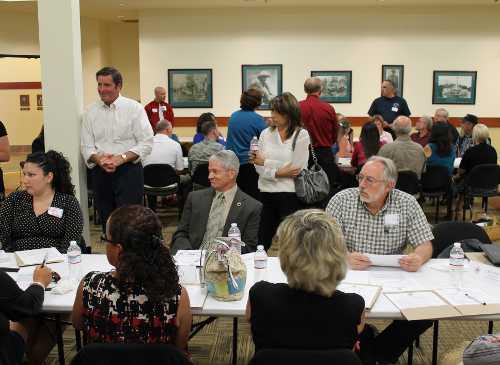
NORTHERN CALIFORNIA – Dozens of veterans and veteran service providers met at the Yuba County Government Center on Monday to collaborate on strategies to create jobs for veterans.
The Veteran Jobs Roundtable, hosted by Congressman John Garamendi (D-Fairfield, CA), brought together representatives from employers, community colleges, local, state, and federal agencies, and non-profit organizations for a robust conversation on what can be done now to help veterans and what additional laws are necessary. The event had an emphasis on the needs of young veterans.
“We need to take action to serve those who have served us. That’s what this is all about today,” said Congressman Garamendi. “Our goal is to learn what we can do as employers and community leaders to take specific actions to help veterans.”
In his opening remarks, Garamendi highlighted one problem facing veterans entering the civilian workforce: skills learned in the military don’t necessarily transfer to required private sector credentials.
Garamendi talked about a young veteran who came into his district office for help. A trained sniper, the veteran served six years in combat in Iraq. When he left the military, he had very little help in the transition, and he’s been unable to find employment.
That so many veterans are slipping through the cracks and not finding gainful employment was the impetus for Monday’s meeting.
After Garamendi gave his opening remarks, the events’ core partners introduced themselves, gave guidance on how they are helping veterans, and explained why hiring veterans makes sense for employers.
Those partners were Betty Harris, chief, Airman & Family Readiness Center at Beale Air Force Base; Brynda Stranix, president of the Yuba-Sutter Economic Development Corp.; Bobbi Park of Sacramento Valley LINC with the Department of Veterans Affairs; Marvin King, veteran service officer for Yuba and Sutter counties; Michael Hensley, president of the Student Veteran Association at Yuba Community College; Ryan Rogers, veteran employment representative at the California Employment Development Department; Tom Pitock, veteran adviser at Yuba Community College; and Vince Kilmartin, the Northern California representative for Troops to Teachers.
“Why hire a veteran? They’re very structured, very dependable, and very exuberant employees,” said Pitock.
During breakout sessions, participants divided themselves into three separate roundtable discussion groups: employers, veteran organizations, and community organizations. The discussions were designed to solicit ideas from participants on ways to incentivize and reduce barriers to hiring veterans.
A conversation that emerged at all the tables was the difficulty in making skills learned while in the service more applicable in civilian life. Military credentials for engineers and nurses, for example, don’t transfer for civilian certification. A man whose service experience was mine sweeping talked about some of his difficulties convincing employers that he was qualified for other work.
One community group leader encouraged veterans enrolling in college to bring their military service records to school administrators. Often colleges will offer credit on some coursework, even if it’s not an official policy to do so.
Additional topics addressed by groups included:
- A desire for easier access to a database of veterans looking for work;
- Support for Make It In America policies that reward employers who hire veterans;
- The need to improve VA services, since the time and health wasted during the VA’s unnecessarily long backlog for claims is a detriment to finding employment;
- Work with veterans to let them know it’s OK to “sell themselves” and be direct about the skills they bring to the table during job interviews, since veterans have largely been taught to be deferential;
- The broader lingering impact of the Great Recession on local employment;
- The scarcity of larger businesses in the Yuba-Sutter area and the need to educate small businesses about veteran hiring, because small businesses are less likely to know about tax rebates available to them;
- The fear of hiring veterans due to misperceptions of their skill sets and unwarranted fears based on the mental health impact of combat; and
- The need to bridge the gap between policymakers, service providers, and veterans.
Another reoccurring theme centered around making sure employers know what advantages exist to hire veterans. They have a work ethic forged during years of military service, and there are multiple tax incentives available to employers to hire veterans.
Specifically, Garamendi’s office and participants at the Veteran Jobs Roundtable urge employers to look into the following tax credits:
- Returning Heroes Tax Credit (RHTC): Incentives for hiring an unemployed veteran – up to $5,600 (40 percent of the first $14,000 wages) for veterans unemployed for 6 months, or up to $2,400 (40 percent of the first $6,000 wages) for veterans unemployed for at least 4 weeks.
- Work Opportunity Tax Credit (WOTC): Extended by the American Taxpayer Relief Act of 2012 and further expanded by the Veteran Employment Transition Act of 2013. Generally, the first $6,000 of wages per eligible employee generates a 40 percent credit for a maximum of $2,400 per employee.
- Wounded Warriors Tax Credit (WWTC): Incentives for hiring long-term (at least 6 months) unemployed veterans with service-connected disabilities – up to $9,600 (40 percent of first $24,000 wages). Veterans with services-connected disabilities maintain existing WOTC. If hired within one year of being discharged from the military the tax credit is up to $4,800 (40 percent of the first $12,000 wages).
- On-The-Job Training (OTJ) Credit: Allows reimbursements to the employer of up to 90 percent of the participant’s wage rate for employers with 50 or fewer employees; up to 75 percent of the participant’s wage rate for employers with 51 to 250 employees; up to 50 percent of the participant’s wage rate for employers with more than 250 employees.
- Enterprise Zone Hiring Tax Credit: A business located in the Yuba-Sutter Enterprise Zone may reduce its state income tax by the amount of wages paid to one or more qualified employees. Businesses have the potential to earn $37,440 or more in tax credits per qualifying employee over a five-year period.
At the conclusion of the meeting, Congressman Garamendi asked participants to join in a task force to “connect the dots” roundtable participants identified locally.
“We don’t have to worry about the entire United States here,” Congressman Garamendi concluded. “Working together, we can have a big impact here in the Yuba-Sutter region, without changing a single law. Let’s get this done.”
The event ended with a plug for the Yuba-Sutter Veterans Stand Down, which takes place August 22-24. Hundreds of veterans and service providers will be in attendance, including representatives from Congressman Garamendi’s office.
There are more than 90,000 veterans in the 3rd Congressional District. In California, 10.7 percent of veterans are unemployed, but the veteran unemployment rate in the 3rd District is much higher. 26.23 percent of veterans in Yuba County are unemployed, and 27.7 percent of veterans in Sutter County are unemployed.
- Details
- Written by: Editor
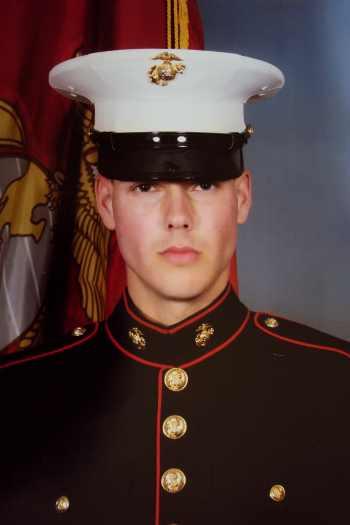
LAKE COUNTY, Calif. – Marine Corps Cpl. Jon W. Layfield returned back to the United States last month after serving a nine-month tour in Afghanistan with Marine Special Operations.
Born and raised in Kelseyville, Layfield is a 2008 graduate of Kelseyville High School.
After attending Cabrillo College in Santa Cruz, he decided to follow in his dad's footsteps and join the service.
He graduated boot camp at the Marine Corps Recruit Depot in San Diego in May 2011 and is currently stationed at Camp Lejeune in North Carolina.
Layfield is on leave visiting with family and friends, and due to return back to North Carolina next week.
His family wants to thank him for his service and let him know how proud they are of him.