 How to resolve AdBlock issue?
Veterans
- Details
- Written by: Editor
WASHINGTON, DC – The Department of Veterans Affairs has announced two new grants to support Secretary Eric K. Shinseki’s goal of ending veterans’ homelessness in 2015.
Under these new programs, homeless providers can apply for funding to enhance the facilities used to serve homeless veterans, and acquire vans to facilitate transportation of this population.
“Those who have served this nation as veterans should never find themselves on the streets, living without care and without hope,” said Secretary Shinseki. “Homeless prevention grants provide community partners with the opportunity to help prevent and end homelessness on the local level. This is a crucial tool to get at-risk veterans and their families on the road to stable, secure lives.”
Approximately $22 million in rehabilitation funds will be available to current operational grant and per diem grantees as part of the effort to increase the useful life of the facilities previously funded under the program.
VA expects current grant and per diem grantees will apply for funding to rehabilitate their current project location and enhance the safety, security and privacy issues associated with the homeless Veteran populations they serve.
A maximum of $250,000 is available per award and the award will not be more than 65 percent of the estimated total cost of the rehabilitation activity. VA has established funding priorities to support its oldest capitally funded projects.
In addition, approximately $2 million in funds will be available for current operational grant and per diem grantees to assist in the acquisition of vans in order to facilitate transportation of veteran participants to medical appointments, employment opportunities in the community, and facilitate grantees’ outreach activities.
The maximum award for a van will be $35,000. The amount of the award will not exceed 65 percent of the total cost of the van.
Applications for both awards are due to the grant and per diem office by no later than 4 p.m. Eastern time on June 28, 2013.
This funding is available under VA’s Homeless Providers Grant and Per Diem Program for current operational grant and per diem grantees.
The Grant and Per Diem Program provides community-based organizations with funding to develop and operate transitional housing and supportive services for homeless Veterans. The Grant and Per Diem Program has more than 15,000 operational transitional housing beds nationwide.
The 2012 Annual Homeless Assessment Report (AHAR) to Congress, prepared by the Department of Housing and Urban Development, estimated there were 62,619 homeless veterans on a single night in January 2012 in the United States, a 7.2 percent decline since 2011 and a 17.2 percent decline since 2009.
The AHAR reports on the extent and nature of homelessness in America. Included in the report is the annual point-in-time (PIT) count, which measures the number of homeless persons in the U.S. on a single night in January 2012, including the number of homeless veterans.
Additional information is available at http://www.va.gov/HOMELESS/GPD.asp or contact the Grant and Per Diem National Program Office at 877-332-0334.
- Details
- Written by: Editor
UPPER LAKE, Calif. – Army National Guard Pvt. Anthony Taylor has graduated from basic combat training at Fort Jackson, Columbia, S.C.
During the nine weeks of training, the soldier studied the Army mission, history, tradition and core values, physical fitness, and received instruction and practice in basic combat skills, military weapons, chemical warfare and bayonet training, drill and ceremony, marching, rifle marksmanship, armed and unarmed combat, map reading, field tactics, military courtesy, military justice system, basic first aid, foot marches, and field training exercises.
Taylor is the nephew of Hope Larnard of Emerald Terrace, Sun Prairie, Wis., and brother of Thomas Cottiero of Upper Lake.
He is a 2010 graduate of Upper Lake High School.
- Details
- Written by: Editor
The federal market is shifting due to shrinking budgets, new regulations, and the changing missions of agencies.
At the third annual Veteran Entrepreneur Training Symposium (VETS2013) in Reno, Nevada, June 10-13, vet entrepreneurs will receive the latest news and information on how these trends will impact their business and identify ways to protect their company.
The event’s Web site is http://www.veterantrainingsymposium.com/ .
The focus of this unique veteran business development event is the extraordinary variety of educational content for Veteran small business owners to choose from to meet their needs.
As such, VETS2013 offers sessions for start-up/emerging business owners with little or no experience in federal procurement and/or business ownership, as well as for mid-tier/mature veteran business owners who have already broken into the federal marketplace and are seeking knowledge to grow.
Hot topics breakouts include:
For start-up businesses
- Introduction to federal contracting;
- VA verification financing options for your small business;
- GSA's Multiple Award Schedule Program.
Ideal for mature businesses
- 2014 healthcare reform: Are you paying or playing?
- Growth beyond size standards;
- Identity theft: Impact on your company.
Keynotes who have redefined leadership:
- Justin Constantine, inspirational speaker, will discuss the value of a positive attitude, teamwork and community values in overcoming adversity.
- Commander Kirk Lippold, USN (Ret.) explains why integrity is key to success and how his Five Pillars of Leadership can help get the most out of your workforce.
- Tony Jimenez, president and CEO, MicroTech, tells his story on how he has grown his 9-year-old business into a profitable quarter-billion dollar company.
- Andre Gudger, director, Office of the Under Secretary of Defense Acquisition, Technology & Logistics, shares the DoD OSBP goals and changes in DoD acquisition policies that will impact your Veteran-owned small business.
There also will be networking opportunities, an awards luncheon and mobile vet center.
Visit the event Web site or check out its Facebook page, https://www.facebook.com/pages/Veteran-Entrepreneur-Training-Symposium-VETS/107710745972433 .
- Details
- Written by: Editor
NORTHERN CALIFORNIA – Congressman John Garamendi (D-Fairfield), a Member of the House Armed Services Committee who represents Beale and Travis Air Force bases, reported with great sadness that two Beale Airmen, Staff Sergeant Richard A. Dickson and Captain Reid K. Nishizuka, died on April 27 near Kandahar Airfield in Afghanistan following an MC-12 aircraft crash.
Sergeant Dickson was assigned to the 306th Intelligence Squadron, and Captain Nishizuka was assigned to the 427th Reconnaissance Squadron, both based out of Beale.
“Staff Sergeant Richard A. Dickson and Captain Reid K. Nishizuka served our country valiantly. These heroes served their nation until their last days, executing their mission with courage and the kind of selfless commitment that is the core of our nation’s strength,” said Congressman Garamendi.
“When they joined the Air Force, Sergeant Dickson and Captain Nishizuka knew the dangers of the job, yet they willingly put their lives on the line in service to our country. As a community and as a nation, we must rally behind their families and friends during this period of mourning. My thoughts and prayers are with them all,” Garamendi said.
- Details
- Written by: Editor
The Department of Veterans Affairs has launched a new hotline – 1-855-VA-WOMEN --to receive and respond to questions from veterans, their families and caregivers about the many VA services and resources available to women veterans.
The service began accepting calls on April 23.
“Some women veterans may not know about high-quality VA care and services available to them,” said Secretary of Veterans Affairs Eric K. Shinseki. “The hotline will allow us to field their questions and provide critical information about the latest enhancements in VA services.”
The hotline is staffed by knowledgeable VA employees who can provide information about benefits including health care services for women.
Callers can be linked to information on claims, education or health care appointments as well as information about VA cemeteries and memorial benefits. Staff can answer urgent questions and provide referrals to homeless and mental health services as well as provide Vet Center information.
Women make up nearly 15 percent of today’s active duty military and 18 percent of National Guard and Reserve forces.
The population of women veterans using VA benefits including health care is growing rapidly. Since 2000, the number of women using VA health care more than doubled, from nearly 160,000 in 2000 to more than 354,000 in 2012.
Based on the upward trend of women in all branches of service, the number of women veterans – and female VA users – will keep climbing.
VA is committed to making improvements for the growing population of women veterans, including the way it communicates with them.
In 2010, VA established an outbound call center to contact women veterans and encourage them to enroll in VA health care.
“In VA health care alone, women constitute only 6 percent of VA patients, but those veterans have a high perception of the quality care they are receiving,” said Irene Trowell-Harris, director of VA’s Center for Women Veterans.
“Many women who served don’t self-identify as veterans and therefore don’t think they qualify for VA benefits. We need to correct existing misinformation and misperceptions so we can serve more women Veterans with the benefits they’ve earned.”
Women veterans are entitled to apply for the same benefits as their male counterparts, which include health care and pharmacy benefits as well as education benefits, disability compensation, home loans, employment assistance and more.
The hotline (1-855-VA-WOMEN) joins numerous other VA hotlines that provide critical information and assistance to veterans, such as those for veterans in crisis and in danger of becoming homeless. Veterans can also receive information and apply for benefits online at VA’s www.eBenefits.va.gov and manage their health care at www.MyHealtheVet.va.gov .
- Details
- Written by: Editor
The Department of Veterans Affairs announced it is implementing an initiative to expedite compensation claims decisions for veterans who have waited one year or longer.
VA claims raters will make provisional decisions on the oldest claims in inventory, which will allow Veterans to begin collecting compensation benefits more quickly, if eligible.
Veterans will be able to submit additional evidence for consideration a full year after the provisional rating, before VA issues a final decision.
“Too many veterans wait too long for a decision, and this has never been acceptable,” said VA Secretary Eric Shinseki. “That is why we are implementing an aggressive plan to eliminate the backlog in 2015. This initiative is the right thing to do now for veterans who have waited the longest.”
Provisional decisions will be based on all evidence provided to date by the veteran or obtained on their behalf by VA. If a VA medical examination is needed to decide the claim, it will be ordered and expedited.
“Issuing provisional decisions not only provides veterans with applicable benefits much more quickly, but also gives them an additional one-year safety net to submit further evidence should it become available. Our door will remain open and if a Veteran has additional evidence, their case will be fast tracked,” said Undersecretary for Benefits Allison Hickey.
If any increase is determined to be warranted based on the additional evidence received, benefits will be retroactive to the date the claim was initially filed. The initiative protects the veteran’s right to appeal the decision.
If no further evidence is received within that year, VBA will inform the veteran that their rating is final and provide information on the standard appeals process, which can be found at http://www.bva.va.gov/ .
Throughout this initiative, VA will continue to prioritize claims for homeless veterans and those claiming financial hardship, the terminally ill, former prisoners of war, Medal of Honor recipients, and veterans filing fully developed claims.
More information about filing fully developed claims is available at: http://www.benefits.va.gov/transformation/fastclaims/ .
Claims for Wounded Warriors separating from the military for medical reasons will continue to be handled separately and on a priority basis with the Department of Defense through the Integrated Disability Evaluation System (IDES). Wounded Warriors separating through IDES currently receive VA compensation benefits in an average of 61 days following their separation from service.
As a result of this initiative, metrics used to track benefits claims will experience significant fluctuations.
The focus on processing the oldest claims will cause the overall measure of the average length of time to complete a claim – currently 286 days – to skew, rising significantly in the near term because of the number of old claims that will be completed.
Over time, as the backlog of oldest claims is cleared and more of the incoming claims are processed electronically through VA’s new paperless processing system, VA’s average time to complete claims will significantly improve. In addition, the average days pending metric – or the average age of a claim in the inventory – will decrease, since the oldest claims will no longer be part of the inventory.
While compensation claims are pending, eligible Veterans are able to receive health care and other benefits from VA.
Veterans who have served in recent conflicts are eligible for five years of free health care from VA. Currently, more than 55 percent of returning Iraq and Afghanistan veterans are using VA health care, a rate of utilization greater than previous generations of veterans.
Veterans can learn more about disability benefits on the joint Department of Defense-VA Web portal eBenefits at https://www.ebenefits.va.gov/ebenefits-portal/ebenefits.portal .
- Details
- Written by: Editor
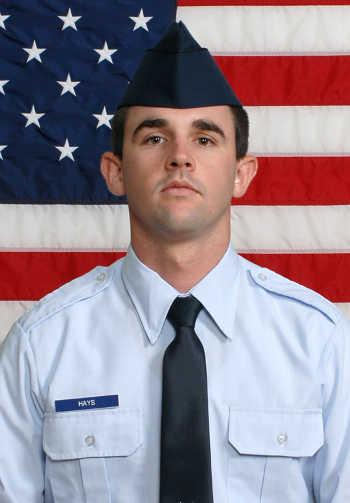
HIDDEN VALLEY LAKE, Calif. – Air Force Airman John S. Hays graduated from basic military training at Lackland Air Force Base, San Antonio, Texas.
The airman completed an intensive, eight-week program that included training in military discipline and studies, Air Force core values, physical fitness, and basic warfare principles and skills.
Airmen who complete basic training earn four credits toward an associate in applied science degree through the Community College of the Air Force.
Hays is the son of Corinne and Ronald Hays of Hidden Valley Lake, Calif.
He is a 2010 graduate of Middletown High School in Middletown, Calif.
- Details
- Written by: Editor
The California Department of Veterans Affairs (CalVet) announces grant funding opportunities for California veterans service organizations.
These grant funds are made available by the Federal government and by private foundations and will be awarded to qualifying veterans service organizations that successfully apply.
The grants are intended to support for programs in the areas of education, employment, housing, and health/mental health with an emphasis on activity-duty service members, veterans and their families.
“These funds provide the opportunity for large and small veterans service organizations alike to enhance their service to veterans and their families,” said CalVet Secretary Peter J. Gravett. “I encourage you to apply for any and all grants available to your organization.”
Possible funding opportunities are divided into the following categories for veterans:
- Education funding opportunities;
- Employment funding opportunities;
- Housing funding opportunities;
- Health care/mental health funding opportunities.
For a more complete description of the funds available, funders, eligibility requirements and links to the grant applications, visit www.calvet.ca.gov/Files/Resources/VeteransOrganizationsGrantOpportunities.pdf .
- Details
- Written by: Editor
With the Senate set to vote on a comprehensive gun-violence prevention bill, a new poll released Friday and commissioned by the Center for American Progress Action Fund and VoteVets.org leaves no doubt that veterans believe the president and Congress need to do something to address gun violence.
The nationwide survey of 804 registered voters who are veterans of the military illustrates that veterans believe it is possible to strengthen the country’s gun laws while continuing to protect the right to bear arms.
“When you carry a gun in a war zone as I did, you come to understand the awesome responsibility and risk that comes with owning a firearm,” said former Rep. Patrick Murphy (D-PA), a Senior Fellow at the Center for American Progress Action Fund and a veteran of the first Iraq War. “I cherish the right to bear arms here at home, but I also understand that with this right comes responsibility – especially the responsibility of comprehensive background checks so that we can keep guns out of the hands of criminals, domestic abusers, and the dangerously mentally ill.”
“On the issue of gun violence, there is no daylight between what veterans believe and what the American public believes – specifically, that this is a crisis, and something needs to be done,” said Jon Soltz, Iraq War veteran and chairman of VoteVets.org. “The veterans we polled tend to identify as Republican and aren’t predisposed to disliking the NRA, and yet, their level of support for the major anti-gun-violence measures being proposed is extremely high. We’ve seen what assault weapons can do, up close and firsthand. Many of us even own weapons. And yet we recognize that reasonable measures to combat gun violence can be consistent both with the Second Amendment and protecting American lives.”
Key findings from the poll include:
- 85 percent of veterans believe it is important for national leaders in Washington, D.C., to address the issue of gun violence; 39 percent say it’s extremely important, 24 percent say it’s very important, and 22 percent say it’s somewhat important.
- The vast majority of veterans – 85 percent – agree that, “We can protect responsible gun owners’ Second Amendment rights while still making it more difficult for criminals and other dangerous people to obtain guns.” This includes 43 percent who strongly agree.
- In addition, while veterans’ opinions of the National Rifle Association are somewhat split, there are more veterans with a favorable than an unfavorable view – 43 percent favorable to 36 percent unfavorable.
Two of the four proposed changes to the country’s gun laws that are being considered on Capitol Hill receive near unanimous support and a high level of intensity among veteran voters.
- More than 9 in 10 veterans – 91 percent – support requiring a criminal background check of every person who wants to buy a firearm, including 74 percent who strongly support it.
- Nearly all veterans – 99 percent – support increasing criminal penalties for people convicted of illegally trafficking guns to criminals, including 91 percent who strongly support it.
The other proposed changes to the country’s gun laws are also supported by a strong majority of veteran voters.
- More than 6 in 10 veterans – 61 percent – support banning high-capacity ammunition magazines, including 45 percent who strongly support it.
- Nearly 6 in 10 veterans – 58 percent – support banning assault-style weapons, including 40 percent who strongly support it.
On Thursday Rep. Mike Thompson (D-CA), former Rep. Murphy, and Soltz stood with fellow veterans from across the country to discuss the new survey and to call on Congress to do more to keep guns out of the hands of dangerous individuals.
“As today’s study shows, America’s heroes who have carried guns in defense of our nation overwhelmingly agree that it’s time for Congress to act to reduce gun violence; I’m one of them,” said Rep. Thompson. “As a Vietnam veteran, hunter, and gun owner, I know that we can keep guns from criminals and the dangerously mentally ill, and respect the Second Amendment rights of law-abiding Americans. The best way to do this is by expanding background checks. Background checks are the first line of defense against guns getting in the hands of those we all agree shouldn’t have them.”