 How to resolve AdBlock issue?
Veterans
- Details
- Written by: Editor
For the third year in a row, the California Department of Veterans Affairs (CalVet) has secured a AA- rating from Fitch Ratings, a global rating agency.
The 'AA-' rating reflects the above-average amount of retained earnings in the program which are equal to 12.7 percent of bonds outstanding and 13.5 percent of loans outstanding in FY 2012, which increased from 11.6 percent and 11.8 percent, respectively, in FY 2011.
This is the third straight year of increases albeit due to decreasing bond and loan balances. CalVet is one of very few state agencies that can claim this high rating.
“I am very pleased that given the difficult economic times our nation is experiencing, CalVet has been able to hold on to its AA- rating from Fitch Ratings,” said Peter J. Gravett, CalVet Secretary. “The downturn in the housing market has greatly affected the CalVet Farm and Home Loan program, but thanks to the diligence of its staff, the program continues to be viable and secure.”
Although Fitch Ratings continues to project a negative outlook for the program, CalVet is confident that its Farm and Home Loan program will perform much better over the next few months given that the economy is showing signs of improving.
As the housing market continues to rebound, CalVet is poised to provide qualified veterans with a much better option for purchasing a farm or home in California than in the private sector.
- Details
- Written by: Editor
KELSEYVILLE, Calif. – The American Legion will hold a pancake breakfast on Sunday, Jan. 13.
The breakfast will take place from 8 a.m. to 11 a.m. at the Kelseyville Lions Club, 4335 Sylar Lane.
The menu will include pancakes, sausage, biscuits, gravy and eggs, with beverage choices of coffee and juice.
The suggested donation is $7 per person.
Come enjoy a hearty breakfast and support local veterans.
For more information call 707-279-2411.
- Details
- Written by: Editor
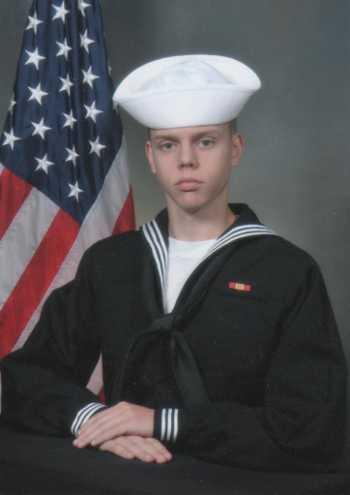
HIDDEN VALLEY LAKE, Calif. – Brandon Tyler King of Hidden Valley Lake has graduated from Navy boot camp.
His family reported that King, a 2012 graduate of Middletown High School, graduated from basic training on Sept. 21.
He will be graduating from “A” school in February before continuing his schooling in Pensacola, Fla., where he will attend “C” school to study to be a naval IT specialist.
King recently came home for a brief visit during the New Year’s festivities after five months away.
After his six years in the Navy, King’s goal is to finish his degrees and become a member of the Federal Bureau of Investigation.
He is the son of Mr. and Mrs. Greg Eixenberger of Hidden Valley Lake and Steven King of Kent, Wash.
- Details
- Written by: Editor
The Department of Veterans Affairs announced it is cutting red tape for veterans by eliminating the need for them to complete an annual Eligibility Verification Report (EVR).
VA will implement a new process for confirming eligibility for benefits, and staff that had been responsible for processing the old form will instead focus on eliminating the compensation claims backlog.
Historically, beneficiaries have been required to complete an EVR each year to ensure their pension benefits continued.
Under the new initiative, VA will work with the Internal Revenue Service (IRS) and the Social Security Administration (SSA) to verify continued eligibility for pension benefits.
“By working together, we have cut red tape for veterans and will help ensure these brave men and women get the benefits they have earned and deserve,” said Secretary of Veterans Affairs Eric K. Shinseki.
VA estimates it would have sent nearly 150,000 EVRs to beneficiaries in January 2013. Eliminating these annual reports reduces the burden on veterans, their families, and survivors because they will not have to return these routine reports to VA each year in order to avoid suspension of benefits.
It also allows VA to redirect more than 100 employees that usually process EVRs to work on eliminating the claims backlog.
“Having already instituted an expedited process that enables wounded warriors to quickly access Social Security disability benefits, we are proud to work with our federal partners on an automated process that will make it much easier for qualified Veterans to maintain their VA benefits from year to year,” said Michael J. Astrue, commissioner of Social Security.
“The IRS is taking new steps to provide critical data to help speed the benefits process for the nation’s Veterans and Veterans Affairs,” said Beth Tucker, IRS deputy commissioner for Operations Support. “The IRS is pleased to be part of a partnership with VA and SSA that will provide needed data quickly and effectively to move this effort forward.”
All beneficiaries currently receiving VA pension benefits will receive a letter from VA explaining these changes and providing instructions on how to continue to submit their unreimbursed medical expenses.
More information about VA pension benefits is available at http://www.benefits.va.gov/pension and other VA benefit programs on the joint Department of Defense-VA Web portal eBenefits at www.ebenefits.va.gov .
- Details
- Written by: Editor
American Indian and Alaska Native veterans will soon have increased access to health care services closer to home following a recent Department of Veterans Affairs and Indian Health Service (IHS) joint national agreement.
“There is a long, distinguished tradition of military service among tribes,” said Secretary of Veterans Affairs Eric K. Shinseki. “VA is committed to expanding access to native veterans with the full range of VA programs, as earned by their service to our nation.”
“The president has called on all cabinet secretaries to find better ways to provide our military families with the support they deserve, and that is exactly what we are doing today,” said Kathleen Sebelius, secretary of the U.S. Department of Health and Human Services. “American Indian and Alaska Native veterans benefit from this agreement, which provides increased options for health care services.”
As a result of the national agreement, VA is now able to reimburse the IHS for direct care services provided to eligible American Indian and Alaska Native veterans.
While the national agreement applies only to VA and IHS, it will inform agreements negotiated between the VA and tribal health programs.
VA copayments do not apply to direct care services provided by IHS to eligible American Indian and Alaska Native veterans under this agreement.
“The VA and IHS, in consultation with the federally-recognized tribal governments, have worked long and hard to come to an equitable agreement that would ensure access to quality health care would be made available to our nation’s heroes living in tribal communities,” said Dr. Robert Petzel, undersecretary for health, Veterans Health Administration. “This agreement will also strengthen VA, IHS and tribal health programs by increasing access to high-quality care for native veterans, particularly those in highly rural areas.”
“This reimbursement agreement between the VA and the IHS will help improve health care services for American Indian and Alaska Native veterans and further the IHS mission and federal responsibility of raising the health status of American Indians and Alaska Natives to the highest level possible,” said Dr. Yvette Roubideaux, director of the Indian Health Service. “This IHS-VA agreement will allow our federal facilities to work with the VA more closely as we implement this critical provision in the recently reauthorized Indian Health Care Improvement Act, passed as part of the Affordable Care Act.”
The agreement between the two agencies marks an important partnering achievement for VA and the IHS and is consistent with the administration’s goal to increase access to care for veterans.
To view the national agreement, visit www.va.gov .
To find out additional information about American Indian and Alaska Native veteran programs, visit www.va.gov/tribalgovernment and http://www.his.gov/ .
- Details
- Written by: Editor
The Department of Veterans Affairs is publishing a proposed regulation in the Federal Register that would change its rules to add five diagnosable illnesses which are secondary to service-connected Traumatic Brain Injury (TBI).
“We must always decide veterans’ disability claims based on the best science available, and we will,” Secretary of Veterans Affairs Eric K. Shinseki said. “Veterans who endure health problems deserve timely decisions based on solid evidence that ensure they receive benefits earned through their service to the country.”
VA proposes to add a new subsection to its adjudication regulation by revising 38 CFR 3.310 to state that if a veteran who has a service-connected TBI also has one of the five illnesses, then the illness will be considered service connected as secondary to the TBI.
Service connection under the proposed rule depends in part upon the severity of the TBI (mild, moderate, or severe) and the period of time between the injury and onset of the secondary illness.
However, the proposed rule also clarifies that it does not preclude a veteran from establishing direct service connection even if those time and severity standards are not met. It also defines the terms mild, moderate, and severe, consistent with Department of Defense (DoD) guidelines.
Comments on the proposed rule will be accepted through the start of February. A final regulation will be published after consideration of all comments received.
VA’s decision is based on a report by the National Academy of Sciences, Institute of Medicine (IOM), “Gulf War and Health, Volume 7: Long-Term Consequences of TBI.”
In its report, the IOM’s Committee on Gulf War and Health concluded that “sufficient evidence of a causal relationship” – the IOM’s highest evidentiary standard – existed between moderate or severe levels of TBI and diagnosed unprovoked seizures.
The IOM found “sufficient evidence of an association” between moderate or severe levels of TBI and Parkinsonism; dementias (which VA understands to include presenile dementia of the Alzheimer type and post-traumatic dementia); depression (which also was associated with mild TBI); and diseases of hormone deficiency that may result from hypothalamo-pituitary changes.
Specific information about the Defense and Veteran Brain Injury Center is available at http://www.dvbic.org/ .
Information about Gulf War and VA’s services and programs are available at http://www.publichealth.va.gov/exposures/gulfwar/hazardous_exposures.asp .
- Details
- Written by: Editor
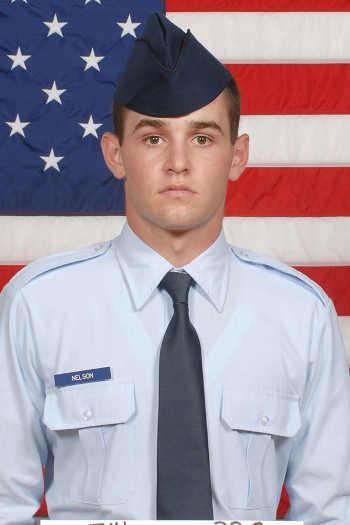
Air Force Airman Cody A. Nelson graduated from basic military training at Lackland Air Force Base, San Antonio, Texas.
The airman completed an intensive, eight-week program that included training in military discipline and studies, Air Force core values, physical fitness, and basic warfare principles and skills.
Airmen who complete basic training earn four credits toward an associate in applied science degree through the Community College of the Air Force.
Nelson earned distinction as an honor graduate.
He is the son of Jennifer Mandeville of Kelseyville, Calif.
The airman is a 2009 graduate of Kelseyville High School.
- Details
- Written by: Editor
The Departments of Veterans Affairs and Housing and Urban Development (HUD) said a new national report shows that homelessness among veterans has been reduced by approximately 7 percent between January 2011 and January 2012.
The decline keeps the Obama Administration on track to meet the goal of ending veteran homelessness in 2015.
“This report continues a trend that clearly indicates we are on the right track in the fight to end homelessness among veterans. While this is encouraging news, we have more work to do and will not be satisfied until no veteran has to sleep on the street,” said Secretary of Veterans Affairs Eric K. Shinseki. “The success we have achieved is directly attributable to the hard work by all of our staff, and the federal, state, and community partners who are committed to ending veteran homelessness.”
HUD Secretary Shaun Donovan added, “This decline tells us that the Obama Administration is on the right path, working together across agencies to target federal resources to produce a measurable reduction in veteran homelessness. Key to this success has been VA and HUD’s implementation of the Housing First approach endorsed by the administration’s strategic plan to prevent and end homelessness. As our nation’s economic recovery takes hold, we will make certain that our homeless veterans find stable housing so they can get on their path to recovery.”
The 2012 Annual Homeless Assessment Report (AHAR) to Congress, prepared by HUD, estimates there were 62,619 homeless veterans on a single night in January in the United States, a 7.2 percent decline since 2011 and a 17.2 percent decline since 2009.
The AHAR reports on the extent and nature of homelessness in America. Included in the report is the annual Point-in-Time (PIT) count, which measures the number of homeless persons in the U.S. on a single night in January 2012, including the number of homeless veterans.
VA has made ending veteran homelessness by the end of 2015 a top priority, undertaking an unprecedented campaign to dramatically increase awareness of VA services available for homeless veterans and veterans at risk of becoming homeless.
While the number of homeless people in the U.S. dropped by less than 1 percent, according to the 2012 AHAR, veteran homelessness has shown a more robust decline.
VA also announced the availability of $300 million in grants for community organizations, estimated to serve approximately 70,000 veterans and their family members facing homelessness.
The deadline for applying to the Supportive Services for Veteran Families (SSVF) program, a homelessness prevention and rapid re-housing program, is Feb. 1, 2013.
“Homeless prevention grants provide community partners with the opportunity to help prevent and end homelessness on the local level,” said Secretary Shinseki. “This is a crucial tool in getting at-risk veterans and their families on the road to stable, secure lives. ”
SSVF grants promote housing stability among homeless and at-risk veterans and their families. The grants can have an immediate impact, helping lift veterans out of homelessness or providing aid in emergency situations that put veterans and their families at risk of homelessness.
Through September 2012, SSVF has aided approximately 21,500 veterans and over 35,000 individuals. Since SSVF is able to help the veteran’s family, 8,826 children were also assisted, helping veterans keep their families housed and together.
Grantees provide a range of supportive services to very low-income veteran families living in or transitioning to permanent housing, including case management, legal assistance, financial counseling, transportation, child care, rent, utilities and other services aimed at preventing homelessness.
The availability of SSVF funds was announced in a Notice of Funding Availability (NOFA) posted in the Federal Register and on VA’s SSVF Web site at www.va.gov/homeless/ssvf.asp .
A video on www.va.gov/homeless/ssvf.asp offers guidance for community organizations interested in applying for SSVF funds.
Community organizations seeking more information on the SSVF program may also contact VA at 1-877-737-0111 or at
- Details
- Written by: Editor
Navy Petty Officer 3rd Class Joshua M. Hebert has graduated from the U.S. Navy’s Nuclear Power School at Naval Nuclear Power Training Command in Goose Creek, S.C.
Nuclear Power School is a rigorous six-month course that trains officer and enlisted students in the science and engineering fundamental to the design, operation, and maintenance of naval nuclear propulsion plants.
Graduates next undergo additional instruction at a prototype training unit before serving as a Surface Warfare Officer aboard a nuclear-powered surface ship or as an Electronics Technician aboard a nuclear-powered submarine.
Hebert is the son of Linda and Stephen Hebert of Hidden Valley Lake, Calif.
He is a 2007 graduate of Clear Lake High School, Lakeport, Calif.