How to resolve AdBlock issue?
Refresh this page
How to resolve AdBlock issue?
Refresh this page
Lake County News,California
  • Home
    • Registration Form
  • News
    • Education
    • Veterans
    • Community
      • Obituaries
      • Letters
      • Commentary
    • Police Logs
    • Business
    • Recreation
    • Health
    • Religion
    • Legals
    • Arts & Life
    • Regional
  • Calendar
  • Contact us
    • FAQs
    • Phones, E-Mail
    • Subscribe
  • Advertise Here
  • Login
How to resolve AdBlock issue?
Refresh this page

News

An aging nation: U.S. median age surpassed 39 in 2024

Details
Written by: Kristie Wilder and Paul Mackun
Published: 21 July 2025


The U.S. median age — the age at which half the population is aged above and the other half below — has increased by 0.6 years from April 2020 to July 2024 when it reached 39.1, according to U.S. Census Bureau population estimates.

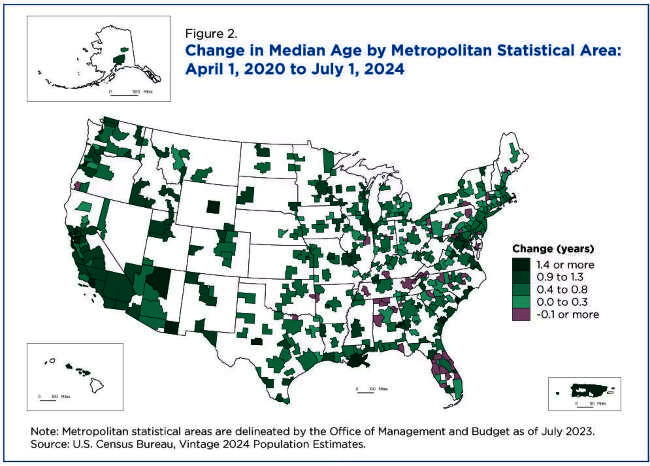
Between April 2020 and July 2024, the median age rose in 329 of the nation’s 387 metro areas. At the same time, 47 metro areas experienced a decline in median age — many of which were in the South, including some in Florida.

Given that nearly 294 million people (86% of the U.S. population) lived in one of the nation’s 387 metro areas in 2024, many metro areas saw an increase in their median ages, too.

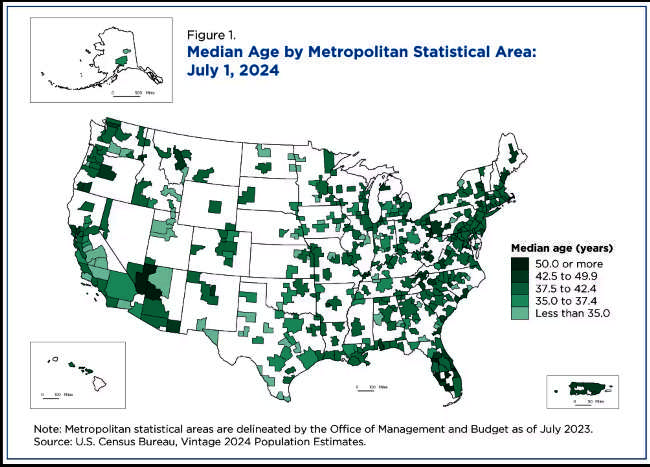
Median ages in metro areas in 2024 ranged between 26.4 and 68.1, with 192 metro areas having a median age higher than the nation’s.

Many of the metro areas with the highest median ages were in Florida and Arizona, both popular retirement destinations (Figure 1).

Metro areas with the lowest median ages tended to have one of two things: a relatively high proportion of young adults, often due to the presence of a college/university or large military installation; or a relatively high proportion of children. Some had both.

Metro area aging trends

Between April 2020 and July 2024, the median age rose in 329 of the nation’s 387 metro areas (Figure 2). 

At the same time, 47 metro areas experienced a decline in median age — many of which were in the South, including some in Florida. 

The median ages of 11 metro areas did not change during the period.

Metro areas with oldest and youngest median ages

The median age increase in many metro areas aligned with the national aging trend: 61.2 million people aged 65 and over lived in the United States in 2024, up 13% from 54.2 million in 2020, in contrast to a decline in the number of children (ages 0 to 17).

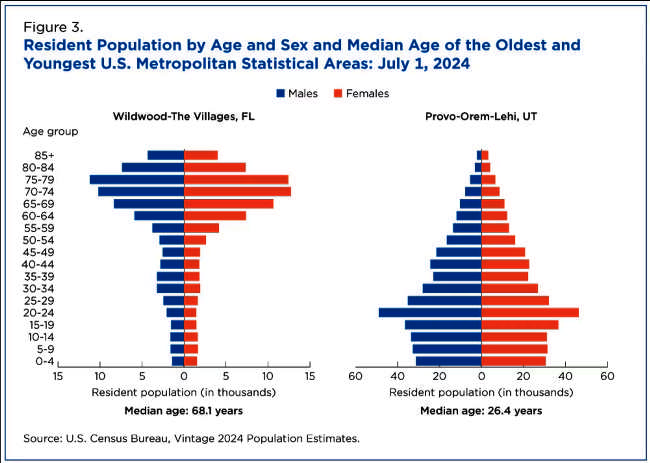
The metro area with the highest median age in 2024 (68.1) was Wildwood-The Villages, FL, where 57% of the population was 65 and older reflecting the presence of a large retirement community. 

Two other Florida metro areas — Punta Gorda and Homosassa Springs — followed closely with the second- (60.1) and third-highest (56.8) median ages, respectively. More than 35% of both populations were 65 and older.

Metro areas with the youngest median age were in Provo-Orem-Lehi, UT (26.4 years) and Logan, UT-ID (27). Both metro areas have a large university.

The result was two vastly different age structures in the nation’s oldest and youngest metro areas in 2024: Older adults dominated the population in Wildwood-The Villages, while there was a higher share of children and young adults in Provo-Orem-Lehi (Figure 3).

Rising and falling median ages

Some metro areas with relatively large shares of the aging population experienced sharper increases in median age than others. 

For instance, South Carolina’s Hilton Head Island-Bluffton-Port Royal and Myrtle Beach-Conway-North Myrtle Beach metro areas had the largest median age hikes from 2020 to 2024: 3.1 and 2.1 years, respectively.

Despite growth in the 65-and-older demographic, the median age in 47 metro areas decreased between 2020 and 2024. 

While the United States is characterized by its increasingly large older adult population — a byproduct of factors such as a sizable baby boomer population and declining 0-17 demographic — these exceptions underscore that age patterns can differ, especially in some fast-growing metro areas.

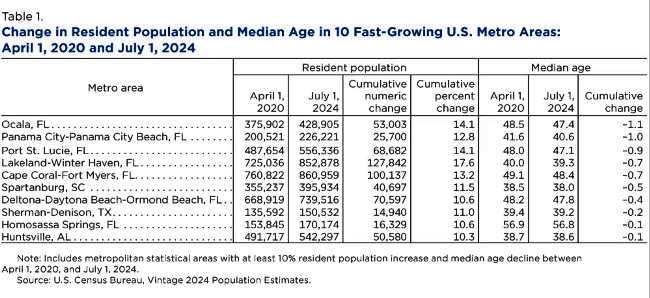
Between 2020 and 2024, 10 metro areas – all of them in the South and seven in Florida – had their total populations rise by at least 10% and their median ages drop (Table 1).

For instance:

Ocala, FL, saw a 14.1% increase in population while its median age dropped by 1.1 years to 47.4.

Lakeland-Winter Haven, FL, and Cape Coral-Fort Myers, FL, had respective population gains of 17.6% and 13.2% and median age dips of 0.7 years to 39.3 and 48.4, respectively.

The population of Sherman-Denison, TX, increased by 11.0%, while its median age went down 0.2 years to 39.2.

In those 10 metro areas, where positive net domestic migration tended to play an important role in their population growth, increases in the number of children and the younger adult population at least partially helped offset aging patterns. 

That resulted in a decline in median age even amid growth in the number of older adults. This contrast underscores a more nuanced picture of the intersection of population growth and aging in U.S. metro areas.

Kristie Wilder is a demographer and Paul Mackun is a geographer in the Census Bureau’s Population Estimates Branch.

Fatality reported in crash near Bartlett Springs

Details
Written by: Elizabeth Larson
Published: 20 July 2025
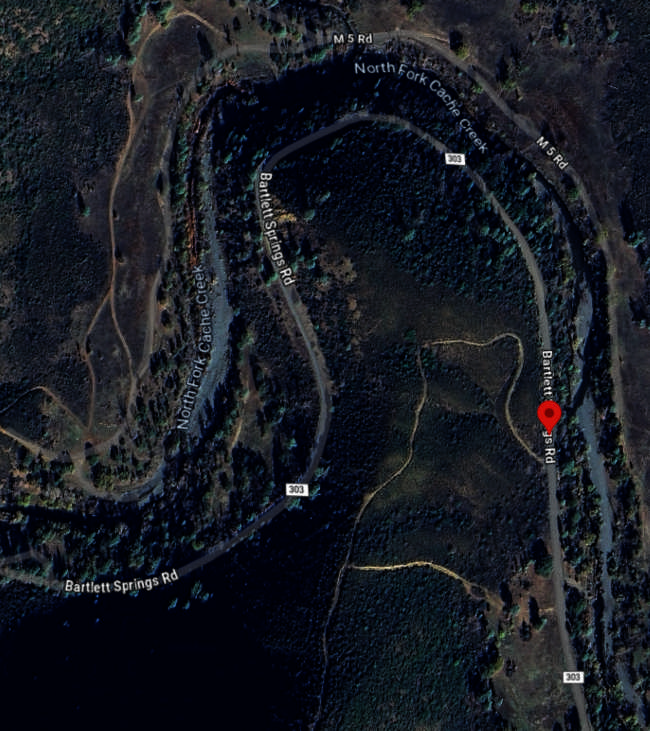
A Google map showing the site of a fatal wreck near Bartlett Springs in Lake County, California, on Saturday, July 19, 2025. 

LAKE COUNTY, Calif. — One person was reported to have been killed in a solo-vehicle crash on Saturday afternoon in a remote part of Lake County.

The wreck, involving a Ford Raptor pickup, occurred shortly before 3:15 p.m. Saturday on Bartlett Springs Road above Lucerne.

The initial dispatch stated there was one subject trapped in a tree and another was with the vehicle about 10 feet over the embankment.

The California Highway Patrol’s online incident reports stated that the pickup was wrapped around a tree.

In addition to Northshore Fire, units from Williams Fire and Cal Fire responded. Cal Fire sent its helicopter from the Boggs Helitack to assist with the rescue, and the California Highway Patrol’s copter also was requested but later canceled.

Shortly before 4 p.m., units on scene stated over the air that there was a fatality.

The CHP left the scene around 7:30 p.m., but other units stayed on scene until the early morning hours on Sunday waiting for a tow truck to remove the pickup.

Another serious solo-vehicle crash occurred on Bartlett Springs Road east of Walker Ridge Road just before 9:30 p.m., according to the CHP and radio traffic.

That rollover crash was reported to have involved four individuals, with one being unconscious.

The injured individual was set to be flown by air ambulance to a regional trauma center.

Email Elizabeth Larson at This email address is being protected from spambots. You need JavaScript enabled to view it.. Follow her on Twitter, @ERLarson, and on Bluesky, @erlarson.bsky.social. Find Lake County News on the following platforms: Facebook, @LakeCoNews; X, @LakeCoNews; Threads, @lakeconews, and on Bluesky, @lakeconews.bsky.social. 

Clawback of $1.1B for PBS and NPR puts rural stations at risk – and threatens a vital source of journalism

Details
Written by: Allison Perlman, University of California, Irvine and Josh Shepperd, University of Colorado Boulder
Published: 20 July 2025

Nathan Heffel and Grace Hood rehearse their Colorado Public Radio public affairs program in Centennial, Colo., in 2017. Andy Cross/The Denver Post via Getty Images

The U.S. Senate and the House of Representatives approved by narrow margins on July 17 and 18, 2025, a law that claws back federal funding for the Corporation for Public Broadcasting. Once President Donald Trump signs it into law, the US$9 billion rescissions package will withdraw $1.1 billion Congress had previously approved for the Corporation for Public Broadcasting, which distributes money to NPR, PBS and their affiliate stations, to receive in the 2026 and 2027 fiscal years.

In addition, it makes deep foreign aid cuts. All Democrats present voted against the measure in both chambers. They were joined in the Senate by two Republicans: Sens. Susan Collins of Maine and Lisa Murkowski of Alaska. Two House Republicans also voted no: Michael R. Turner of Ohio and Brian Fitzpatrick of Pennsylvania. The Conversation U.S. asked Allison Perlman and Josh Shepperd, who are both media scholars, to explain why the measure will have a big impact on public broadcasters.

What will happen to NPR, PBS and local stations?

NPR and PBS provide programming to local public television and radio stations across the country. The impact on them will be direct and indirect.

Both NPR and PBS receive money from the Corporation for Public Broadcasting, an independent nonprofit corporation Congress created in 1967 to receive and distribute federal money to public broadcasters. More than 70% of the money it distributes flows directly to local stations. Some stations get up to half of their budgets from the CPB.

But NPR and PBS get much of their funding from foundation grants, viewers’ and listeners’ donations, and corporate underwriting. And local public radio and TV stations also get support from an array of sources besides CPB.

“There’s nothing more American than PBS,” said the network’s CEO, Paula Kerger, at a congressional hearing on March 26, 2025.

Only about 1% of NPR funding, and 15% of PBS funding, comes directly from the government via the CPB. However, once local radio and television stations lose federal funding, they’ll be less able to pay NPR and PBS for the programs they produce.

The nearly 1,500 public media stations in the U.S. rely on a mix of NPR, PBS and third-party producer programming, such as American Public Media and PRX, for the programs they offer. Local stations also produce and air regional news and provide emergency broadcasts for the government.

In rural areas with few broadcast stations and spotty cellphone coverage, public broadcast stations are vital sources of information about important community news and updates during emergencies. Federal support is essential for the programming and day-to-day operations of many local stations and allows for the maintenance of equipment and personnel to operate these vital community resources.

We believe that stations in communities that most need them, especially in rural locations, will be hit especially hard because they rely heavily on CPB funding.

Why are Republicans taking this step?

Public broadcasting has long been a target of conservative Republicans.

They say that with a highly diversified media landscape, the public no longer needs media that is subsidized by federal dollars. They also claim that public broadcasting has a liberal bias and taxpayers should not be required to fund media that slants to the left politically.

Why is public media necessary when there’s news on the internet?

As journalism revenue has plummeted, public broadcasting has remained a vital source for news in communities across the nation. This is especially true in rural communities, where economic and political pressures have threatened the survival of local journalism.

In addition, with much online news coverage placed behind paywalls, public radio and television plays an important role in making quality journalism available to the American public.

An online ad for a program, 'Water News,' on a public radio station.
Want crucial information about water systems in your drought-prone community? Public radio station KVMR in Nevada City, Calif., has a program for you. KVMR screenshot

Why did Congress approve these funds 2 years ahead?

Public broadcasting has gotten roughly $550 million per year from the federal government in recent years.

The CPB has always approved and designated those funds two years in advance, due to a provision in the Public Broadcasting Act of 1967, after Congress has voted to provide that money. The CPB then has distributed that funding primarily through grants to PBS and NPR affiliate stations to support their technical infrastructure, program development and audience research.

What are the consequences for Native communities?

Dozens of Native American stations are at risk of closing once the CPB is defunded. Native Public Media, a network of 57 radio stations and four TV stations, is a key source of news and information for tribal communities across the nation and relies on CPB support.

U.S. Sen. Mike Rounds, a South Dakota Republican, publicly stated that he secured an agreement with the White House to move $9.4 million in Interior Department funding to two dozen Native American stations. But there is no provision related to this promise within the legislation.

This article was updated after the House passed the measure.The Conversation

Allison Perlman, Associate Professor of Film & Media Studies, University of California, Irvine and Josh Shepperd, Associate Professor of Media Studies, University of Colorado Boulder

This article is republished from The Conversation under a Creative Commons license. Read the original article.


Helping Paws: Shepherds, pit bulls and terriers

Details
Written by: Elizabeth Larson
Published: 20 July 2025

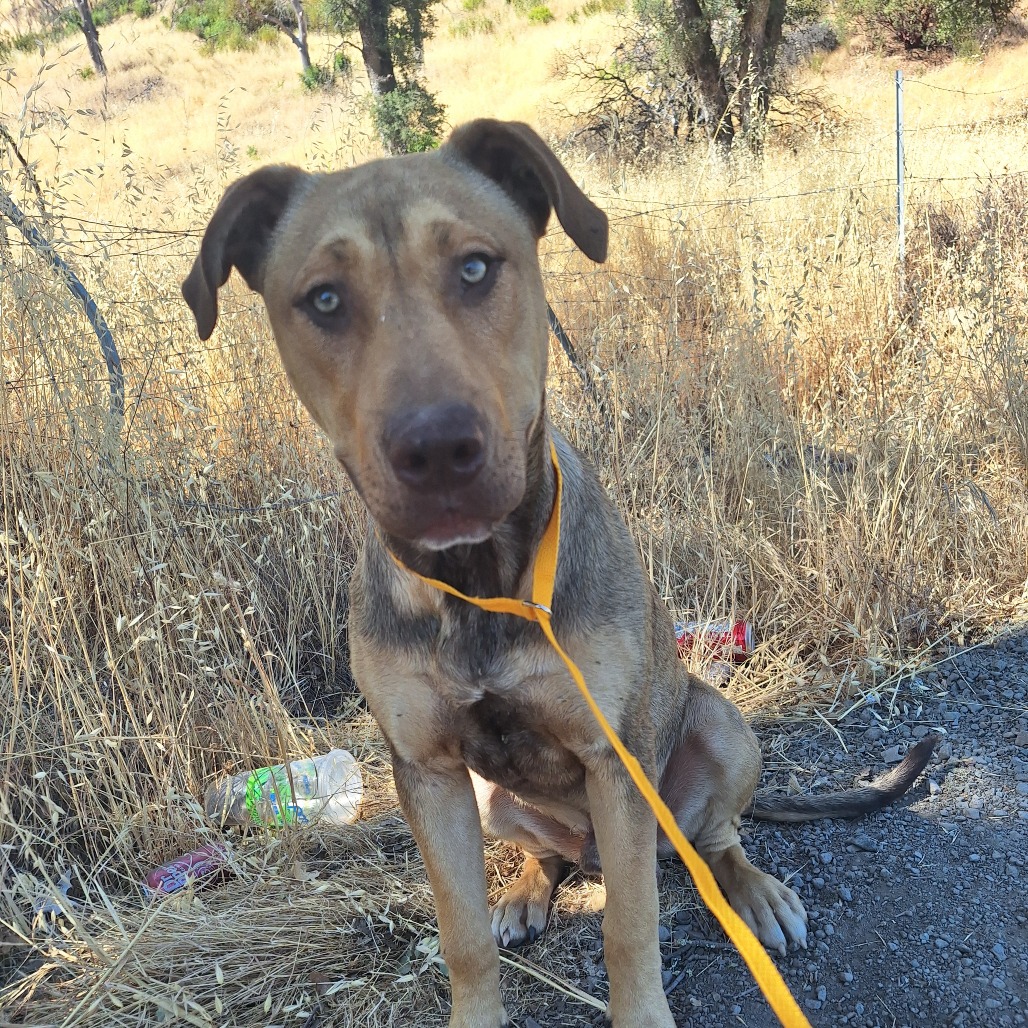
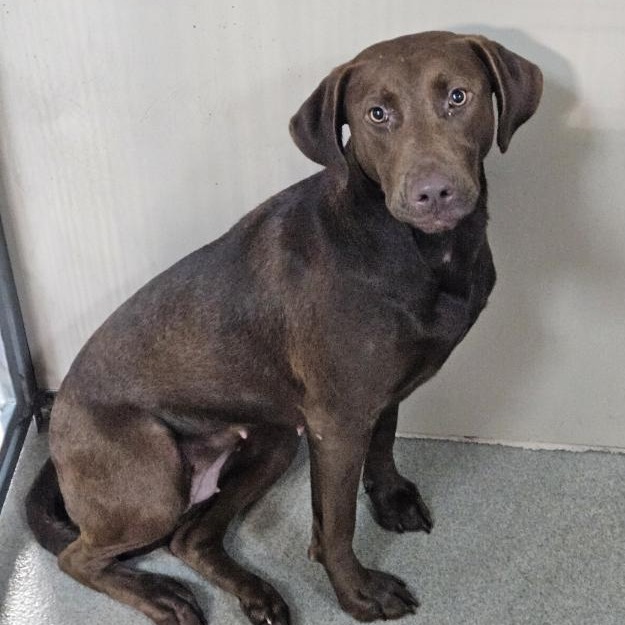
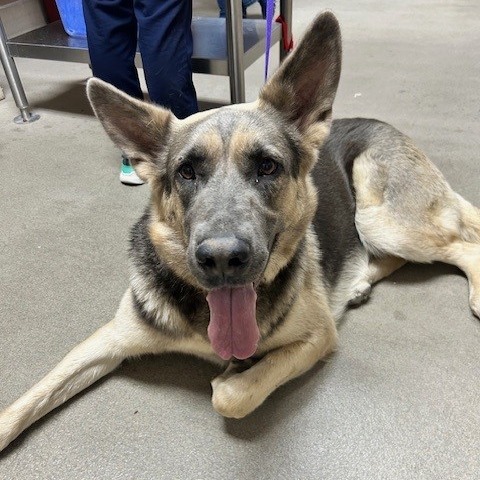
LAKE COUNTY, Calif. — Lake County Animal Care and Control has a varied group of dogs ready for adoption this week.

The dogs available for adoption this week include mixes of border collie, German shepherd, husky, Labrador Retriever, pit bull terrier, terrier and shepherd.

Dogs that are adopted from Lake County Animal Care and Control are either neutered or spayed, microchipped and, if old enough, given a rabies shot and county license before being released to their new owner. License fees do not apply to residents of the cities of Lakeport or Clearlake.

Those animals shown on this page at the Lake County Animal Care and Control shelter have been cleared for adoption.

Call Lake County Animal Care and Control at 707-263-0278 or visit the shelter online for information on visiting or adopting.

The shelter is located at 4949 Helbush in Lakeport.

Email Elizabeth Larson at This email address is being protected from spambots. You need JavaScript enabled to view it.. Follow her on Twitter, @ERLarson, and on Bluesky, @erlarson.bsky.social. Find Lake County News on the following platforms: Facebook, @LakeCoNews; X, @LakeCoNews; Threads, @lakeconews, and on Bluesky, @lakeconews.bsky.social. 

Desiree's preview photo
Desiree

Tiger's preview photo
Tiger

Cub's preview photo
Cub

Diamond's preview photo
Diamond

Sky 's preview photo
Sky

Carmen's preview photo
Carmen

Saphire's preview photo
Saphire

Scrappy's preview photo
Scrappy
Jax's preview photo
Jax

Bear's preview photo
Bear

 
Tilly's preview photo
Tilly

Kennel #11a's preview photo
Kennel #11a

Kennel #11b's preview photo
Kennel #11b

Enty's preview photo
Enty

Romeo's preview photo
Romeo
 
Hunter's preview photo
Hunter

Kristoph's preview photo
Kristoph

Lucky's preview photo
Lucky

 
Tanner's preview photo
Tanner

Kennel#31's preview photo
Kennel#31

Kennel#13's preview photo
Kennel#13

Helen's preview photo
Helen

Foster#10871's preview photo
Foster#10871

Kennel #24's preview photo
Kennel #24

Kennel#27's preview photo
Kennel#27

Nala's preview photo
Nala

Kennel #15a(Pitbull)'s preview photo
Kennel #15a(Pitbull)

Kennel #15b(Hercules)'s preview photo
Kennel #15b(Hercules)
  1. Space News: For the first time, astronomers witness the dawn of a new solar system
  2. Major injury crash sends three to hospitals
  3. Lake County Library to offer Career Online High School
  • 284
  • 285
  • 286
  • 287
  • 288
  • 289
  • 290
  • 291
  • 292
  • 293
How to resolve AdBlock issue?
Refresh this page