How to resolve AdBlock issue?
Refresh this page
How to resolve AdBlock issue?
Refresh this page
Lake County News,California
  • Home
    • Registration Form
  • News
    • Education
    • Veterans
    • Community
      • Obituaries
      • Letters
      • Commentary
    • Police Logs
    • Business
    • Recreation
    • Health
    • Religion
    • Legals
    • Arts & Life
    • Regional
  • Calendar
  • Contact us
    • FAQs
    • Phones, E-Mail
    • Subscribe
  • Advertise Here
  • Login
How to resolve AdBlock issue?
Refresh this page

News

How 17M Americans enrolled in Medicaid and ACA plans could lose their health insurance by 2034

Details
Written by: Simon F. Haeder, Texas A&M University
Published: 16 July 2025
The millions of people losing insurance include many who get coverage through the ACA marketplace. sesame/DigitalVision Vectors via Getty Images

The big tax and spending package President Donald Trump signed into law on July 4, 2025, will cut government spending on health care by more than US$1 trillion over the next decade.

Because the final version of the legislation moved swiftly through the Senate and the House, estimates regarding the number of people likely to lose their health insurance coverage were incomplete when Congress approved it by razor-thin margins. Nearly 12 million Americans could lose their health insurance coverage by 2034 due to this legislation, according to the nonpartisan Congressional Budget Office.

However, the number of people losing their insurance by 2034 could be even higher, totaling more than 17 million. That’s largely because it’s likely that at least 5 million Americans who currently have Affordable Care Act marketplace health insurance will lose their coverage once subsidies that help fund those policies expire at the end of 2025. And very few Republicans have said they support renewing the subsidies.

In addition, regulations the Trump administration introduced earlier in the year will further increase the number of people losing their ACA marketplace coverage.

As a public health professor, I see these changes, which will be phased in over several years, as the first step in a reversal of the expansion of access to health care that began with the ACA’s passage in 2010. About 25.3 million Americans lacked insurance in 2023, down sharply from 46.5 million when President Barack Obama signed the ACA into law. All told, the changes in the works could eliminate three-quarters of the progress the U.S. has made in reducing the number of uninsured Americans following the Affordable Care Act.

Millions will lose their Medicaid coverage

The biggest number of people becoming uninsured will be Americans enrolled in Medicaid, which currently covers more than 78 million people.

An estimated 5 million will eventually lose Medicaid coverage due to new work requirements that will go into effect nationally by 2027.

Work requirements target people eligible for Medicaid through the Affordable Care Act’s expansion. They tend to have slightly higher incomes than other people enrolled in the program.

Medicaid applicants who are between 19 and 64 years old will need to certify they are working at least 80 hours a month or spending that much time engaged in comparable activities, such as community service.

When these rules have been introduced to other safety net programs, most people lost their benefits due to administrative hassles, not because they weren’t logging enough hours on the job. Experts like me expect to see that occur with Medicaid too.

Other increases in the paperwork required to enroll in and remain enrolled in Medicaid will render more than 2 million more people uninsured, the CBO estimates.

And an additional 1.4 million would lose coverage because they may not meet new citizenship or immigration requirements.

In total, these changes to Medicaid would lead to more than 8 million people becoming uninsured by 2034.

Many of those who aren’t kicked out of Medicaid would also face new copayments of up to US$35 for appointments and procedures – making them less likely to seek care, even if they still have health insurance.

The new policies also make it harder for states to pay for Medicaid, which is run by the federal government and the states. They do so by limiting the taxes states charge medical providers, which are used to fund the states’ share of Medicaid funding. With less funding, some states may try to reduce enrollment or cut benefits, such as home-based health care, in the future.

Losing Medicaid coverage may leave millions of low-income Americans without insurance coverage, with no affordable alternatives for health care. Historically, the people who are most likely to lose their benefits are low-income people of color or immigrants who do not speak English well.

Protester holds sign that says 'My friend had cancer. ACA saved his life.'
A supporter of the Affordable Care Act stands in front of the Supreme Court building on Nov. 10, 2020. Samuel Corum/Getty Images

ACA marketplace policies may cost far more

The new law will also make it harder for the more than 24 million Americans who currently get health insurance through Affordable Care Act marketplace plans to remain insured.

For one, it will be much harder for Americans to purchase insurance coverage and qualify for subsidies for 2026.

These changes come on the heels of regulations from the Trump administration that the Congressional Budget Office estimates will lead to almost 1 million people losing their coverage through the ACA marketplace. This includes reducing spending on outreach and enrollment.

What’s more, increased subsidies in place since 2021 are set to expire at the end of the year. Given Republican opposition, it seems unlikely that those subsidies will be extended.

Not extending the subsidies alone could mean premiums will increase by more than 75% in 2026. Once premiums get that unaffordable, an additional 4.2 million Americans could lose coverage, the Congressional Budget Office estimates.

With more political uncertainty and reduced enrollment, more private insurers may also withdraw from the ACA market. Large insurance companies such as Aetna, Cigna and UnitedHealth have already raised concerns about the ACA market’s viability.

Should they exit, there would be fewer choices and higher premiums for people getting their insurance this way. It could also mean that some counties could have no ACA plans offered at all.

Ramifications for the uninsured and rural hospitals

When people lose their health insurance, they inevitably end up in worse health and their medical debts can mount. Because medical treatments usually work better when diagnoses are made early, people who end up uninsured may die sooner than if they’d still had coverage.

Having to struggle to pay the kinds of high medical bills people without insurance face takes a physical, mental and financial toll, not just on people who become uninsured but also their families and friends. It also harms medical providers that don’t get reimbursed for their care.

Public health scholars like me have no doubt that many hospitals and other health care providers will have to make tough choices. Some will close. Others will offer fewer services and fire health care workers. Emergency room wait times will increase for everyone, not just people who lose their health insurance due to changes in Trump’s tax and spending package.

Rural hospitals play a crucial role in health care access.

Rural hospitals, which were already facing a funding crisis, will experience some of the most acute financial pressure. By one estimate, more than 300 hospitals are at risk of closing.

Children’s hospitals and hospitals located in low-income urban areas also disproportionately rely on Medicaid and will struggle to keep their doors open.

Republicans tried to protect rural hospitals by designating $50 billion in the legislative package for them over 10 years. But this funding comes nowhere near the $155 billion in losses KFF expects those health care providers to incur due to Medicaid cuts. Also, the funding comes with a number of restrictions that could further limit its effectiveness.

What’s next

Some Republicans, including Sens. Mike Crapo and Ron Johnson, have already indicated that more health care policy changes could be coming in another large legislative package.

They could include some of the harsher provisions that were left out of the final version of the legislation Congress approved. Republicans may, for example, try to roll back the ACA’s Medicaid expansion.

Moving forward, spending on Medicare, the insurance program that primarily covers Americans 65 and older, could decline too. Without any further action, the CBO says that the law could trigger an estimated $500 billion in mandatory Medicare cuts from 2026 to 2034 because of the trillions of dollars in new federal debt the law creates.

Trump has repeatedly promised not to cut Medicare or Medicaid. And yet, it’s possible that the Trump administration will issue executive orders that further reduce what the federal government spends on health care – and roll back the coverage gains the Affordable Care Act brought about.

Portions of this article first appeared in a related piece published on June 13, 2025.The Conversation

Simon F. Haeder, Associate Professor of Public Health, Texas A&M University

This article is republished from The Conversation under a Creative Commons license. Read the original article.
Lakeport’s 10th Street corridor made safer for pedestrian and bicycle access

Details
Written by: LAKE COUNTY NEWS REPORTS
Published: 15 July 2025

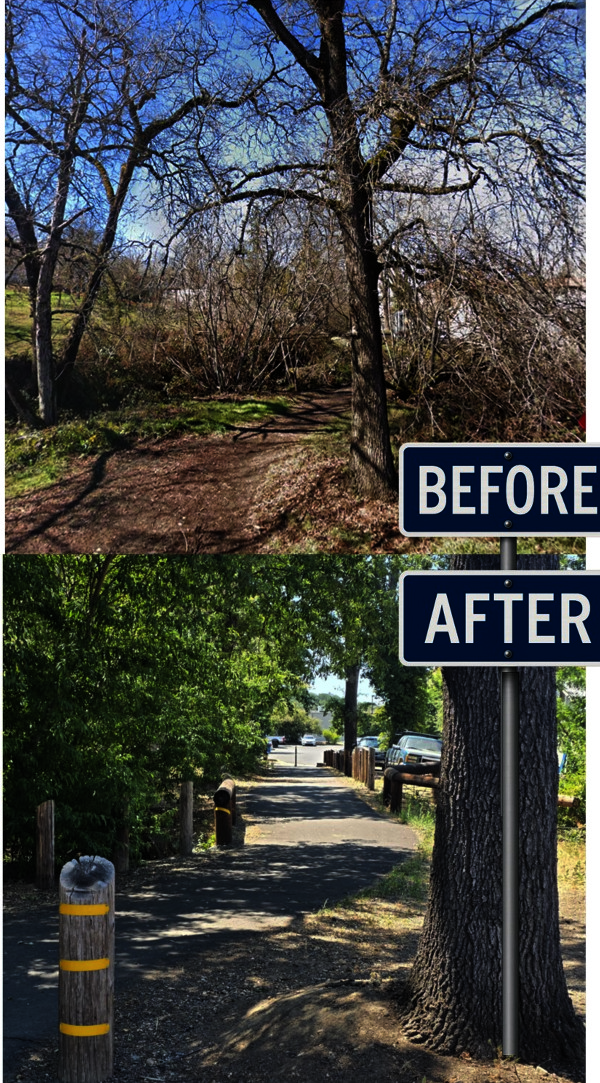
The 10th Street corridor in Lakeport, California, before and after recent work to improve pedestrian and bicycle access. Photos courtesy of the city of Lakeport.


LAKEPORT, Calif. — The city of Lakeport has made significant progress in transforming 10th Street into a safer and more accessible east-west route for pedestrians and cyclists. 

As a low-traffic residential street that parallels the heavily traveled 11th Street corridor, 10th Street offers a safer alternative for residents traveling between neighborhoods and key destinations, including Safeway, CVS, the post office, banks and local restaurants.

Recent upgrades include the installation of a 215-foot Class I path that connects 10th Street to the shopping center via Manzanita Drive. 

Class I paths are fully separated from vehicle traffic and provide a designated, paved route for walking, biking, and using mobility devices, offering a safe and user-friendly connection away from busy roads.

This new link eliminates a longstanding dead end and improves access to commercial services.

Additional improvements include ADA-compliant curb ramps and new sidewalks at the 10th Street and North Street intersection, supported by a voluntary sidewalk extension from a nearby homeowner. 

To promote safer crossings, a rectangular rapid flashing beacon has been installed at the intersection of 11th and High Street. This feature enhances pedestrian visibility and encourages use of the 10th Street route.

Upcoming project phases will focus on:
 
• Completing sidewalk gaps on the north side of 10th Street.
• Installing a mid-block RRFB at Main Street for safer downtown crossings.
• Repairing roadway surfaces and applying edge-line striping to establish advisory bike lanes while preserving on-street parking.

“These improvements reflect the city’s phased, cost-effective strategy for enhancing pedestrian safety and connectivity,” the city said in an announcement. “The project supports Lakeport’s long-term vision for a more walkable, bike-friendly community while maximizing available resources.”

For more information, contact the Lakeport Public Works Department at 707-263-3578 or visit www.cityoflakeport.com. 

District 3 residents invited to take survey on community issues

Details
Written by: LAKE COUNTY NEWS REPORTS
Published: 15 July 2025

LAKE COUNTY, Calif. — Residents of Lake County’s District 3 are being invited to take a survey about community issues that are most important to them.

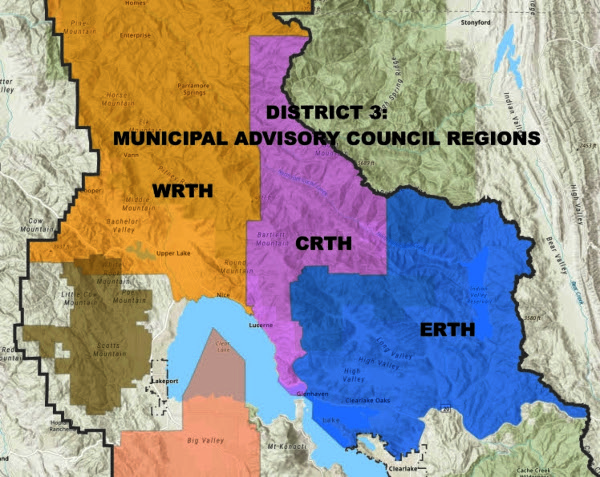
The three Municipal Advisory Councils, or MACs, of District 3 — East Region Town Hall, Central Region Town Hall and Western Region Town Hall — wish to jointly tackle issues shared along Lake County’s Northshore area.

The MACs need the community’s help in prioritizing which projects are most important to the communities. 

From code enforcement to public safety issues, local economy to the environment, they want to hear from Northshore residents.

“By working together, we can have a greater impact in helping our communities thrive,” the groups said in an announcement.

The survey can be found online here.

It can also be accessed via the ERTH website.

California becomes largest economy in the world to achieve clean energy milestone

Details
Written by: LAKE COUNTY NEWS REPORTS
Published: 15 July 2025


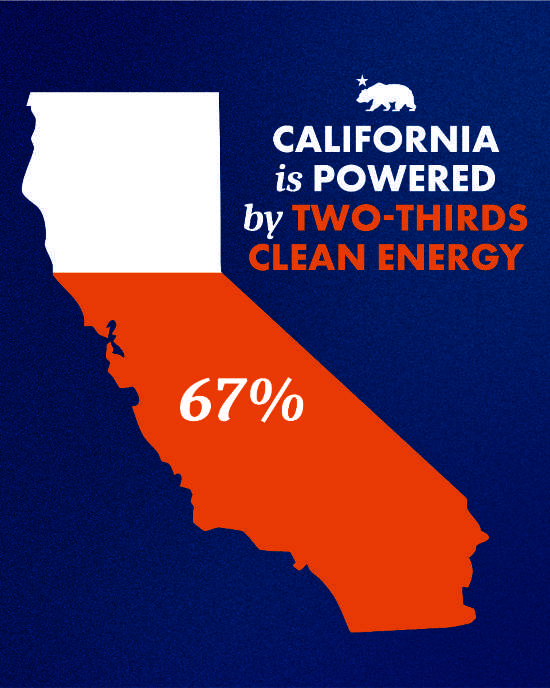
California has achieved an historic milestone: The state was powered by two-thirds clean energy in 2023, the latest year for which data is available. 

California is the largest economy in the world to achieve this level of clean energy. 

The state released new data showing California’s continued progress toward a clean energy future with 67% of the state’s retail electricity sales in 2023 coming from renewable and zero-carbon electricity generation — compared to just 61% the previous year and around 41% a decade ago. 

Sources of clean energy include generation from solar, wind, hydro, nuclear, geothermal and biomass. 

In 2024, the state added a record-breaking 7,000 megawatts (MW) of clean capacity to the grid, representing the largest single-year increase in clean energy capacity added to the grid in state history. 

This new figure broke the previous records set in both 2022 and 2023, marking a third consecutive year of unprecedented clean energy growth.

“As the federal government turns its back on innovation and commonsense, California is making our clean energy future a reality. The world’s fourth largest economy is running on two-thirds clean power — the largest economy on the planet to achieve this milestone,” said Gov. Gavin Newsom. “And for the first time ever, clean energy provided 100% of the state’s power nearly every day this year for some part of the day. Not since the Industrial Revolution have we seen this kind of rapid transformation.” 

Historic investments over the past 15 years have led to an extraordinary pace of development in new clean energy generation. And as the grid is increasingly powered by clean energy, pollution is down and the economy is up. 

Greenhouse gas emissions in California are down 20% since 2000 — even as the state’s GDP increased 78% in that same time period. 

The power sector is a major driver of the decline in greenhouse gases — emissions from electric power have been cut in half since 2009, helping the state achieve its emissions reductions goals years ahead of schedule.

California is home to the most clean energy jobs in the U.S. and the state’s renewable energy and clean vehicle industries lead the nation in growth. Officials reported that California boasts more than a half-million green jobs and has seven times more clean jobs than fossil fuel jobs. 

Solar and wind jobs account for a majority of green jobs, and battery storage and grid modernization is the second-fastest growing sector within California’s clean energy workforce.  

California continues to move at a rapid pace on bringing clean energy online. Since 2019, a record 25,000 MW of new energy resources statewide have been added to the grid, with most of that being solar and battery storage. 

This aligns with the governor’s roadmap to the state’s clean energy future released in 2023, which called for 148,000 megawatts (MW) of new clean power by 2045.

“California has achieved yet another major milestone on our journey to a clean energy future. The latest numbers show how our state is demonstrating that clean energy is mainstream and is here to stay,” said California Energy Commission Chair David Hochschild. 

Sources eligible under the state’ Renewables Portfolio Standard — such as solar and wind — made up 43% of the power mix in 2023, up from 39% in 2022. 

Other zero carbon resources continue to power the grid with large hydro accounting for 12% and nuclear power at 12% in 2023.

“California has set ambitious clean energy goals, and utilities and community choice aggregators have stepped up to deliver clean resources at competitive prices to communities up and down the state,” said California Public Utilities Commission President Alice Reynolds. “We are bringing renewable energy online at an unprecedented scale and pace never seen before.”

Solar represents the technology with the largest amount of installed renewable energy capacity in the state — over 21,000 MW of solar capacity operates the electric grid and another 19,000 MW of behind-the-meter generation. The California grid regularly breaks solar generation peak record levels — the latest solar peak recorded in late May was over 21,500 MW of solar generation.

Officials said the state is also doubling down on its goals by swiftly increasing its battery energy storage capacity. 

The state’s battery fleet now stands at over 15,000 MW — 1,944% higher than when the governor took office in 2019. The state’s storage fleet is regularly storing any available extra solar energy generated during the day, and supporting the grid by dispatching during the evening.  

Clean energy days

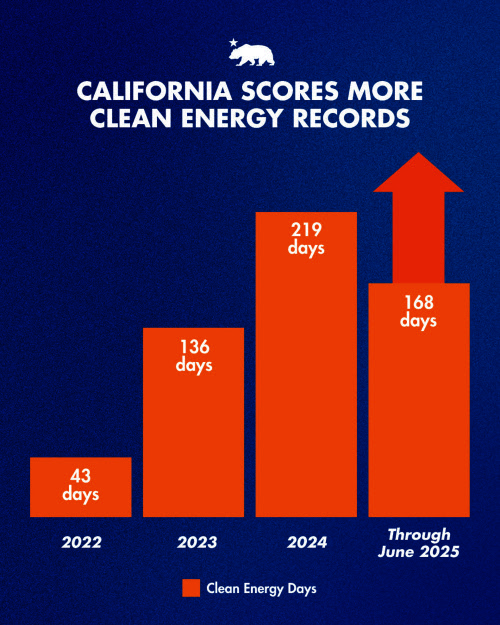
More than 9 out of 10 days so far this year have been powered by 100% clean energy for at least some part of the day in California. In 2025, California’s grid has run on 100% clean electricity for an average of 7 hours a day.

Data compiled by the California Energy Commission shows clean energy has powered the equivalent of 51.9 days in the state — nearly 30% of the year to date running on 100% clean electricity. 

That already surpasses the amount of “clean energy days” last year — and represents a 750% increase in clean energy days since 2022.

  1. FEMA’s flood maps often miss dangerous flash flood risks, leaving homeowners unprepared
  2. Supervisors to discuss state grant applications, pause on cannabis permits 
  3. Lakeport City Council to consider new power option and $1.2 million paving project
  • 289
  • 290
  • 291
  • 292
  • 293
  • 294
  • 295
  • 296
  • 297
  • 298
How to resolve AdBlock issue?
Refresh this page