How to resolve AdBlock issue?
Refresh this page
How to resolve AdBlock issue?
Refresh this page
Lake County News,California
  • Home
    • Registration Form
  • News
    • Education
    • Veterans
    • Community
      • Obituaries
      • Letters
      • Commentary
    • Police Logs
    • Business
    • Recreation
    • Health
    • Religion
    • Legals
    • Arts & Life
    • Regional
  • Calendar
  • Contact us
    • FAQs
    • Phones, E-Mail
    • Subscribe
  • Advertise Here
  • Login
How to resolve AdBlock issue?
Refresh this page

News

Space News: En route to Jupiter, NASA’s Europa Clipper captures images of stars

Details
Written by: Jet Propulsion Laboratory
Published: 16 February 2025
Engineers on NASA’s Europa Clipper mission work with the spacecraft’s star trackers in a clean room at the agency’s Jet Propulsion Laboratory in 2022. Used for orienting the spacecraft, the star trackers are seen here with red covers to protect their lenses. Photo: NASA/JPL-Caltech.

Three months after its launch from NASA’s Kennedy Space Center in Florida, the agency’s Europa Clipper has another 1.6 billion miles to go before it reaches Jupiter’s orbit in 2030 to take close-up images of the icy moon Europa with science cameras.

Meanwhile, a set of cameras serving a different purpose is snapping photos in the space between Earth and Jupiter.

Called star trackers, the two imagers look for stars and use them like a compass to help mission controllers know the exact orientation of the spacecraft — information critical for pointing telecommunications antennas toward Earth and sending data back and forth smoothly.

In early December, the pair of star trackers (formally known as the stellar reference units) captured and transmitted Europa Clipper’s first imagery of space.

The picture, composed of three shots, shows tiny pinpricks of light from stars 150 to 300 light-years away. The starfield represents only about 0.1% of the full sky around the spacecraft, but by mapping the stars in just that small slice of sky, the orbiter is able to determine where it is pointed and orient itself correctly.

The starfield includes the four brightest stars — Gienah, Algorab, Kraz, and Alchiba — of the constellation Corvus, which is Latin for “crow,” a bird in Greek mythology that was associated with Apollo.

Hardware checkout

Besides being interesting to stargazers, the photos signal the successful checkout of the star trackers. The spacecraft checkout phase has been going on since Europa Clipper launched on a SpaceX Falcon Heavy rocket on Oct. 14, 2024.

“The star trackers are engineering hardware and are always taking images, which are processed on board,” said Joanie Noonan of NASA’s Jet Propulsion Laboratory in Southern California, who leads the mission’s guidance, navigation and control operations. “We usually don’t downlink photos from the trackers, but we did in this case because it’s a really good way to make sure the hardware — including the cameras and their lenses — made it safely through launch.”

Pointing the spacecraft correctly is not about navigation, which is a separate operation. But orientation using the star trackers is critical for telecommunications as well as for the science operations of the mission.

Engineers need to know where the science instruments are pointed. That includes the sophisticated Europa Imaging System, or EIS, which will collect images that will help scientists map and examine the moon’s mysterious fractures, ridges, and valleys. For at least the next three years, EIS has its protective covers closed.

Europa Clipper carries nine science instruments, plus the telecommunications equipment that will be used for a gravity science investigation. During the mission’s 49 flybys of Europa, the suite will gather data that will tell scientists if the icy moon and its internal ocean have the conditions to harbor life.

The spacecraft already is 53 million miles (85 million kilometers) from Earth, zipping along at 17 miles per second relative to the Sun, and soon will fly by Mars. On March 1, engineers will steer the craft in a loop around the Red Planet, using its gravity to gain speed.

More about Europa Clipper

Europa Clipper’s three main science objectives are to determine the thickness of the moon’s icy shell and its interactions with the ocean below, to investigate its composition, and to characterize its geology. The mission’s detailed exploration of Europa will help scientists better understand the astrobiological potential for habitable worlds beyond our planet.

Managed by Caltech in Pasadena, California, JPL leads the development of the Europa Clipper mission in partnership with the Johns Hopkins Applied Physics Laboratory in Laurel, Maryland, for NASA’s Science Mission Directorate in Washington. APL designed the main spacecraft body in collaboration with JPL and NASA’s Goddard Space Flight Center in Greenbelt, Maryland, NASA’s Marshall Space Flight Center in Huntsville, Alabama, and Langley Research Center in Hampton, Virginia. The Planetary Missions Program Office at Marshall executes program management of the Europa Clipper mission. NASA’s Launch Services Program, based at Kennedy, managed the launch service for the Europa Clipper spacecraft.

Find more information about Europa Clipper here: https://science.nasa.gov/mission/europa-clipper/.

Sheriff’s office works to identify human remains found in National Forest

Details
Written by: Elizabeth Larson
Published: 15 February 2025
LAKE COUNTY, Calif. — The Lake County Sheriff’s Office said it is investigating the discovery of human remains in a remote area of the county earlier this week.

The agency said that at 1:30 p.m. Wednesday it received a call regarding the discovery of skeletal human remains in the Mendocino National Forest just north of Lucerne.

Sheriff’s spokesperson Lauren Berlinn said the Major Crimes Unit and the Coroners Unit, along with the U.S. Forest Service, responded to the scene.

The sheriff’s office is actively working with Lake County’s forensic pathologist and is sending the remains to the California Department of Justice for analysis to determine the identity of the decedent and the cause of death, Berlinn said.

Berlinn said an investigation into the circumstances surrounding the death is being conducted, with more information expected to be released as the investigation continues.

Over the course of the past several years, the Lake County Sheriff’s Office as well as sheriff’s offices in Humboldt and Mendocino counties have been assisted in such investigations by technological breakthroughs in forensic analysis, in particular DNA technology.

In 2021, technology company Parabon Nanolabs assisted the Lake County Sheriff’s Office in identifying a murder victim from 1976.

In May, a Lake County cold case involving skeletal human remains found in 1979 along the Hopland Grade was solved thanks to a combination of detective work and DNA analysis conducted by Texas-based Othram, a company that specializes in forensic genetic genealogy.

Othram also assisted the Mendocino County Sheriff’s Office identify human remains in a nearly 40-year-old missing person’s case.

If you have any information related to this latest investigation in Lake County, contact the Sheriff’s Major Crimes Unit via the tipline at 707-262-4088.

Email Elizabeth Larson at This email address is being protected from spambots. You need JavaScript enabled to view it.. Follow her on Twitter, @ERLarson, and on Bluesky, @erlarson.bsky.social. Find Lake County News on the following platforms: Facebook, @LakeCoNews; X, @LakeCoNews; Threads, @lakeconews, and on Bluesky, @lakeconews.bsky.social.

State wildlife officials capture, collar 12 gray wolves in Northern California

Details
Written by: LAKE COUNTY NEWS REPORTS
Published: 15 February 2025
A satellite-collared dark gray wolf. Photo courtesy of the California Department of Fish and Wildlife.


The California Department of Fish and Wildlife has announced the recent capture, collar and release of 12 gray wolves in northern California.

There are now more satellite-collared wolves in California than ever before, which is expected to improve understanding and management of the species in the state.

“The captures exceeded our expectations and will enhance our ability to monitor our wolf population both for conservation and recovery and also to help mitigate conflict with livestock,” said Axel Hunnicutt, statewide gray wolf coordinator for the California Department of Fish and Wildlife, or CDFW.

Capture operations occurred from Jan. 14 through the end of that month across Siskiyou, Lassen, Plumas and Sierra counties.

With the aid of contracted aircraft and a capture crew, wolves from the Whaleback, Harvey and Beyem Seyo packs were captured.

In addition to fitting each wolf with a satellite collar, biologists recorded body measurement and collected biological samples, including DNA and blood.

Those samples allow CDFW to monitor wolves for diseases and to determine the relatedness of individuals and packs. The wolves were released at their capture locations.

“Having multiple collars in each of these packs, especially those on younger wolves, will not only aid current studies looking at diet and land-use preferences, but also will provide data on when and where they disperse when leaving their packs,” Hunnicutt said.

Of the 12 collared wolves, seven were female and five were male:

• Five were captured from the Beyem Seyo pack in Sierra County, including one that had been previously collared;
• Five were captured from the Harvey pack in Lassen County, including one that had been previously collared;
• Two were captured from the Whaleback pack in Siskiyou County.

“The recent collaring of 12 of California’s wolves will allow the wildlife agency to more carefully monitor these endangered animals and help the public better understand what this magnificent species is all about,” said Amaroq Weiss, a senior wolf advocate at the Center for Biological Diversity. “Wolf recovery in our state is still in its infancy and more information is always welcome.”

Satellite-collaring gray wolves is an important management and research tool to help monitor populations, understand landscape use patterns and minimize livestock conflicts.

The collars do not provide real-time data. Instead, the collars collect wolf locations several times daily and periodically transmit those locations to CDFW.

The battery life of the satellite collars is about two to three years. They are programmed to drop off the animal before the battery is depleted.

CDFW is currently aware of seven wolf packs in California. While nine packs were reported in the fall of 2024, wolf packs can be fluid. For example, the Beyem Seyo and Antelope packs recently merged.

More information about California’s wolves can be found on CDFW’s gray wolf web page.

In other recent gray wolf developments:

• CDFW scientists identified two new wolf packs at the end of 2024, the Diamond pack in eastern Plumas and southern Lassen counties and the Ice Cave pack near Lassen Volcanic National Park.
• Wolves in the Yowlumni pack in Tulare County are infected with sarcoptic mange, a skin disease caused by parasitic mites. Mange infections cause itchy skin lesions and hair loss. Some wolves only experience mild mange signs and can clear the infection and survive. Other wolves, however, may experience severe disease characterized by extensive hair loss, secondary bacterial infections, emaciation and eventually death. Mange has occurred in other gray wolf populations across North America. CDFW continues to monitor the pack and is consulting with experts from other states where mange occurs in wolf populations. The mange infections are believed to be limited to the Yowlumni pack as none of the recently captured and collared wolves in northern California showed signs of disease.
• The California Wolf Project (CAWP), a collaboration between CDFW and UC Berkeley’s Rausser College of Natural Resources, has just released its 2024 Annual Report. The project is investigating wolf habitat use, diet, relationships with other wildlife and wolf-livestock conflict.
• In April, CDFW anticipates issuing its first annual report on the status of gray wolves in California. The annual report will complement the Quarterly Wolf News and Updates regularly e-mailed and posted to CDFW’s gray wolf web page.

If FEMA didn’t exist, could states handle the disaster response alone?

Details
Written by: Ming Xie, University of Maryland, Baltimore County
Published: 15 February 2025


Hurricane Ian caused widespread damage in Florida in 2022, estimated at over $112 billion. This scene was once a shopping center. Giorgio Veira/AFP via Getty Images

Imagine a world in which a hurricane devastates the Gulf Coast, and the U.S. has no federal agency prepared to quickly send supplies, financial aid and temporary housing assistance.

Could the states manage this catastrophic event on their own?

Normally, the Federal Emergency Management Agency, known as FEMA, is prepared to marshal supplies within hours of a disaster and begin distributing financial aid to residents who need help.

However, with President Donald Trump questioning FEMA’s future and suggesting states take over recovery instead, and climate change causing more frequent and severe disasters, it’s worth asking how prepared states are to face these growing challenges without help.

What FEMA does

FEMA was created in 1979 with the job of coordinating national responses to disasters, but the federal government has played important roles in disaster relief since the 1800s.

During a disaster, FEMA’s assistance can begin only after a state requests an emergency declaration and the U.S. president approves it. The request has to show that the disaster is so severe that the state can’t handle the response on its own.

FEMA’s role is to support state and local governments by coordinating federal agencies and providing financial aid and recovery assistance that states would otherwise struggle to supply on their own. FEMA doesn’t “take over,” as a misinformation campaign launched during Hurricane Helene claimed. Instead, it pools federal resources to allow states to recover faster from expensive disasters.

During a disaster, FEMA:

  • Coordinates federal resources. For example, during Hurricane Ian in 2022, FEMA coordinated with the U.S. Coast Guard, the Department of Defense and search-and-rescue teams to conduct rescue operations, organized utility crews to begin restoring power and also delivered water and millions of meals.

  • Provides financial assistance. FEMA distributes billions of dollars in disaster relief funds to help individuals, businesses and local governments recover. As of Feb. 3, 2025, FEMA aid from 2024 storms included US$1.04 billion related to Hurricane Milton, $416.1 million for Hurricane Helene and $112.6 million for Hurricane Debby.

  • Provides logistical support. FEMA coordinates with state and local governments, nonprofits such as the American Red Cross and federal agencies to supply cots, blankets and hygiene supplies for emergency shelters. It also works with state and local partners to distribute critical supplies such as food, water and medical aid.

The agency also manages the National Flood Insurance Program, offers disaster preparedness training and helps states develop response plans to improve their overall responses systems.

What FEMA aid looks like in a disaster

When wildfires swept through Maui, Hawaii, in August 2023, FEMA provided emergency grants to cover immediate needs such as food, clothing and essential supplies for survivors.

The agency arranged hotel rooms, rental assistance and financial aid for residents who lost homes or belongings. Its Direct Housing Program has spent $295 million to lease homes for more than 1,200 households. This comprehensive support helped thousands of people begin rebuilding their lives after losing almost everything.

FEMA also helped fund construction of a temporary school to ensure that students whose schools burned could continue their classes. Hawaii, with its relatively small population and limited emergency funds, would have struggled to mount a comparable response on its own.
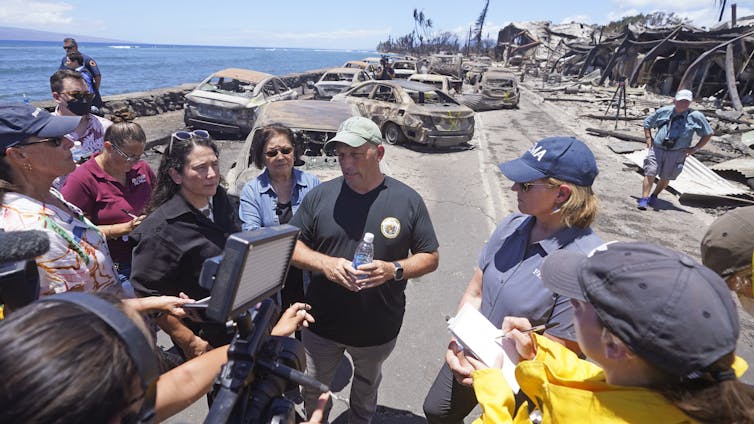
A man wearing a T-shirt with the state seal of Hawaii speaks with reporters, standing next to a woman with 'FEMA' on her cap and shirt with ocean and burned properties behind them.
Hawaii Gov. Josh Green, center, and then-FEMA Administrator Deanne Criswell speak to reporters in Lahaina, Hawaii, on Aug. 12, 2023, while assessing the wildfire damage there. AP Photo/Rick Bowmer

Larger states often need help, too. When a 2021 winter storm overwhelmed Texas’ power grid and water infrastructure, FEMA coordinated the delivery of essential supplies, including water, fuel, generators and blankets, following the disaster declaration on Feb. 19, 2021. Within days, it awarded more than $2.8 million in grants to help people with temporary housing and home repairs.

Which states would suffer most without FEMA?

Without FEMA or other federal support, states would have to manage the disaster response and recovery on their own.

States prone to frequent disasters, such as Louisiana and Florida, would face expensive recurring challenges that would likely exacerbate recovery delays and reduce their overall resilience.

Smaller, more rural and less wealthy states that lack the financial resources and logistical capabilities to respond effectively would be disproportionately affected.

“States don’t have that capability built to handle a disaster every single year,” Lynn Budd, director of the Wyoming Office of Homeland Security, told Stateline in an interview. Access to FEMA avoids the need for expensive disaster response infrastructure in each state.

States might be able to arrange regional cooperation. But state-led responses and regional models have limitations. The National Guard could assist with supply distribution, but it isn’t designed to provide fast financial aid, housing or long-term recovery options, and the supplies and the recovery effort still come at a cost.
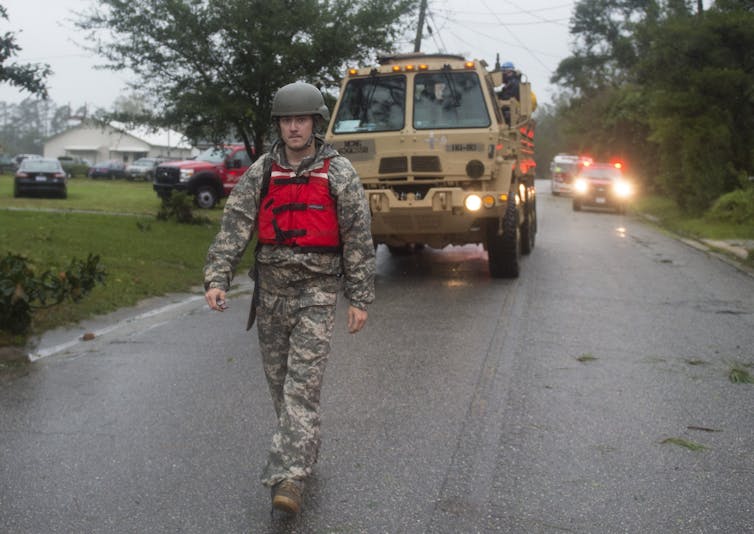
A National Guard member walks in front of search and rescue vehicles.
Members of the National Guard and a FEMA search-and-rescue team work together in the disaster response after Hurricane Florence pounded Wilmington, N.C., in September 2018. Andrew Caballero-Reynolds/AFP via Getty Images

Wealthier states might be better equipped to manage on their own, but poorer states would likely struggle. States with less funding and infrastructure would be left relying on nonprofits and community-based efforts. But these organizations are not capable of providing the scope of services FEMA can.

Any federal funding would also be slow if Congress had to approve aid after each disaster, rather than having FEMA already prepared to respond. States would be at the mercy of congressional infighting.

In the absence of a federal response and coordinating role, recovery would be uneven, with wealthier areas recovering faster and poorer areas likely seeing more prolonged hardships.

What does this mean?

Coordinating disaster response is complex, the paperwork for federal assistance can be frustrating, and the agency does draw criticism. However, it also fills an important role.

As the frequency of natural disasters continues to rise due to climate change, ask yourself: How prepared is your state for a disaster, and could it get by without federal aid?The Conversation

Ming Xie, Assistant Professor of Emergency Management and Public Health, University of Maryland, Baltimore County

This article is republished from The Conversation under a Creative Commons license. Read the original article.

  1. Estate Planning: Managing the affairs of an aging parent
  2. Space News: Hubble captures a cosmic cloudscape
  3. Witness recounts shooting that took life of poet
  • 445
  • 446
  • 447
  • 448
  • 449
  • 450
  • 451
  • 452
  • 453
  • 454
How to resolve AdBlock issue?
Refresh this page