 How to resolve AdBlock issue?
News
- Details
- Written by: LAKE COUNTY NEWS REPORTS
Oct. 20 to 26 is National Teen Driver Safety Week, and it is a great time for California parents to talk to their teenagers about safe driving, including the importance of driving sober.
The greatest dangers for teen drivers are alcohol consumption, not wearing a seat belt, distracted driving, speeding, and driving with passengers in the vehicle.
For National Teen Driver Safety Week, parents are encouraged to talk with their teens about the important rules they need to follow to stay safe.
According to the California Highway Patrol:
• Traffic crashes are the leading cause of death among teens 16-19 years old.
• A teen driver was determined to be at fault in approximately 66 percent of those crashes.
“ABC encourages parents to talk to their children about the dangers of consuming alcohol and driving,” said ABC Director Joseph McCullough. “Underage drinking causes a disproportionate amount of preventable deaths every year.”
Parents can be the biggest influencers on teens’ driving habits if they take the time to talk with their teens about some of the biggest driving risks.
To help reduce risks for teen drivers, follow these basic rules:
• Impaired driving: All teens are too young to legally buy, possess, or consume alcohol. However, nationally in 2022, 22 percent of young drivers involved in fatal crashes had alcohol in their system, and 84 percent of those involved exceeded a .08 percent blood alcohol content or BAC. The number of teen drivers involved in fatal crashes with alcohol in their system has nearly doubled since 2017, according to figures from NHTSA.
• Seat belt safety: Wearing a seat belt is one of the simplest ways for teens to stay safe in a vehicle. Yet too many teens aren’t buckling up — 50 percent of teen passenger vehicle drivers who died in 2022 were unbuckled.
• Distracted driving: Cell phone use while driving is not only dangerous, but it is also illegal. Distracted driving accounted for eight percent of all teen motor vehicle crashes in 2021. Drivers under 18 are not allowed to use a phone for any reason, including hands-free.
• Speed limits: Speeding is a critical safety issue for all drivers, especially for teens. In 2022, fatal crashes involving teens 15 to 18 were speeding more than any other demographic.
• Passengers: The likelihood of teen drivers engaging in risky behavior triples when traveling with multiple passengers.
OTS funds multiple ABC programs designed to help keep California youth safe including Target Responsibility for Alcohol Connected Emergencies, or TRACE, Minor decoy, and shoulder tap decoy operations that are used to reduce youth access to alcohol.
TRACE involves in-depth ABC investigations of serious incidents involving alcohol-related car crashes.
The minor decoy and shoulder tap programs reduce youth access to alcohol by performing compliance checks on licensees and the public to ensure they don’t furnish alcohol to underage youth.
For more information about National Teen Driver Safety Week and to learn safe driving tips to share with teens, visit the NHTSA Website.
- Details
- Written by: LAKE COUNTY NEWS REPORTS
Eighty entries are confirmed with participants represented by floats, vehicles, walkers, performers and others taking part in this first Sacramento cavalcade celebrating California Native Americans during National Native American Month.
Also planned as part of the November festivities is a Friday, Nov. 8, cultural exchange for 150 third and fourth grade students with classes in traditional crafts and performances such as dancing or bird singing. The student program is scheduled from 9:45 a.m. to 1:30 p.m. on the Capitol grounds.
Tribal artisans and performers will teach the classes in Capitol Park in the Native American monument area or in Capitol hearing rooms, depending on the weather.
This program is modeled after a successful project more than 20 years old held for elementary students in the Inland Empire at California State University, San Bernardino.
That student gathering is coordinated annually in September during California Native American Month and was founded and organized by Assemblymember James C. Ramos (D-San Bernardino), the first and only California Native American elected to the state Legislature, along with area tribes and the university.
More than 5,000 native and nonnative young students have participated in the San Bernardino event.
- Details
- Written by: Elizabeth Larson
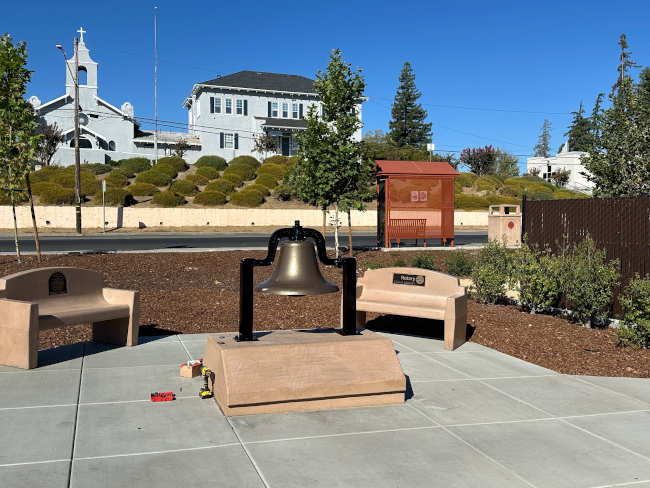
LAKEPORT, Calif. — The effort to preserve a piece of unique Lakeport history will be celebrated this week.
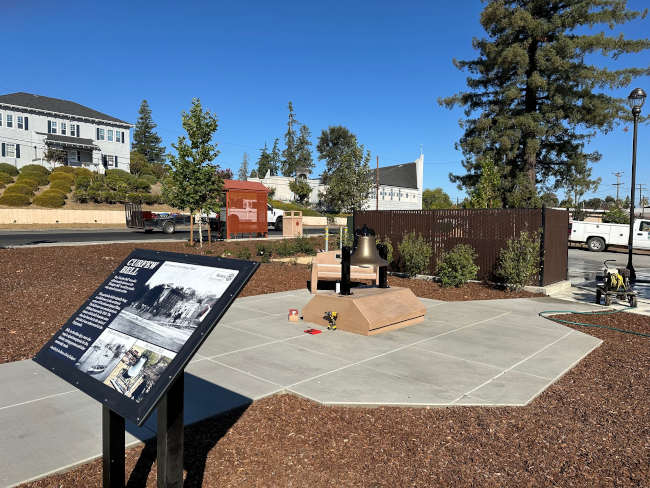
The Lakeport curfew bell is at the heart of a new monument to be dedicated at Xabatin Park in a “Rotary After Dark” event planned for 5:30 to 7:30 p.m. Wednesday, Oct. 23.
The project, a collaboration between the city of Lakeport and the Lakeport Rotary, focused on taking the historic Lakeport “curfew” — or “hooligan” — bell, which had sat in storage for many years, and placing it at the center of a new monument at the park, which opened a year ago this month.
The bell once was used to alert children to return home for the night.
During the June meeting in which the Lakeport City Council gave its final approval on the project, Lakeport Public Works Director Ron Ladd credited Public Works Superintendent Jim Kennedy for finding the bell sitting in storage on the Lake County Fairgrounds property.
Mark Lipps, a local businessman and Rotary District 5130 Area governor who took the club’s lead on the project during his term as president that ended earlier this year, reported that the bell has been installed at the park.
He said the bell originally was installed downtown just after the historic Lakeport courthouse was built in the 1870s.
“This has been a Lakeport Rotary labor of love for the last year,” he told fellow Rotarians in an email update on the bell project.
The Rotary reported that the bell display, commemorative plaque and accompanying benches are located near the parking lot and the bathrooms.
The monument’s completion comes as the Lakeport Rotary itself is planning to celebrate its 100th anniversary in 2025.
“This club is a part of the history and legacy of this community. I am excited that our club plans to continue telling the stories of ‘days gone by’ in celebrating our 100th Anniversary. Stay tuned for those details. We will continue the sweat equity in leaving more footprints around town for today and upcoming generations,” Lipps reported in his email update.
The community is encouraged to attend the Wednesday celebration.
Email Elizabeth Larson at
- Details
- Written by: LAKE COUNTY NEWS REPORTS
These funds support efforts across the USDA National Institute of Food and Agriculture’s Community Food Projects Competitive Grants Program and Gus Schumacher Nutrition Incentive Program.
Among the grantees in this round of funding is Lake County Tribal Health and its Food as Medicine Program.
The program will receive $480,440 through the Produce Prescription, which awarded $5.2 million to 11 awardees.
The USDA said these projects will demonstrate and evaluate the impact of fresh fruit and vegetable prescriptions.
The goals of the Produce Prescription Program are to increase purchase and consumption of fruits and vegetables, reduce individual and household food insecurity, and reduce healthcare use and associated costs.
Tribal Health did not immediately respond to a request for comment about its project.
“Healthy, safe, and affordable food is essential for a strong start for children and a healthy life for all of us,” said Deputy Secretary of Agriculture Xochitl Torres Small. “Through these investments, the Biden Harris Administration is investing in healthy food options for people no matter where they live and supporting stronger local and regional food systems.”
The investment provides funding to 20 CFPCGP projects , which bring together stakeholders from distinct parts of the food system and fosters understanding of national food security trends and how they might work together to improve local food systems.
This investment is expected to catalyze small production agriculture, increase food access in low-income communities, increase community engagement in planning for food security solutions, and bridge gaps in local foods systems.
Named in honor of the former USDA Under Secretary of Agriculture for Farm and Foreign Agricultural Services (1997 to 2001) Gus Schumacher, GusNIP grant programs include Nutrition Incentives and Produce Prescriptions. By bringing together stakeholders from various parts of the food and healthcare systems, GusNIP projects help foster understanding to improve the health and nutrition of participating households, facilitate growth in underrepresented communities and geographies, and aggregate data to identify and improve best practices on a broad scale.
Fourteen awardees are receiving GusNIP Nutrition Incentive funding totaling $36.3 million. These projects increase the purchase of fruits and vegetables by providing incentives at the point of purchase among income-eligible households participating in the USDA Supplemental Nutrition Assistance Program and Nutrition Assistance Program Block Grants. The awards include Pilot Projects, Standard Projects and Largescale Projects.
These investments answer the call to the White House Challenge to End Hunger and Build Healthy Communities, which is an extension of the National Strategy on Hunger, Nutrition, and Health that aims to end hunger and increase healthy eating.