Nasa’s missions are some of the most technologically advanced and critically important endeavours. From the Mars Rover explorations to the Artemis missions to the Moon, the space agency’s projects push the boundaries of science and technology. However, these missions are also prime targets for cyber-attacks.
In a bold move to counter the escalating threat of these attacks, US congressmen Maxwell Alejandro Frost and Don Beyer have proposed the Spacecraft Cybersecurity Act. If passed, the legislation would mandate the US space agency Nasa to overhaul the way it procures and builds its spacecraft.
It would have to incorporate rigorous cybersecurity measures from the very start of the design and development process in an effort to protect them against attack.
Securing these sensitive missions against potentially catastrophic failures, becomes even more urgent amid rising geopolitical tensions.
A recent Government Accountability Office (GAO) report exposed alarming vulnerabilities in Nasa’s current cybersecurity practices. The report highlighted that while the space agency has cybersecurity requirements for spacecraft once they are operational, it lacks mandatory guidelines for embedding such protections in the design of spacecraft during acquisition and development.
High stakes
A successful breach could have devastating consequences, including mission failure, data theft and national security risks. For example, a compromised communication system could render a spacecraft uncontrollable, ending its mission prematurely. Nasa missions also generate vast amounts of valuable scientific data.
The theft of this sensitive information would potentially give adversaries access to advanced research and technology. The stakes are high: the loss of control over a spacecraft could lead to collisions or other catastrophic failures, jeopardising not just the mission but other assets in space. Attacks could even affect spacecraft carrying humans, such as Nasa’s Orion capsule that’s designed to take astronauts to the Moon.
Nasa’s missions are some of the most technologically advanced and important endeavours.NASA/JPL-Caltech
Globally, the importance of cybersecurity in space operations is increasingly being recognised. The European Union has launched cybersecurity initiatives such as the EU Space Program and the IRIS² project that boosts satellite-based connectivity.
France’s Law on Space Operations and the UK’s Space Industry Act 2018 both include cybersecurity provisions. The much-awaited EU Space Law is also widely expected to incorporate protections against cyber-attacks. These efforts underscore the necessity of international cooperation and standardisation in addressing cyber-attacks in space.
Addressing the challenges
If the US Spacecraft Cybersecurity Act does pass – and timings aren’t confirmed as it was only introduced to the House of Representatives on July 9 this year – its unique focus on spacecraft will allow for the development of precise, effective cybersecurity measures tailored to specific projects. The proposed act requires Nasa to update its acquisition policies within 270 days, ensuring timely and effective integration of these essential protections from the initial stages of spacecraft development.
However, Nasa has also faced criticism for its delayed response to cybersecurity threats. Despite being aware of these issues since 2019, the agency cited a lack of time for not implementing necessary changes.
One significant challenge is the burden on smaller operators and contractors. The legislation must provide support and guidance to help these companies comply with cybersecurity requirements without stifling innovation. This support could include financial incentives, technical assistance, and a phased implementation approach to allow smaller companies time to adapt to new standards.
Continuous monitoring of spacecraft systems and periodic updates to address emerging threats may all be vital components of the act. The dynamic nature of the threats will require a proactive approach to cybersecurity. If the US act is passed, Nasa is likely to be tasked with implementing regular reviews and updates of its cybersecurity policies and protocols.
The US Spacecraft Cybersecurity Act represents a pivotal step in securing space missions against cyberthreats. While the cybersecurity frameworks in France and the UK are still in their early stages and untested, they underscore the increasing recognition of a need for robust cybersecurity measures for space operations.
Swift implementation and uniform standards may protect Nasa’s missions and set a global benchmark for spacecraft cybersecurity, enhancing the security of space exploration for all.
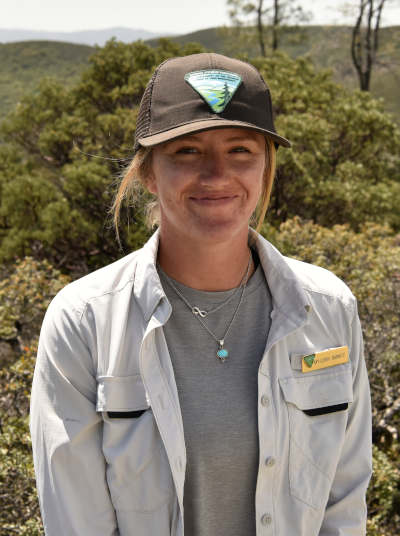
Kay-Leigh Barnitz. Photo courtesy of the Bureau of Land Management. LAKE COUNTY, Calif. — The Bureau of Land Management California and the Mendocino National Forest have announced the selection of the new Berryessa Snow Mountain National Monument manager.
Kay-Leigh Barnitz will now oversee the monument, created in July 2015 by President Barack Obama and expanded in May by President Joe Biden.
The monument covers 344,476 acres in Lake, Napa, Yolo, Solano, Colusa, Glenn and Mendocino counties.
Two-thirds of the monument is within Lake County alone, and Lucerne has been named the monument’s official gateway community.
BLM said Barnitz’s career in public service and natural resources spans more than 10 years.
“Kay-Leigh is an experienced, dedicated and collaborative leader,” said BLM Central California District Manager Chris Heppe. “Her extensive knowledge of natural resource management and commitment to community partnerships will benefit the Monument’s scenic and biologically diverse landscapes.”
“I am extremely pleased to welcome Kay-Leigh to the region,” said acting Mendocino National Forest Supervisor David Fournier. “I share her excitement for the opportunities here and gratitude for the Monument and the collaboration among our agencies and partners.”
Barnitz has a strong background in natural resource management at the monument. Over the last eight years, as the wildlife biologist for the Ukiah Field Office, she was instrumental in restoring and protecting rare ecosystems in the region including those encompassed by the monument.
She’s now embracing the challenge of overseeing the management of the vast amount of public lands the monument includes.
“The Berryessa Snow Mountain National Monument encompasses some of the most spectacular landscapes and diverse ecosystems in the country,” Barnitz said. “I am looking forward to continuing my work with the communities of northern California, our partners, and the visitors to ensure this special place is available for the use and enjoyment of current and future generations.”
Barnitz is a self-proclaimed, “Woman of the West.” Originally from New Mexico, she was raised in Oregon and now enjoys life in California.
Her permanent career was first spurred by the BLM’s Direct Hire Authority/Resource Assistant Internship program with the Las Cruces District Office in Las Cruces, New Mexico.
She values the Western lifestyle and loves hiking, riding horses, running her dogs, hunting and snowboarding on public lands.
Barnitz holds a bachelor’s degree in wildlife science from New Mexico State University.
On Thursday, Rep. Mike Thompson (CA-04) joined Rep. Joe Morelle (NY-25) and over 40 members of Congress to introduce a constitutional amendment that will reverse the Supreme Court’s recent decision to grant U.S. presidents broad immunity from criminal prosecution.
“Maintaining a healthy and fair democracy means that no one — not even our commander-in-chief — is above the law. Yet last month, the Supreme Court of the United States undermined that principle and with it, the foundation of our democracy,” said Thompson. “The Supreme Court’s ruling to grant broad criminal immunity to the presidency runs counter to our country’s ideals, and I thank my colleague Rep. Joe Morelle for championing this measure to reinstate our rule of law.”
“Earlier this month the Supreme Court of the United States undermined not just the foundation of our constitutional government, but the foundation of our democracy. At its core, our nation relies on the principle that no American stands above another in the eyes of the law. I introduced this constitutional amendment to correct a grave error of this Supreme Court and protect our democracy by ensuring no president is ever above the law. The American people expect their leaders to be held to the same standards we hold for any member of our community. Presidents are not monarchy, they are not tyrants, and shall not be immune,” said Morelle.
Read the constitutional amendment below.
118TH CONGRESS
2D SESSION H. J. RES. ll
Proposing an amendment to the Constitution of the United States providing that there is no immunity from criminal prosecution for an act on the grounds that such act was within the constitutional authority or official duties of an individual, and providing that the President may not grant a pardon to himself or herself.
IN THE HOUSE OF REPRESENTATIVES
JOINT RESOLUTION
Proposing an amendment to the Constitution of the United States providing that there is no immunity from criminal prosecution for an act on the grounds that such act was within the constitutional authority or official duties of an individual, and providing that the President may not grant a pardon to himself or herself.
Resolved by the Senate and House of Representatives of the United States of America in Congress assembled (two-thirds of each House concurring therein), That the following article is proposed as an amendment to the Constitution of the United States, which shall be valid to all intents and purposes as part of the Constitution when ratified by the legislatures of three-fourths of the several States:
‘‘ARTICLE—
‘‘SECTION 1. No officer of the United States, including the President and the Vice President, or a Senator or Representative in Congress, shall be immune from criminal prosecution for any violation of otherwise valid Federal law, nor for any violation of State law unless the alleged criminal act was authorized by valid Federal law, on the sole ground that their alleged criminal act was within the conclusive and preclusive constitutional authority of their office or related to their official duties, except for Senators and Representatives acting pursuant to the first clause of the sixth section of the first article.
‘‘SECTION 2. The President shall have no power to grant a reprieve or pardon for offenses against the United States to himself or herself.
‘‘SECTION 3. This amendment is self-executing, and Congress shall have the power to enact legislation to facilitate the implementation of this amendment.’’
Perhaps that’s unsurprising. The legislation has little relevance to most American citizens, and many Native Americans were dismayed when President Calvin Coolidge signed it into law in June 1924.
Meanwhile, as I’ve covered in my research and teaching on federal Indian law, the Indian Citizenship Act was not a gift or benefit to Native Americans. It was part of a coercive larger effort to assimilate Native Americans into U.S. society.
From nation to assimilation
For centuries after Europeans colonized North America in the 16th century, Native Americans sought to remain separate and distinct from the settlers.
For a while, the U.S. government reinforced that intentional separation. From 1820 to 1850, the federal government had a policy of forcibly removing Native Americans from their homelands and segregating them on reservations in the Indian Territory, now known as Oklahoma.
By keeping Native Americans far from towns and cities, the U.S. hoped to maintain the distinct identities of tribes as sovereign nations – and ensure Native peoples remained non-Americans.
As U.S. ambitions for expansion drove the new nation to push farther west, however, the nation began working to assimilate Native people into American society. The U.S. wanted more land, including in the Indian Territory.
In 1887, Congress passed the Dawes Severalty Act, abrogating treaties that had guaranteed tribes and their citizens reserved lands in perpetuity. It broke up reservation lands into individual family allotments for tribal citizens and allowed non-Natives to buy land in the Indian Territory that remained unallocated.
The aim was to push Native peoples into becoming agrarian farmers. By encouraging them to abandon their traditional lives, lawmakers hoped to integrate Native Americans into the non-Native societies that were surrounding them.
Training ‘model Americans’
Of all the U.S. efforts to assimilate Native Americans, none was more notorious than the Indian boarding schools.
First established in 1879, these institutions aimed to remove Native American children from their families and communities, deny them the right to speak their languages and practice their religions, and train them to be model Americans.
Yet, Native Americans were not Americans in the eyes of the U.S. government. They could not vote in U.S. elections, freely sell their land or control their children’s education.
They were, however, eligible to serve in America’s wars. After an estimated 12,000 Native American solders fought in World War I, President Calvin Coolidge, inspired by their service, signed the Indian Citizenship Act into law.
Congress had crafted the legislation over the objections of many tribes. They recognized this unilateral imposition of U.S. citizenship as an infringement on their sovereignty over their citizens.
For lawmakers, that was the point. They wanted to take the assimilation of Native peoples to the next level, by making their Americanness official.
Layered citizenship
After 1924, Native Americans were left navigating a uniquely complex web of layered citizenships.
Most Americans, in addition to their national citizenship, are citizens of a state, a county and a city. Native Americans have all that plus another national citizenship – that of their tribe, which has its own laws and civic responsibilities.
Tribal citizenship is not about race or ethnicity. It confers a political status, one of citizenship in a tribe.
Unlike U.S. citizens, tribal citizens can lose their status.
As sovereign nations, tribes have the right to disenroll members, and they regularly do. About 80 tribes have removed approximately 11,000 tribal citizens from their rolls over the past 25 years over lineage questions, dual enrollment and other disqualifying factors.
The federal government can also terminate tribal membership by terminating tribes. From 1953 to 1970, in what became known as the Termination Era, the U.S. ended its government-to-government relationships with many tribes by withdrawing their federal recognition as sovereign nations.
Officially, this policy ended the tribes’ “status as wards of the United States” in order “to grant them all of the rights and prerogatives pertaining to American citizenship.”
Though U.S. citizenship was imposed without consent, Native Americans have come to terms with being dual citizens of the same country.
They have learned to navigate the complexities of living in two civic and legal systems simultaneously – with the ups and downs of both – and become active participants in American political life.
President Herbert Hoover’s vice president from 1929 to 1933 was Charles Curtis, an enrolled member of the Kaw Nation. More recently, in 2021, U.S. Rep. Deb Haaland, an enrolled member of the Pueblo of Laguna, became the first Native American appointed as secretary of the interior.
Native Americans have also served in every major U.S. military conflict, starting with the Revolutionary War. They have the highest per capita record of military service of all historically underrepresented populations.
Ely S. Parker, a Tonawanda Seneca, wrote the final draft of the terms of Confederate surrender to end the Civil War. The Code Talkers, who turned their Native languages into an unbreakable code, helped achieve U.S. victories in the two world wars.
Despite these contributions, Native Americans lag behind other U.S. citizens in almost every social and economic measure.
U.S. Census Bureau data shows the median income for Native Americans on reservations is $23,000 a year – 61% below the U.S. average. One in three reservation residents live in poverty, three times higher than the general population. In 2020, Native American students constituted less than 1% of college and university enrollment nationwide.
As these statistics reveal, U.S. citizenship has not guaranteed full access to all the riches and privilege of the United States. Indeed, it wasn’t meant to.
A variety of duck species at rest on the water at the Yolo Bypass Wildlife Area. Photo courtesy of CDFW. The California Department of Fish and Wildlife has completed its 2024 waterfowl breeding population survey.
The resulting data indicate the overall number of breeding ducks has decreased by 25 percent, while mallards decreased 12 percent, the most abundant duck in the survey.
“Despite another good water year, the lack of adequate nesting habitat, particularly in the Central Valley, continues to restrict waterfowl population growth in California,” said CDFW Waterfowl Program Biologist Melanie Weaver.
The complete 2024 California Waterfowl Breeding Population Survey Report is available at the CDFW website.
The total numbers of ducks (all species combined) decreased from 495,438 in 2023 to 373,864 this year. This estimate is 30 percent below the long-term average.
The estimated breeding population of mallards decreased from 202,108 in 2023 to 177,828 this year, while also below their long-term average.
The long-term declines are largely attributed to the loss of nesting habitat for ducks. Additionally, the impact of recent drought conditions likely have exacerbated these declines.
CDFW biologists and warden-pilots have conducted this survey annually using fixed-wing aircraft since 1948. The population estimates are for those areas where the vast majority of waterfowl nesting occurs in California, including wetland and agricultural areas in northeastern California, throughout the Central Valley, the Suisun Marsh and some coastal valleys.
The majority of California’s wintering duck population originates from breeding areas surveyed by U.S. Fish and Wildlife Service (USFWS) in Alaska and Canada, and these results should be available by August.
CDFW survey information, along with similar data from other Pacific Flyway states, is used by the USFWS and the Pacific Flyway Council when setting hunting regulations for the Pacific Flyway states, including California.
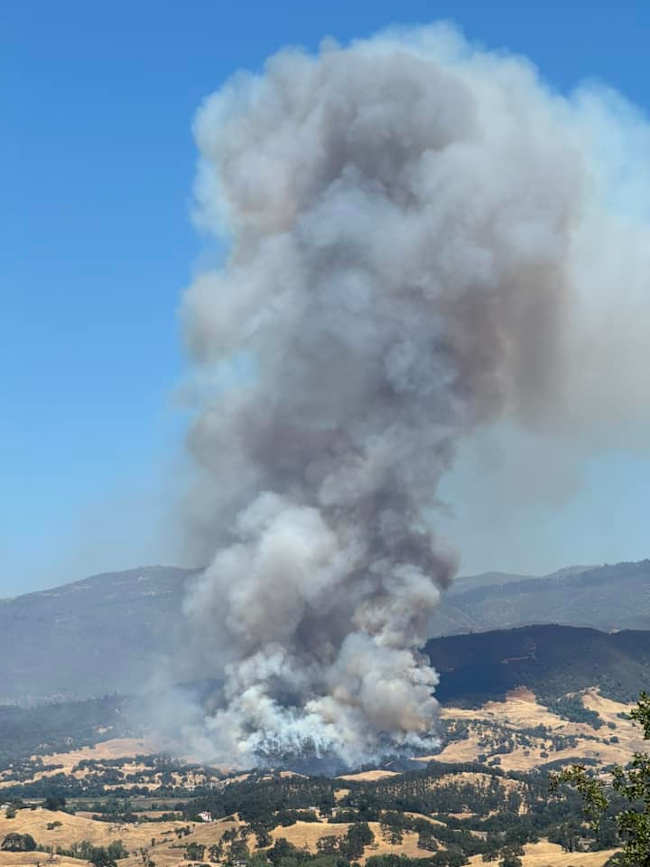
The Acorn fire. Photo by Tim Kennedy. LAKE COUNTY, Calif. — Firefighters are working to stop a fire that began Thursday afternoon near Robinson Rancheria.
The Acorn fire was first reported at around 1 p.m. in the area of Manzanita Circle and Acorn Drive near Robinson Rancheria.
Initial reports from the scene put the fire at three acres with a moderate rate of spread, with a request for structure protection due to the nearby subdivision.
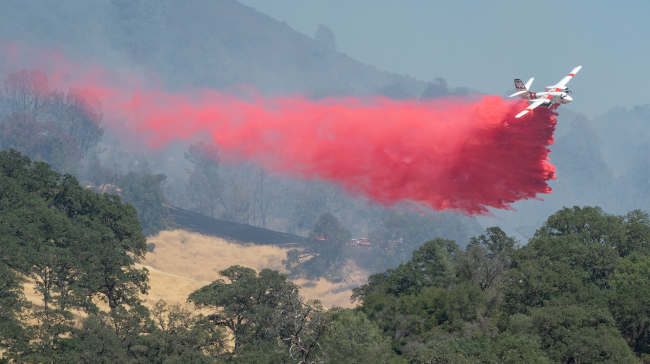
A Cal Fire tanker drops retardant on the Acorn fire near Upper Lake, California, on Thursday, July 25, 2024. Photo by Frank Blue. Air support has been brought in from the Ridge fire east of Clearlake Oaks to help with stopping the blaze, according to radio reports. FlightRadar24 showed U.S. Forest Service tankers were working the site.
Cal Fire arrived on scene at about 1:15 p.m. and entered in unified command with Northshore Fire.
By about 1:30 p.m., the fire was reported to be between 15 and 20 acres. At that point, incident command requested five more engines, four dozers, four water tenders and four crews, with the Northshore Support Team requested shortly afterward.
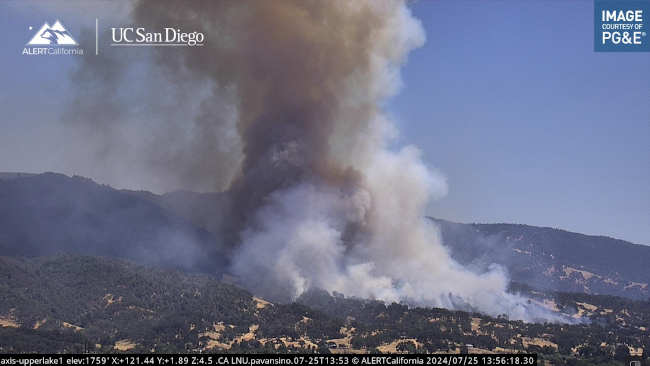
The Acorn fire as seen on fire alert cameras supported through PG&E.
Firefighters also were reporting issues with people on Highway 20 at Reclamation Road blocking traffic, with the California Highway Patrol requested to respond.
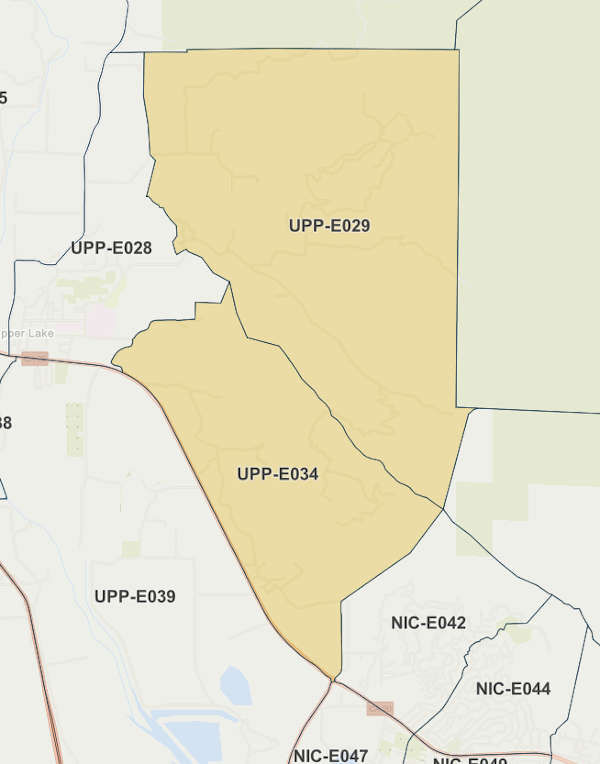
At 1:42 p.m., the Lake County Sheriff’s Office issued an evacuation warning for zones UPP-E029 & UPP-E034. The zones can be seen here.
At 2:25 p.m., incident command updated the fire’s size to 75 acres, noting they are making good progress to get around the fire.
At 3:25 p.m., the fire was reported to be 151 acres.
Forward progress was reported to be stopped just after 4:30 p.m.
On Thursday night, Cal Fire said the Acorn fire remained at 151 acres, with containment at 10%.
Additional information will be published as it becomes available.
Email Elizabeth Larson at This email address is being protected from spambots. You need JavaScript enabled to view it.. Follow her on Twitter, @ERLarson, or Lake County News, @LakeCoNews.
CLEARLAKE, Calif. — The city of Clearlake’s action to file a lawsuit against Highlands Mutual Water Co. will culminate in a trial set to take place this week.
The growing tensions between the city of Clearlake and water companies that serve city residents led to the city filing the lawsuit in June.
In filing the lawsuit, the city argued that the action was necessary to obtain records and get a new election of district board members.
The suit names Highlands Mutual Water Co. and each of its five board members, citing concerns “about the ability of Highlands to provide reliable drinking water and fire flow protection.”
A short cause trial will take place at 9 a.m. Friday, July 26, in Lake County Superior Court’s Department 2.
The fight between the city and the water district comes as city officials said they are moving forward with plans to consolidate water services in Clearlake as part of a larger effort to meet the infrastructure needs that come with the plans to grow and develop the city — something community members have said they’ve wanted for decades.
The city said Highlands Mutual Water refused many requests to supply the city with records, despite the city being the largest shareholder in its service territory and having a legal right to the records under state corporation law.
“Concerns from shareholders, coupled with our own observation of poor fire flow, drinking water delivery, and Highland’s inability to serve new development, prompted us to take a closer look,” Mayor David Claffey said in a statement released by the city. “The more we delved into Highland’ operations, the more we were obstructed. City representatives were blocked from meetings or refused information, and a demand letter sent in mid-April was largely ignored. The council believes more transparency is needed and felt we had no other course of action than to file a lawsuit on behalf of the public.”
For its part, the water district called the city’s action a “frivolous lawsuit” that’s part of an effort to manipulate the shareholder vote that saw the five-member board reelected during the annual shareholder leadership election on April 10.
On July 5, the water company filed its own complaint against the city, alleging an illegal meeting of council members who participated in the water company’s annual shareholders meeting on April 10. That lawsuit has not yet been set for a hearing, according to Superior Court records.
Over the course of the past year, the relationship between the city and the water district has deteriorated.
City Manager Alan Flora said he attempted to attend a March 27 district board meeting but the district, who said he failed to give them a 24-hour notice that he intended to be there, escorted him out of the building and locked the door. At that meeting, the city said rates already considered to be “high risk” for affordability by the State Water Board were raised behind that locked door with no direct notice to shareholders.
Highlands Mutual board members, staff and shareholders also have appeared at City Council meetings to criticize the city for what they consider to be its shortcomings, including faulting the city for road conditions at a time when, as it turns out, the city is making more road improvements funded by the one-cent Measure V sales tax than has happened in its history.
In a statement about the lawsuit, Highlands Mutual Water said the city didn’t understand the “complexities of water management.”
The company added, “The water industry is highly technical and demanding. The City's approach, marked by feigned outrage and unsubstantiated allegations, threatens to destabilize a well-run operation and disrupt water service to the residents of Clearlake.”
Last week, the district also sent out another mailer urging people to call the city and demand that the lawsuit be dropped. Flora told the council at its July 18 meeting that he’d spoken to a few people responding to the fliers and that, after he explained the situation, their concerns were satisfied.
The city of Clearlake has developed a section on its website titled “What's going on with the water situation?” that focuses on the water service within the city and what they’ve learned about Highlands. City officials said they are updating the website as they obtain additional documents and reports.
The crux of the case
In preparation for its shareholder election, Highlands Mutual said proxies to cast a vote were sent to all residents and businesses in its service territory with active water connections in accordance with the company’s bylaws, California Corporations Code and the company’s 99-year practice.
The city collected 177 proxy votes, and Flora and the majority of the council — with the exception of Councilwoman Joyce Overton — attended the April 10 meeting, submitting the proxies in an attempt to elect the City Council as the board.
During that meeting, Board President Mark Coats called the city’s effort a “hostile takeover.”
After several hours of city officials arguing the complexities of corporation law with district staff including attorney Brian Hughes, district officials ruled that the city’s effort failed and board members Mark Coats, Robert Kraft, Jessica Chernoh, Kathryn Davis and Rachelle Sapeta were reelected with 217 votes.
Highlands Mutual has since asserted that the 177 ballots the city presented at the April meeting included only 83 from actual shareholders, stating that “the remaining were unauthorized ballots from owners of vacant lots who are not eligible to vote.”
The city gave the district a demand letter on April 10 and, in followup, filed the lawsuit in Lake County Superior Court on June 11.
In its action, the city alleges the following:
• election of directors at the April 10, 2024, annual shareholders meeting was invalid (directors were not properly elected as directors) so the defendant directors (board seated April 10, 2024) are not entitled to serve as directors at Highlands; the lawsuit includes an injunction against all director defendants acting as directors or exercising any of the powers conferred on directors of Highlands; • demand for a new, properly noticed, election where each shareholder gets a vote and each vote is counted; • inspection of corporate records including copies of accounting books, records, and all shareholder and director meeting minutes, including any reports prepared by or on behalf of Highlands related to the condition of Highlands’ water system and its vulnerability to service interruptions; • Highlands’ record of shareholder names, addresses, and shareholdings including the document referred to in Article IV, Section 8 of the Bylaws as the share register.
The city is additionally accusing the water district board of mismanaging the system because Highlands Mutual’s water has repeatedly exceeded minimum levels of haloacetic acids according to the State Water Resources Control Board several times in recent years.
“While this has been partially explained as a one-time event, in fact, it has been an ongoing problem over a five-year period. This is a concern since long-term exposure to haloacetic acids can cause severe health impacts,” the city said in its initial statement on the suit.
A development that includes a popular fast casual food chain has been halted by the requirement of Highlands to include large sections of their system that has been undersized for many years, the city said, noting, “Highlands should be working with the developer to identify a path for a successful project.”
The city also said a “proposed, much-needed medical clinic in Highlands’ service area was not able to meet fire department requirements due to Highlands’ inability to provide adequate service. With the City’s intervention and investment in Highland’s undersized infrastructure, the facility was completed and became operational in 2023.”
There, the city is referring to Tribal Health’s new Southshore Clinic.
During a May 28 visit to the city to deliver a $4 million check for its Burns Valley Sports Complex, Congressman Mike Thompson met with city and tribal officials about development efforts.
At that time, Tribal Health CEO Ernesto Padilla described his challenges with Highlands as well as Golden State Water, as the clinic borders both districts. He said he was quoted vastly different amounts — from $70,000 up to $700,000 — he had been told it would cost to hook the new clinic up to their systems.
Padilla said the districts also wanted Tribal Health to install equipment no one else has.
Ultimately, the city partnered to get the water connection done — Flora said the city itself put in the water line — and Padilla expressed his appreciation for those efforts.
Flora said development in the city is being held up by Highlands’ inability to meet the needs of projects with its 100-year-old water system, which he said has failed twice since 2019 and is now at risk.
He said the city is moving forward with its plans to consolidate the water districts. ““The good old boys club isn’t too excited about this,” said Flora.
Flora said the city can acquire the companies and will need to convince shareholders to support their plan, which has support from the state water board.
Elem Indian Colony Chair Agustin Garcia, whose tribe is developing projects in the city including a new travel center, said they had no idea about the water issues until talking to Padilla. He said he doesn’t think the general public is aware of the issues.
Garcia added that businesses are being held hostage by the water company. “It’s a difficult situation.”
Flora said the city initially had good conversations with the district staff — then they got cut off. Since then, he said, the city has attempted to restart conversations and the district said not to talk to them anymore
“The voices of Highlands’ shareholders have been muted by the Board’s actions,” said Vice Mayor Joyce Overton. “This isn’t just about public properties owned by the City, but each individual shareholder being able to exercise their right to information and having a voice in how the company operates. It’s shocking to see some aspects of the company’s business practices, including that the Board makes decisions behind locked doors. Unfortunately, Highlands responded to questions and inquiries by further restricting access to information rather than simply sharing information that shareholders are entitled to review. It makes me wonder, what are they trying to hide.”
The case’s first hearing, on invalidating the April corporate election, took place on June 20 before Judge Michael Lunas.
During that hearing, Lunas set the case’s trial date for July 26.
Highlands Mutual strikes back
Highlands Mutual Water Co., in its response to the lawsuit, said that if the city is successful with its suit, it will seek “to elect a majority of Highland’s Board Members who would force the residents who own Highlands Mutual Water Company to subsidize hook-up fees for investors of new developments.”
The statement continued, “The City’s frivolous lawsuit is a second power play to hijack the Company from the shareholders/ residents who co-own it and replace the current dedicated, responsible, leadership and their unique expertise with members of the Council. Highland’s board of directors is highly committed to the community that we serve. Each of their biographies describes long histories of community involvement.”
Highlands Mutual challenged what it said is the city of Clearlake’s assertions that it can manage the water system “better than our seasoned experts who have competently run it for decades. The City already faces challenges in maintaining the basic services it is responsible for, and the idea of adding the management of a water system to its responsibilities seems unrealistic and irresponsible. We are concerned about who would take over if existing members of the City Council were to sit on our board of directors, some with histories of professional and legal improprieties.”
The company, calling the city “mismanaged,” also has made a series of additional — and, based on the record, factually questionable — allegations about city services and other matters not directly related to water, which echoed the types of verbal attacks supporters have made in city council meetings.
Water expert weighs in
At the Clearlake City Council’s June 6 meeting, ahead of the lawsuit filing, it had appeared that the situation with the city and the water district had cooled somewhat when Robert Roscoe, a respected water resources expert and consultant, gave a presentation called “Water Supply and the city of Clearlake.”
Roscoe took a conciliatory, middle-of-the-road approach, describing the city’s three separate water purveyors — Highlands Mutual, Golden State and Konocti County Water District — and their structures and lauding them all for doing a good job with a water body whose water is challenging to treat.
He focused the presentation on “what are you missing out on if you did it differently” — in other words, if a more unified approach was taken instead of having three different water companies acting independently.
Some of what would be different, according to Roscoe, include grant availability, a less disjointed water service and unified planning between the systems, which now only plan for their own needs, not the city’s.
Roscoe discussed the potential benefits of system consolidation, including improved coordination in planning, resilience, investments, reduced duplication, improved economies of scale and more efficient staffing.
“I don’t think this is as much about anything they’re really doing wrong,” it’s that it’s not in the city’s overall best interest, with opportunities missed.
His recommendations included encouraging the city to continue to work with water purveyors to coordinate capital project planning between water projects and city development/redevelopment projects.
Roscoe said the elephant in the room was the city’s struggling infrastructure. “You’ve got a lot of infrastructure that is nearing the end of its useful life.”
He said that, in his opinion, three separate water systems in a city the size of Clearlake is “two too many.” Roscoe emphasized again, however, that his recommendations were less about how the three systems were performing and more about a missed opportunity.
Jeff Davis, Highlands Water’s manager, told Roscoe, “I appreciate that,” adding he believed it was a good presentation.
During that meeting, City Attorney Ryan Jones said the city had reached out to Highlands Mutual Water to discuss consolidation as a more global topic, but was told by the water company’s attorney that they were not to have communication with them. Jones said the city took that to mean that they couldn’t talk to the water company at all.
Brian Hughes, Highlands Mutual’s attorney, asked the city what was the purpose of the discussion at that point. He said all the district had seen was discussion of takeover and consolidation.
Hughes said they would have to agree to disagree, and that the water company hadn’t been asked to present at that meeting, but he acknowledged Roscoe’s presentation was a great one.
He said the water company believes that any takeover attempt would negatively impact the community.
Overton told the water company that all the city wanted was information.
“I’m just going to stay it now because I'm tired of hearing it,” she said, adding that the water company should be ashamed of what it told shareholders, and that shareholders should ask questions.
Flora said city staff were never directed to attempt a hostile takeover. Rather, the city exercised its right to vote during a shareholder meeting.
The narrative about the hostile takeover has been created by Highlands Water Co., Flora said.
Councilman Russ Perdock added, “We should all be on the same side,” noting they are all neighbors.
Editor's note: The story has been updated to show that trial is now set to take place in Department 2.
Email Elizabeth Larson at This email address is being protected from spambots. You need JavaScript enabled to view it.. Follow her on Twitter, @ERLarson, or Lake County News, @LakeCoNews.

 How to resolve AdBlock issue?