 How to resolve AdBlock issue?
News
- Details
- Written by: Lake County News reports

LAKE COUNTY, Calif. – Two teams of young Lake County robotics enthusiasts will take part in their first competition on Sunday.
Lake County's two FIRST LEGO Lego League Robotics teams, the Planeteers and Watts Up, will compete at the Intel R&D Campus in Folsom.
It’s a qualifying event for the district championship games, according to Barbara McIntyre, facility coordinator for the Taylor Observatory-Norton Planetarium, who is a league coach along with Michael Schenck and Stephen Stangland.
The teams, which meet at the observatory, have been working on the challenge, “Senior Solutions.”
That challenge has required each team to interview senior citizens and identify problems they face, and research solutions to those problems. They will present their solutions at the tournaments.
In addition to having their solutions judged, they also will be scored on the competition’s “core values,” which are “Gracious Professionalism and Coopertition.”
It’s estimated that approximately 205,000 children participating in 20,500 teams from over 60 countries will participate in the FIRST Lego League during the 2012-13 school year.

- Details
- Written by: Elizabeth Larson
LAKEPORT, Calif. – The county’s animal shelter has a number of new dogs offered for adoption this week, including some big dogs plus a few small ones as well.
Rottweiler, Doberman Pinscher, pit bull, lab, cattle dog, terriers and Chihuahua mixes are among canines eligible for adoption this week.
Thanks to Lake County Animal Care and Control’s new veterinary clinic, many of the animals offered for adoption already are spayed or neutered and ready to go home with their new families.
Dogs that are adopted from Lake County Animal Care and Control are either neutered or spayed, microchipped and, if old enough, given a rabies shot and county license before being released to their new owner. License fees do not apply to residents of the cities of Lakeport or Clearlake.
If you're looking for a new companion, visit the shelter. There are many great pets hoping you'll choose them.
The following dogs at the Lake County Animal Care and Control shelter have been cleared for adoption (additional dogs on the animal control Web site not listed are still “on hold”).

Chihuahua-terrier mix
This male Chihuahua-terrier is 2 years old.
He weighs 10.6 pounds, has a medium-length red coat and has not been neutered.
He’s in kennel No. 4, ID No. 34860.

‘Corrie’
“Corrie” is a 4-year-old Rottweiler-Doberman Pinscher mix.
He weighs 98 pounds, is neutered and has a short brown and black coat.
Find him in kennel No. 8, ID No. 33210.

Male Chihuahua mix
This male Chihuahua mix is 3 years old.
He has a short red coat, weighs 18.6 pounds and has been neutered.
Find him in kennel No. 9, ID No. 34724.

Female Labrador Retriever mix
This female Labrador Retriever mix 7 months old.
She has a short black coat and is not yet spayed.
She’s in kennel No. 10, ID No. 34829.

Male husky mix
This 4 and a half year old male husky mix would like a new home, preferably not one with livestock.
He has gold eyes and erect ears, a short red and tan coat. He has been altered and weighs 56 pounds.
He's in kennel No. 11, ID No. 32738.
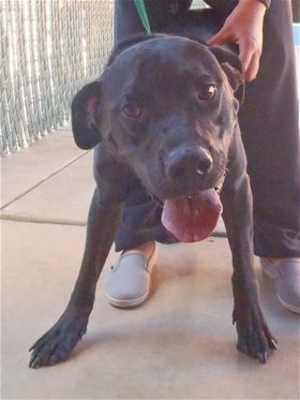
‘Moose’
“Moose” is a 3-year-old Labrador Retriever mix.
He has a short black coat, weighs 66 pounds and has been neutered.
He’s in kennel No. 16, ID No. 34643.

Female pit bull terrier mix
This female pit bull terrier mix is 5 months old.
She has a short brown coat and has not been altered.
She’s in kennel No. 19b, ID No. 34754.

Female shepherd mix
This female shepherd mix is 1 year old.
She has brown eyes and floppy years, and a short black and brown coat. Shelter staff did not report if she had been spayed.
Find her in kennel No. 20, ID No. 34623.

Female cattle dog mix
This female cattle dog mix is 1 year old.
She has a short brown coat, floppy ears and brown eyes, and weighs 39 pounds. She has been spayed.
Shelter staff said she is a jumper (she can top a 6-foot fence) and loves tennis balls.
She’s in kennel No. 24, ID No. 34758.
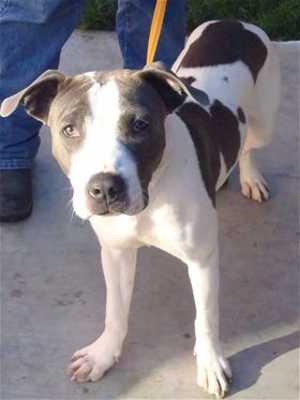
Male pit bull terrier mix
This male pit bull terrier mix is 6 months old.
Shelter staff reported that he is great with other dogs and loves to play.
He has a short white and gray coat, is medium-sized and has not yet been altered.
He’s in kennel No. 31, ID No. 34815.
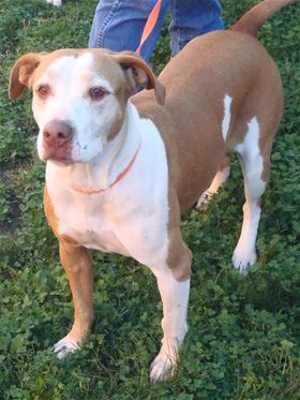
‘Mary Jane’
“Mary Jane” is a 6-year-old pit bull terrier mix.
She has a short brown and white coat, is medium-sized and has been spayed.
Find her in kennel No. 34, ID No. 34818.
Please note: Dogs listed at the shelter's Web page that are said to be “on hold” are not yet cleared for adoption.
To fill out an adoption application online visit http://www.co.lake.ca.us/Government/Directory/Animal_Care_And_Control/Adopt/Dog___Cat_Adoption_Application.htm .
Lake County Animal Care and Control is located at 4949 Helbush in Lakeport, next to the Hill Road Correctional Facility.
Office hours are Monday through Friday, 8 a.m. to 5 p.m., and 1 p.m. to 3 p.m., Saturday. The shelter is open from 10:30 a.m. to 4:30 p.m. Monday through Friday and on Saturday from 1 p.m. to 3 p.m.
Visit the shelter online at http://www.co.lake.ca.us/Government/Directory/Animal_Care_And_Control.htm .
For more information call Lake County Animal Care and Control at 707-263-0278.
Email Elizabeth Larson at
- Details
- Written by: Lake County News reports

LAKE COUNTY, Calif. – A holiday fundraiser to benefit the Lake County Hunger Task Force is returning this holiday season.
The Bountiful Gift Box is available for purchase again this year after being so well received the past two Christmas seasons.
The gift boxes contain Comice pears, a bottle of wine, walnuts, and apples from Lake County producers.
There are a limited number of Bountiful Gift Boxes – approximately 125 – and they go very quickly.
One hundred percent of the proceeds are donated directly to the Lake County Hunger Task Force, an all-volunteer organization seeking to provide fresh produce and nutritionally sound food to needy local residents through creation of community gardens, canning lessons and equipment donation, and regular food distribution.
Those needs of the hungry in our community have increased dramatically with the loss of two local food pantries in 2011.
“Lake County has a greater need than ever for food to help those on fixed incomes make their budgets stretch to the end of each month,” said Hunger Task Force volunteer Lorrie Gray.
“The elderly have been especially hit hard by the economy, with many making the choice between medications, rent, and food,” Gray explained. “They have no safety net, and we would like to help provide them with as much healthy food as we possibly can. They are less likely to take advantage of the Cal Fresh program, when eligible, than other age groups.”
Twenty-two percent of the population in Lake Co. is over age 65 and may not be eligible for food assistance.
Only 10 percent of those eligible do apply, for many it is fear of the process or the ethic of a generation unused to asking for assistance.
Sixty-nine percent of the school-aged children in Lake County are eligible for school lunches due to the limited economic resources of their families.
“The Bountiful Gift Box Project is such a beautiful effort to be involved with,” said Michelle Scully, one of the project’s organizers.
“The generosity of the local producers is so great and the response by both gift box purchasers and receivers is always overwhelmingly positive,” she said. “It's really awesome to be part of such a win-win project. The gift givers felt like they were giving a truly thoughtful and meaningful gift, the recipients loved experiencing the wonderful products we produce here in Lake County, and over the last two years the HTF received over $11,000 to continue all of the great work they do for our community. It’s hard to beat something like that.”
Gift boxes are $50 and purchasers may request red or white wine and requests will be honored as supply dictates. Once again this year there will be a very limited number of boxes available with olive oil rather than wine.
If you miss out on the boxes or would also like to contribute more to help stop hunger in our community, you can make a donation toward the purchase of a grocery holiday gift card for a senior citizen.
“This allows the seniors to purchase food that they prefer and in the quantities they need over time rather than all at once,” said Gray.
These gift cards may be given in a recipients name and a card specifying the donation will be provided.
“The first year we did this the gift box idea came together really quickly and we made do with what we had in terms of packaging,” said Scully. “We’ve been so fortunate to have had specially designed gift boxes donated to the project from the packaging company International Paper.”
She added, “The box is just awesome and is a package that people will be proud to give and to receive. I hear nothing but good things from people who have either ordered one or received one which is pretty exciting. People who have purchased a box before start asking about them early on as they know they make a wonderful gift and they sell-out very quickly. I hope that everyone who donated products, purchased a box, and received a gift box will be just as happy with its presentation.”
Anyone interested in purchasing a gift box may contact Lorrie Gray at 707-277-9227 or via email to Michelle Scully at
Boxes are $50 and numbers are limited. Distribution is scheduled for Dec. 7 at the Lake County Family Resource Center parking lot, 5350 Main St., Kelseyville.
- Details
- Written by: Lake County News reports
Attorney General Kamala D. Harris has released a new report that outlines the growing prevalence of the crime of human trafficking in the state, the increasing involvement of sophisticated transnational gangs in perpetrating the crime and the modern technologies that traffickers use to facilitate it.
Harris released “The State of Human Trafficking in California 2012” at the Human Trafficking Leadership Symposium, hosted by the University of Southern California in partnership with Humanity United.
Leaders from law enforcement, victim service groups, non-government organizations and other groups convened to discuss the report and consider best practices in the fight against forced labor and sex trafficking.
U.S. Secretary of Labor Hilda L. Solis and Mexico Attorney General Marisela Morales Ibáñez provided keynote remarks at the symposium.
“Human trafficking is a growing threat because criminal organizations have determined it is a low-risk, high-reward crime. We are here to change that calculus,” said Harris. “We must counter the ruthlessness of human traffickers with our resolve, innovation and collaboration. Law enforcement must continue to get trained, gather data and work to shut down the human trafficking operations in our state.”
California law enforcement and service providers have committed to cracking down on this rapidly-evolving crime.
The report finds that from mid-2010 to mid-2012, California’s nine regional anti-human trafficking task forces provided training to 25,591 law enforcement personnel, prosecutors, victim service providers and other first responders.
During the same period, the task forces identified 1,277 victims, initiated 2,552 investigations, and arrested 1,798 individuals for the crime.
California – the nation’s most populous and diverse state and the world’s ninth largest economy – is one of the nation’s top four destination states for trafficking human beings.
Despite public perception, 72 percent of trafficked human beings in the state cite the United States as their country of origin, with the remainder coming from foreign countries.
The report also describes the evolving challenges California faces in addressing this crime, which has become a $32 billion-a-year global industry.
Among the key findings in the report, organized criminal networks and street gangs are increasingly responsible for trafficking persons into and throughout the state.
The prevailing wisdom among these criminals is that human trafficking is more profitable and has a lower risk of being detected than drug trafficking.
In addition, new innovations in technology make it possible for traffickers to recruit victims and perpetrate their crimes online.
However, technology is also key to successful enforcement as the Internet, social media and mobile devices provide new avenues for identifying perpetrators, reaching out to victims and raising public awareness about human trafficking.
Harris earlier this year convened a Human Trafficking Work Group to update the first Human Trafficking in California report, released in 2007 by the California Alliance to Combat Trafficking and Slavery Task Force, as a result of the state’s first anti-trafficking law (AB 22, Lieber).
The 2012 Work Group included more than 100 representatives of state, local and federal law enforcement, state government agencies, victim service providers, nonprofit groups, technology companies and educational institutions.
The State of Human Trafficking in California 2012 reflects the Work Group discussions held during three day-long meetings in Sacramento, San Francisco and Los Angeles, as well as supplemental research and investigation by the California Department of Justice.
Key highlights from The State of Human Trafficking in California 2012
From mid-2010 to mid-2012, California’s nine regional human trafficking task forces identified 1,277 victims, initiated 2,552 investigations, and arrested 1,798 individuals.
In the same two-year period, California’s task forces provided training to 25,591 law enforcement personnel, prosecutors, victim service providers, and other first responders.
Several non-governmental organizations have also trained judicial officers, airport personnel, social service providers, pro bono attorneys, and retail businesses, among others.
The variety of individuals who have been trained underscores the pervasiveness of human trafficking and the important role that governmental and non-governmental actors play in detecting trafficking and assisting victims.
Seventy-two percent of human trafficking victims whose country of origin was identified by California’s task forces are American. The public perception is that human trafficking victims are from other countries, but data from California’s task forces indicate that the vast majority are Americans.
Labor trafficking is under-reported and under-investigated as compared to sex trafficking. 56 percent of victims who received services through California’s task forces were sex trafficking victims. Yet, data from other sources indicate that labor trafficking is 3.5 times as prevalent as sex trafficking worldwide.
Local and transnational gangs are increasingly trafficking in human beings because it is a low-risk and high, renewable profit crime. It is critical for federal, state, and local law enforcement and labor regulators to collaborate across jurisdictions to disrupt and dismantle these increasingly sophisticated, organized criminal networks.
A vertical prosecution model run outside routine vice operations can help law enforcement better protect victims and improve prosecutions. Fostering expertise about human trafficking within a law enforcement agency and handling these cases outside routine vice operations can prevent erroneously viewing trafficking victims as perpetrators.
Early and frequent collaboration between law enforcement and victim service providers helps victims and prosecutors. Victims who receive immediate and comprehensive assistance are more likely to help bring their traffickers to justice.
Traffickers are reaching more victims and customers by recruiting and advertising online. Traffickers use online advertising and Internet-enabled cell phones to access a larger client base and create a greater sense of anonymity. Law enforcement needs the training and tools to investigate trafficking online.
Technology is available to better identify, reach, and serve victims. Tools like search-term-triggered messages, website widgets, and text short codes enable groups to find victims online, connect them with services, and encourage the general public to report human trafficking.
Alert consumers need more tools to leverage their purchasing power to reduce the demand for trafficking. Public and private organizations are just beginning to create web-based and mobile tools to increase public awareness and educate consumers about how to help combat human trafficking.
Human trafficking involves the recruitment, smuggling, transporting, harboring, buying, or selling of a person for purposes of exploitation, prostitution, domestic servitude, sweatshop labor, migrant work, agricultural labor, peonage, bondage or involuntary servitude.
While human trafficking often involves the smuggling of human beings across international borders, numerous Americans are trafficked around the United States ever year.
Human trafficking strips people, especially women and children, of their freedom and violates our nation’s promise that every person in the United States is guaranteed basic human rights.
For more information on the trafficking of human beings and to view the report online, go to www.oag.ca.gov/human-trafficking .