How to resolve AdBlock issue?
News
- Details
- Written by: Guy Webster

Team members of NASA's Mars Science Laboratory mission took a test rover to Dumont Dunes in California's Mojave Desert earlier this month to improve knowledge of the best way to operate a similar rover, Curiosity, currently flying to Mars for an August landing.
The test rover that they put through paces on various sandy slopes has a full-scale version of Curiosity's mobility system, but it is otherwise stripped down so that it weighs about the same on Earth as Curiosity will weigh in the lesser gravity of Mars.
Information collected in these tests on windward and downwind portions of dunes will be used by the rover team in making decisions about driving Curiosity on dunes near a mountain in the center of Gale Crater.
First, however, the Mars Science Laboratory spacecraft, launched Nov. 26, 2011, must put Curiosity safely onto the ground.
Safe landing on Mars is never assured, and this mission will use innovative methods to land the heaviest vehicle in the smallest target area ever attempted on Mars.
Advances in landing heavier payloads more precisely are steps toward eventual human missions to Mars.
Curiosity is on track for landing the evening of Aug. 5, 2012, PDT (early on Aug. 6, Universal Time and EDT) to begin a two-year prime mission.
Researchers plan to use Curiosity to study layers in Gale Crater's central mound, Mount Sharp.
The mission will investigate whether the area has ever offered an environment favorable for microbial life.
NASA's Jet Propulsion Laboratory, a division of the California Institute of Technology in Pasadena, manages the mission for the NASA Science Mission Directorate, Washington.
More information about Curiosity is online at http://www.nasa.gov/msl and http://mars.jpl.nasa.gov/msl/ .
You can follow the mission on Facebook at: http://www.facebook.com/marscuriosity and on Twitter at: http://www.twitter.com/marscuriosity .
Guy Webster works for the Jet Propulsion Laboratory in Pasadena, Calif.

- Details
- Written by: Elizabeth Larson
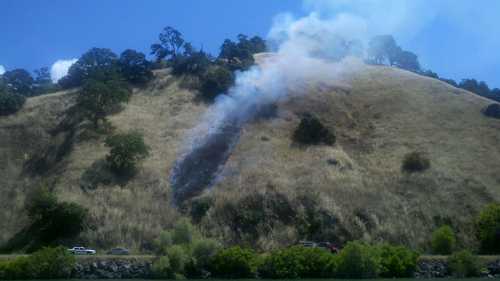
LUCERNE, Calif. – A wildland fire burned a small amount of acreage near Lucerne on Sunday.
The fire was reported just after 11:30 a.m. off Highway 20 just east of Lucerne, according to Cal Fire Battalion Chief Greg Bertelli.
“It took about an hour to contain,” Bertelli said of the fire.
Altogether, about two acres were burned, he said.
Northshore Fire and Cal Fire responded, and the U.S. Forest was standing by to assist as well in case other fires broke out, Bertelli said.
A helicopter, bulldozer, two Northshore Fire engines, two Cal Fire engines and one handcrew responded, according to Bertelli.
He said no structures were threatened.
For a few hours afterward firefighters remained on the steep hillsides where the fire had burned for mop up, he said.
The fire’s cause remained under investigation Sunday, Bertelli said.
John Jensen contributed to this report.
Email Elizabeth Larson at
- Details
- Written by: Lake County News Reports
Wild radishes grew prolifically along roadsides and in fields during my childhood, and their slender seed pods provided my friends and me with a handy snack when we were out and about.
Some say these invasive plants are ancestors of today’s cultivated radishes, but that’s open to debate.
One thing’s certain, however. The name “radish” is well-deserved, as the green pods we ate out-of-hand mimic the spicy taste of radishes farmed for food.
Peppery and pungent, radishes come in all shapes and sizes. Even their colors vary, expanding far beyond the bright red or deep magenta we see on small globe radishes in the supermarket.
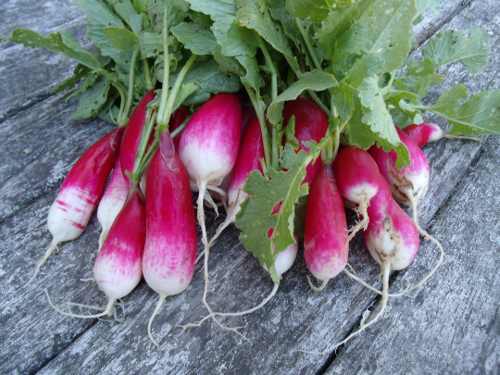
For example, French breakfast radishes are red ovals with white tips; icicle radishes are, not surprisingly, elongated and white; Easter egg radishes, while not an actual variety, are ovals or rounds sold in bunches of white, purple, pink, and red; and watermelon radishes can be as large as a baseball with white surrounding a pink center.
The time for radishes is now. A spring or early summer crop, they’re one of the first things to sprout up in the garden, taking less than a month from seed to table in most cases.
Some varieties hold up better in the summer heat than others, but most don’t do well once it gets hot, becoming overly spicy or bitter.
In addition to spring or summer radishes, there are winter radish varieties, which are sown in late summer or early fall.
Winter radishes are slower to develop than spring radishes, growing much larger. Typically crisper and more pungent, they hold in the ground and store longer than the spring varieties available now.
Winter radishes include the Spanish black radish, which can be large and round or elongated with tough black skin and spicy white flesh, and Asian radishes, also known as daikon (Japanese for long root), Chinese radishes, Japanese radishes, Oriental radishes, or mooli in Britain and India.
There are many varieties of daikon, both long and round, some growing quite large. The variety which with we are most familiar is white and carrot-like in size and shape.
Asian radishes can be pickled, used in stir-fries, fermented for kimchee, and even made into a savory Chinese cake with shrimp and egg.
A cruciferous plant, radishes are related to other vegetables in the brassica family, such as cabbage and mustard.
The entire plant is edible: its leaves, root, seeds, seed pods, flowers and sprouts.
The leaves may be used when young and tender in salads or on sandwiches, or sautéed like its cousins, mustard or arugula.
Certain types of radish are grown solely for oil production from its seeds. Advocates of radish seed essential oil claim such benefits as liver detoxification, kidney health, and relief of ailments as various as skin disorders and constipation.
Sprouted radish seeds yield delicate, peppery-flavored sprouts, perfect for adding piquancy to salads and sandwiches.
Some radish varieties are grown exclusively for their seed pods, left in the ground after their normal harvesting season. Seed pods develop after the plant has flowered and, like the wild radish pods of my childhood, offer crunchy zest when eaten.
The aptly-named rat-tailed radish is an old European variety that has long, curly pods, often pickled, that can grow to lengths of more than 8 inches. A German variety supplies spicy seeds for eating raw with beer.
The roots of the radish plant are most often eaten raw, whether out-of-hand, on vegetable platters, in salads, or on sandwiches, and there are an amazing variety of ways to cook with them, as well.
In addition to topping lettuce in a traditional salad, they may be shredded and mixed with colorful carrots, beets, scallions and other veggies to make a confetti salad; added to slaw; or pickled in a number of different ways.
Mango and lime is an interesting match for radishes in a salad, as is cucumber and dill.
Good partners for radishes on sandwiches include brown bread and butter (these make great tea sandwiches); cream cheese or butter and olives; avocado; egg salad; or roast beef.
Butter tames the spicy taste of radishes, and a simple but elegant way to serve them is on a platter with sweet butter and flavored salts, which may be made with such seasonings as roasted fennel or paprika and a dash of cayenne pepper. Simply dip a radish in butter and into one of the flavored salts for a perfectly balanced bite.
Radish’s characteristic zing is mellowed by cooking, which brings out a rich, earthy flavor. They can be braised, sautéed, roasted, even added to stir-fries, or even incorporated into pasta dishes.
Radishes are a very good source of fiber, vitamin C, folic acid, and potassium. They also contain riboflavin, vitamin B6, calcium, magnesium, copper and manganese. Other nutrients, like iron, are found in trace amounts.
They’re mildly anti-inflammatory, which helps to control allergies and illnesses.
If you’ve got radishes in your garden, plop them in a bucket of cold water to keep them cool if it’s a hot day when you pull them from the ground.
When choosing them at a market, radishes should feel firm when gently squeezed. If they yield to pressure, the flesh will be spongy.
Whether from the ground or market, remove the leaves before storing in the fridge, where they’ll keep for up to three weeks.
And here’s a tip. Before serving fresh radishes, soak them in ice water for extra crispness.
There is a delicious array of radish-inspired recipes I could offer you – sautéed radishes with mint, quick pickled radishes, roasted caramelized radishes, creamy rich radish green soup, glazed radishes, even radish butter – but the one that made my heart skip a beat is the cabbage-radish slaw with peanut dressing offered below.
The Asian-inspired recipe utilizes both daikon and red radishes, and should be a wonderful summertime treat. I hope you enjoy it.
But before I go, did you know that radishes inspire a yearly holiday festival in Mexico?
Citizens of Oaxaca City celebrate “Radish Night” (“Noche de los Rabanos” in Spanish) on December 23.
Folk art and agriculture are combined in this Christmas festival when ornate sculptures – from small animals and human figures to representations of events such as the Nativity – are carved from radishes and displayed on the town square.
The festival lasts just a few short hours as vegetables have a limited life span as art.
Even so, it’s an immensely creative way to celebrate one’s “roots.”
Cabbage-radish slaw with peanut dressing
1 tablespoon finely chopped peeled fresh ginger
¼ coarsely chopped shallot
¼ cup plus 1 tablespoon creamy peanut butter
½ cup rice-wine vinegar (not seasoned)
3 tablespoons soy sauce
3 tablespoons packed dark-brown sugar
¼ cup canola or safflower oil
1 small green cabbage (about 1 ¾ pounds), finely shredded
1 medium daikon radish, cut into 1/8-inch-thick matchsticks
16 red radishes, halved lengthwise and cut into thin half moons
4 scallions, cut on the diagonal into long, thin slices
½ cup dry-roasted peanuts
Blend ginger, shallot, peanut butter, vinegar, soy sauce, sugar, and oil in a blender until smooth; set aside.
Put cabbage, radishes, scallions, and peanuts in a large serving bowl. Pour in peanut dressing and toss thoroughly to combine.
Recipe is courtesy of www.MarthaStewart.com .
Esther Oertel, a freelance writer, cooking teacher, and speaker, is passionate about local produce and all foods in the vegetable kingdom. She welcomes your questions and comments and may be reached at
- Details
- Written by: Lake County News reports
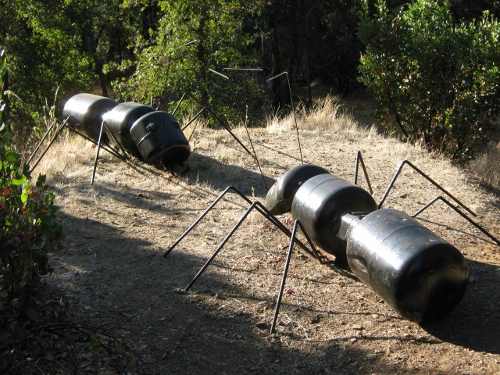
MIDDLETOWN, CA – The 10th annual EcoArts: Lake County Sculpture Walk will open in June, and the installation of sculptures in dialogue with nature will be available for viewing through Oct. 13 at Middletown Trailside Nature Preserve County Park.
A grand opening event is scheduled for Sunday, June 10, from 11 a.m. to 3 p.m.
All activities are free, family friendly and fun.
Stroll along the center trail of the 107-acre County Park to view the sculptural expressions of award-winning artists, as well as local schools and community groups.
Bring a picnic lunch and enjoy your meal at one of the tables located through out this naturally scenic park.
Visitors will enjoy the sculpture walk as well as the beauty of the park that is also home to many types of wildlife.
The park is located at 21435 Dry Creek Cutoff, Middletown, California and is open daily from dawn until dusk.
The Trailside Nature Preserve Park is accessed via Dry Creek Cutoff off of State Route 175. Sensible shoes and water are recommended.
Admission to the Sculpture Walk is free.
Please visit www.ecoartsoflakecounty.org or call Karen Turcotte at 707-928-0323 for more information.