 How to resolve AdBlock issue?
News
- Details
- Written by: Lake County News reports
NORTHERN CALIFORNIA – Calling the most recent Bay Delta Conservation Plan delay the “last, best opportunity to stand up to … unreasonable demands,” Reps. Mike Thompson (CA-1), Jerry McNerney (CA-11), George Miller (CA-7), Doris Matsui (CA-5) and John Garamendi (CA-10) called for specific steps to be taken for the plan to move forward in a fair and transparent manner.
The five members from the California congressional delegation have been vocal in calling for changes to the Bay Delta Conservation Plan and have demanded that any plan has significant input from the Bay-Delta region.
In letters sent Wednesday to Gov. Jerry Brown and Secretary of the Interior Ken Salazar, the lawmakers said, “We recognize that some are now calling for an immediate decision, but we believe that it is critical to get this right; a rushed and inadequate Bay-Delta planning effort will lead to increased litigation, uncertainty, and expense.”
“So far in this process we’ve seen too many back-door deals that put the interests of South-of-Delta water contractors before our farmers, fishermen and local communities. Many of our families and small businesses that depend on the Delta would have their livelihood stripped away and the Delta’s diverse wildlife would be destroyed if these politically driven deals were put in place. Federal and state officials need to use this delay to come up with fair and transparent plan that is based on sound science so that our communities, businesses, fish, wildlife and environment in the Delta and north of the Delta are not harmed,” said Rep. Thompson.
“I will not accept any plan for the Delta that is harmful to the farmers, families, and small business owners in the Delta region. To date, the planning process for Delta water has been unduly influenced by wealthy water contractors from south of the Delta who would steal our water, costing us millions of dollars and countless jobs. This delay provides an opportunity for the state and federal governments to stand up to the water contractors and ensure that the BDCP includes the input of our region. I will continue to fight against any measures that would destroy the Delta and our way of life,” said Rep. McNerney.
“More than five years into this process, the Bay Delta Conservation Plan still hasn’t met basic legal or scientific requirements,” said Rep. Miller. “This is the last chance to fix it, and that’s why this delay is so important: it gives the scientists time to get it right. The Bay-Delta’s health is key to California’s future – we can either work out a good plan that reduces reliance on the Delta, or we can end up with increased litigation, uncertainty, and expense.”
“A 50-year permit needs to be done not only right, but with due diligence and equitable treatment to all those affected. I want to see the federal and state agencies take this opportunity to put forward a process and a plan for the Delta region that recognizes the input they’ve received not just from south of Delta interests, but north of Delta interests as well. Our state can’t afford to get this wrong,” said Rep. Matsui.
“As the lynchpin of California’s water system, the economic and environmental sustainability of the Sacramento-San Joaquin Delta must be made front and center in this discussion. It’s the law,” said Rep. John Garamendi. “In addition, using the best available science, we must focus on conservation, storage, and recycling to preserve our state’s ecosystems and to meet the water needs of nearly 40 million Californians.”
The full text of the letter is below and attached.
May 16, 2012
The Honorable Ken Salazar
Secretary
Department of the Interior
1849 C Street, NW
Washington, DC 20240
Dear Secretary Salazar:
We write in response to the recently-announced delay in the timeline for releasing additional details of the proposed Bay Delta Conservation Plan (BDCP). We believe that acknowledging the need for changes and additional scientific review is an important first step towards transforming the BDCP into a plan that meets state and federal legal requirements and into a process that is fair, transparent, and inclusive of communities in the Delta region and Northern California. We recognize that some are now calling for an immediate decision, but we believe that it is critical to get this right; a rushed and inadequate Bay-Delta planning effort will lead to increased litigation, uncertainty, and expense.
As you know, we have raised many objections during the skewed process that has led to this point. We have reached out to state and federal officials repeatedly, as a group and as individuals, to express our view that the BDCP is failing to adequately address the needs of our constituents and the health of the Bay-Delta ecosystem. Our concerns have been largely reinforced by numerous independent analyses and the release of draft environmental documents which show that the leading BDCP proposal will not meet biological goals and may even lead to the extinction of several species, including some of California’s iconic salmon runs. The recent “red flag” comments from state and federal agencies are just the latest indication that the BDCP must be overhauled if it is to be successful.
We also understand that, despite the many flaws with the BDCP, state and federal agencies still hope to make a significant announcement on the plan this summer. We would like to reemphasize our conviction that, before making a determination of a preferred project, state and federal agencies have an obligation to ensure that the BDCP will:
- Vigorously and meaningfully engage local officials from the Bay-Delta region and Northern California in the BDCP process.
- Reflect the best available scientific understanding of the Bay-Delta ecosystem’s needs as required by state law, including the reduction of water diversions from the Bay-Delta.
- Demonstrate an understanding of the economic issues identified by the Delta Protection Commission’s Economic Sustainability Plan for the Sacramento-San Joaquin River Delta.
- Fully analyze a complete range of alternatives, including non-diversion alternatives, the State Water Resource Control Board’s alternative, and proposals put forth by experts from the Delta and Northern California. A cost-benefit analysis of each alternative should also be conducted.
- Define and meet biological goals and ensure that the preferred BDCP proposal is fully consistent with the best available science and relevant federal and state environmental laws.
- Protect water quality and reliability for farmers and communities in the Delta and Northern California.
- Rebuild the Bay-Delta’s fisheries and the thousands of jobs they sustain.
- Preserve flood protection for communities in the Delta and Northern California and include a focus on levee improvements.
- Commit to choosing, clearly and with intent, the “least environmentally damaging practicable alternative” as federal law requires.
- Meet the requirements of state law by including alternative water supplies as a way to increase water supply reliability and reduce dependence on the Delta.
Our constituents have repeatedly demonstrated that they are ready, willing, and able to participate in a BDCP process that is truly collaborative and transparent. Despite the good intentions of our constituents, the BDCP has been dominated by south-of-Delta contractors with a long history of opposing balanced solutions to the challenges facing California’s water system.
The recently-announced delay in the BDCP may represent the last, best opportunity to stand up to the unreasonable demands of south-of-Delta water contractors and change the BDCP into a plan that can enjoy support throughout the entire state of California.
Thank you for your attention to this letter. We look forward to your response.
Sincerely,
Jerry McNerney
George Miller
Mike Thompson
Doris Matsui
John Garamendi
- Details
- Written by: Lake County News reports
NORTHERN CALIFORNIA – Department of Fish and Game (DFG) biologists are trying a new tactic to help California’s ocean-bound juvenile salmon, in hopes of increasing survival rates.
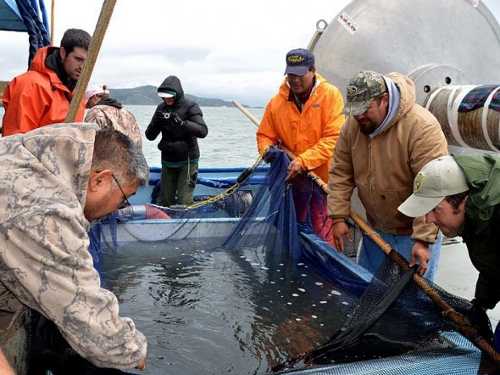
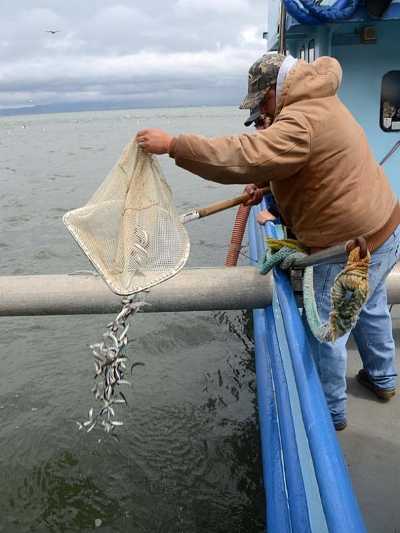
On May 3, for the first time in state history, DFG staff used a boat to move approximately 100,000 young Chinook (called smolts) down the Sacramento River to San Francisco Bay.
Upon arrival, the smolts were released in the Bay, where they will grow to adulthood before returning upriver to spawn.
“We’ve been using trucks to transport smolts to points downstream for years, but we’ve never moved them by barge, and we’ve never moved them this far,” said DFG Environmental Scientist Colin Purdy, who supervised the boat transport to the Bay Area.
“Truck releases are typically much further upstream, and though they do shorten the fish’s journey to the ocean, they still face all kinds of hazards in the river,” Purdy said. “It’s possible we could better the chances of survival for this species just by making a few thoughtful changes in our operating practices. The data we collect over the next few years will tell the story, but we’re hopeful that we’ll see positive results.”
Salmon return to their spawning grounds using their sense of smell.
The process, called imprinting, begins before birth as waters flow over the eggs and continues as they grow and make their way to the ocean.
Each segment of water on their journey has distinctive chemical cues which they can re-trace to their spawning grounds.
Water is circulated through pumps from the Sacramento River into the boat’s holding tank, where the fish are kept.
The hope is that this may improve their ability to find their way back as an adult and predators are unable to access the fish in the holding tank during the journey downstream.
This is the beginning of a multiyear study program aimed at increasing return rates of salmon from the sea to their native rivers.
Over the next few years, scientists will use the data collected from the fish to test and evaluate the idea that overall survival rates and increased adult returns can be better achieved by barging the young salmon downstream.
To form a basis of comparison for this study, two other control groups of 100,000 smolts each were released by trucks in other locations at the same time as the barge release – one at a different location in the Bay, and one into the Sacramento River near Sacramento.
All 300,000 fish in this study were implanted with coded wire tags smaller than a tiny piece of pencil lead, which will ultimately enable scientists to tell which of the three groups the returning fish came from – the barge release, or one of the two truck releases.
The study is being conducted by DFG fisheries biologists with the support of the Commercial Salmon Trollers Advisory Committee, which donated the use of the boat, fuel and crew time to help ensure a successful start to the study. They have committed to helping DFG for the next three years of data collection.
“This has been a major cooperative effort and we really appreciate DFG’s willingness to work with everybody and look at new ways of doing things,” said Zeke Grader, executive director of the Pacific Coast Federation of Fishermen. “DFG is committed to decreasing straying rates among the salmon migrating up the Sacramento River. Barging may be one way to achieve this goal.”
Scientists hope to confirm that – unlike the usual method of transporting the fish by truck – the boat transport will both eliminate in-river hazards such as getting lost or being eaten by predators, and give the smolts a chance to imprint on their native stream on their way to the ocean, improving their chances of successful return.
- Details
- Written by: Lake County News reports
LOWER LAKE, Calif. – The Konocti Unified School District has a new superintendent.
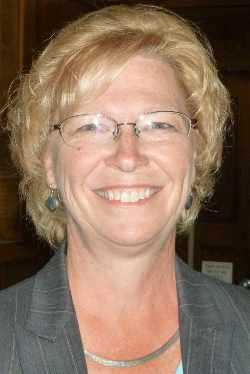
At its regular meeting on Wednesday evening, the Konocti Unified School District Board of Trustees announced that Donna Becnel has been selected to serve as district superintendent effective July 1.
Becnel will succeed Superintendent Dr. William MacDougall, who will retire on June 30.
Board President Anita Gordon said the board was unanimous in the decision to hire Becnel.
Gordon commented that the district is fortunate to have found such an experienced and skilled school administrator to provide leadership to the students and staff of the Konocti Unified School District.
Becnel currently serves as the assistant superintendent for human resources in the Hayward Unified School District.
Before coming to Hayward, she worked in personnel services in the Antioch, San Lorenzo and Castro Valley Unified School districts.
Her first administrative position was in the Mt. Pleasant School District where she served as director of special education and pupil services. Mt. Pleasant is a district about the same size as Konocti located in the San Jose area.
Although her main area of expertise has been in human resources, she has likewise had experience in business services including budget preparation and management as well as experience in curriculum and instructional services.
In the Hayward District, she designed and implemented a program called “Aspiring Administrators” to provide coaching and mentoring support to new certificated and classified management staff.
She has been involved in the communities where she has worked volunteering for community service through Rotary, Chamber of Commerce and the Police Activities League.
She currently serves on the board of directors for a nonprofit that provides counseling services to the local schools and community.
Konocti Unified conducted a nationwide search for the superintendent position and received more than 30 applications.
The applications were screened by a team of educators and the board selected eight candidates to be interviewed.
Each candidate not only had an hour long interview with the school board but also met with a community committee composed of 17 local citizens including parents, community business leaders, teachers, classified staff, parents and school administrators.
After listening to the input from the community committee, the board selected three candidates for a second interview.
Once they identified the top candidate, two board members visited the current district of employment to interview teachers, staff and co-workers, the district reported.
- Details
- Written by: Elizabeth Larson
LAKEPORT, Calif. – Local educators and members of the legal community are partnering to bring a new educational experience to the community's young people.
The Mock Trial Program is set to make its debut in the 2012-13 school year.
The program, which began in Southern California, gives young people the chance to study court cases and argue them before real judges in real courtrooms as part of mock bench trials competitions.
The Lake County Superior Court and Lake County Office of Education partnered late last year to bring the program to Lake County.
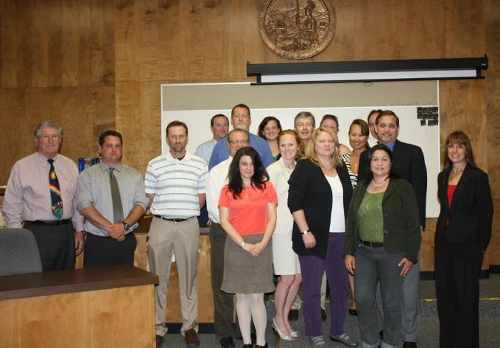
Close to 20 people – including Superior Court Judge Andrew Blum, Lake County Superintendent of Schools Wally Holbrook and Upper Lake High School Superintendent Patrick Iaccino – met in the Lake County Superior Court Department 2 courtroom on Tuesday afternoon to talk about the next steps necessary to make the competition a reality.
Holbrook said presentations have been made at local high schools, four of which expressed their interest in forming teams for the competition.
He said the plan is to be ready at the start of the coming school year.
Court staffer Suzanne Blavet said a number of local attorneys – Stephen and Angela Carter, Anna Gregorian and Bill Conwell, David Markham, Jon Hopkins and Jacqueline Snyder – already are committed to working with teams forming at the various schools.
Still other local attorneys may be joining as well, Blavet said.
Stephanie Wayment of the Lake County Office of Education said every county that has a mock trial competition has the opportunity to send one team to the state competition, which this coming year will be held in Anaheim.
Holbrook said Lake County's Mock Trial Program will have its actual kick off at the end of September or start of October.
Community members interested in participating at various levels should contact the Lake County Office of Education, 707-262-4100.
Email Elizabeth Larson at