 How to resolve AdBlock issue?
News
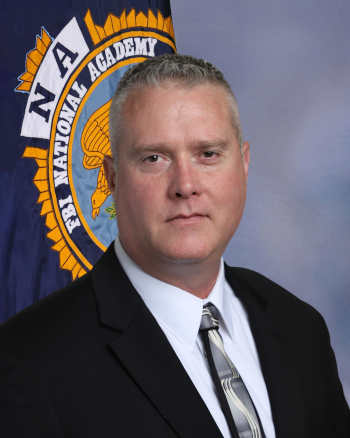
LAKE COUNTY, Calif. — Lake County’s sheriff-elect has graduated from the Federal Bureau of Investigation’s National Academy.
Lake County Undersheriff Lucas Bingham was one of 201 law enforcement officers who graduated from the academy in Quantico, Virginia, on Thursday, June 6, the Lake County Sheriff’s Office reported.
Bingham was elected sheriff in March. He ran unopposed and will take office in January.
“I am deeply grateful for the opportunity to have attended the National Academy,” said Bingham. “The advanced training and the invaluable connections made with law enforcement professionals worldwide will help me better serve our community. The National Academy has reinforced my commitment to innovation and excellence. I look forward to applying the insights and skills gained to further elevate the standards of the Sheriff’s Office."
Bingham, a seasoned professional with 26 years of service at the sheriff’s office, has been instrumental in managing and leading the agency.
Testifying to its global recognition, the National Academy’s 290th session had participants hailing from 46 states, the District of Columbia, 24 countries, five military organizations and six federal civilian organizations.
The National Academy is 10 weeks of advanced communication, leadership and fitness training. Participants must have proven records as professionals within their agencies to attend.
Since 1935, the FBI National Academy has graduated 55,186 graduates. It is held at the FBI Training Academy in Quantico, where the FBI trains its new special agents and intelligence analysts.
- Details
- Written by: LAKE COUNTY NEWS REPORTS
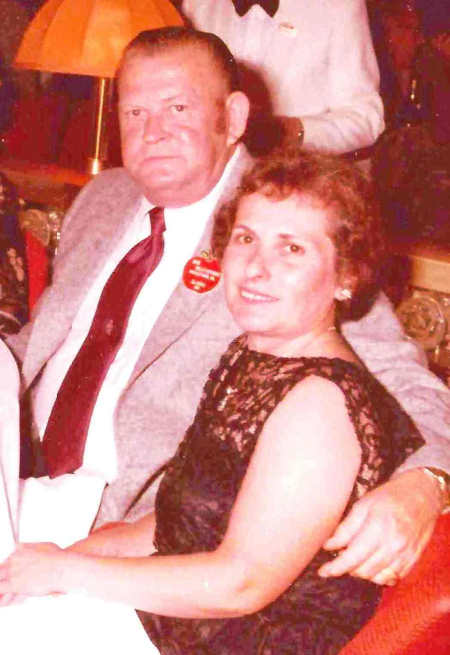
MIDDLETOWN, Calif. — The Middletown Days Committee has announced that its honorees for this weekend’s 63rd annual event will include Pioneer Award winners, the Weatherwax family.
“In the annals of Middletown’s history, one of the names that stands out as a beacon of community spirit and generosity: the Weatherwax family,” the committee said in its statement. “For decades, this remarkable family has left an indelible mark on the town, shaping its landscape and fostering a sense of togetherness that defines the very essence of community.
Bob and Gerry Weatherwax moved to the area from La Puente in Southern California in 1955 along with Bob’s mom, sister and two brothers.Their warmth and hospitality knew no bounds.
The couple had dreamed of living in a small rural community and moving to Lake County was a dream come true. They welcomed everyone with open arms, embodying the spirit of community.
Bob and Gerry have four children and two adopted children: Linda, Bob Jr., Susie, Bill, Ted and Jeff. Their three children who still live in the area, Bobby Weatherwax and his wife, Linda, Susie Knowles and her husband, Tom, and Linda Diehl-Darns and her husband, Tom and the three children that live out of the area, Bill Weatherwax and his wife Kathy, Jeff Stopper and Ted Stopper.
Their children have carried on their parents’ legacy with pride, continuing to uphold the family traditions that have defined them, as well as volunteering to support the community.
Among Bob and Gerry Weatherwax’s many contributions, the Weatherwax family initiated and hosted the Middletown Unified School District teacher barbecues at the start of each school year. This annual event served as a gesture of appreciation and support for the teachers of Middletown, fostering a sense of camaraderie and unity within the educational community.
Long before Sober Grad became a widespread practice, the Weatherwaxes took it upon themselves to ensure the safety of Middletown’s graduating students. They hosted their own Sober Grad celebrations, which included a live band at their ranch in Snell Valley, providing a safe and alcohol-free environment for graduating students and their friends.
Their foresight and dedication undoubtedly saved countless lives and set a precedent for responsible graduation celebrations in the community.
Additionally, their influence extended to the realm of sports and extracurricular activities through the establishment of the Sports Boosters. Their support and advocacy helped provide essential resources for Middletown’s student athletes, fostering a culture of excellence and achievement within the local sports community.
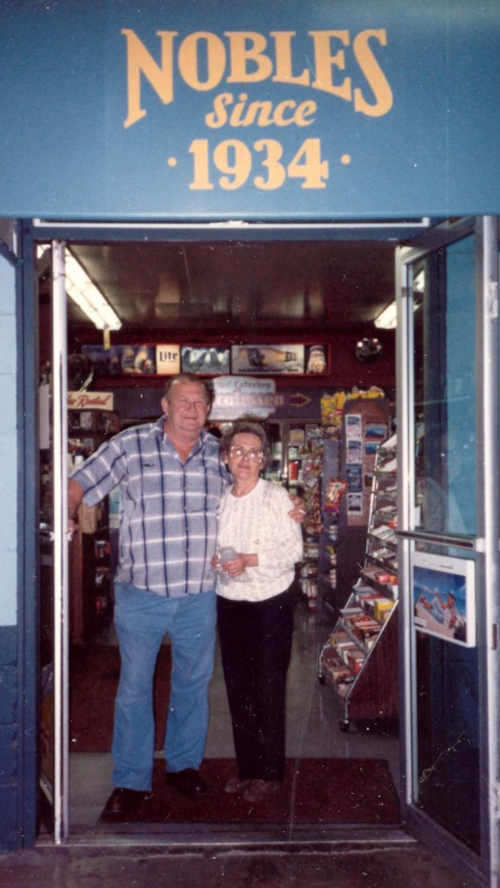
At the heart of their legacy lies their instrumental role in the development of Middletown Central Park. The land was donated to the community for a park by ancestors of the Hardester family.
In the 1960s, when the town was in need of a communal space for gatherings and recreation, the Weatherwax family stepped forward along with other community members. Their contributions, both in terms of time and money, were pivotal in transforming a mere idea into a vibrant reality.
The Weatherwaxes’ involvement in the development of Middletown Central Park continues today.
They rolled up their sleeves and became deeply engaged in the process, investing their time and energy to ensure that every aspect of the park reflected the needs and desires of the community — from the creation of the arena, stage and dance floor to the establishment of the original senior center and barbecue area, as well as their support of the Middletown Days Queen Contest. Their fingerprints can be found in every corner of the park.
Their commitment to community service was exemplified through their instrumental role initially establishing the Middletown Lions and Lioness Clubs as charter members. Not only did they contribute financially to the clubs’ founding, but they also donated their time and resources to ensure its success. Bob Weatherwax Jr., Susie Knowles and Tom Knowles, and Linda Diehl-Darms continue volunteering and supporting the Lions Club and community.
In addition to their involvement with Middletown Central Park Association and the Lions and Lioness Clubs, the Weatherwax family has played integral roles in other community service organizations, including the Middletown Merchants Association and the Middletown Luncheon Club.
The enduring legacy of the Weatherwax family in Middletown is not just a tale of philanthropy and community service; it’s a story of multigenerational commitment and unwavering dedication to the betterment of their hometown.
With each passing generation, their impact has only grown stronger, leaving an indelible mark on the fabric of Middletown’s identity. Rooted deeply in the soil of Middletown, the Weatherwax family has seen five generations here, each contributing in their own unique way to the town’s growth and prosperity.
Their dedication to Middletown’s development is evident in every aspect of their lives. For the Weatherwax family, giving back to their community is not just a choice; it is a calling. Family, friends, and the town itself are all integral parts of their lives, and they work tirelessly to ensure that Middletown continues to thrive.
As the Weatherwax family continues to write their chapter in Middletown’s history, their legacy serves as a beacon of inspiration for future generations. Their unwavering commitment to family, friends, community and service reminds us all of the power of selflessness and compassion in shaping a brighter tomorrow.
Their story serves as a powerful reminder of the profound impact that individuals and families can have when they come together for the greater good. In the hearts and minds of the people of our community, the Weatherwax family will forever hold a special place as true guardians of community spirit and unity.
- Details
- Written by: LAKE COUNTY NEWS REPORTS
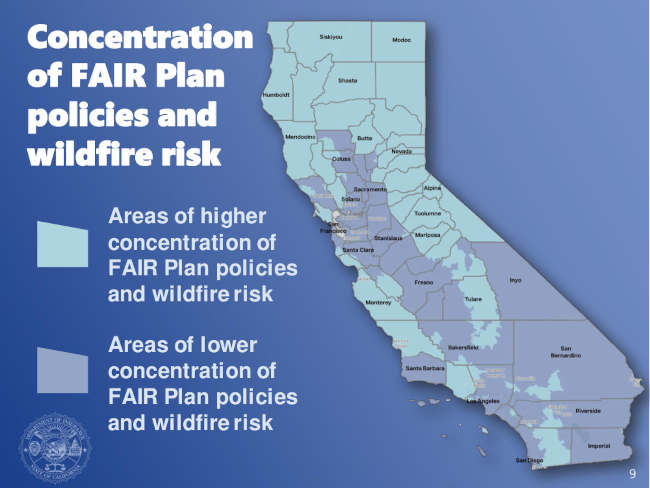
First-ever wildfire risk map showing where insurance companies need to write more coverage
There is hope on the horizon for Californians whose options for fire insurance coverage have been severely curtailed over the past decade.
On Wednesday, Insurance Commissioner Ricardo Lara released further details of his plan to increase the writing of homeowners and commercial insurance policies in areas of the state with high wildfire risk and so transform the insurance market, which has forced many homeowners — including some in Lake County — into an extremely expensive, last-resort option.
Lara’s office said this action is the next step of his Sustainable Insurance Strategy that will help restore coverage options for Californians across the state while safeguarding the integrity of the state’s insurance market.
“Commissioner Lara is keeping California on course for the most significant insurance reform in 30 years by releasing regulatory text outlining the commitments that insurance companies must make in order to use forward-looking catastrophe models for ratemaking,” his office reported in the Wednesday statement.
The release of this regulatory text and announcement of a June 26 public workshop is part of the package of regulatory language designed to incorporate the use of catastrophe models in California ratemaking.
“Californians in every corner of our state are frustrated with outdated regulations and desperate for change,” said Commissioner Lara. “Whether you live in the Sierra or the foothills, along the coast or in a city, California is not a 'one-size-fits-all' place, and we need to be inclusive. We are enacting a major reform that will result in insurance companies writing more policies, so if you are stuck on the FAIR Plan because of your unique wildfire risk, there will be help for you.”
Under Proposition 103 enacted by voters in 1988, insurance companies are legally free to choose where they will write policies in California.
As a result, insurance companies are writing more and more in areas of the state deemed less risky, especially with the continued threat of climate change.
This most affects residents and business owners in areas with wildfire risk where the California FAIR Plan has become the only option for insurance, not the last resort as it was intended.
Under Commissioner Lara’s strategy, insurance companies will be allowed to use forward-looking catastrophe models if — and only if — they increase writing of policies in these wildfire distressed areas, helping fix a fundamental shortcoming of Prop. 103.
“We are addressing this crisis of insurance availability head-on. For the many Californians who live anywhere where wildfires are a threat, my strategy will increase their options while requiring insurance companies to take their wildfire safety actions seriously,” Lara said. “This builds on my first-in-the-nation Safer from Wildfires regulation by requiring insurance companies take into account wildfire mitigation efforts at the individual property, community, and regional level.”
Gov. Gavin Newsom on Wednesday offered his support for Lara’s plan. “This is another critical action to help fix California’s decades-old insurance crisis. It will help homeowners who face higher threats of wildfire get the coverage they need, while also easing pressure off of the state’s FAIR Plan. As the climate crisis has rapidly intensified, the insurance system hasn’t been seriously reformed in 30 years – this is part of our strategy to strengthen our marketplace and get folks the coverage they need.”
Last year, Newsom called for swift regulatory action to strengthen and stabilize California’s marketplace with a focus on creating a better rate approval process, building a stronger FAIR Plan, and accelerating the implementation of regulations.
In May, the Newsom Administration released a proposal to increase the transparency and speed of rate change application approval timelines, while remaining consistent with Proposition 103’s consumer protections from excessive, inadequate, and unfairly discriminatory insurance rates.
Insurance rates nationwide have been on the rise due to the impacts of the climate crisis. Newsom’s office reported that California rates have been below the national average and significantly less than some other states, with the average yearly cost for $300,000 homes at:
• California – $1,405;
• National – $2,601;
• Texas – $3,851;
• Florida – $4,419.
Under this regulatory package, insurance companies must detail where they are writing policies in submitted rate filings and the department will use its existing enforcement authority to hold them accountable.
Insurance companies using catastrophe models also will be required to take into account the steps taken by policyholders to mitigate wildfire risk.
“Technology is harming consumers, not helping them when it comes to making insurance more available and affordable. I commend the Department for insisting that there be a tangible benefit for consumers,” said Amy Bach, executive director of United Policyholders, a nonprofit organization founded in 1991 that informs and advocates for insurance consumers across the country. “The department is intent on this being a two-way street where consumers are better served. We need a public model as a benchmark and strong regulations to prevent overcharges and unfair underwriting practices.”
Sen. Bill Dodd, D-Napa, who formerly represented Lake County in the State Assembly, also is supporting Lara’s plan.
“We all know the status quo in the insurance market isn’t acceptable,” Dodd said in a Wednesday statement. “I appreciate Commissioner Lara’s thoughtful leadership and partnership to protect consumers while ensuring insurance availability and affordability throughout California. We’ve got to attack this problem from multiple angles by reducing wildfire risk and addressing the impacts of inflation and ratemaking on the insurance market. Advancing and refining these proposed regulations is another piece of the puzzle for creating a functional, fair, sustainable insurance system in California. As the state achieves needed reforms, we need to hold insurers accountable for stepping up and offering insurance, and these regulations would help do that.”
First-ever insurance map shows where increased coverage is needed
As part of Wednesday’s announcement, the Insurance Department released a statewide map that it developed showing areas where wildfire risk and FAIR Plan policies are concentrated.
Lake County is shown as one of the areas with a higher concentration of both risk and FAIR plan policies.
Lake also is No. 12 on a preliminary list of 28 distressed counties for which Lara is seeking insurer commitments for increased policy writing.
The county’s commercial and residential ZIP codes also are on separate preliminary lists of undermarketed ZIP codes for insurer commitments.
With this map, insurance companies will have direct knowledge of where they need to write more policies in the state in order to utilize catastrophe modeling in their rates that are subject to department approval.
The department took a hybrid approach due to the state’s large population and complex geography.
It used insurance data first to identify ZIP codes in areas of wildfire hazard where more than 15% of policies are written by the California FAIR Plan, the state's insurer of last resort, as well as ZIP codes where incomes are low and but insurance premiums are high, namely above $4 per $1,000 of coverage.
To be more inclusive, the department also identified counties where greater than 20% of policies are considered high risk by a review of that county’s aggregate fire risk scores.
Finally, as part of new growth benchmarks, insurance companies must take FAIR Plan policies facing wildfire risk from more urban areas.
The map aligns with recent work by Cal Fire identifying fire hazard zones where mitigation resources are targeted, thus amplifying those efforts. The department will update this information from time to time but no less than once every year.
“This type of coordination and alignment between state agencies is a critical part of our success in preparing communities for wildfire,” said State Fire Marshal Daniel Berlant. “Commissioner Lara’s work aligns with Cal Fire’s wildfire mitigation efforts and builds on major investments the state is making to protect residents.”
Insurance companies must write more policies
This hybrid approach enacts an agreement that Commissioner Lara reached with insurance companies last year to cover at least 85% of properties in distressed areas.
The new regulatory text also recognizes the complexity of California’s insurance marketplace which is made up of large and small companies, including some serving geographical regions with fewer homes at risk of wildfires.
Larger insurance companies with a major presence in distressed areas will need to write no less than 85% of properties within two years of a rate filing being adopted and report their progress to the Department.
Companies already meeting the threshold will be required to maintain those policies in force for three years. Smaller companies, new entrants, and companies that largely write outside of wildfire risk areas and cannot meet the 85% requirement will need to expand their writings by at least 5%.
Companies will be able to craft plans subject to the department’s review and approval that expand policy writing in areas of wildfire risk anywhere in the state, helping all parts of California benefit from greater insurance options.
Commercial insurance companies will need to increase coverage by 5% in wildfire distressed ZIP codes statewide, which will increase coverage options for farms and wineries, homeowners and condo associations, and other businesses.
“California Farm Bureau members applaud Commissioner Lara's continued commitment to restore competition to the insurance market by bringing insurers back to write residential and commercial policies in our state,” said Shannon Douglass, president of the California Farm Bureau. “Competition is the first step to guide the market to a place where pricing reflects ongoing wildfire mitigation efforts undertaken by Californians, including by our farmers and ranchers who work to remove fuels and safeguard properties. Our productive agricultural lands provide important buffers that can reduce the risk of catastrophic fire events. We hope our members can obtain comprehensive, affordable coverage through improved insurance offerings that recognize their contributions to protecting California from wildfires.”
Continued progress toward enacting transformative insurance reforms
The regulatory text that Commissioner Lara announced Wednesday is part of his strategy enabling insurance companies to use “forward-looking” catastrophe modeling in rate making when they commit to writing and maintaining more policies.
This is a companion to draft text that he released in March before receiving public input at an April workshop.
Following the public workshop on June 26, the department will review public input before issuing the full catastrophe modeling regulation for adoption by year end.
Commissioner Lara detailed another part of his strategy in February when he published a “complete rate application” regulation that creates clarity in the rate review process for all participants.
This regulation is a critical part of reducing unnecessary delays that can cause rate filings to take more than a year. It holds insurance companies accountable for providing the complete information that the department needs to make informed and timely decisions on these filings, and also helps prevent delays caused by intervenors raising issues not relevant to the rate review process.
The department plans to introduce another major part of the strategy with proposed regulation text in July to allow insurance companies that take on greater risks in California to incorporate a reinsurance cost component in their rate filings to cover those risks.
That same month, Commissioner Lara also plans to require the FAIR Plan to increase coverage to $20 million per structure for larger homeowners’ associations, condo associations, farms, and other businesses. He also will require the FAIR Plan to have a sounder financial sustainability structure.
“We have been surviving with 20th century regulations for 21st century problems. We are compressing decades of deferral and delay into a one-year timeline of action,” Lara told the Assembly Insurance Committee on May 15. “We have to remain flexible. We have to be responsive. The lesson of the past is that we cannot be locked into another 30 years of stagnant regulations.”
- Details
- Written by: Lake County News reports
Headache, chills, tiredness may be evidence of a supercharged defense, according to UCSF-led study.
Fewer than 1 in 4 people in the U.S. have received last year’s updated COVID-19 vaccine, despite a death toll of more than 23,000 Americans this year.
One of the most common reasons for bypassing the COVID vaccine is concern about side effects like tiredness, muscle and joint pain, chills, headache, fever, nausea and feeling generally unwell.
But a new study, led by UC San Francisco, has found that the symptoms indicate a robust immune response that is likely to lessen the chances of infection.
The study, which appears online June 10 in Annals of Internal Medicine, is based on symptom reports and antibody responses from 363 people, who had the Pfizer-BioNTech or Moderna mRNA vaccines when they were first introduced.
After the second dose of the vaccine, the researchers found that those with seven or more symptoms had nearly double the antibody levels of those who did not have symptoms. The participants were mainly in their forties to sixties and had not had the virus.
About 40% of the people in the study also wore a device to monitor their temperature, breathing and heart rate. The researchers found that those whose skin temperature increased by 1 degree Celsius after the second dose had three times the antibody levels six months later, compared to those whose temperature did not increase.
An absence of side effects does not mean the vaccine is not working
“Generally, we found that the higher the number of side effects, the higher the level of antibodies,” said first author Ethan Dutcher, MD, PhD, a postdoctoral researcher in the UCSF Department of Psychiatry and Behavioral Sciences, and the Weill Institute for Neurosciences. “But this wasn’t a hard rule: some people without side effects had better antibodies than some people with side effects.”
As the virus has evolved and fatality rates have fallen, many people are underestimating its impact.
“The toll of COVID is still high for some – sickness, lost work, lasting fatigue and the dreaded long COVID,” said co-senior author Elissa Epel, PhD, a vice chair in the UCSF Department of Psychiatry and Behavioral Sciences. “While the symptoms from vaccination can be very unpleasant, it’s important to remember that they don’t come close to the disease’s potential complications,” she said.
“With COVID-19 vaccines likely here to stay, identifying what predicts a strong antibody response will remain important,” said co-senior author Aric Prather, PhD, professor in the UCSF Department of Psychiatry and Behavioral Sciences.
The latest recommendations from the Centers for Disease Control and Prevention are that everyone 6 months and older should receive the updated vaccine, and those 65 and older should receive an additional dose.
Co-Authors: Ashley Mason, PhD, and Frederick Hecht, MD, of UCSF; James E. Robinson, MD, of Tulane University; and Stacy Drury, MD, PhD, of Tulane University and Boston Children’s
Hospital.
Funding: National Institutes of Health (R24AG048024, 5U24AG066528 and U54CA260581).
Disclosures: Epel is on the scientific advisory boards of Meru Health and Oura Health. Mason has receiving consultancy fees from Oura Health. Prather is an advisor to NeuroGeneces and L-New Co.
Suzanne Leigh writes for UCSF.
- Details
- Written by: Suzanne Leigh