 How to resolve AdBlock issue?
News
- Details
- Written by: Lake County News reports
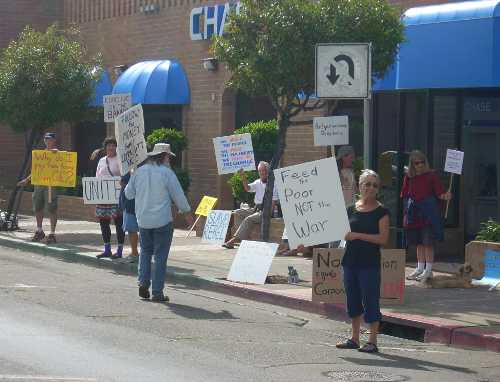
The Occupy Wall Street movement that began in New York and spread to America’s largest cities and abroad also found support in many of California’s smaller towns and municipalities, according to researchers at the University of California, Riverside.
Occupy movements “emerged in seemingly unlikely places, demonstrating the depth of frustration that people feel about the recession and the austerity measures that have been taken by authorities,” researchers from UCR’s Transnational Social Movements Research Working Group wrote in a report issued this month.
In an ongoing study of the breadth of the protests against economic inequality, high unemployment and greed – “Diffusion of the Occupy Movement in California” – the researchers identified Occupy movements in 143 smaller California towns and cities.
Lake County’s cities and towns do not have Occupy pages; however, in late November an “Occupy Lake County” Facebook page was formed.
There also is a dedicated Web site to the local movement at www.occupylakecounty.org/, as Lake County News has reported.
“Big cities got the movement early. The spatial depth of the movement to small towns is not well-known,” said Christopher Chase-Dunn, a distinguished professor of sociology who is known internationally for his research of social movements.
People in medium and small-sized towns are occupying space, organizing events and lending their voices to the movement in their own towns, graduate student Michaela Curran-Strange added. “They are focusing on local issues as well as national and regional ones.”
“The Occupy Barstow Web site proclaimed that Barstow is ‘about as far from Wall Street as you can get.’ But the Barstow occupiers probably did not know that there were also Occupy actions in Weaverville, Idyllwild, Calistoga, El Centro and many other small California towns, even in very remote areas,” Chase-Dunn and Curran-Strange wrote in their report.
A survey of 482 incorporated towns and cities in California found that 143 of them – nearly 30 percent – had Occupy sites on Facebook between Dec. 1 and Dec. 8.
Many of the small and medium-sized towns are very active with likes, posts and events on their Facebook pages. For example, the town of Arcata has about 17,000 people and 2,950 subscriptions on their page.
A few of the medium- and small-sized towns created pages fairly early, Curran-Strange said. For example, Petaluma Occupiers created their Facebook site on Sept. 27; South Lake Tahoe and Arcata on Sept. 28; the Coachella Valley on Oct. 2; and Half Moon Bay on Oct. 5.
“When you think about the fact that Occupy Wall Street states on their website that they began on September 17th, that's pretty impressive that West Coast towns – some of them medium and small – picked up on it almost immediately,” Curran-Strange noted.
Facebook Occupy sites in California’s smaller cities were nearly evenly divided between the northern and southern halves of the state, with 70 identified north of Bakersfield and 73 south of the Kern County city.
“This was fairly unexpected,” Curran-Strange said. “Southern California is more densely populated than Northern California, with the exception of the Bay area, of course, so fewer pages were expected from Northern California.”
The north-south finding also is interesting because most people believe that the political culture of Northern California is much more Leftist than that of Southern California, Chase-Dunn and Curran-Strange wrote. “Our findings suggest that this is no longer true, at least as indicated by the propensity to establish Occupy sites.”
The two researchers found that the Occupy movement relies on social media such as Twitter and Facebook as well as public assemblies to organize, communicate, and raise awareness about growing inequalities that spawned the national movement.
“This snapshot of the Web presence of the Occupy movement shows where and the extent to which this movement diffused from its early presence in the largest cities to the smaller cities and towns of California,” Chase-Dunn and Curran-Strange explained.
Discussions on local movement Facebook pages illustrate the variety of issues that are important to local participants, ranging from student loan debt, rising tuition costs and raising taxes on the rich to corporate crime and moving toward a more democratic and sustainable economy.
Most pages have become a forum for sharing news of all kinds as well as images associated with the movement.
For example:
• A Yreka man who lost his home to foreclosure organized an Occupy group in the small Northern California town.
• Occupy Riverside activists helped an ex-Marine reoccupy the home that he and his family were evicted from as a result of foreclosure.
• Occupy Petaluma protestors successfully petitioned Fannie Mae and Freddie Mac to suspend evictions during the holidays.
• Ojai organizers urged participants to move their savings from accounts from large banks such as Wells Fargo and Bank of America to local banks and credit unions.
• Occupy Davis protested tactics of police who pepper-sprayed students protesting tuition increases at UC Davis.
• Occupy Redding is supporting postal workers who are protesting job cuts.
Noting that many Occupy encampments have been removed by authorities, the UCR researchers observed that events such as the crackdown in Oakland and the following one-day shut-down of the Port of Oakland “show that this movement has broad support and is capable of powerful collective action.”
California cities with Occupy pages on Facebook:
Alameda, Amador, Anaheim, Antioch, Apple Valley, Arcata, Arroyo Grande, Atascadero, Atherton, Atwater, Bakersfield, Beaumont, Berkeley, Beverly Hills, Brea, Brentwood, Burbank, Calabasas, Calistoga, Camarillo, Chico, Chula Vista, Citrus heights, Claremont, Coachella, Colton, Compton, Concord, Corona, Coronado, Costa Mesa, Covina, Cudahy, Culver City.
Danville, Davis, Delano, El Centro, Elk Grove, Encinitas, Escondido, Eureka, Fontana, Fresno, Fullerton, Gilroy, Half Moon Bay, Hayward, Healdsburg, Hemet, Hollister, Imperial, Irvine, Laguna Niguel, Lake Elsinore, Livingston, Lodi, Lompoc, Long Beach, Los Angeles, Madera, Malibu, Manteca, Martinez, Marysville, Merced, Mission Viejo, Modesto, Montclair, Monterey, Mount Shasta, Mountain View.
Napa, Novato, Oakland, Oceanside, Ojai, Ontario, Orange, Oxnard, Palm Desert, Palm Springs, Palmdale, Palo Alto, Paradise, Pasadena, Perris, Petaluma, Pico Rivera, Pomona, Poway, Rancho Cucamonga, Red Bluff, Redding, Redondo Beach, Redwood City, Rialto, Richmond, Riverside, Sacramento, Salinas, San Bernardino, San Diego, San Fernando, San Francisco, San Jose, San Leandro, San Luis Obispo, San Mateo.
Santa Ana, Santa Barbara, Santa Clarita, Santa Cruz, Santa Monica, Santa Rosa, Sebastopol, Sierra Madre, Simi Valley, Sonoma, Sonora, South Gate, South Lake Tahoe, South San Francisco, Stockton, Sunnyvale, Tehachapi, Temecula, Thousand Oaks, Torrance, Tracy, Turlock, Ukiah, Vacaville, Vallejo, Ventura, Victorville, Visalia, Vista, Walnut Creek, Watsonville, West Hollywood, Woodland, Yuba City.
Follow Lake County News on Twitter at http://twitter.com/LakeCoNews, on Tumblr at www.lakeconews.tumblr.com, on Google+, on Facebook at www.facebook.com/pages/Lake-County-News/143156775604?ref=mf and on YouTube at www.youtube.com/user/LakeCoNews .
- Details
- Written by: Dauna Coulter
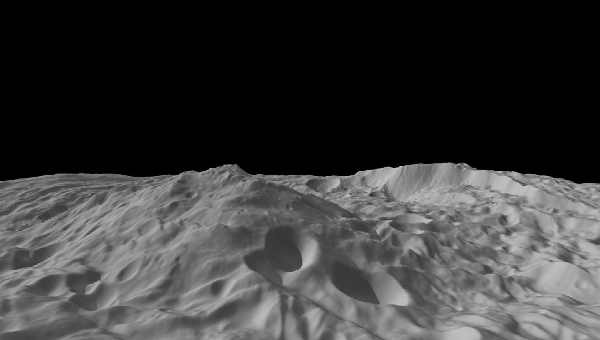
When NASA's Dawn spacecraft entered orbit around giant asteroid Vesta in July, scientists fully expected the probe to reveal some surprising sights.
But no one expected a 13-mile high mountain, two and a half times higher than Mount Everest, to be one of them.
The existence of this towering peak could solve a longstanding mystery: How did so many pieces of Vesta end up right here on our own planet?
For many years, researchers have been collecting Vesta meteorites from "fall sites" around the world. The rocks' chemical fingerprints leave little doubt that they came from the giant asteroid.
Earth has been peppered by so many fragments of Vesta that people have actually witnessed fireballs caused by the meteoroids tearing through our atmosphere.
Recent examples include falls near the African village of Bilanga Yanga in October 1999 and outside Millbillillie, Australia, in October 1960.
"Those meteorites just might be pieces of the basin excavated when Vesta's giant mountain formed," says Dawn PI Chris Russell of UCLA.
Russell believes the mountain was created by a 'big bad impact' with a smaller body; material displaced in the smashup rebounded and expanded upward to form a towering peak.
The same tremendous collision that created the mountain might have hurled splinters of Vesta toward Earth.
"Some of the meteorites in our museums and labs," he said, "could be fragments of Vesta formed in the impact -- pieces of the same stuff the mountain itself is made of."
To confirm the theory, Dawn's science team will try to prove that Vesta's meteorites came from the mountain's vicinity. It's a "match game" involving both age and chemistry.
"Vesta formed at the dawn of the solar system," said Russell. "Billions of years of collisions with other space rocks have given it a densely cratered surface."
The surface around the mountain, however, is tellingly smooth. Russell believes the impact wiped out the entire history of cratering in the vicinity.
By counting craters that have accumulated since then, researchers can estimate the age of the landscape.
"In this way we can figure out the approximate age of the mountain's surface,” Russell said. “Using radioactive dating, we can also tell when the meteorites were 'liberated' from Vesta. A match between those dates would be compelling evidence of a meteorite-mountain connection."
For more proof, the scientists will compare the meteorites' chemical makeup to that of the mountain area.
"Vesta is intrinsically but subtly colorful,” Russell explained. “Dawn's sensors can detect slight color variations in Vesta's minerals, so we can map regions of chemicals and minerals that have emerged on the surface. Then we'll compare these colors to those of the meteorites."
Could an impact on Vesta really fill so many museum display cases on Earth? Stay tuned for answers.
Dauna Coulter works for the National Aeronautics and Space Administration.
Follow Lake County News on Twitter at http://twitter.com/LakeCoNews, on Tumblr at www.lakeconews.tumblr.com, on Google+, on Facebook at www.facebook.com/pages/Lake-County-News/143156775604?ref=mf and on YouTube at www.youtube.com/user/LakeCoNews .
- Details
- Written by: Lake County News reports
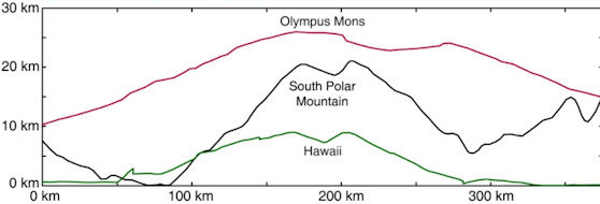
Glenn Hughes, 52, was arrested early Saturday morning, according to a report from Sgt. Greg Van Patten of the Mendocino County Sheriff’s Office.
Just after 1 a.m. Saturday morning the Mendocino County Sheriff's Office dispatch center received a call from a person reporting a physical altercation between two adult males at the Hidden Pines Campground near the city of Fort Bragg, Van Patten reported.
Deputies were dispatched less than five minutes later and arrived at the campground at 1:15 a.m., two minutes after being dispatched, Van Patten said.
When Deputies arrived they witnessed Hughes standing over the body of an adult male who was lying on the ground unconscious, according to Van Patten.
Deputies immediately detained Hughes as an eyewitness told deputies they had seen Hughes physically beating male victim, Van Patten said.
Deputies checked the male on the ground determined he was not breathing and didn’t have a pulse. Van Patten said deputies requested an ambulance and began performing CPR on man but he was later pronounced dead at the scene.
Mendocino County Sheriff's Office detectives were called to the scene and have begun followup investigations into the incident, Van Patten said Saturday.
He said Hughes was arrested for murder and was to be booked into the Mendocino County Jail, where bail would be determined.
Van Patten said Saturday that the victim’s identity was being withheld pending the notification of his next of kin.
Anyone who may have information in regards to this incident is urged to call Det. Dustin Lorenzo at 707-961-2692.
Follow Lake County News on Twitter at http://twitter.com/LakeCoNews, on Tumblr at www.lakeconews.tumblr.com, on Google+, on Facebook at www.facebook.com/pages/Lake-County-News/143156775604?ref=mf and on YouTube at www.youtube.com/user/LakeCoNews .
- Details
- Written by: Lake County News reports
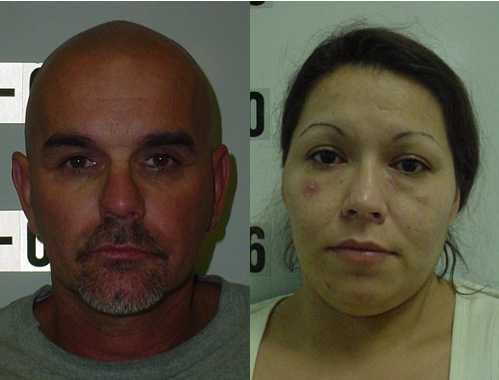
MIDDLETOWN, Calif. – The service of a search warrant by the Lake County Sheriff’s Narcotics Task Force on Friday morning resulted in two arrests, the seizure of approximately six grams of methamphetamine and several pounds of processed marijuana.
Arrested were 48-year-old David Phillip Clark and Stephanie Alyce Ybarra, 29, both of Middletown.
On Thursday, Dec. 22, narcotics detectives secured a search warrant for Clark’s person, home and vehicle, according to Sgt. Steve Brooks.
Then on Friday, Dec. 30, at approximately 11 a.m., detectives served the warrant at Clark’s home on Santa Clara Road in Middletown.
When narcotics detectives entered the home, they detained Clark and Ybarra without incident, Brooks reported.
During a search of the home, detectives located approximately six grams of methamphetamine packaged for sales and multiple pounds of processed marijuana, which was also packaged for sales, according to Brooks. Several packages of the marijuana also were labeled with prices.
Brooks said detectives also located a glass meth pipe, digital scales and a surveillance system monitoring the front of the home.
Clark was arrested for possession of a controlled substance for sales, possession of a controlled substance, possession of marijuana for sales and possession of narcotics paraphernalia, Brooks said.
He reported that Ybarra was arrested for possession of a controlled substance and possession of narcotics paraphernalia.
Both were transported to the Lake County Hill Road Correctional Facility and booked.
Jail records indicated Ybarra’s bail was set at $15,000, and Clark’s at $25,000. Both remained in jail overnight.
The Sheriff’s Narcotics Task Force can be reached through its anonymous tip line at 707-263-3663.
Follow Lake County News on Twitter at http://twitter.com/LakeCoNews, on Tumblr at www.lakeconews.tumblr.com, on Google+, on Facebook at www.facebook.com/pages/Lake-County-News/143156775604?ref=mf and on YouTube at www.youtube.com/user/LakeCoNews .