 How to resolve AdBlock issue?
News
LAKE COUNTY, Calif. — With a heatwave impacting much of inland California this week, state and local agencies are prepared to respond and urging Californians to take steps to protect themselves from extreme heat.
Excessive heat watches and warnings went into place on Tuesday.
For Lake County, a heat advisory is in effect from 8 a.m. Wednesday to 8 p.m. Thursday due to anticipated temperatures of between 95 and 103 degrees and temperatures into the 70s at night.
The Lake County Sheriff’s Office of Emergency Services said Lake County’s HeatRisk on Wednesday is high and residents are encouraged to drink plenty of water, wear lightweight clothing, avoid outdoor activities between 10 a.m. adn 4 p.m. and remain in cool places during the day.
Cooling options across Lake County include the Lake County Library and Lake County Behavioral Health Peer Support Centers. OES said details are available at Ready.LakeCountyCA.gov under the "Response" tab.
The National Weather Service said temperatures in the Central Valley may reach up to 105 degrees, with Death Valley National Park likely reaching 118 to 121 degrees.
Given this extreme weather, the state is entering phase 2 of its Extreme Temperature Response Plan, which is triggered by NWS predictions of excessive heat activity and moves the state into action to coordinate an all-hands response by the state government.
As the changing climate is making heat waves more intense and frequent, extreme heat kills more Americans each year than any other extreme weather events, including wildfires, droughts, and floods.
Ahead of Memorial Day Weekend, Gov. Gavin Newsom announced the launch of ready.ca.gov — a new one-stop shop for Californians to prepare for emergencies and extreme weather.
The new website is part of Listos California, which is a state effort that connects communities with in-language resources before, during and after emergencies.
How you can stay safer from extreme heat
Stay cool (During the hottest times of the day):
• Those without air conditioning should check with their city or county for cooling centers or visit public locations such as a library or shopping mall.
• Avoid physical exertion or exercising outdoors.
• Wear lightweight, light colored, loose clothing, hats, sunglasses and sunscreen.
Stay hydrated:
• Drink plenty of fluids, especially water, even when not thirsty; drink sports drinks (in moderation with water) to help replace electrolytes lost during exercise.
• Avoid sugary, alcoholic, and very cold drinks.
• Eat plenty of fruits and vegetables.
Stay connected:
• Monitor those at high risk of heat-related illness including infants and young children; people 65 years of age or older; individuals with chronic illness, disabilities or who are pregnant.
• Californians are also encouraged to check on their neighbors – call or visit vulnerable people, and offer to pick up groceries, medication, and other necessities. Older adults, young children and babies, people with chronic medical conditions and those who are pregnant are most vulnerable.
• Use a buddy system when working in the heat.
Stay informed:
• Check the local news for weather forecasts, extreme heat alerts, and cooling centers.
Stay safe outdoors:
• Warm summer weather is causing continued snow melt from winter’s record snowpack, resulting in colder and faster water that continues today.
Remember to always be safe around the water:
• Make sure you and your loved ones wear properly fitting, U.S. Coast Guard-approved life jackets. Several public and private entities make life jackets available to the public on a loan basis.
• Always supervise children by appointing a designated “water watcher.”
• Know your limits. Swimming in a lake, ocean or river is different from swimming in a pool.
• If someone is in distress, seek help from a lifeguard or call 9-1-1 if one is not available.
Excessive heat watches and warnings went into place on Tuesday.
For Lake County, a heat advisory is in effect from 8 a.m. Wednesday to 8 p.m. Thursday due to anticipated temperatures of between 95 and 103 degrees and temperatures into the 70s at night.
The Lake County Sheriff’s Office of Emergency Services said Lake County’s HeatRisk on Wednesday is high and residents are encouraged to drink plenty of water, wear lightweight clothing, avoid outdoor activities between 10 a.m. adn 4 p.m. and remain in cool places during the day.
Cooling options across Lake County include the Lake County Library and Lake County Behavioral Health Peer Support Centers. OES said details are available at Ready.LakeCountyCA.gov under the "Response" tab.
The National Weather Service said temperatures in the Central Valley may reach up to 105 degrees, with Death Valley National Park likely reaching 118 to 121 degrees.
Given this extreme weather, the state is entering phase 2 of its Extreme Temperature Response Plan, which is triggered by NWS predictions of excessive heat activity and moves the state into action to coordinate an all-hands response by the state government.
As the changing climate is making heat waves more intense and frequent, extreme heat kills more Americans each year than any other extreme weather events, including wildfires, droughts, and floods.
Ahead of Memorial Day Weekend, Gov. Gavin Newsom announced the launch of ready.ca.gov — a new one-stop shop for Californians to prepare for emergencies and extreme weather.
The new website is part of Listos California, which is a state effort that connects communities with in-language resources before, during and after emergencies.
How you can stay safer from extreme heat
Stay cool (During the hottest times of the day):
• Those without air conditioning should check with their city or county for cooling centers or visit public locations such as a library or shopping mall.
• Avoid physical exertion or exercising outdoors.
• Wear lightweight, light colored, loose clothing, hats, sunglasses and sunscreen.
Stay hydrated:
• Drink plenty of fluids, especially water, even when not thirsty; drink sports drinks (in moderation with water) to help replace electrolytes lost during exercise.
• Avoid sugary, alcoholic, and very cold drinks.
• Eat plenty of fruits and vegetables.
Stay connected:
• Monitor those at high risk of heat-related illness including infants and young children; people 65 years of age or older; individuals with chronic illness, disabilities or who are pregnant.
• Californians are also encouraged to check on their neighbors – call or visit vulnerable people, and offer to pick up groceries, medication, and other necessities. Older adults, young children and babies, people with chronic medical conditions and those who are pregnant are most vulnerable.
• Use a buddy system when working in the heat.
Stay informed:
• Check the local news for weather forecasts, extreme heat alerts, and cooling centers.
Stay safe outdoors:
• Warm summer weather is causing continued snow melt from winter’s record snowpack, resulting in colder and faster water that continues today.
Remember to always be safe around the water:
• Make sure you and your loved ones wear properly fitting, U.S. Coast Guard-approved life jackets. Several public and private entities make life jackets available to the public on a loan basis.
• Always supervise children by appointing a designated “water watcher.”
• Know your limits. Swimming in a lake, ocean or river is different from swimming in a pool.
• If someone is in distress, seek help from a lifeguard or call 9-1-1 if one is not available.
- Details
- Written by: LAKE COUNTY NEWS REPORTS
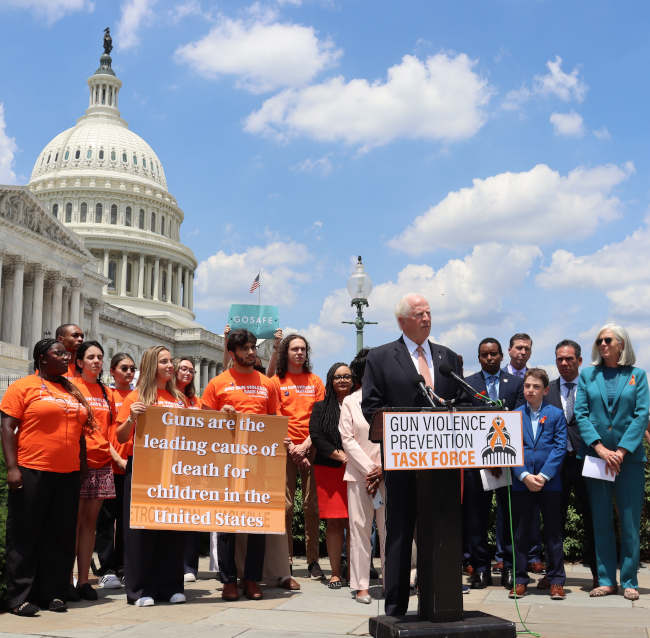
On Tuesday, Gun Violence Prevention Task Force Chair Mike Thompson (CA-04), Democratic Whip Katherine Clark (MA-05), House Democratic Caucus Chair Pete Aguilar (CA-33), House Assistant Minority Leader Joe Neguse (CO-02), Rep. Robin Kelly (IL-02), and Rep. Lucy McBath (GA-07) held a press conference marking the start of Gun Violence Awareness Month and the upcoming two-year anniversary of the Bipartisan Safer Communities Act.
“It’s the 156th day of the year and our country has already experienced 197 mass shootings. That’s unacceptable,” said Thompson, Chair of the Gun Violence Prevention Task Force. “Two years ago this month, Democrats helped pass the Bipartisan Safer Communities Act, cementing the most significant gun violence prevention law in thirty years. But our work isn’t done. While Democrats push for progress, Republicans stand in the way of safer communities. This June, during Gun Violence Prevention Month, we are recommitting ourselves to keep up the fight against gun violence.”
“Two years ago this month, Democrats enacted the Safer Communities Act — the most significant effort to save kids from gun violence since before my own children were even born. It was a once-in-a-generation kind of achievement. But it shouldn’t be,” said Democratic Whip Katherine Clark. “As Democrats have always made clear, this law is just the first step. But under this Republican Majority, we have seen nothing but cruel inaction. Not one vote to save a single life. That’s the difference between the two sides of the aisle. Republicans are here to pull stunts. Democrats are here to solve problems.”
“Two years ago, Democrats and Republicans came together in the most significant piece of legislation that we have been able to accomplish in the last 30 years,” said Chair Pete Aguilar. “We urge House Republicans to join us to protect our kids and their futures, and to come to the table to find a meaningful path forward to end gun violence once and for all.”
“Coloradans and Americans across our country are demanding that the United States Congress do something about the scourge of gun violence,” said Assistant Leader Joe Neguse. “And House Democrats have risen to the occasion — heeded that call. You heard from Chairman Thompson, from Chairman Aguilar, from Whip Clark about the work we did just a few short years ago to get the Bipartisan Safer Communities Act across the finish line — not the last step, but an important first step.”
“The American people intimately know the impact of gun violence too well,” said Rep. Robin Kelly. “Every year, 43,000 people die from gun violence. Behind each of those deaths are family members, loved ones, coworkers, and friends who miss them every day. The toll of gun violence should move Congress to action, yet many of my colleagues across the aisle don’t even recognize gun violence as a problem. We must choose to change course and save lives. Inaction is not an option.”
“I came to Congress after my son was murdered by a man with a gun. For years, I had been a mother crying out to our elected officials to take action to end the horror of gun violence that ripped apart families like mine and put dread in the hearts of parents,” said Rep. Lucy McBath. “Through bipartisan steps in Congress and the work of the Biden-Harris Administration, the tides are changing. I feel my son’s legacy every single day in this work, and I was proud to join my colleagues on the Gun Violence Prevention Task Force today to kick off Gun Violence Awareness Month as we continue this fight to save lives.”
The tragic death of Hadiya Pendleton, who was shot and killed at age fifteen just days after performing at President Obama’s second inauguration, inspired the creation of Gun Violence Awareness Day on the first Friday in June. Gun Violence Awareness Month is recognized as an extension of the day.
The Gun Violence Prevention Task Force was founded in the wake of the tragedy at Sandy Hook Elementary School in 2012 when 20 students and 6 educators were slaughtered in a senseless act of violence.
This group, consisting of 180 Members of Congress, is devoted to finding commonsense solutions to our nation's ongoing gun violence epidemic. Rep. Thompson has served as Chair since the Task Force’s founding.
Task Force members helped pass the Bipartisan Safer Communities Act (BSCA), the most consequential gun violence prevention legislation signed into law in decades. President Biden signed the BSCA into law in June of 2022.
The BSCA:
• Provided $750 million for State Crisis Intervention Programs (includes Red Flag laws).
• Closed the “Boyfriend Loophole.”
• Tightened the definition of “Federally Licensed Firearms Dealer” to ensure more firearm sales require a background check.
• Enhanced background checks for 18 to 20-year-olds to ensure that juvenile records are considered in the background check process.
• Created federal straw purchasing and trafficking criminal offenses, allowing prosecutors to target dangerous illegal gunrunners.
• Provided $250 million for Community Violence Intervention Programs.
• Invested in children and family mental health services.
• Increased funding for school safety, school mental health resources, and school resource officers.
- Details
- Written by: LAKE COUNTY NEWS REPORTS
NORTHERN CALIFORNIA — The decadeslong effort to build a new reservoir in neighboring Colusa and Glenn counties took a step forward on Tuesday.
As a result of a streamlining law implemented last year, the Sites Reservoir project cleared a major hurdle, overcoming a California Environmental Quality Act, or CEQA, challenge and gaining full approval from the Yolo County Superior Court.
Last year, Gov. Gavin Newsom signed into law a package of bills to accelerate critical infrastructure projects across California that will help build the state’s 100% clean electric grid, ensure safe drinking water and boost the state’s water supply, and modernize our transportation system.
That package included SB 149, which allows the governor to certify qualifying infrastructure projects for judicial streamlining under CEQA.
The governor’s infrastructure streamlining law requires that courts must decide CEQA challenges within 270 days to the extent feasible. Tuesday’s decision occurred within 148 days.
“California needs more water storage, and we have no time to waste – projects like the Sites Reservoir will capture rain and snow runoff to supply millions of homes with clean drinking water. We’re approaching this work with urgency, everything from water storage to clean energy and transportation projects,” Newsom said.
The Sites Reservoir will capture water during wet seasons and store it for use during drier seasons — holding up to 1.5 million acre-feet of water, enough for three million households’ yearly usage.
It has received a total of $46.75 million in early funding from the state. In all, Sites is eligible for $875.4 million of Proposition 1 funding. Total project cost is estimated at $4 billion.
The Governor’s Office said the project will help California maintain a resilient water supply in the face of climate change, weather extremes and water scarcity.
“Sites Reservoir is critical to California’s Water Supply Strategy and meeting our goal of expanding above and below ground water storage capacity by 4 million acre feet,” the Governor’s Office said in a statement.
By streamlining permitting, cutting red tape and allowing state agencies to use new project delivery methods, the infrastructure package seeks to maximize taxpayer dollars and accelerate timelines of projects throughout the state, while ensuring appropriate environmental review and community engagement.
The package will take full advantage of an unprecedented $180 billion in state, local, and federal infrastructure funds over the next ten years while creating an estimated 400,000 good-paying jobs, the Governor's Office reported.
As a result of a streamlining law implemented last year, the Sites Reservoir project cleared a major hurdle, overcoming a California Environmental Quality Act, or CEQA, challenge and gaining full approval from the Yolo County Superior Court.
Last year, Gov. Gavin Newsom signed into law a package of bills to accelerate critical infrastructure projects across California that will help build the state’s 100% clean electric grid, ensure safe drinking water and boost the state’s water supply, and modernize our transportation system.
That package included SB 149, which allows the governor to certify qualifying infrastructure projects for judicial streamlining under CEQA.
The governor’s infrastructure streamlining law requires that courts must decide CEQA challenges within 270 days to the extent feasible. Tuesday’s decision occurred within 148 days.
“California needs more water storage, and we have no time to waste – projects like the Sites Reservoir will capture rain and snow runoff to supply millions of homes with clean drinking water. We’re approaching this work with urgency, everything from water storage to clean energy and transportation projects,” Newsom said.
The Sites Reservoir will capture water during wet seasons and store it for use during drier seasons — holding up to 1.5 million acre-feet of water, enough for three million households’ yearly usage.
It has received a total of $46.75 million in early funding from the state. In all, Sites is eligible for $875.4 million of Proposition 1 funding. Total project cost is estimated at $4 billion.
The Governor’s Office said the project will help California maintain a resilient water supply in the face of climate change, weather extremes and water scarcity.
“Sites Reservoir is critical to California’s Water Supply Strategy and meeting our goal of expanding above and below ground water storage capacity by 4 million acre feet,” the Governor’s Office said in a statement.
By streamlining permitting, cutting red tape and allowing state agencies to use new project delivery methods, the infrastructure package seeks to maximize taxpayer dollars and accelerate timelines of projects throughout the state, while ensuring appropriate environmental review and community engagement.
The package will take full advantage of an unprecedented $180 billion in state, local, and federal infrastructure funds over the next ten years while creating an estimated 400,000 good-paying jobs, the Governor's Office reported.
- Details
- Written by: LAKE COUNTY NEWS REPORTS
LAKEPORT, Calif. — Lakeport’s California Department of Motor Vehicles is among 20 offices statewide set to have in-person office hours cut back significantly.
The DMV said Monday that Lakeport’s office, located at 965 Parallel Drive, will now be open two days a week instead of five.
The modified office hours go into effect July 1.
The state said the change is being made “to improve efficiency and to better serve the evolving needs of customers as part of the DMV’s digital transformation.”
Lakeport’s hours currently are 8 a.m. to 5 p.m. Monday, Tuesday, Thursday and Friday, and 9 a.m. to 5 p.m. Wednesday.
That will change to 8 a.m. to 5 p.m. Tuesdays and Thursdays, the DMV reported.
Staff at offices with modified service hours will work on “virtual office” items during the days the offices are closed to the public, the DMV said.
“We are committed to providing services to customers when and where they want,” said DMV Director Steve Gordon. “As a mobile-first organization, we are serving Californians through many channels on any device while at the same time still serving customers who must visit an office.”
Lake County News submitted several questions to the DMV’s Sacramento headquarters about the decision, including asking if this action was a response to state cutbacks, how it would tailor services to seniors — a large part of Lake County’s population — and how residents of rural areas that don’t have good Internet services overcome the challenge of having less office availability.
The DMV did not answer those questions, but did respond to a question about how the 20 offices, including Lakeport’s, were chosen for the cutback in office hours.
“Before making the decision to modify office hours, the DMV closely reviewed transaction volumes, staffing, wait times and other criteria at its 170 offices statewide to determine which offices to move to a modified schedule while still being able to meet the in-office needs of the communities they serve,” the agency’s public affairs office said in an email.
The DMV also responded to another question — about whether Clearlake’s DMV office at 15930 Dam Road d Unit B will be impacted.
“The hours at the Clearlake office will remain the same,” the DMV said.
Those hours are 8 a.m. to 5 p.m. all days except Wednesday, which are 9 a.m. to 5 p.m.
The DMV said it expects the change in Lakeport’s office hours to have minimal impact on overall wait times.
“On weekdays when the office is closed to the public, DMV team members will process transactions started online that require additional processing or virtual customer interaction. This will help improve efficiency and speed up processing times for all customers as more tasks are completed online,” the DMV said in its general press statement on the decision.
The communities impacted by the new plan are primarily those with 8,000 residents or less in rural areas, with the exception of Hollister, which has nearly 43,000 residents, and Blythe and Coalinga, with both having populations of just over 17,000, according to a Lake County News analysis.
On Monday, the DMV’s offices stopped processing simple transactions “that can easily be completed online or through other convenient options,” the agency reported.
“The DMV’s ongoing customer-focused digital transformation provides many opportunities online or through other convenient options to complete DMV tasks. Most DMV transactions do not require an office visit and can be conveniently started or completed online at dmv.ca.gov/online,” the DMV said.
The DMV is encouraging people to use online services or “other channels” to complete transactions, even including eligible driver’s license and vehicle registration renewals. Customers can use the Service Advisor on the DMV website to learn their options to complete DMV tasks.
In addition to Lakeport, the other communities who are being moved to a two- or three-day schedule are Bishop, Blythe, Coalinga, Colusa, Crescent City, Fall River Mills, Fort Bragg, Garberville, Hollister, Lake Isabella, Lakeport, Mariposa, Mount Shasta, Needles, San Andreas, Susanville, Taft, Weaverville, Willows and Yreka.
Email Elizabeth Larson atThis email address is being protected from spambots. You need JavaScript enabled to view it. . Follow her on Twitter, @ERLarson, or Lake County News, @LakeCoNews.
The DMV said Monday that Lakeport’s office, located at 965 Parallel Drive, will now be open two days a week instead of five.
The modified office hours go into effect July 1.
The state said the change is being made “to improve efficiency and to better serve the evolving needs of customers as part of the DMV’s digital transformation.”
Lakeport’s hours currently are 8 a.m. to 5 p.m. Monday, Tuesday, Thursday and Friday, and 9 a.m. to 5 p.m. Wednesday.
That will change to 8 a.m. to 5 p.m. Tuesdays and Thursdays, the DMV reported.
Staff at offices with modified service hours will work on “virtual office” items during the days the offices are closed to the public, the DMV said.
“We are committed to providing services to customers when and where they want,” said DMV Director Steve Gordon. “As a mobile-first organization, we are serving Californians through many channels on any device while at the same time still serving customers who must visit an office.”
Lake County News submitted several questions to the DMV’s Sacramento headquarters about the decision, including asking if this action was a response to state cutbacks, how it would tailor services to seniors — a large part of Lake County’s population — and how residents of rural areas that don’t have good Internet services overcome the challenge of having less office availability.
The DMV did not answer those questions, but did respond to a question about how the 20 offices, including Lakeport’s, were chosen for the cutback in office hours.
“Before making the decision to modify office hours, the DMV closely reviewed transaction volumes, staffing, wait times and other criteria at its 170 offices statewide to determine which offices to move to a modified schedule while still being able to meet the in-office needs of the communities they serve,” the agency’s public affairs office said in an email.
The DMV also responded to another question — about whether Clearlake’s DMV office at 15930 Dam Road d Unit B will be impacted.
“The hours at the Clearlake office will remain the same,” the DMV said.
Those hours are 8 a.m. to 5 p.m. all days except Wednesday, which are 9 a.m. to 5 p.m.
The DMV said it expects the change in Lakeport’s office hours to have minimal impact on overall wait times.
“On weekdays when the office is closed to the public, DMV team members will process transactions started online that require additional processing or virtual customer interaction. This will help improve efficiency and speed up processing times for all customers as more tasks are completed online,” the DMV said in its general press statement on the decision.
The communities impacted by the new plan are primarily those with 8,000 residents or less in rural areas, with the exception of Hollister, which has nearly 43,000 residents, and Blythe and Coalinga, with both having populations of just over 17,000, according to a Lake County News analysis.
On Monday, the DMV’s offices stopped processing simple transactions “that can easily be completed online or through other convenient options,” the agency reported.
“The DMV’s ongoing customer-focused digital transformation provides many opportunities online or through other convenient options to complete DMV tasks. Most DMV transactions do not require an office visit and can be conveniently started or completed online at dmv.ca.gov/online,” the DMV said.
The DMV is encouraging people to use online services or “other channels” to complete transactions, even including eligible driver’s license and vehicle registration renewals. Customers can use the Service Advisor on the DMV website to learn their options to complete DMV tasks.
In addition to Lakeport, the other communities who are being moved to a two- or three-day schedule are Bishop, Blythe, Coalinga, Colusa, Crescent City, Fall River Mills, Fort Bragg, Garberville, Hollister, Lake Isabella, Lakeport, Mariposa, Mount Shasta, Needles, San Andreas, Susanville, Taft, Weaverville, Willows and Yreka.
Email Elizabeth Larson at
- Details
- Written by: Elizabeth Larson