LAKEPORT, Calif. — The Lakeport City Council this week will consider long-term, exclusive agreements with two nonprofits for use of key city-owned properties, including the historic Carnegie Library.
The council will meet Tuesday, Dec. 2, at 6 p.m. in the council chambers at Lakeport City Hall, 225 Park St.
The agenda can be found here.
If you cannot attend in person, and would like to speak on an agenda item, you can access the Zoom meeting remotely at this link or join by phone by calling toll-free 669-900-9128 or 346-248-7799.
The webinar ID is 973 6820 1787, access code is 477973; the audio pin will be shown after joining the webinar. Those phoning in without using the web link will be in “listen mode” only and will not be able to participate or comment.
Comments can be submitted by email to This email address is being protected from spambots. You need JavaScript enabled to view it.. To give the city clerk adequate time to print out comments for consideration at the meeting, please submit written comments before 3:30 p.m. on Tuesday, Dec. 2.
On Tuesday, the council will consider approving a lease agreement with the Clear Lake Environmental Research Center, or CLERC, for the Carnegie Library.
Since 2021, CLERC has used a portion of the historic, 107-year-old building as a water and wastewater testing laboratory. It’s now seeking to open an environmental educational center on the second floor.
The council also will consider granting a lease to the Lake County Arts Council, which is seeking to move its art gallery to the Silveira Community Center. The proposed agreement between the city and the Arts Council also will include having the Arts Council coordinate scheduling and event management at the center.
The proposed lease will be for one year, after which it can be extended.
In both cases, the proposed lease agreements call for $1 per month payments to the city.
In other business, the council will consider appointments to the Lakeport Economic Development Advisory Committee, or LEDAC.
Proposed appointments of incumbents Lissette Hayes and Pam Harpster, and new member Victoria Pulido will be discussed, along with a resolution to add three designated voting member seats for the Lake County Fair, the Big Valley Band of Pomo Indians and the Scotts Valley Band of Pomo Indians.
The council on Tuesday also will hold a public hearing to introduce a draft ordinance to amend the 2025 Building Code, and will get updates on the water and sewer master plan, and consider approving a license agreement with Westside Community Park for the construction, operation and maintenance of the Westside Community Trail Park on designated portions of the city’s property, and to authorize the city manager to execute the agreement.
The council also will be introduced to new Police Officer Kimberly Searcy.
On the consent agenda — items considered noncontroversial and usually accepted as a slate on one vote — are ordinances; minutes, the Maddy Act list; Lakeport Fire Protection District Measure M report; and notice of completion for the Lakeshore & Martin Repaving Project.
Email Elizabeth Larson at This email address is being protected from spambots. You need JavaScript enabled to view it.. Follow her on Twitter, @ERLarson, and on Bluesky, @erlarson.bsky.social. Find Lake County News on the following platforms: Facebook, @LakeCoNews; X, @LakeCoNews; Threads, @lakeconews, and on Bluesky, @lakeconews.bsky.social.
The December guest speaker is Marcus Beltramo of Lake County Code Enforcement, who will give a report on code enforcement issues in the ERTH region.
Under business, the group will get an update on ERTH activities and projects, consider Land Use Committee recommendations, discuss ERTH Council meetings and get an update on the District 3 municipal advisory committee.
There also will be a commercial cannabis report and cannabis ordinance update, they will hear the latest on ongoing projects such as the EPA cleanup of the mercury mine Superfund site, Klaus Park, cell tower projects, Caltrans, PG&E, the Planning Department projects list and Spring Valley, and get a report from Supervisor EJ Crandell.
ERTH’s next meeting will take place on Jan. 7.
Members are Angela Amaral, Holly Harris, Maria Kann, Denise Loustalot and Sterling Wellman.
For more information visit the group’s Facebook page.
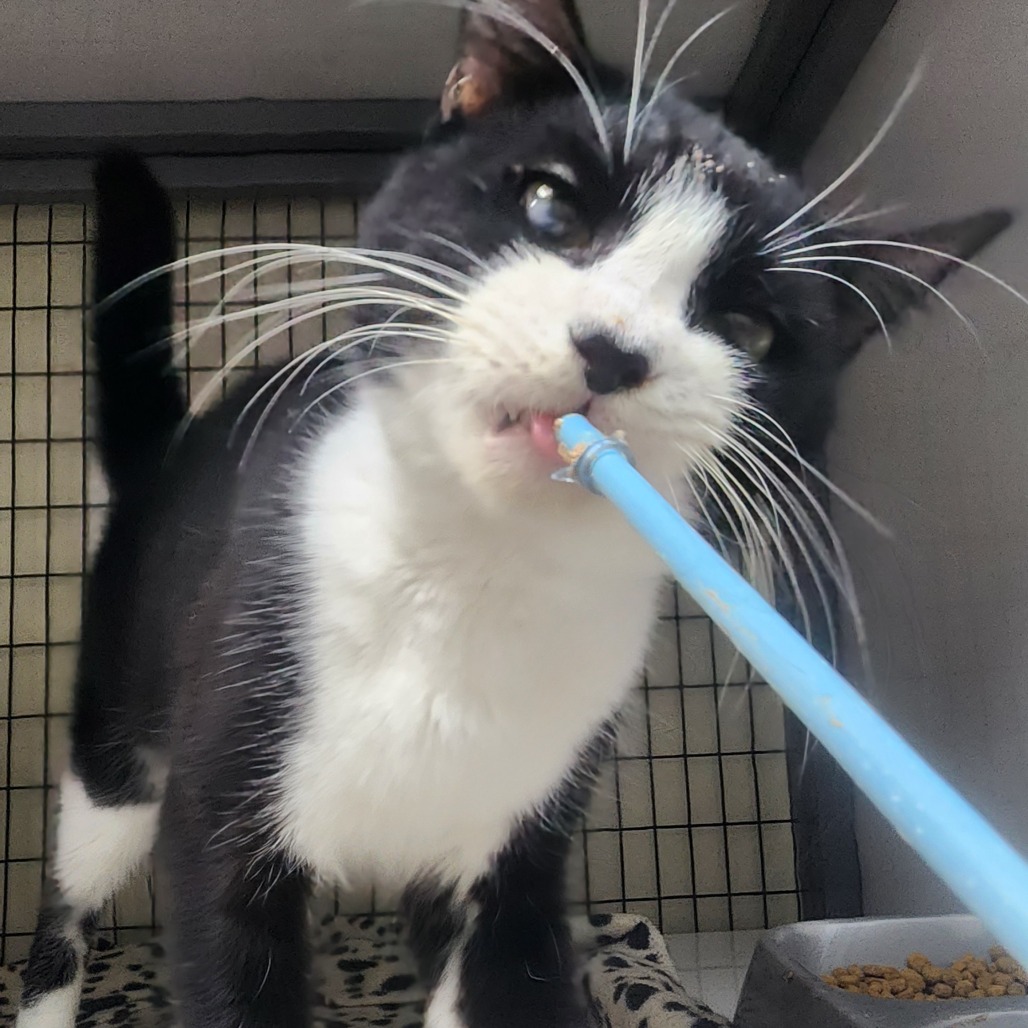
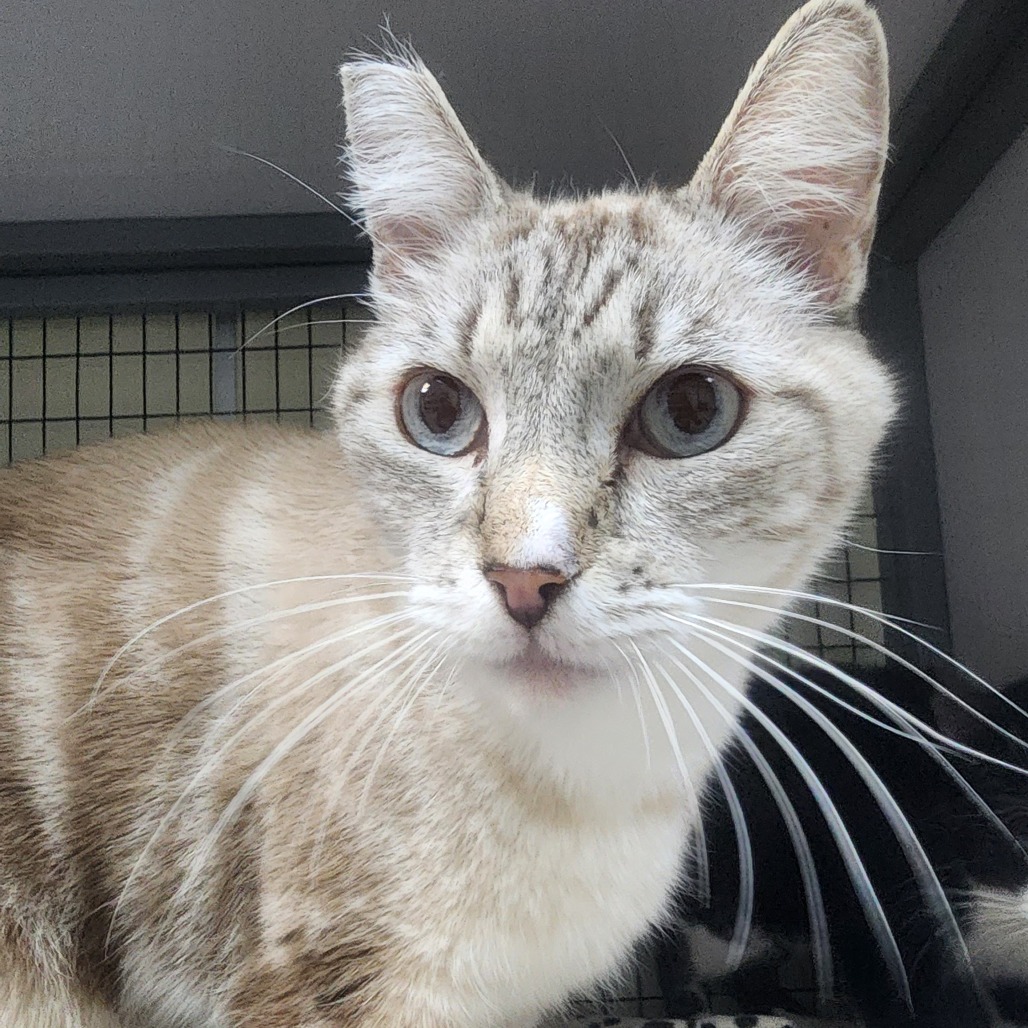
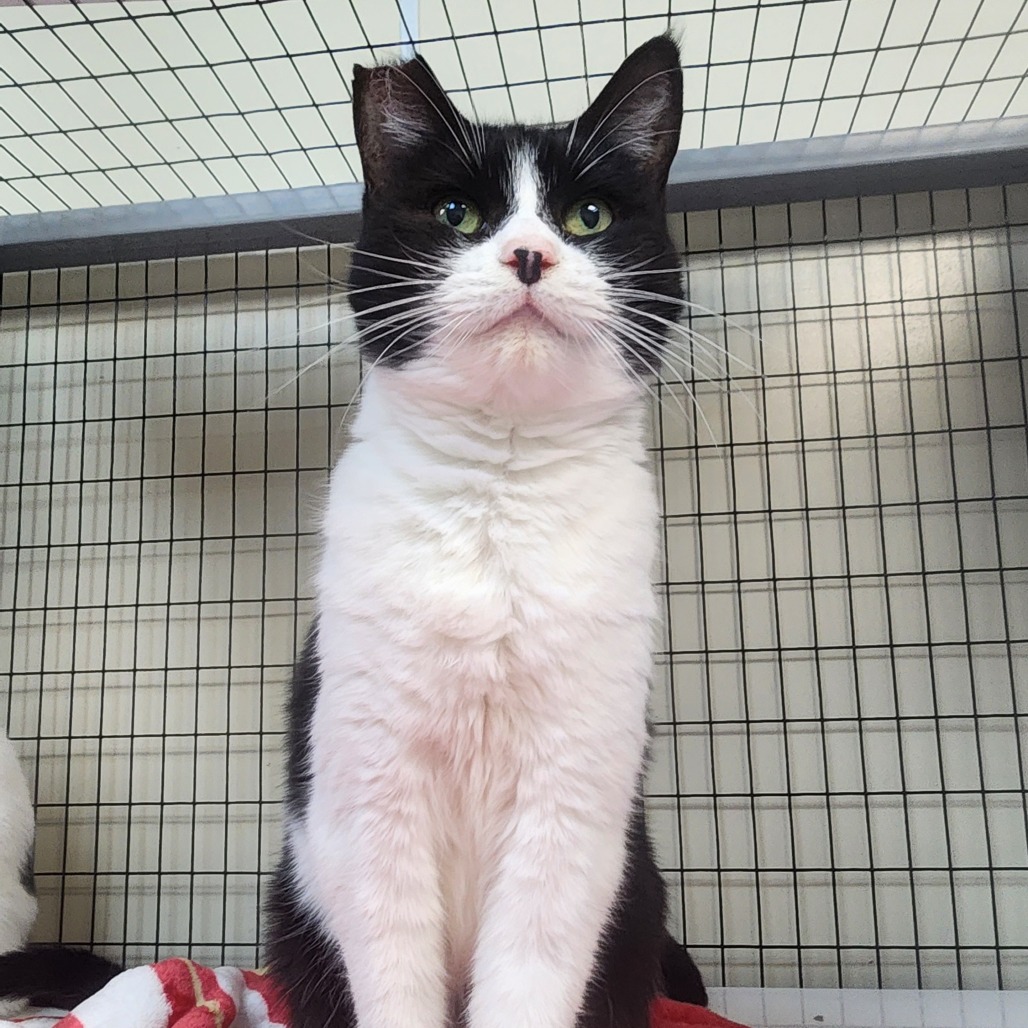
LAKE COUNTY, Calif. — Lake County Animal Care and Control has several cats needing to go to new homes this week.
The kittens and cats at the shelter that are shown on this page have been cleared for adoption.
Call Lake County Animal Care and Control at 707-263-0278 or visit the shelter online for information on visiting or adopting.
The shelter is located at 4949 Helbush in Lakeport.
Email Elizabeth Larson at This email address is being protected from spambots. You need JavaScript enabled to view it.. Follow her on Twitter, @ERLarson, and on Bluesky, @erlarson.bsky.social. Find Lake County News on the following platforms: Facebook, @LakeCoNews; X, @LakeCoNews; Threads, @lakeconews, and on Bluesky, @lakeconews.bsky.social.
Written by: Tevis Garrett Graddy-Lovelace, American University School of International Service
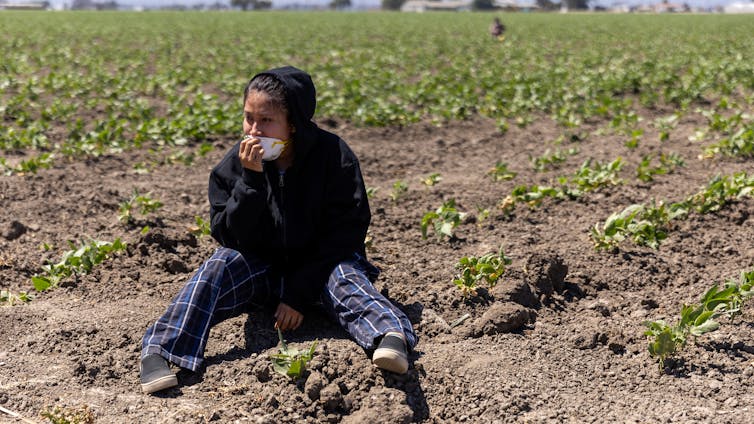
A person sits in a field of crops after a raid by U.S. immigration agents. Blake Fagan/AFP via Getty ImagesThe U.S. government has caused massive food waste during President Donald Trump’s second term. Policies such as immigration raids, tariff changes and temporary and permanent cuts to food assistance programs have left farmers short of workers and money, food rotting in fields and warehouses, and millions of Americans hungry. And that doesn’t even include the administration’s actual destruction of edible food.
Yet, huge amounts of food – on average in the U.S., as much as 40% of it – rots before being eaten. That amount is equivalent to 120 billion meals a year: more than twice as many meals as would be needed to feed those 47 million hungry Americans three times a day for an entire year.
As a scholar of wasted food, I have watched this problem worsen since Trump began his second term in January 2025. Despite this administration’s claim of streamlining the government to make its operations more efficient, a range of recent federal policies have, in fact, exacerbated food wastage.
A farmworker raises her hands as armed immigration agents approach during a raid on a California farm in July 2025.Blake Fagan/AFP via Getty Images
Immigration policy
Supplying fresh foods, such as fruits, vegetables and dairy, requires skilled workers on tight timelines to ensureripeness, freshness and high quality.
The Trump administration’s widespread efforts to arrest and deport immigrants have sent Immigration and Customs Enforcement, the Border Patrol and other agencies into hundreds of agricultural fields, meat processing plants and food production and distribution sites. Supported by billions of taxpayer dollars, they have arrested thousands of food workers and farmworkers – with lethal consequences at times.
Dozens of raids have not only violated immigrants’ human rights and torn families apart: They have jeopardized the national food supply. Farmworkers already work physically hard jobs for low wages. In legitimate fear for their lives and liberty, reports indicate that in some places 70% of people harvesting, processing and distributing food stopped showing up to work by mid-2025.
When the Trump administration all but shut down the U.S. Agency for International Development in early 2025, the agency had 500 tons of ready-to-eat, high-energy biscuitsworth US$800,000, stored to distribute to starving people around the world who had been displaced by violence or natural disasters. With no staff to distribute the biscuits, they expired while sitting in a warehouse in Dubai.
Though the soybeans were intended to feed the Chinese pig industry, not humans, the specter of waste looms both in terms of the potential spoilage of soybeans and the actual human food that could have been grown in their place.
Since taking office, the second Trump administration has taken many steps aimed at efficiency that actually boosted food waste. Mass firings of food safety personnel risks even more outbreaks of foodborne diseases, tainted imports, and agricultural pathogens – which can erupt into crises requiring mass destruction, for instance, of nearly 35,000 turkeys with bird flu in Utah.
In addition, the administration canceled a popular program that helped schools and food banks buy food from local farmers, though many of the crops had already been planted when the cancellation announcement was made. That food had to find new buyers or risk being wasted, too. And the farmers were unable to count on a key revenue source to keep their farms afloat.
Also, the administration slashed funding for the Federal Emergency Management Agency that helped food producers, restaurants and households recover from disasters – including restoring power to food-storage refrigeration.
The fall 2025 government shutdown left the government’s major food aid program, SNAP, in limbo for weeks, derailing communities’ ability to meet their basic needs. Grocers, who benefit substantially from SNAP funds, announced discounts for SNAP recipients – to help them afford food and to keep food supplies moving before they rotted. The Department of Agriculture ordered them not to, saying SNAP customers must pay the same prices as other customers.
Food waste did not start with the Trump administration. But the administration’s policies – though they claim to be seeking efficiency – have compounded voluminous waste at a time of growing need. This Thanksgiving, think about wasted food – as a problem, and as a symptom of larger problems.
American University School of International Service master’s student Laurel Levin contributed to the writing of this article.
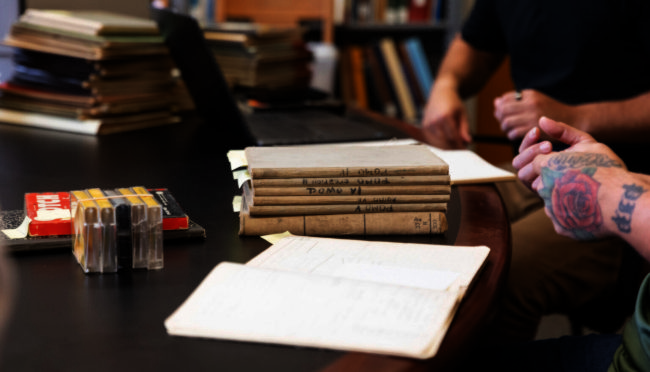
For decades, Sally McLendon, a prominent linguist with UC Berkeley ties, worked with Indigenous communities to document and learn about their languages. After her death, her notebooks and approximately 90 tapes were transported to the California Language Archive on campus, where they can be made accessible for others to access and learn from. Photo by Brittany Hosea-Small/UC Berkeley.
Collections at UC Berkeley's California Language Archive help keep Indigenous languages alive. This is the story of one of them. This story is part of a two-part UC Berkeley News series about the California Language Archive. An episode of the Berkeley Voices podcast features one student’s story of working with the archive and learning about his own culture.
Throughout her long career as a linguist, Sally McLendon eagerly anticipated her annual trips to California’s Lake County and her conversations with Pomo elders. McLendon first developed a research interest in Pomoan languages during her Ph.D. at UC Berkeley in the 1960s — work she pursued throughout her life as a leading scholar who collaborated with Indigenous communities in California and across the Americas.
On her trips to Lake County, she took page after page of meticulous, handwritten notes and recorded hours of conversations on a tape recorder, which she would replay every night to transcribe and translate. She also took her young daughters to Clear Lake, trips they say they still remember fondly.
Her oldest, Annabella Pitkin, recalls fetching sandwiches from a nearby store while McLendon talked with Eastern Pomo elders about language, culture, oral literature and history. And after they returned home to New York City, Pitkin remembers overhearing the recordings that her mother was analyzing from another room.
“I was so reassured, falling asleep, hearing the sounds of Eastern Pomo,” Pitkin said.
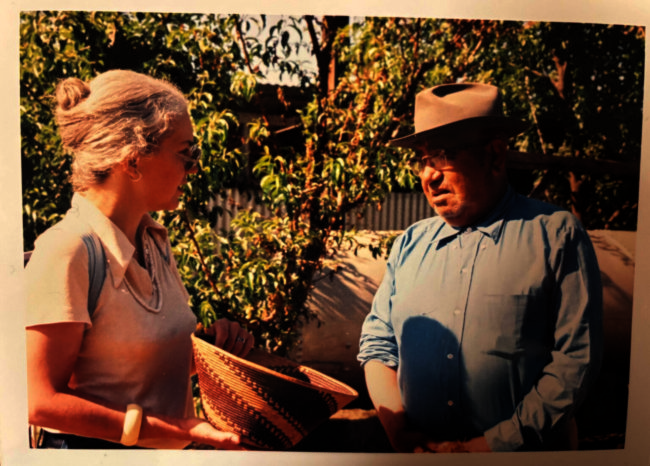
During her visits to Lake County, Sally McLendon spoke with Pomo elders, including Ralph Holder, shown here during a trip in the 1970s. In addition to her linguistics work, McLendon contributed important studies of Indigenous California community histories and the Pomo basketmaking tradition. Courtesy of Annabella Pitkin.
Pitkin didn’t know it at the time, but her mother had amassed a vast collection of notes and recordings beginning in 1959 that chronicled three of the seven distinct Pomoan languages. McLendon’s records described the pronunciations of words and more complex grammatical structures, as well as the tribe’s oral literature and traditions. The collection expanded as her collaborations with tribes continued.
Decades later, as McLendon’s health began to fail, she and her older daughter began discussing the collection’s future. It was a lingering question when she died last year at her home in New York at the age of 90.
The answer came in the form of a letter Pitkin found buried beneath a pile of her mother’s unopened mail. It was a query from the West Coast, and it would set in motion a chain of events that would return the materials to the Bay Area, assist a tribe in further revitalizing its language, and help a graduate student unearth his own family history.
The letter was from the California Language Archive at UC Berkeley.
Deep in Dwinelle, an archive of language
Nestled in the depths of Dwinelle Hall, the California Language Archive is home to thousands of notebooks and photographs and hours upon hours of recordings. Started in the 1950s as a research center alongside the Department of Linguistics, it’s now among the largest collections of Indigenous language materials in the world. It contains documentation of nearly 400 Indigenous languages, originally from California but now also across the globe.
The archive also contains a massive, publicly accessible database of nearly 60,000 digital files, totaling about 530 days of audio and 40 days of video. Used by scholars and tribes, the archive preserves records essential for language revitalization, cultural reclamation and the reintroduction of tribal practices that may have once been banned, said Andrew Garrett, a professor of linguistics and the archive’s faculty director.
“Sometimes we have the only recordings of a particular language or the only documented information about certain cultural practices or certain stories or certain kinds of vocabulary,” Garrett said. “That material is really valuable in Indigenous communities today.”
Until about five years ago, a graduate student researcher handled the archive’s day-to-day operations, which include collecting and cataloging materials and working with scholars and tribal members to access the collection.
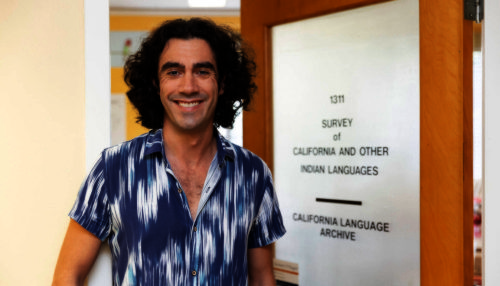
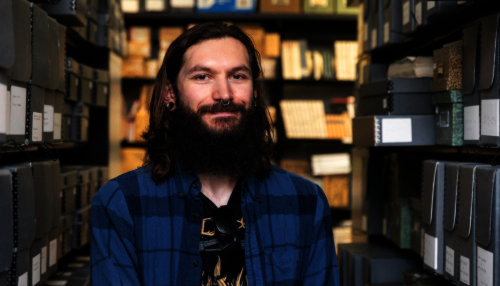
Zachary O’Hagan manages the California Language Archive. His job includes facilitating visits from the public and seeking materials that might be important additions to the collection. Photo by Brittany Hosea-Small/UC Berkeley.
Zachary O’Hagan began working with the archive in the fourth year of his Ph.D., studying Peruvian languages. The duties of managing the collection — which continued through his postdoctoral research — fell to him until the archive formally hired him as its full-time manager.
It was an opportunity to jumpstart the effort of opening the archive’s holdings to more people and proactively seek out those who may have materials that should be in the archive.
“In 2025, it’s easy to think that most human knowledge is somehow already online,” O’Hagan said. “There’s a vast quantity of human knowledge that is still on paper or still in a box in someone’s attic and somewhere where it should make its way into an archive.”
In recent years, O’Hagan has turned his attention to alumni and others who did linguistics research throughout the 20th century but whose work had not yet been sent to the archive. Armed with a pen, paper and street address, O’Hagan dashed off letters to academics around the world — people like McLendon.
“She’s well known in the documentation of California languages,” O’Hagan said. “She was someone who had, in a way, been on our radar for a long time.”
The California Language Archive had been on her radar, too.
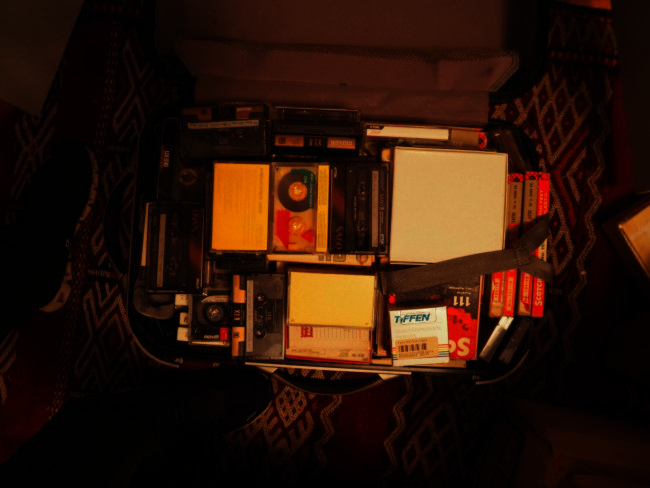
O’Hagan and Pitkin packed McLendon’s recordings into a suitcase, which he used as his carry-on bag for his flight back to Berkeley. The tapes contain hours and hours of conversations with Pomo elders. Photo courtesy of Zachary O’Hagan.
A suitcase full of 90 priceless tapes
Pitkin got in touch with O’Hagan not long after she found the letter. She and her mother had discussed contributing her work on Pomoan languages to the archive for years; at that moment, it was a question of what materials would be of most interest.
As she sifted through the boxes and folders, Pitkin was filled with a range of emotions. She found receipts from gas stations and restaurants from those trips to Clear Lake. She found photographs, some of her and her sister standing with her mother and old friends from Clear Lake communities, people whom she spent years getting to know.
“It was a wonderful kind of memory lane,” Pitkin said.
She remembered her mother and father, the linguist Harvey Pitkin, whom McLendon met in a Dwinelle Hall elevator when they were both graduate students at Berkeley. Over the years, her parents had explained to Pitkin the work they did as scholars of Indigenous languages and the importance of knowing Indigenous history. They taught their children why land ownership was a vital topic and how language was more than just words. By that point, McLendon was teaching linguistics, anthropology and intellectual history at Hunter College and the City University of New York Graduate Center.
Recalling her mother’s lifetime of work as a linguist, Pitkin said, “You really can’t enter another world until you have at least the most rudimentary sense of language. Language just shapes what you experience and how you reflect on it.”
In October 2024, O’Hagan was attending a conference at Yale University. He and Pitkin decided that, in the 90 minutes he had to spare before he needed to be at the airport, he could tour McLendon’s mid-century apartment and see what kind of records might be of interest to the archive. He was immediately struck by the volume of notebooks, file slip boxes and tapes. With sticky notes in hand, Pitkin and O’Hagan went room to room, opening boxes and labeling the materials that were of most interest to the California Language Archive.
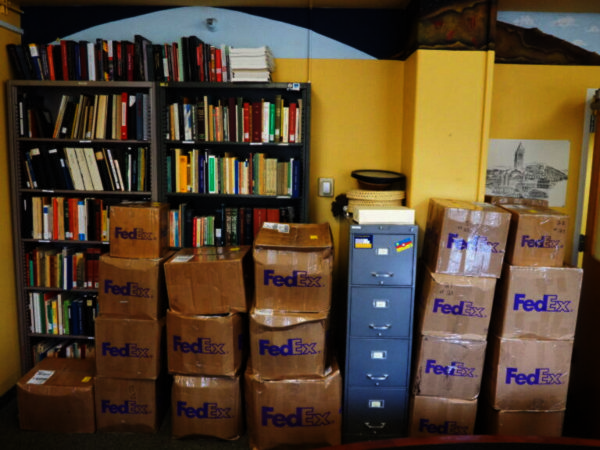
With the clock ticking before O’Hagan’s flight, they decided the boxes of notebooks and file slips could be FedExed to the archive. As for the audio tapes, those should go more immediately.
O’Hagan transferred his clothes and toiletries to an old suitcase they found in the apartment. That freed up space in his carry-on bag, into which they stashed the recordings that would be by his side on his return trip to Berkeley.
“We filled up the suitcase with about 90 tapes,” he said, describing the reel-to-reel recordings and cassettes. “That took us really down to the wire.”
Then he hailed a cab for the airport, priceless recordings in tow. The arrival of the tapes at the California Language Archive marked the end of one journey, but it was the beginning of another for one student who would find the recordings especially important.
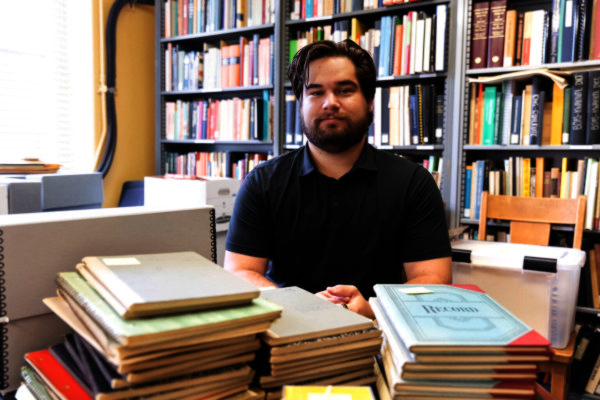
While reviewing records from McLendon’s collection, Lee-Wynant found interviews with his great-great aunt that veered in all sorts of directions, from family trees to social customs, traditional weddings and childhood stories. Photo by Brittany Hosea-Small/UC Berkeley.
A student’s ‘lifetime project’
Tyler Lee-Wynant grew up hearing stories about his great-great-aunt, Edna Campbell Guerrero.
In addition to English, she spoke three dialects of Northern Pomo. She shared her cultural and linguistic knowledge with her family and linguists who became dear friends — including researchers like McLendon from UC Berkeley.
Though Guerrero died the year Lee-Wynant was born, his father has shared stories about Guerrero teaching him Pomoan phrases, an effort to keep the language alive. As a linguistics student at UC Davis, Lee-Wynant became involved in documenting Indigenous languages and archiving his own recordings with the California Language Archive. He joined a separate research project after he graduated, annotating and indexing existing materials at the archive.
The work led him to his great-great-aunt.
“When I began to hear my aunt’s voice and the voices of other Northern Pomo speakers, I was just completely just blown away,” Lee-Wynant said.
Now in the second year of his linguistics Ph.D. at Berkeley, working as a graduate student researcher in the California Language Archive, Lee-Wynant spends hours each week studying and cataloguing new materials. He said having a connection with the archive’s holdings has helped him feel a tie to his tribal heritage and family history.
“My connection has only strengthened over the years,” he said.
As Lee-Wynant pored through the materials O’Hagan flew back to Berkeley with, he quickly realized several tapes featured McLendon’s interviews with his great-great-aunt. Even more of those interactions are detailed in the 23 boxes of McLendon’s notebooks that arrived this summer.
Some of the materials focus on language basics, like verb forms or differences in the pronunciation of related words among the seven Pomoan languages. But Lee-Wynant quickly found the interviews veered in all sorts of directions, from family trees to social customs, traditional weddings and childhood stories.
“This is like a lifetime project for me. I’ve only scratched the surface,” Lee-Wynant said, realizing it’ll take at least a year to sort through the materials. “There’s so, so much. I always get the chills whenever I listen to it because you never know what story is going to come up.”
Nearly two-dozen boxes of McLendon’s notebooks and other research materials arrived this summer at the California Language Archive over the summer. Photo courtesy of Zachary O’Hagan.
While several students on campus have used the California Language Archive to research their family, Lee-Wynant is the first to have been cataloguing items that feature a relative — a remarkable coincidence in timing that was some 70 years in the making.
“She always valued her heritage. She always wanted to try to document that for posterity,” Lee-Wynant said. “I think she always had some hope that, in the future, like now, descendants and people of the community would value it and keep it going.
“And she was right.”
After years of learning about his great-great-aunt from his father, Lee-Wynant said it’s been deeply meaningful for the role to be reversed — for him to be sharing findings from his research with his father. He’s also increasingly optimistic about how her work will persist through efforts to teach Pomoan languages to young people.
“I would love for the descendants to be able to learn about their family from these resources as I have,” Lee-Wynant said. “There’s just so much, and there’s so much that’s just waiting to be learned.”
Weaving language into community
Jonathan Cirelli is helping to make that a reality.
Cirelli is the language manager for, and an enrolled member of, the Habematolel Pomo of Upper Lake Tribe, a federally recognized Native sovereign nation. His job is both to collect materials that may help with language revitalization and to work with tribal leaders and the community to create systems that keep alive languages and culture the U.S. government tried to destroy. Future plans include creating flashcards, workbooks and curricula for language reintroduction — especially among young people.
“It took generations for us to lose our language,” he tells people. “It might take a couple generations for us to regain it in the way we want to.”
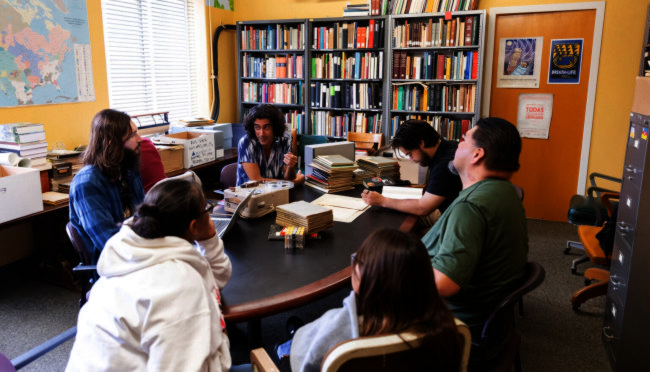
The California Language Archive facilitates visits, including one in October where members of the Habematolel Pomo of Upper Lake Tribe were able to see and listen to the newly arrived materials. Photo by Brittany Hosea-Small/UC Berkeley.
On a recent Wednesday, Cirelli, Lee-Wynant and O’Hagan gathered in the California Language Archive to review McLendon’s work and formulate a plan for how it will integrate with the Pomoan language revitalization work.
Together, they leafed through the folders and followed along with the recordings. McLendon’s work was among the most detailed Cirelli had seen. Critically, it filled in gaps with local dialects. Cirelli saw words he’d never seen before and breakdowns of sentences that filled in missing links for how certain words translated between dialects.
It was like finding a piece that fills in a puzzle.
“I was happily overwhelmed with how much material was there,” Cirelli said.
The visit exemplified one of the key goals of the archive, said Garrett, the faculty director.
“What archives really are is about relationships,” Garrett said. “Relationships between the material that is curated in an archive and the various communities that have a stake in that material.”
As the archive works to digitize the materials, Cirelli will be using them to develop a language curriculum — continuing the work of creating teaching materials that McLendon had pursued decades ago. Bit by bit, they plan to introduce phrases in school curricula and casual interactions. It’s a long-term project, Cirelli said, but it’s one worth doing.
“People really underestimate the power of language,” Cirelli said. “There are songs, ceremonies, traditions, food and other things that were ingrained only in — and are kind of protected by — our language. So by us reintroducing it, we’re really just trying to get another layer of our heritage back.”
Meanwhile, Pitkin has continued to find herself reflecting on her childhood trips to Clear Lake with her mother and sister and their time in Berkeley. Asked what motivated her mother to spend so many years working to preserve Pomoan languages, Pitkin paused.
“I think she felt a real sense of obligation to the communities at Clear Lake, an obligation to try not to let them down,” she said.
Having these materials at the California Language Archive brings them full circle. It opens the door for future possibilities for how the materials might be used by communities and researchers — possibilities McLendon had already begun to imagine.
“The story is not over,” Pitkin said. “These are living materials that belong to the world of living people and that are part of ongoing community and scholarly conversations and reimaginings. They’re kind of like the seeds of future things that can grow from them.
“That’s part of why the California Language Archive is so important. It provides a space from which new things can grow.”
Jason Pohl and Anne Brice write for UC Berkeley.
During a recent visit, Jonathan Cirelli leafed through the folders and followed along with the recordings. Cirelli will be using the materials to develop a language curriculum — continuing the work that McLendon had pursued decades ago. Photo by Brittany Hosea-Small/UC Berkeley.
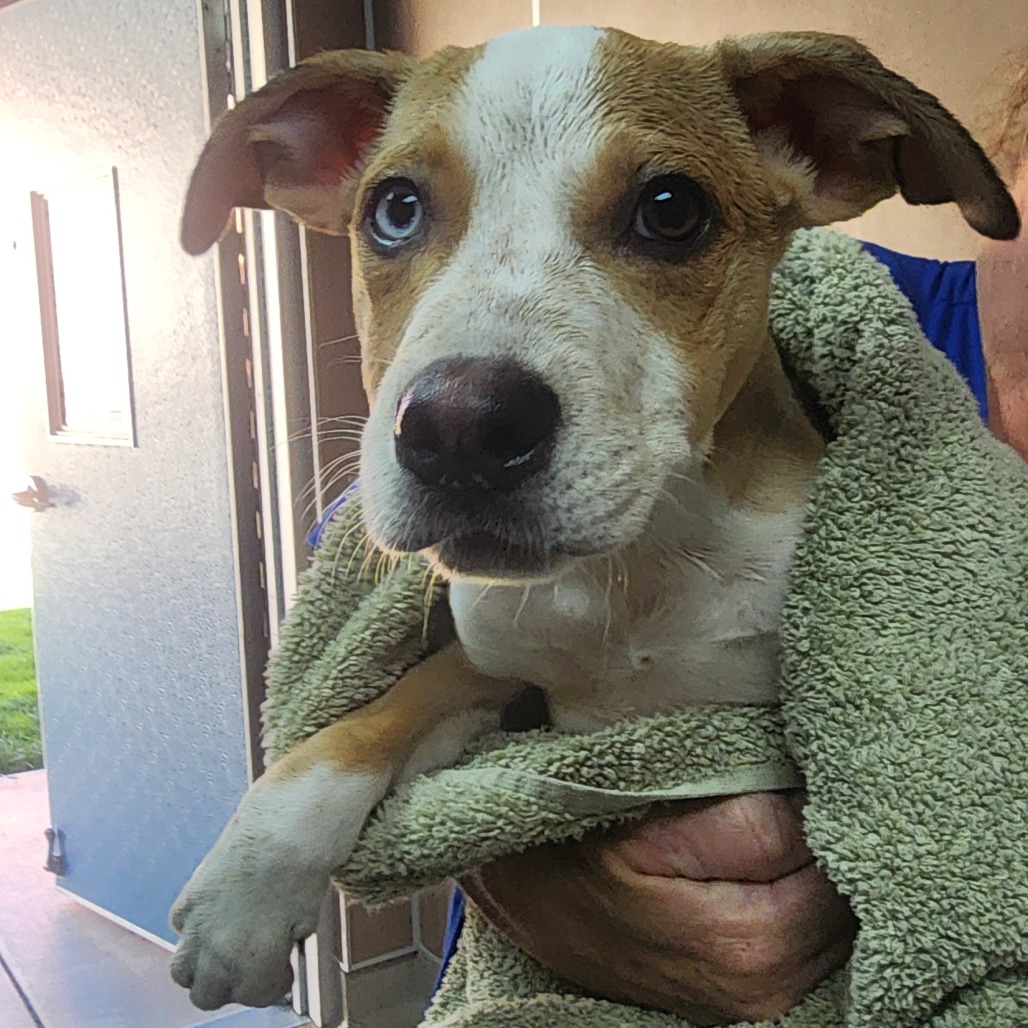
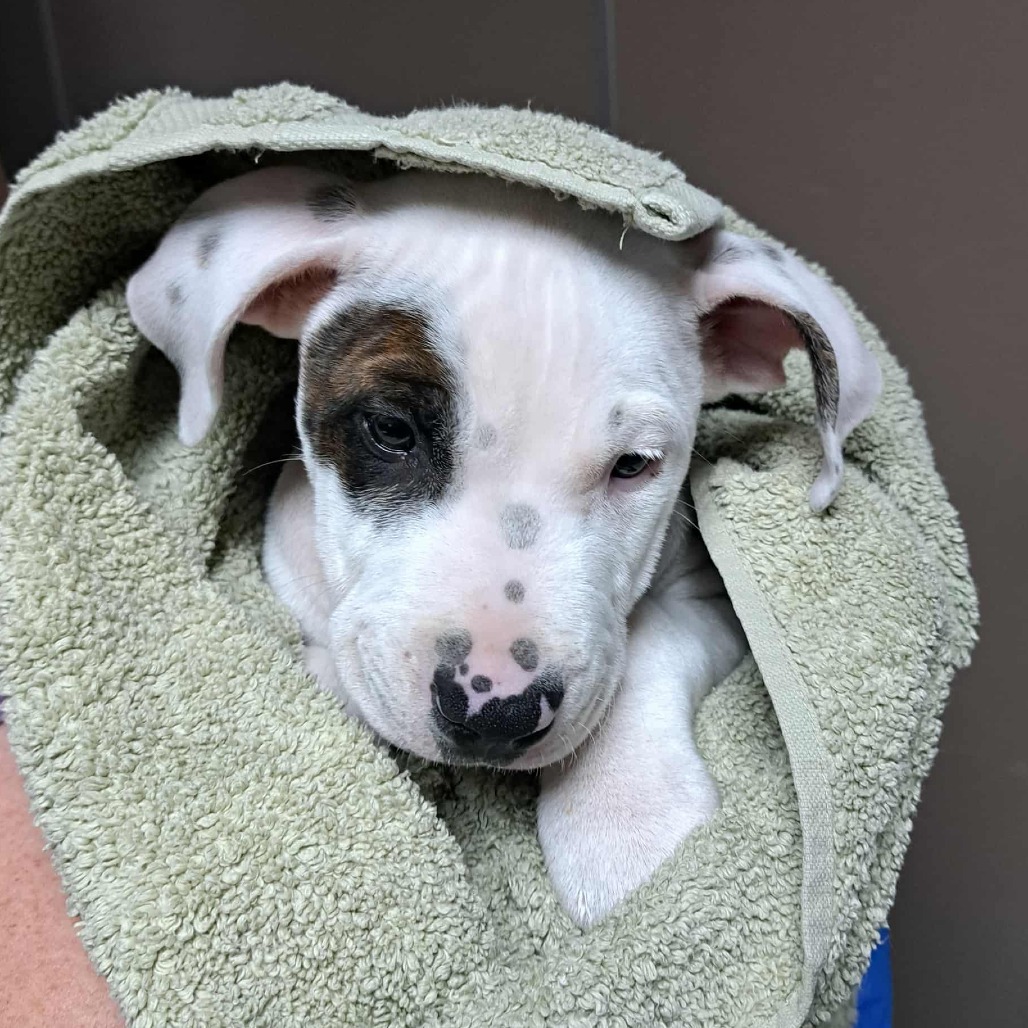
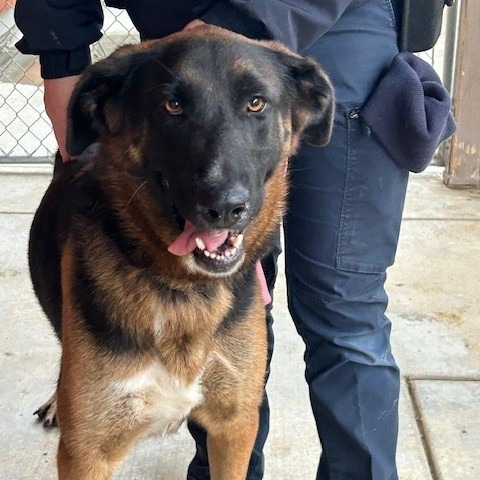
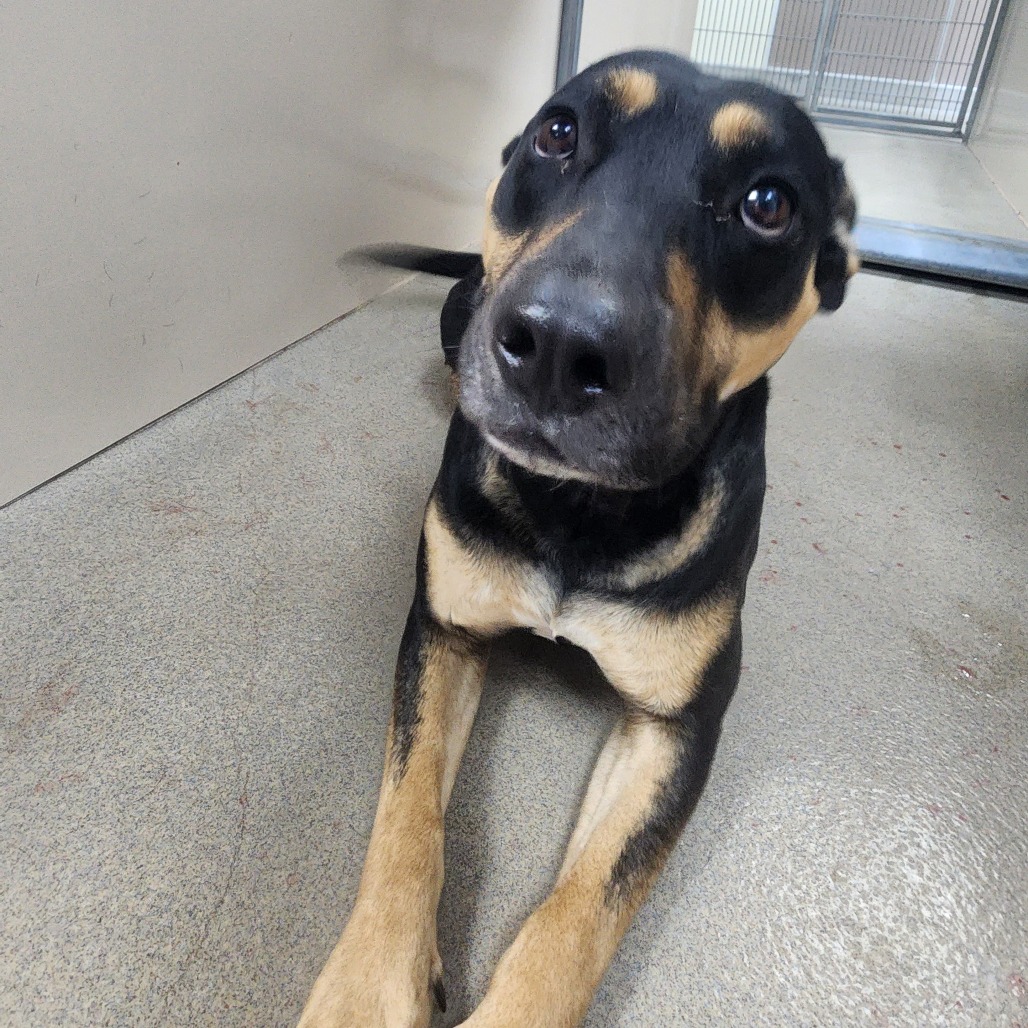
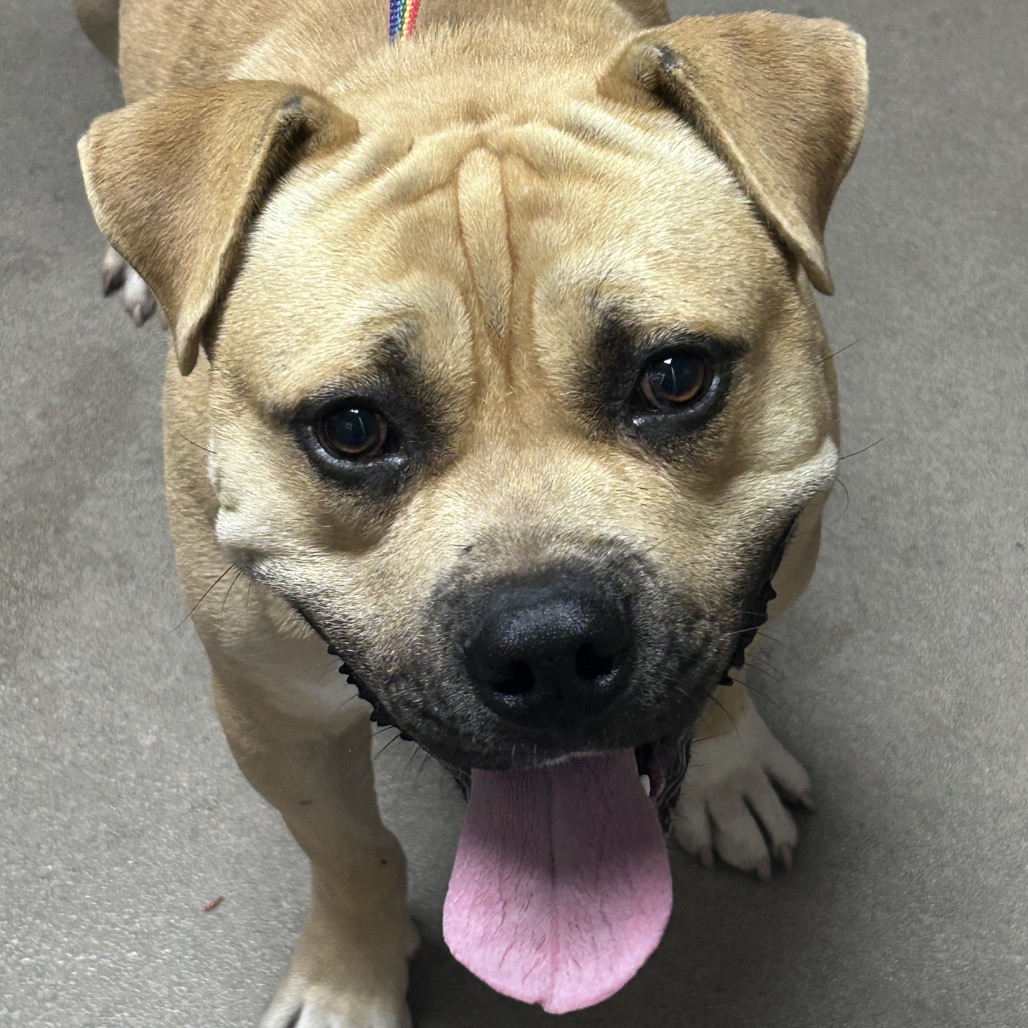
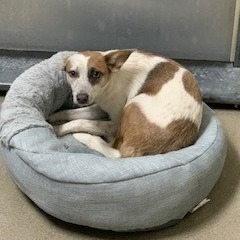
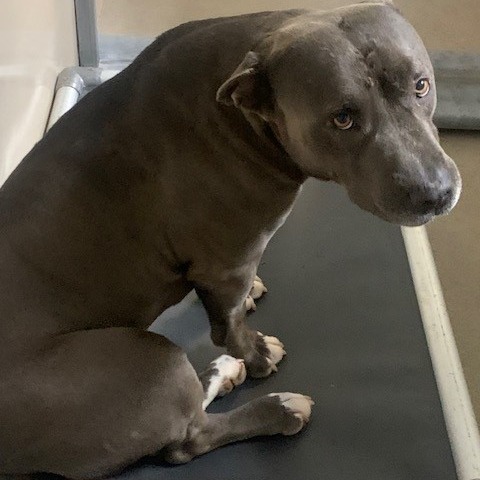
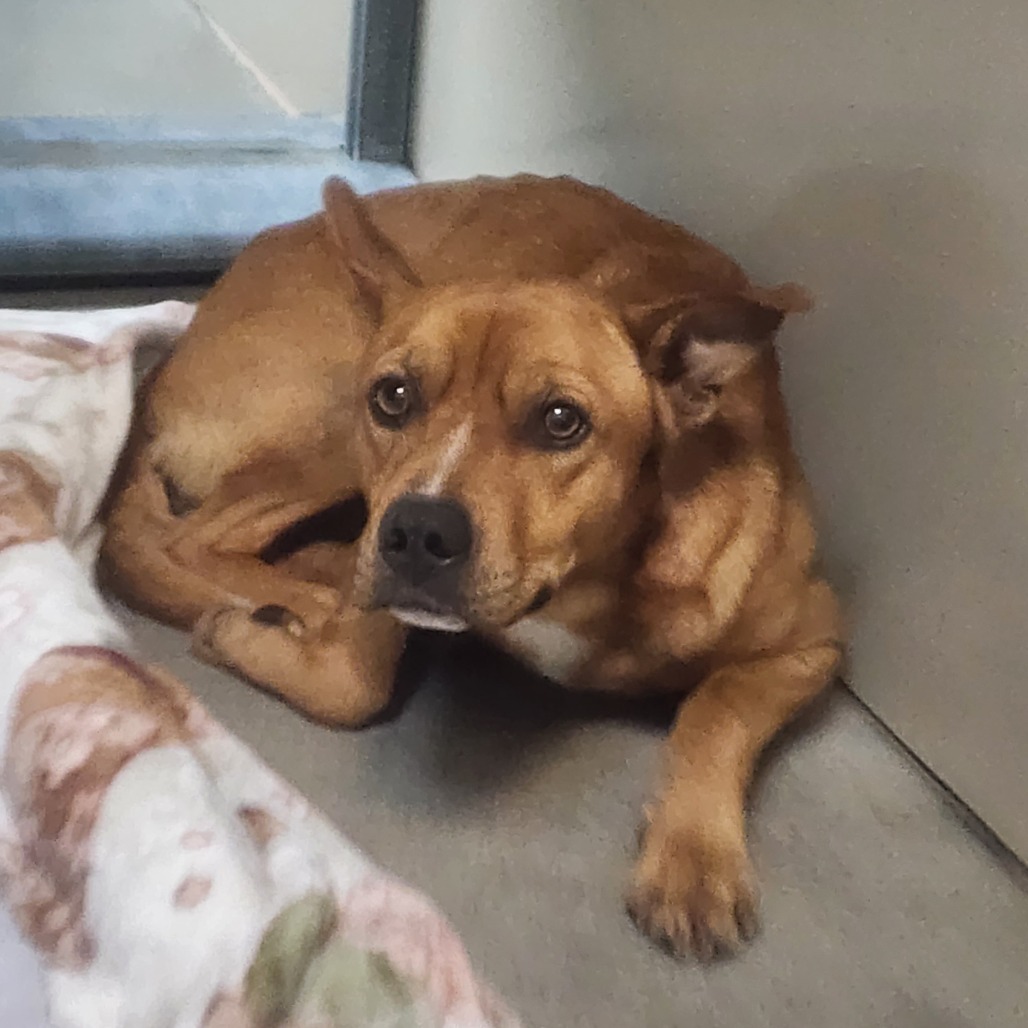
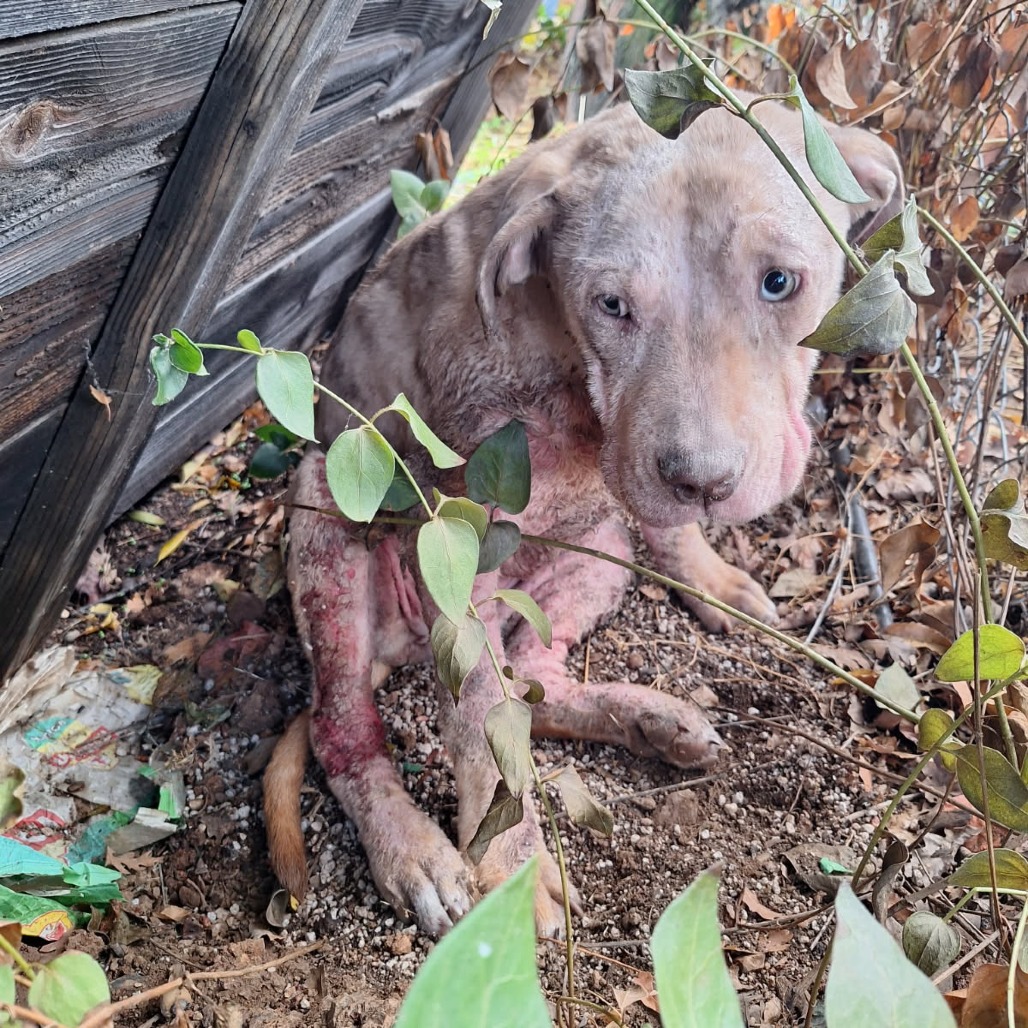
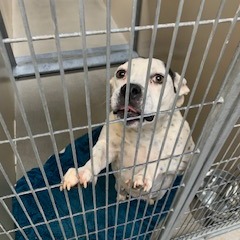
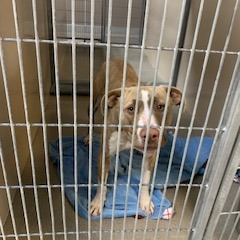
LAKE COUNTY, Calif. — Lake County Animal Care and Control has a group of dogs this week waiting for their new homes.
The dogs available for adoption this week include mixes of cattle dog, German shepherd, Labrador Retriever, pit bull terrier, terrier and shepherd.
Dogs that are adopted from Lake County Animal Care and Control are either neutered or spayed, microchipped and, if old enough, given a rabies shot and county license before being released to their new owner. License fees do not apply to residents of the cities of Lakeport or Clearlake.
Those animals shown on this page at the Lake County Animal Care and Control shelter have been cleared for adoption.
Call Lake County Animal Care and Control at 707-263-0278 or visit the shelter online for information on visiting or adopting.
The shelter is located at 4949 Helbush in Lakeport.
Email Elizabeth Larson at This email address is being protected from spambots. You need JavaScript enabled to view it.. Follow her on Twitter, @ERLarson, and on Bluesky, @erlarson.bsky.social. Find Lake County News on the following platforms: Facebook, @LakeCoNews; X, @LakeCoNews; Threads, @lakeconews, and on Bluesky, @lakeconews.bsky.social.
Ordinary and universal, the act of writing changes the brain. From dashing off a heated text message to composing an op-ed, writing allows you to, at once, name your pain and create distance from it. Writing can shift your mental state from overwhelm and despair to grounded clarity — a shift that reflects resilience.
Psychology, the media and the wellness industry shape public perceptions of resilience: Social scientists study it, journalists celebrate it, and wellness brands sell it.
In my work as a professor of writing studies, I research how people use writing to navigate trauma and practice resilience. I have witnessed thousands of students turn to the written word to work through emotions and find a sense of belonging. Their writing habits suggest that writing fosters resilience. Insights from psychology and neuroscience can help explain how.
Writing rewires the brain
In the 1980s, psychologist James Pennebaker developed a therapeutic technique called expressive writing to help patients process trauma and psychological challenges. With this technique, continuously journaling about something painful helps create mental distance from the experience and eases its cognitive load.
In other words, externalizing emotional distress through writing fosters safety. Expressive writing turns pain into a metaphorical book on a shelf, ready to be reopened with intention. It signals the brain, “You don’t need to carry this anymore.”
Translating emotions and thoughts into words on paper is a complex mental task. It involves retrieving memories and planning what to do with them, engaging brain areas associated with memory and decision-making. It also involves putting those memories into language, activating the brain’s visual and motor systems.
Writing things down supports memory consolidation — the brain’s conversion of short-term memories into long-term ones. The process of integration makes it possible for people to reframe painful experiences and manage their emotions. In essence, writing can help free the mind to be in the here and now.
Taking action through writing
The state of presence that writing can elicit is not just an abstract feeling; it reflects complex activity in the nervous system.
Brain imaging studies show that putting feelings into words helps regulate emotions. Labeling emotions — whether through expletives and emojis or carefully chosen words — has multiple benefits. It calms the amygdala, a cluster of neurons that detects threat and triggers the fear response: fight, flight, freeze or fawn. It also engages the prefrontal cortex, a part of the brain that supports goal-setting and problem-solving.
In other words, the simple act of naming your emotions can help you shift from reaction to response. Instead of identifying with your feelings and mistaking them for facts, writing can help you simply become aware of what’s arising and prepare for deliberate action.
Even mundane writing tasks like making a to-do list stimulate parts of the brain involved in reasoning and decision-making, helping you regain focus.
Making meaning through writing
Choosing to write is also choosing to make meaning. Studies suggest that having a sense of agency is both a prerequisite for, and an outcome of, writing.
Researchers have long documented how writing is a cognitive activity — one that people use to communicate, yes, but also to understand the human experience. As many in the field of writing studies recognize, writing is a form of thinking — a practice that people never stop learning. With that, writing has the potential to continually reshape the mind. Writing not only expresses but actively creates identity.
Writing also regulates your psychological state. And the words you write are themselves proof of regulation — the evidence of resilience.
Popular coverage of human resilience often presents it as extraordinary endurance. News coverage of natural disasters implies that the more severe the trauma, the greater the personal growth. Pop psychology often equates resilience with unwavering optimism. Such representations can obscure ordinary forms of adaptation. Strategies people already use to cope with everyday life — from rage-texting to drafting a resignation letter — signify transformation.
Building resilience through writing
These research-backed tips can help you develop a writing practice conducive to resilience:
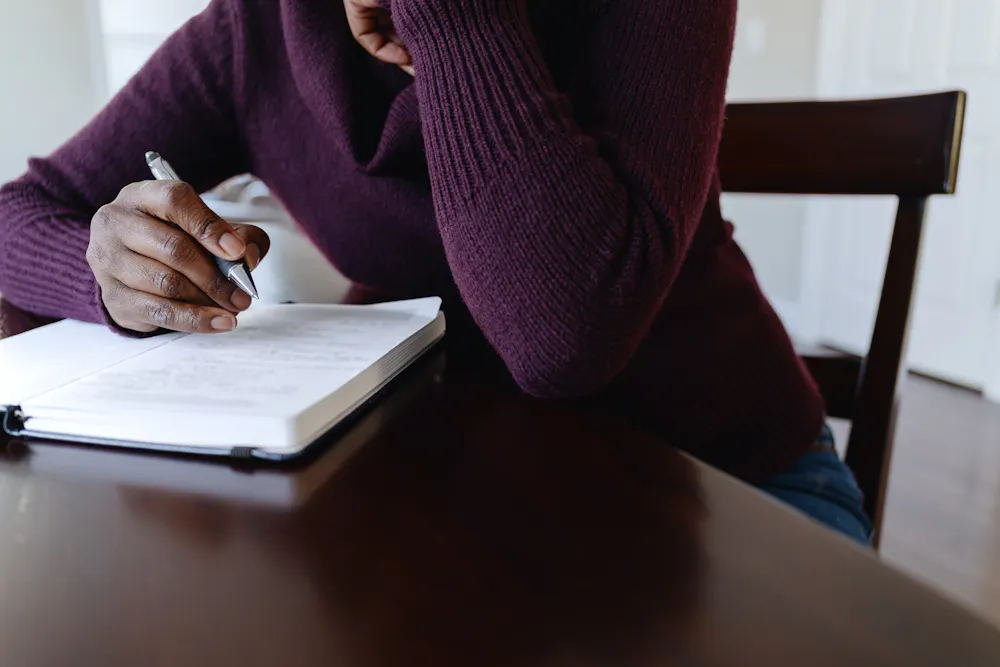
1. Write by hand whenever possible. In contrast to typing or tapping on a device, handwriting requires greater cognitive coordination. It slows your thinking, allowing you to process information, form connections and make meaning.
2. Write daily. Start small and make it regular. Even jotting brief notes about your day — what happened, what you’re feeling, what you’re planning or intending — can help you get thoughts out of your head and ease rumination.
3. Write before reacting. When strong feelings surge, write them down first. Keep a notebook within reach and make it a habit to write it before you say it. Doing so can support reflective thinking, helping you act with purpose and clarity.
4. Write a letter you never send. Don’t just write down your feelings — address them to the person or situation that’s troubling you. Even writing a letter to yourself can provide a safe space for release without the pressure of someone else’s reaction.
5. Treat writing as a process. Any time you draft something and ask for feedback on it, you practice stepping back to consider alternative perspectives. Applying that feedback through revision can strengthen self-awareness and build confidence.
Resilience may be as ordinary as the journal entries people scribble, the emails they exchange, the task lists they create — even the essays students pound out for professors.

 How to resolve AdBlock issue?