How to resolve AdBlock issue?
Refresh this page
How to resolve AdBlock issue?
Refresh this page
Lake County News,California
  • Home
    • Registration Form
  • News
    • Education
    • Veterans
    • Community
      • Obituaries
      • Letters
      • Commentary
    • Police Logs
    • Business
    • Recreation
    • Health
    • Religion
    • Legals
    • Arts & Life
    • Regional
  • Calendar
  • Contact us
    • FAQs
    • Phones, E-Mail
    • Subscribe
  • Advertise Here
  • Login
How to resolve AdBlock issue?
Refresh this page

News

Holiday storm inbound to Northern California

Details
Written by: Elizabeth Larson
Published: 18 December 2025

LAKE COUNTY, Calif. — The Christmas and New Year’s holidays are forecast to be cold, windy and wet thanks to an inbound atmospheric river storm system.

The National Weather Service said the approaching atmospheric river will bring heavy rain to Oregon on Wednesday and Thursday, with lighter rain expected across northwest California during that same time period. 

Beginning on Thursday night and Friday, forecasters said heavy rain — along with gusting wind of up to 45 miles per hour — is expected in Northern California.

For the next week, the National Weather Service is reporting that rain — sometimes heavy — is expected across northwest California.

The National Weather Service’s Eureka office said Lake and Mendocino counties will see lighter rain starting on Thursday, with moderate to locally heavy rain expected this weekend and early in the new week. 

Rainfall will trend through Lake County on Saturday. Forecasters said Lake and Mendocino counties could “be in the bullseye” for a narrow band of moderate to locally heavy rain over the weekend.

Through Dec. 22, the National Weather Service is estimating the following rainfall totals for Lake County:

• Clearlake: 2.73 inches.
• Lakeport: 3.52 inches.
• Upper Lake: 4.59 inches.

The Lake County forecast shows temperatures through Wednesday with daytime highs reaching the low 60s and nighttime lows falling into the high 30s, with periods of morning fog. Winds are forecast on Friday and Saturday.

Email Elizabeth Larson at This email address is being protected from spambots. You need JavaScript enabled to view it.. Follow her on Twitter, @ERLarson, and on Bluesky, @erlarson.bsky.social. Find Lake County News on the following platforms: Facebook, @LakeCoNews; X, @LakeCoNews; Threads, @lakeconews, and on Bluesky, @lakeconews.bsky.social. 

Longtime Kelseyville Unified School Board member resigns; district seeks provisional board member 

Details
Written by: LAKE COUNTY NEWS REPORTS
Published: 18 December 2025
Kelseyville Unified School Board member Rick Winer, who served as a trustee for 25 years. Photo courtesy of the Kelseyville Unified School District.

KELSEYVILLE, Calif. — Following the resignation this month of a longtime member of its board of trustees, the Kelseyville Unified School District is now seeking applications for a provisional board member.

The district said the vacancy was created when long-time board member Rick Winer resigned.

“After 25 years of service on our board, Rick deserves to spend more time fishing and less time working,” said District Superintendent Dr. Nicki Thomas said.

Before he retired, Winer was a school psychologist who eventually became a school principal in Upper Lake. 

As a Kelseyville Unified Board member, he served as board president for many years. Thomas noted how much she appreciated Winer’s perspective, as an educator and a psychologist.  

“Rick always put kids first and he helped others do the same. When board members disagreed, he would refocus the discussion on what was best for students and that often brought everyone back together,” she said. 

The new provisional board member would serve through the end of November 2026. The successful candidate will then be able to run as an incumbent for a full term.  

Applications will be available via the Kelseyville Unified website and the district office beginning Jan. 2. The deadline for submission is Jan. 30.

Interviews will be held at a special board meeting on Feb. 10 starting at 10 a.m.

The basic criteria to serve as a Kelseyville Unified Board member include residing within the district boundaries, being a registered voter, having no conflicts of interest that would invalidate service (such as being a district employee) and being at least 18 years of age. 

The role of the school board is to make sure Kelseyville Unified is responsive to the values, beliefs and priorities of the Kelseyville community. The board works with the superintendent to set direction, establish an effective and efficient structure, provide support, ensure accountability and advocate for children in Kelseyville schools.

In addition to helping shape local education, board members receive health insurance through the district.  

The time commitment to serve is about four hours per month. Board members usually attend one regular monthly meeting and occasional special meetings, for which they prepare by reading materials provided in advance. Meetings usually last about two hours. 

For those considering applying for the provisional board member spot, Thomas stressed the importance of working collaboratively with fellow board members, educators, and the public. 

She explained that serving on a school board is not a political post, but a community service. As such, it requires people who can “respect differing opinions and hold confidential information in private.”  

Initial petition filings set to open for offices on June primary ballot

Details
Written by: LAKE COUNTY NEWS REPORTS
Published: 18 December 2025

LAKE COUNTY, Calif. — The Lake County Registrar of Voters Office said the period in which to submit the initial filings to run for offices in the June primary will begin this week. 

The Statewide Primary Election is scheduled to be held on Tuesday, June 2, 2026, to elect federal, state, legislative and county officials. 

A candidate may submit “in-lieu-of-filing fee petitions”, containing signatures of registered voters in the jurisdiction in which he/she seeks nomination, to offset all or part of the cost of his/her filing fee. 

The in-lieu-of-filing petitions are available between Dec. 19 and Feb. 4 during regular office hours of 8 a.m. to 5 p.m., Monday through Friday. The office is closed on county holidays and weekends.

The deadline to file the In-Lieu-of-Filing Fee Petitions with the Lake County Registrar of Voters’ office is close of business on Wednesday, Feb. 4.

Candidates for judicial offices are to file a declaration of intention before filing for office during the candidate filing period. Prospective candidates may file a declaration of intention between Feb. 9 and March 6, 2026. If an incumbent fails to file, the deadline to file a declaration of intention for that office will extend to March 11 for individuals other than the incumbent.

All candidates for elective office must also file within the nomination period of Feb. 9 through March 6 a declaration of candidacy form, nomination papers and pay filing fee in order for their name to be printed on the June 2 Statewide Primary Election ballot. 

Eligible voters can file for candidacy for the following offices.

Voter-nominated offices:

• Governor;
• Lieutenant governor;
• Secretary of state;
• Controller;
• Treasurer;
• Attorney general;
• Insurance commissioner;
• Member, State Board of Equalization, District 2;
• State Superintendent of Public Instruction;
• U.S. Representative in Congress, Districts 1 and 4;
• State Senate, District 2;
• State Assembly, District 4.

County offices:

• Judge of the Superior Court, Department 2;
• County superintendent of schools;
• County supervisor, Districts 2 and 3;
• Assessor-recorder;
• County clerk-auditor;
• Treasurer-tax collector.

Voters desiring information regarding filing for any of the elective offices enumerated above may visit the registrar’s website or contact the Registrar of Voters office in person at 325 N Forbes St, Lakeport.

The Registrar’s Office also can be reached at telephone 707-263-2372 or toll-free 888-235-6730, and email This email address is being protected from spambots. You need JavaScript enabled to view it.. 

Rising electricity prices and an aging grid challenge the nation as data centers demand more power

Details
Written by: Barbara Kates-Garnick, Tufts University
Published: 18 December 2025
Energy prices are going up – still. zpagistock/Moment via Getty Images

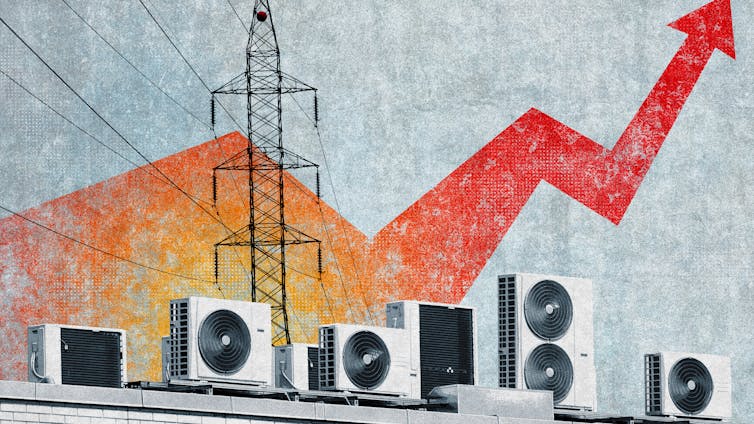
Everyone – politicians and the public – is talking about energy costs. In particular, they’re talking about data centers that drive artificial intelligence systems and their increasing energy demand, electricity costs and strain on the nation’s already overloaded energy grid.

As a former state energy official and utility executive, I know that many of the underlying questions involving energy affordability are very complex and have been festering for decades, in part because of how many groups are involved. Energy projects are expensive and take a long time to build. Where to build them is often also a difficult, even controversial, question. Consumers, regulators, utilities and developers all value energy reliability but have different interests, cost sensitivities and time frames in mind.

The problem of high energy prices is not new, but it is urgent. And it comes at a time when the U.S. is deeply divided on its approaches to energy policy and the politics of solving collective problems.

A person in an elevated bucket works with tools and wires.
To stay reliable, the electricity grid needs long-term investment, not just repairs after storms. Miguel J. Rodriguez Carrillo/Getty Images

Rising costs

From September 2024 to September 2025, average U.S. residential electricity prices have risen 7.4%, from 16.8 to 18 cents per kilowatt-hour. Government analysts expect prices will continue to rise and outpace inflation in 2026.

With household earnings basically flat when adjusted for inflation, these increases hit consumers hard. They take up higher percentages of household expenses – especially for lower-income households. Electricity prices have effects throughout the economy, both directly on consumers’ budgets and indirectly by raising operating costs for business and industry, which pass them along to customers by raising prices for goods and services.

The problem

By 2030, energy analysts expect U.S. electricity demand to rise about 25%, and McKinsey estimates that data centers’ energy use could nearly triple from current levels by that year, using as much as 11.7% of all electricity in the U.S. – more than double their current share.

The nation’s current electricity grid is not ready to supply all that energy. And even if the electricity could be generated, transmission lines are aging and not up to carrying all that power. Their capacity would need to be expanded by about 60% by 2050.

Orders of key generating equipment often face multiyear delays. And construction of new and expanded transmission lines has been very slow.

A Brattle Group analysis estimates all that new and upgraded equipment could cost between US$760 billion and $1.4 trillion in the next 25 years.

The reasons

The enormous scale of the work needed is a result of a lack of investment over time and delays in the investments that have been made.

For instance, since at least 2011 there has been an effort to bring Canadian hydropower to the New England electricity grid. Political opposition to cutting a path for a transmission line through forestland meant the project was subjected to a statewide referendum in Maine – and then a court case that overturned the referendum results. During those delays, inflation raised the estimated price of the project by half, from $1 billion to $1.5 billion – an added cost that will be paid by Massachusetts electricity customers.

That multiyear effort is just one example of how the vast web of companies that generate power, transmit it from power plants to communities, and distribute it to homes and businesses complicates attempts to make changes to the power grid.

State and federal government agencies have roles in these processes. States’ public utilities commissions oversee the utility companies that distribute power to customers. The Federal Energy Regulatory Commission oversees connections of power generators to the grid and the transmission lines that move electricity across state lines.

Often, those efforts aren’t aligned with each other, leading to delays over jurisdiction and decision-making.

For instance, as new generators prepare to operate, whether they are solar farms or gas-fired power plants, they need permission from FERC to connect to the transmission grid. The commission typically requests technical engineering studies to determine how the project would affect the existing system. Delays in this process increase the timeline and cost of development and postpone adding new capacity to the grid.

The costs

A key question for regulators and consumers alike is who should pay for adding more electricity to the grid and making the system more reliable.

Utilities traditionally charge customers for the costs of generating and delivering power. And it’s not clear how much power the data centers will ultimately require.

Some large data centers have taken to paying to build their own on-site power plants, though often they can supply energy to the grid as well.

In some states, efforts have begun to address public concern about electricity bills. In November 2025, two utility commissioners in Georgia, who had consistently approved electricity rate hikes over the previous two years, were voted out of office in a landslide.

New Jersey’s Gov.-elect Mikie Sherrill has pledged to declare a utility-price emergency and freeze costs for a year.

In New York, Gov. Kathy Hochul has paused implementation of state law, driven by environmental concerns, requiring that all new buildings over seven stories tall only use electricity and not natural gas or other energy sources. Hochul has said that requirement would increase electricity demand too much, raising prices and making the grid less stable.

In Massachusetts, Gov. Maura Healey has filed legislation seeking to provide energy affordability, including eliminating some charges from utility bills, capping bill increases and barring utility companies from charging customers for advertisement costs.

A wind turbine stands near a large group of block-shaped buildings.
Generating more power – from wind, nuclear or other sources – is only part of the potential solution. Scott Olson/Getty Images

The solutions

Clearly, there are no quick fixes or easy solutions to this complex situation.

However, innovation in regulation, combined with new technologies and even AI itself, may enable creative regulatory and technical solutions. For instance, devices that can be programmed to use energy efficiently, time-sensitive pricing and demand monitoring to smooth out peaks and valleys in electricity use can potentially ease both grid load and customers’ bills. But those solutions will work only if all the players are willing to cooperate.

There are a lot of ideas about how to lower the public’s burden of paying for data centers’ power. New ideas like this need careful scrutiny and possible revisions to ensure they are effective at lowering costs and increasing reliability.

As the country grapples with the effort to upgrade the grid, perform long-deferred maintenance and build new power plants, consumers’ costs are likely to continue to rise, further increasing pressure on Americans. Existing regulations and government oversight may no longer lower electricity costs immediately or help people plan for the rising costs over the long term.The Conversation

Barbara Kates-Garnick, Professor of Practice in Energy Policy, The Fletcher School, Tufts University

This article is republished from The Conversation under a Creative Commons license. Read the original article.

  1. Feimer appointed as Lake County’s new chief public defender
  2. Redbud Audubon Society to host Christmas Bird Count Dec. 20
  3. Clearlake City Council to select mayor, vice mayor for 2026
  • 125
  • 126
  • 127
  • 128
  • 129
  • 130
  • 131
  • 132
  • 133
  • 134
How to resolve AdBlock issue?
Refresh this page