How to resolve AdBlock issue?
Refresh this page
How to resolve AdBlock issue?
Refresh this page
Lake County News,California
  • Home
    • Registration Form
  • News
    • Education
    • Veterans
    • Community
      • Obituaries
      • Letters
      • Commentary
    • Police Logs
    • Business
    • Recreation
    • Health
    • Religion
    • Legals
    • Arts & Life
    • Regional
  • Calendar
  • Contact us
    • FAQs
    • Phones, E-Mail
    • Subscribe
  • Advertise Here
  • Login
How to resolve AdBlock issue?
Refresh this page

News

Federal courts rule that SNAP benefits must be released; delay in food assistance still anticipated

Details
Written by: Elizabeth Larson
Published: 01 November 2025

LAKE COUNTY, Calif. — Two federal judges on Friday ruled that billions of dollars meant to fund food benefits during the ongoing government shutdown must be released, decisions that are expected to impact a quarter of Lake County’s residents.

On Tuesday, 25 states — including California — and the District of Columbia sued the Trump administration over its withholding of money approved by Congress to fund the Supplemental Nutrition Assistance Program, or SNAP, as the shutdown continues.

In that lawsuit, the U.S. District Court in Massachusetts found the federal government is statutorily mandated to use the $6 billion in SNAP contingency funds, which were previously appropriated by Congress for the U.S. Department of Agriculture through September 2026.

Also on Friday, in a separate case, the U.S. District Court in Rhode Island ruled that the federal government is illegally withholding available funds for SNAP and must make these funds available to all states. That suit was filed by a coalition of local governments, nonprofits, small businesses and other organizations.

Regarding the lawsuit involving California, the Governor’s Office said in its announcement on the ruling that the federal government confirmed that it has $5.25 billion of those contingency funds available as well as $23 billion available in other USDA funds. 

The court also ruled that the USDA has discretion to use $23 billion dollars in Section 32 funds for SNAP.

“I'm proud to see courts agree that the Trump administration has a legal responsibility to support the SNAP program,” said Gov. Gavin Newsom. “The USDA needs to release all available funding for this critical program immediately. We’re not going to sit idly by while families go hungry. It’s cruel, it’s immoral and it’s beneath us as a nation. California will keep fighting to make sure people get the food assistance they need and deserve."

Newsom’s office said in the Friday statement that, despite having the authority to release the funds and the “legal duty” to spend all available dollars for SNAP benefits, the Trump administration and the USDA “chose for the first time in America’s history to not extend these benefits for millions of low-income families who depend on this to place food on their tables.”

Millions of dollars in benefits delayed to Lake County

Forty two million Americans rely on SNAP benefits. That includes 5.5 million Californians who have lost access to an estimated $1.1 billion in food assistance, the Governor’s Office said.

The average monthly benefit per person is reported to be about $187.

In Lake County, the Social Services Department said 24% of the population, or 16,320 people, use SNAP to make ends meet, totaling about $2.9 million per month. 

The funds to continue the program were set to be cut off on Saturday.

The Governor’s Office said the rulings handed down on Friday don’t make SNAP benefits immediately available, but rather begin the process “of requiring the federal government to direct funds to the program supporting Americans facing food insecurity.”

To make ends meet, the state of California has fast-tracked $80 million in state funds to stabilize food bank food distribution and offset delays in SNAP and CalFresh benefits. 

The Lake County Board of Supervisors on Tuesday is scheduled to receive an update from Social Services Director Rachael Dillman Parsons on the delay of SNAP and CalFresh benefits, and discuss how to protect vulnerable community members from the impacts of the benefit delays.

Later in the week, Dillman Parsons is due to meet with local food programs and food banks to discuss the response to the crisis and how those organizations can collaborate to feed Lake County’s residents in need.

Email Elizabeth Larson at This email address is being protected from spambots. You need JavaScript enabled to view it.. Follow her on Twitter, @ERLarson, and on Bluesky, @erlarson.bsky.social. Find Lake County News on the following platforms: Facebook, @LakeCoNews; X, @LakeCoNews; Threads, @lakeconews, and on Bluesky, @lakeconews.bsky.social. 

Police look for missing Clearlake boy

Details
Written by: LAKE COUNTY NEWS REPORTS
Published: 01 November 2025
Sean Brooks Jr. Courtesy photo.


CLEARLAKE, Calif. — The Clearlake Police Department is attempting to locate a boy last seen earlier this week.

Sean Brooks Jr., 10, was last seen on Thursday.

He is described as a black male, 4 feet 10 inches tall and 70 pounds, with brown hair and brown eyes. A description of his clothing was not available. 

If you have any knowledge of Sean's whereabouts please contact the Clearlake Police Department at 707-994-8251, Extension 1. 

An Indigenous approach shows how changing the clocks for daylight saving time runs counter to human nature – and nature itself

Details
Written by: Rachelle Wilson Tollemar, University of Wisconsin-Madison
Published: 01 November 2025

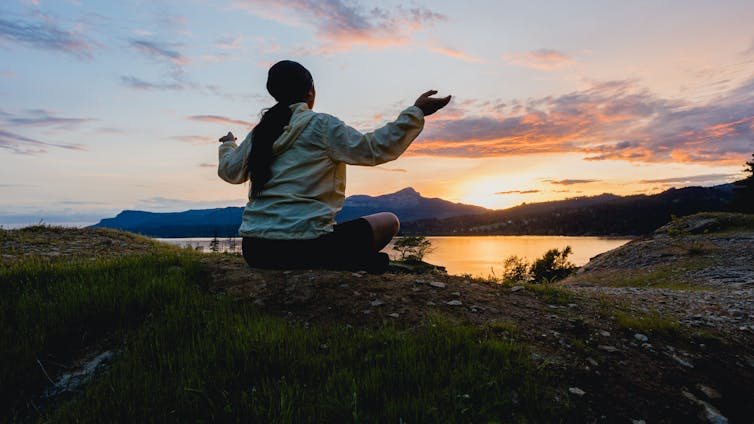
Humans and nature can find balance in each other. timnewman/E+ via Getty Images

It is that time again. Time to wonder: Why do we turn the clocks forward and backward twice a year? Academics, scientists, politicians, economists, employers, parents – and just about everyone else you will interact with this week – are likely debating a wide range of reasons for and against daylight saving time.

But the reason is right there in the name: It’s an effort to “save” daylight hours, which some express as an opportunity for people to “make more use of” time when it’s light outside.

But as an Indigenous person who studies environmental humanities, this sort of effort, and the debate about it, misses a key ecological perspective.

Biologically speaking, it is normal, and even critical, for nature to do more during the brighter months and to do less during the darker ones. Animals go into hibernation, plants into dormancy.

Humans are intimately interconnected with, interdependent on, and interrelated to nonhuman beings, rhythms and environments. Indigenous knowledges, which despite their complex, diverse and plural forms, amazingly cohere in reminding humans that we too are an equal part of nature. Like trees and flowers, we are beings who also need winter to rest and summer to bloom.

As far as we humans know, we are the only species that chooses to fight against our biological presets, regularly changing our clocks, miserably dragging ourselves into and out of bed at unnatural hours.

The reason, many scholars agree, is that capitalism teaches humans that they are separate from, and superior to, nature – like the point on top of a pyramid. That, and I argue, that capitalism wants people to work the same number of hours year-round, no matter the season. This mindset runs counter to the way Indigenous people have lived for thousands of years.

A group of people stand around an open circle on an island, as the Sun rises behind a bridge across the water.
A large gathering of people celebrate Indigenous Peoples Day in 2024, by watching the Sun rise over San Francisco Bay. Tayfun Coskun/Anadolu via Getty Images

The nature of time and work

Indigenous views of the world are not the pyramids or lines of capitalism but the circles and cycles of life.

Concretely, time correlates with terrestrial and celestial changes. Historic records and oral interviews document that in traditional Indigenous cultures of the past, human activity was scheduled according to nature’s recurring patterns. So for example, a meeting might have been scheduled not at 4 p.m. on Thursday, but rather at the next full moon. Everyone knew well in advance when that would arise and could plan accordingly.

Such an acute sensitivity to nature’s calendar has symbolic meaning, too. To look up and see the Moon in the sky at night is to see the same Moon that someone once saw centuries ago and someone else will hopefully see centuries into the future. Time is interwoven with nature in a sense that far exceeds Western understanding. It embodies past, present and future all at once. Time is life.

The 2015 movie ‘El Abrazo de la Serpiente (Embrace of the Serpent)’ examines the relationship between Indigenous cultures of knowing and colonizing forces.

In this Indigenous context, daylight saving time is nonsensical – if not outright comical. Time can’t be changed any more than a clock’s hands can grab the Sun and move its position in the sky. The Sun will continue to cycle at its gravitational will for generations – and economic systems – to come.

Like time, Indigenous approaches to work are also more expansive than the capitalist economy’s. They validate and value all life-sustaining activities as work. Taking care of oneself, of the sick, of the elderly, of the young, of the land, or even merely resting, for example, are equally valuable activities.

That’s because the objective of most Indigenous economies is not to increase an economist-invented measurement of production by working from 9 a.m. to 5 p.m., Monday through Friday. Rather, their goal is to find and generate a holistic well-being for all.

Daylight saving time is exclusively designed for 9-to-5 workers. It attempts to boost economic activity by giving them, and them alone, more light. Think about it: Care workers, who are predominantly women, work beyond daylight hours year-round. Where is their temporal accommodation? Though likely not malicious or even purposeful, the political intervention of daylight saving time ignores the massive workforce that operates on the periphery of the mainstream economy. In some ways, it reinforces the discriminatory idea that only some workers are worthy of economic recognition and accommodation.

In this sense, daylight saving time raises the question: Does the economy really need that extra hour of sunshine and worker productivity? Traditional economic philosophies would likely answer no out of principle; they may see daylight saving time as trespassing the biophysical, ethical and sacred limits of the world ecology by encouraging cultures of overwork and overconsumption.

A person swipes a card in a machine on a wall.
A worker swipes a time card to clock in at the beginning of their shift. halbergman/E+ via Getty Images

The working of time and nature

Since the invention of the clock, capitalism has increasingly treated time as an inanimate object largely independent of the environment.

While the rest of nature rises and slumbers to lunar and solar cycles, humans work and sleep to the resetting of their artificial clocks.

In their 2016 book “The Slow Professor,” humanities scholars Maggie Berg and Barbara K. Seeber connect this objectification of time to an inhumane culture of work.

Modern workers, they write, are increasingly expected to treat time as a numerical asset that can be managed, measured and controlled. Time for rest and relaxation has no countable home in the capitalist economy of life.

There are certainly practical benefits to using time to measure and monitor economic activities – such as knowing the precise time a meeting is scheduled to start and end. But Berg’s and Seeber’s work reveals how that reasonable practicality has been subverted to hold workers captive within what I argue is an unsustainable, unnatural and exploitative environment. Work time and life time have blurred into one.

In capitalism, work is expected to grow infinitely, despite existing within a finite world inhabited by limited beings. At a time when human activity depletes the world’s ecology – rather than sustaining it as it once did – this around-the-clock approach to work is simply incompatible with nature.

In sum, daylight saving time reproduces the same destructive logic that has led humans and nonhumans into the present socio-ecological crises. Disobeying and dominating the laws, rhythms and shape of nature, as seen in the seasonal exploitation of human energy and labor via daylight saving time, perpetuates the unparalleled social and environmental decline uniquely characteristic to the current capitalist era.

Looking backward, progressing forward

Unlike the relatively recent inception of capitalism, Indigenous wisdom espouses a set of philosophies as old as time. It reminds humans that there are other ways of interacting with time, work and the environment – ways that existed before capitalism and that can exist afterward, too.

In my view, people might be better off if the discussion about changing the clocks in the fall and spring wasn’t about how much time we can “make use of” or how much daylight we might “save,” but rather about reducing the number of hours we are expected to be made useful – and profitable – to secure a more just and sustainable existence for all.The Conversation

Rachelle Wilson Tollemar, Lecturer in Spanish Environmental Cultural Studies, University of Wisconsin-Madison

This article is republished from The Conversation under a Creative Commons license. Read the original article.

Clearlake Animal Control: ‘Rico’ and the dogs

Details
Written by: Elizabeth Larson
Published: 01 November 2025
“Rico.” Photo courtesy of Clearlake Animal Control.

CLEARLAKE, Calif. — Clearlake Animal Control has new puppies amongst the dogs available to loving homes this week.

The shelter has 52 adoptable dogs listed on its website.

This week’s dogs include “Rico,” a 2-month-old male mixed breed puppy with a short black coat. He is expected to be just over 40 pounds when fully grown.

The shelter is located at 6820 Old Highway 53. It’s open from 9 a.m. to 6 p.m. Tuesday through Saturday. 

For more information, call the shelter at 707-762-6227, emailThis email address is being protected from spambots. You need JavaScript enabled to view it. or visit Clearlake’s adoptable dogs here.

This week’s adoptable dogs are featured below.

Email Elizabeth Larson at This email address is being protected from spambots. You need JavaScript enabled to view it.. Follow her on Twitter, @ERLarson, and on Bluesky, @erlarson.bsky.social. Find Lake County News on the following platforms: Facebook, @LakeCoNews; X, @LakeCoNews; Threads, @lakeconews, and on Bluesky, @lakeconews.bsky.social. 

  1. Daylight saving time ends Nov. 2
  2. Space News: Solar storms have influenced our history – an environmental historian explains how they could also threaten our future
  3. Judge upholds Interior’s ability to reevaluate Scotts Valley Vallejo casino plan, allows tribe to continue pursuing project
  • 174
  • 175
  • 176
  • 177
  • 178
  • 179
  • 180
  • 181
  • 182
  • 183
How to resolve AdBlock issue?
Refresh this page