 How to resolve AdBlock issue?
News
- Details
- Written by: Lake County News reports
The advent of COVID-19 one year ago caused nearly every service and nonprofit organization to have to cancel their fundraisers.
Lakeport Rotary was unable to hold the Konocti Challenge in October and its main fundraiser, selling the beer at the Lake County Fair, also was canceled.
“Service clubs and other charitable organizations in Lake County are in a tough place right now, given the COVID restrictions and the safety of our community members,” Strong pointed out. “Fundraising is so crucial to the success of these organizations. The money raised at these events is what is used to provide the impactful community service projects programs we all do. So now we pivot and time to think outside the box.”
This time of year there would normally be dozens of crab feeds available to those crustacean lovers of Lake County but so far there have been few.
To meet that need, Lakeport Rotary Club, with the help of its premier sponsors Adventist Health Clearlake and Pro Farms, is stepping up to offer a nontraditional crab feed experience by providing a sumptuous crab dinner with all of the fixings available for drive-thru pickup at the Lake County Fairgrounds on Saturday, March 13, between 5 and 7 p.m.
The dinners will include a generous portion of fresh cracked crab, salad, french roll, butter and a yummy cake pop donated by My Tiny Diner.
The cost is $50 per person with the ability to add on fresh-made clam chowder, a bottle of Lake County wine or cans of craft beer from O'Meara's.
Crab dinner tickets are available for purchase at www.lakeportrotary.org. Tickets are available in limited quantities so order soon.
There will also be an online auction opening on Friday, March 12, running through Sunday, March 14.
They will have some amazing auction items taking shape including a variety of incredible desserts, a winery lunch and barrel tasting, a scenic flight and lunch, a stay in a beautiful San Diego condo, a “Day as a Deputy with Sheriff Martin,” a gift card tree worth hundreds, a wagon ride and wine tasting in Kelseyville, and stays in local lodging establishments just to name a few. More items are coming on every day so check back often.
Information on the online auction will be available soon at www.lakeportrotary.org and tickets for the crab dinner are already on sale and going fast.
“We wish we could throw that big in-person crab feed that is always so much fun,” shared Lakeport Rotary Club President Jeff Warrenburg, “but these times call for something special. We look forward to seeing our friends and neighbors, all while providing a yummy meal, donned in a mask, and thanking you from afar as you safely drive through to pick up your meal.”
Sponsorship opportunities are available and donations of auction items are greatly appreciated. Contact Jennifer Strong at
The Rotary Club of Lakeport was founded in 1925. It has undertaken hundreds of community projects over the years, funded college and vocational school scholarships for local high school graduates and contributed money and other resources to many worldwide initiatives, including efforts to eradicate polio and advance programs that promote goodwill and peace. In recent years, Lakeport Rotary has led efforts to help Lake County residents recover from wildfire devastation and begin the rebuilding process.
- Details
- Written by: Elizabeth Larson
Last week, Public Health Dr. Gary Pace announced that after 16 months on the job he was resigning. He’s planning to return to private practice, as Lake County News has reported.
Pace, who lives in Sonoma County, plans to stay on with Lake County until April 16.
County Administrative Officer Carol Huchingson told the board Tuesday that there has been a fair amount of turnover in Public Health officers across California and it will be a challenge to find Pace’s successor.
In Lake County, it’s been a challenge to keep the job filled in recent years, even when not faced with a pandemic.
Since December 2017, Lake County has had three Public Health officers, Huchingson explained to the board.
For nearly a decade, Dr. Karen Tait had filled the job, joining the county in April 2008 and retiring in December 2017.
Following her retirement, Pace was appointed interim Public Health officer, remaining in the post until early 2018, when the board appointed Dr. Sara Goldgraben to the post.
By summer, Goldgraben had left and Pace was again appointed as interim Public Health officer. He was in the job until October 2018, when Dr. Erin Gustafson was appointed.
Gustafson left in August 2019 to accept a job in San Bernardino County and Health Services Director Denise Pomeroy asked Pace to again come back as the interim Public Health officer.
The board would appoint him to the job in a permanent capacity in October 2019.
Huchingson said that the way these recruitments usually work is once the county has a candidate pool developed, the County Administrative Office will put together a panel to screen and interview the candidates.
Those top candidates will be presented to the board, which will interview them in closed session and announce any hiring decision it makes in open session, Huchingson said.
Pomeroy, who spoke at the Tuesday virtual meeting, said she is back to work on a part-time basis after having been on leave for a few months.
She said the recruiter the county has used in the past has a sound resume, and she’s currently waiting on two quotes from the company – one for recruiting a new Public Health director and one for the Health Department’s director of nursing, a job which the county has been trying to fill for 15 months.
The last time they used the recruiter, Pomeroy said the company brought them nine good candidates and they were able to recruit from that list.
“I’m excited to get this moving as quickly as we can to get some candidates on board for your interview and decision,” Pomeroy said.
Supervisor Jessica Pyska said the county needs to be aggressive in the search for a new Public Health officer.
“It’s a difficult time. It’s a difficult position to fill,” she said.
“I want all options on the table,” said Board Chair Bruno Sabatier.
He said he wants to be open to both hiring a permanent, salaried employee, or to contract with someone. “I want to make sure that we are open for any way of getting those people on board.”
He asked staff about what the “Plan B” is if an initial recruitment doesn’t succeed, as the county needs to have the position filled.
Huchingson said the backup plan is to use Pace longer if they must and then, if they can’t recruit a new doctor, to speak with two other doctors they’re contracting with to see if one of them would take the job.
She said counties are known to help each other out, just as Lake County has done in helping neighboring counties cover jobs like agriculture commissioner and air quality director. Huchingson said she will be reaching out to other counties to see if Lake can get assistance from them on a part-time basis.
The board reached unanimous consensus to move forward with the recruitment plan staff proposed.
Email Elizabeth Larson at
- Details
- Written by: Elizabeth Larson
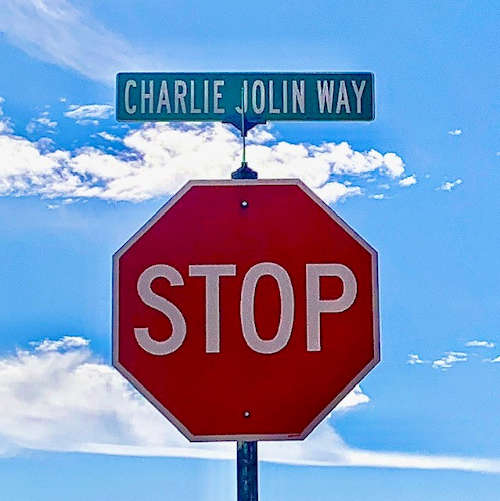
LAKEPORT, Calif. – The city of Lakeport said the process to rename a city street in honor of the man whose vision resulted in the creation of Westside Community Park is complete.
Westside Park Road has been renamed “Charlie Jolin Way.”
Jolin, who died in June at age 96, was the guiding force in the creation more than 20 years ago of Westside Community Park.
City officials also credit him with being instrumental in the development of Library Park.
Jolin, a proud World War II Navy veteran, was a devoted community volunteer.
He was a member and chair of the Lakeport Planning Commission, chair of the Citizens Advisory Committee for the development of the city's general plan, a longtime Boy Scout leader and the 2014 recipient of the Stars of Lake County Lifetime Achievement Award.
In June, shortly after Jolin’s death, the Westside Community Park Committee approached the Lakeport City Council and requested that Westside Park Road be renamed to honor Charlie Jolin and to recognize his commitment to the park and the city.
The committee believed there would be no Westside Community Park if it were not for Jolin.
The Lakeport City Council approved beginning the street renaming process in July, with the proposal then going to the Lakeport Planning Commission.
In October, the commission recommended approval of the name change to the Lakeport City Council.
The council gave final approval for the name change in November.
On Jan. 19, the street was officially renamed Charlie Jolin Way.
While the street signs have been changed, mapping platforms still reflect Westside Park Road, the city reported. When providing directions, residents may want to advise travelers of the new street name.
Email Elizabeth Larson at
- Details
- Written by: Lake County News reports
The package, passed by the Legislature this week, builds on the initiatives in the Governor’s January state budget proposal to provide cash relief to lower-income Californians, increase aid to small businesses and provide license renewal fee waivers to businesses impacted by the pandemic.
In addition to these measures, today’s action will commit additional resources for critical child care services and fund emergency financial aid for community college students.
“As millions of Californians are struggling to make ends meet amid the devastating impacts of this pandemic, we are taking immediate action in partnership with our legislative leadership to provide families and businesses the relief they need,” said Gov. Newsom. “This critical assistance – including child care, relief for small business owners, direct cash support to individuals and households, financial aid for community college students and more – will help keep our communities afloat as the state continues to confront the immense challenges of this moment.”
“These bills help Californians pay their bills, and provide bread-and-butter relief to the small businesses that make our communities great, and who in turn, are the cornerstone of our economy. Stores we rely upon, restaurants we love, and services our families have turned to for years,” said Senate President pro Tempore Toni G. Atkins. “This is what we can do right now to help them, but it isn’t the end of our efforts. Not by a long shot.”
“Californians are hurting. This plan represents a way of softening the human and economic blows of COVID. More than that, it builds an economic foundation for recovery. This is the people of California saying that we will not leave behind those who are hurting most, whether they are individuals or small businesses. This is California strong,” said Speaker Anthony Rendon.
Below are key provisions of the bills signed into law.
Direct relief to individuals and families
Incorporates the Governor’s Golden State Stimulus plan to assist California households that have borne the disproportionate economic burden of the COVID-19 Recession – those with incomes below $30,000, as well as those unfairly excluded from previous federal stimulus payments.
Provides $600 in one-time relief to households receiving the California EITC for 2020. In addition, the agreement provides a $600 one-time payment to taxpayers with Individual Tax Identification Numbers, or ITINs, who were precluded from receiving the $1,200 per person federal payments issued last spring and the more recent $600 federal payments. Tuesday’s action also provides $600 payments to households with ITINs and income below $75,000. ITIN taxpayers who also qualify for the California EITC would receive a total of $1,200. The payments will be provided to these households shortly after they file their 2020 tax returns.
Provides direct relief to additional lower-income Californians through a $600 one-time grant to households enrolled in the CalWORKS program and recipients of SSI/SSP and Cash Assistance Program for Immigrants. Grant payments for CalWORKS households are expected by mid-April; timing for the delivery of SSI/SSP and CAPI grants is currently under discussion with federal officials.
Combined, the package represents a total of 5.7 million payments to low-income Californians.
Immediate relief for small businesses
Provides $2.1 billion – a four-fold increase over the $500 million currently being distributed – for grants up to $25,000 for small businesses impacted by the pandemic, and allocates $50 million of this total for non-profit cultural institutions.
Fee waivers for heavily impacted licensees
Two years of fee relief for roughly 59,000 restaurants and bars licensed through the state’s Department of Alcoholic Beverage Control that can range annually from $455 to $1,235. The action also reflects fee relief for more than 600,000 barbering and cosmetology individuals and businesses licensed through the Department of Consumer Affairs.
More resources for critical child care
Addition of just over $400 million in new federal funds to provide stipends of $525 per enrolled child for all state-subsidized child care and preschool providers serving approximately 400,000 children in subsidized care statewide. The new federal resources will extend care for children of essential workers through June of 2022, and funds increased access to subsidized child care for more than 8,000 children of essential workers and at-risk children – who are not currently served in the system – through June of 2022.
Additional aid for individuals and families
Provides an additional $24 million for financial assistance and services through Housing for the Harvest – a program providing support for agricultural workers who have to quarantine due to COVID-19. The effort also provides a combined $35 million for food banks and diapers.
Emergency financial relief to support community college students
Provides an additional $100 million in emergency financial aid for qualifying low-income students carrying six or more units, with award amounts to be determined locally and made available by early April. In addition, the agreement provides $20 million to reengage students who have either left their community college studies because of the pandemic or to engage students at risk of leaving.
CalFresh student outreach and application assistance
Provides roughly $6 million to support outreach and application assistance to the University of California, California State University and California Community College students made newly eligible for CalFresh – the state-administered federal program for supplemental food assistance. The agreement also provides $12 million in state funds to support associated county administrative workload.
In addition, the following provision is included in Tuesday’s action:
Restoration of reductions
Restoration of the previously enacted reductions, effective July 1, for the University of California, California State University, the Judicial Branch, Child Support Services and for moderate-income housing.
The governor signed the following bills into law on Tuesday:
AB 81 by Assemblymember Philip Ting (D-San Francisco) – COVID-19 relief.
AB 82 by Assemblymember Philip Ting (D-San Francisco) – COVID-19 pandemic emergency: contact tracing: childcare.
AB 85 by the Committee on Budget – Budget Act of 2020.
SB 87 by Senator Anna Caballero (D-Salinas) – California Small Business COVID-19 Relief Grant Program: income tax: gross income: exclusion: small business grants.
SB 88 by the Committee on Budget and Fiscal Review – One-time stimulus payment: delinquent accounts: Earned Income Tax Credit: statements.
SB 94 by Senator Nancy Skinner (D-Berkeley) – Alcoholic beverage control: barbering and cosmetology: license renewal fees: waiver.
For full text of the bills, visit http://leginfo.legislature.ca.gov.