 How to resolve AdBlock issue?
News
- Details
- Written by: Lake County News reports
In a Friday update, Dr. Gary Pace reported, “We continue to see a huge surge of cases in Lake County, our highest rate ever. The hospitals are feeling the stress, but keeping patient flow moving and maintaining a high standard of care.”
He added, “This is probably the worst phase of the pandemic, and we don't know how long it will last.”
As of Friday, Lake County had 2,656 total COVID-19 cases and 32 deaths.
Pace urged county residents to stay home as much as possible, wear masks and stay distant. “This is the most crucial time to take extra precautions.”
To date, more than 2,000 doses of the COVID-19 vaccine have been administered in Lake County, Pace said.
He said vaccine distribution around California is managed by the State Department of Public Health, with the small amount coming into California is allocated to each county, based on population.
“We have been getting about 400 doses per week over the last month,” Pace said.
Given the strong interest in vaccination, the state set up priority phases so the most vulnerable, and those working with the vulnerable, could get the vaccine first, Pace explained.
Pace said Phase 1a – mainly healthcare and emergency workers – has been generally completed in Lake County.
“In early Phase 1b, we have been focusing on vulnerable elders – the people most likely to die if they get infected – and teachers and school staff so as we open the schools, they can be protected,” Pace said.
Pace said vaccinations are provided through the community medical providers, especially Adventist and Sutter Clinics, which have their own supplies of vaccine, along with other local clinics.
Safeway Pharmacy in Lakeport also received some doses of the Moderna vaccine this week. Pace said they are offering appointments for those eligible Monday through Friday, from 11 a.m. to 1 p.m., and 2 to 5 p.m., starting Monday, Jan. 25. Make an appointment here.
Public Health has begun new vaccine sites. Pace said they are held on Tuesdays, Wednesdays and Thursdays in Lakeport at the Lake County Fairgrounds, 401 Martin St., and Mondays, Fridays and Saturdays at the Clearlake Senior Center, 3245 Bowers Ave.
The clinics are by appointment only, so Pace asked that no one show up without an appointment. He said there are still no appointments generally available to the public.
School personnel will be contacted by their school district when their name comes up on the list. Seniors will be contacted by the senior centers and others helping to contact the most vulnerable.
People from the Phase 1a that did not previously get vaccinated can contact the Health Department to be placed on a list.
“Remember, there is not nearly enough vaccine for everyone that wants it, so patience is important at this time,” Pace said.
He also asked people not to call the senior centers or the school districts, as they have been getting an overwhelming number of calls. “They will reach out as they work through their lists,” Pace said.
“We hope to keep moving forward with getting as much of the community vaccinated as quickly as possible, and are ordering as much supply as we are able,” Pace said. “Hopefully, the supply will improve in the coming weeks. New doses are ordered weekly, and we aim to get vaccine doses out within a week of when we receive them. Getting the most vulnerable people at the front of the line is important. Be patient, we are trying to get the vulnerable elders and specific groups of workers taken care of first.”
- Details
- Written by: Lake County News reports
The California Department of Fish and Wildlife issued nearly two million sport fishing licenses in 2020, an 11 percent increase from 2019.
Of those, 1,201,237 were annual resident sport fishing licenses, a 19 percent increase over 2019. Not since 2008 has CDFW issued as many sport fishing licenses as it did last year.
California hunter numbers also spiked. CDFW issued nearly 300,000 California hunting licenses in 2020, a nine percent increase from the previous year. Of those, 244,040 were annual resident hunting licenses – an 11 percent increase from the previous year.
About 16 percent of the annual resident hunting licenses issued last year – 43,450 – went to first-time license holders.
Another 12 percent of those hunting licenses – 31,835 – went to reactivated hunters, meaning residents who didn’t purchase a California hunting license in 2019, but held one in a prior year.
“We recognize it’s important to provide an outlet for recreation, mental and physical health during these difficult times, and we’ve worked hard as a department to keep hunting and fishing opportunities open, available and safe as much as possible,” said CDFW Director Charlton H. Bonham. “We’re especially excited to welcome so many new hunters and new anglers of all ages and all backgrounds. A California fishing or hunting license is a passport to outdoor adventure and a gateway to healthy living, environmental stewardship, good times and lifetime learning.”
Hunters and anglers play a crucial role in managing natural resources by regulating wildlife populations to maintain ecological and biological diversity, participating in surveys for scientific data collection and reporting wildlife crimes.
Hunters and anglers also help sustain a multibillion-dollar outdoor recreation industry and provide a significant funding source for fish and wildlife conservation in California.
Amid the global pandemic in 2020, CDFW created new virtual learning resources for hunters and anglers while instituting COVID-19 safeguards and precautions on the ground to keep hunting and fishing opportunities open and safe for both staff and participants.
Among those efforts:
– The Harvest Huddle Hour, or R3H3, debuted. Part of CDFW’s R3 initiative to recruit, retain, and reactivate hunters and anglers in California, the virtual seminar series for beginning adult audiences is intended to increase knowledge and confidence around skillsets required to harvest wild food in California. The seminars, archived online at the CDFW website, included “Intro to California Inland Fishing,” “Bag and Possession Limits and Gifting Your Take,” “Intro to Foraging,” “Tackle Box Basics” and “Intro to Turkey Hunting.” More topics in hunting, fishing, foraging and the shooting sports are planned for 2021.
– Beginning in May, CDFW’s Hunter Education Program allowed aspiring hunters to complete their hunter education requirements entirely online. Prior to COVID-19, California offered a traditional in-person course or a hybrid online/in-person class with a certified Hunter Education Instructor.
– CDFW’s Hunter Education Program also moved its Advanced Hunter Education Clinics – focused on the how-to of hunting – to an online, webinar format in 2020. The webinars, archived online at the CDFW website, included “Waterfowl Reservation System and Refuge Operations,” “Waterfowl Wednesday,” “Upland Opportunities” and “Band-tailed Pigeons – What They Are and How to Hunt Them.” More topics are planned for 2021.
– CDFW’s Fishing in the City Program, which provides angling opportunities for city dwellers and suburban residents, continued with trout and catfish plants in neighborhood park ponds and suburban lakes even though it had to suspend in-person fishing clinics. Fishing in the City created a series of “learn to fish” videos to help newcomers get started in fishing – and help parents get their kids started in fishing.
– CDFW instituted COVID-19-related safeguards and operational changes at all state-operated wildlife areas and refuges — popular with hunters, anglers, wildlife watchers, hikers, and others — to keep these areas open and accessible throughout 2020 and into 2021.
- Details
- Written by: DENNIS FORDHAM
Editor’s note: This is an updated and corrected version of an article that originally was published on Jan. 23.
Anyone settling a decedent’s estate should investigate the possibility that property belonging to the decedent’s estate, or an inheritance to which the decedent has a claim, escheated to the state.
Escheat is the legal process by which a person or institution with custody of a property belonging to another deposits the property with the state. Escheat is done for safekeeping the property to be returned to the rightful owner.
Under California law, generally speaking, tangible or intangible property that is abandoned or unclaimed for a period of over three years by an owner, whose last known address is in California, escheats to the state. Unclaimed property that escheats to California is transferred by the holder of the property to the state controller.
The escheat rules regarding when property must be transferred from a holder to the controller vary depending on the asset type, such as: (1) An inactive deposit bank account where the owner has left the account dormant (no activity), has not corresponded with the bank electronically or in writing, and has not otherwise indicated an interest in the deposit escheats to the State after a period of 3 years of dormancy; (2) a safe deposit box that is unclaimed by the owner from more than 3 years from the date on which the lease or rental period, or date of termination, on the box expired; and (3) for stocks and bonds, when any dividend, profit, distribution, interest or payment on principal is made but goes unclaimed by the owner.
Prior to escheating the holder of the property must notify the owner that the unclaimed property may be transferred to the State if the owner does not contact the holder. With an incapacitated person the agent under a durable power of attorney (or successor trustee in the case of trust assets) could take action to prevent the escheat. With a deceased owner, the personal representative of the decedent’s probate estate, the successor trustee of the decedent’s trust, or a surviving heir with a small estate claim could take action.
Once deposited with the state controller, the person entitled to the property has five years to claim the property. California, and other states, allow anyone to search their online records of unclaimed property using the owner’s name. Just Google, “California unclaimed property search” to pull up the controller’s website.
When the property of a deceased person escheats, the Attorney General has two years after the owner’s death to petition the Superior Court in Sacramento County to determine that California is entitled to the escheated property. Upon filing the petition the court will issue an order requiring all persons interested in the estate to appear and show cause within 60 days of the order why the estate should not vest in the state. If legal proceedings to administer the estate have been instituted, such as a probate, a copy of the order must be filed in those proceedings.
If a resident of California dies without a will and without any heirs – or dies with heirs who cannot be contacted — and a probate is instituted then any assets remaining after paying the decedent’s creditors and taxes escheats to the state. The probate court will order distribution to the controller who keeps the property for 5 years from the distribution order. After 5 years the property escheats to the state.
Fortunately, as of 2015 California Escheat law provides that property rarely permanently escheats to the state. That is, the property can still be claimed years later. That fact makes it more worthwhile searching California’s unclaimed property records to claim escheated property.
Dennis A. Fordham, attorney, is a State Bar-Certified Specialist in estate planning, probate and trust law. His office is at 870 S. Main St., Lakeport, Calif. He can be reached at
- Details
- Written by: Bert Spector, Northeastern University
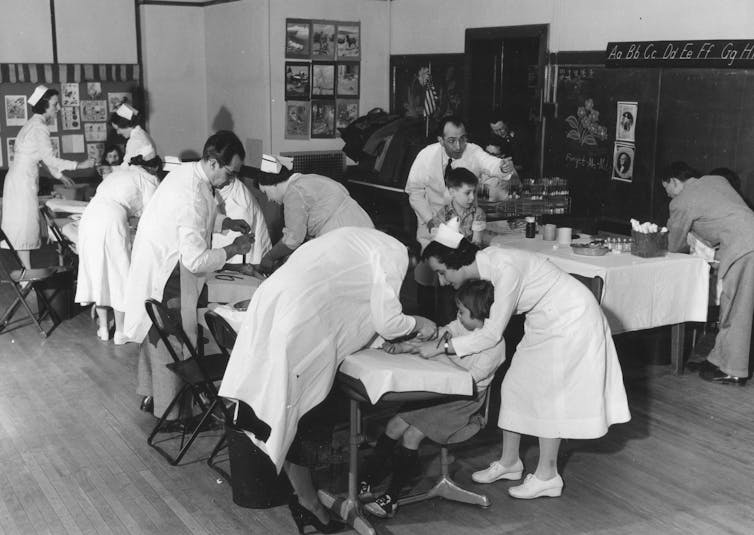
I nervously fell into a long line of fellow first graders in the gymnasium of St. Louis’ Hamilton Elementary School in the spring of 1955. We were waiting for our first injection of the new polio vaccine.
The National Foundation for Infantile Paralysis – with money raised through its annual March of Dimes campaign – had sponsored field tests for a vaccine developed by Jonas Salk. The not-for-profit had acquired sufficient doses to inoculate all the nation’s first and second graders through simultaneous rollouts administered at their elementary schools. The goal was to give 30 million shots over three months.
Now, more than six decades later, attention focuses on the rollout of two COVID-19 vaccines, following their emergency use authorization by the U.S. Food and Drug Administration. States have begun to administer them in a rocky and frustratingly slow delivery process – while hundreds of thousands of new cases continue to be diagnosed daily in the U.S.
While not necessarily comforting, it is useful to recognize that the early days and weeks of mass distribution of a new medication, particularly one that is intended to address a fearful epidemic, are bound to be frustrating. Only after examining the complex polio vaccine distribution process as documented in papers collected in the Dwight D. Eisenhower Presidential Library did I come to understand how partial my childhood memories actually were.
Vaccine distribution, 65 years ago
After I received my polio shot, I remember my parents’ relief.
The polio virus causes flu-like symptoms in most people who catch it. But in a minority of those infected, the brain and spinal cord are affected; polio can cause paralysis and even death. With the distribution of Salk’s vaccine, the much-feared stalker of children and young adults had seemingly been tamed. Within days, however, the initial mass inoculation program went off the rails.

Immediately following the government’s licensing of the Salk vaccine, the National Foundation for Infantile Paralysis contracted with private drug companies for US$9 million worth of vaccine (around $87 million today) – about 90% of the stock. They planned to provide it free to the country’s first and second graders. But just two weeks after the first doses were administered, the Public Health Service reported that six inoculated children had come down with polio.
As the number of such incidents grew, it became clear that some of the shots were causing the disease they were meant to prevent. A single lab had inadvertently released adulterated doses.
After considerable fumbling and outright denial, Surgeon General Leonard Steele first pulled all tainted vaccine off the market. Then, less than a month after the initial inoculations, the U.S. shut down distribution entirely. It wasn’t until the introduction of a new polio vaccine in 1960, created by Albert Sabin, that public trust returned.
History’s lessons for 2021
This story offers several lessons relevant to the COVID-19 vaccine distribution just now getting rolling.
First, federal coordination of an emergent lifesaving medical product is critical.
The federal government had declined to play an active oversight and coordination role for the polio vaccine, but still wanted the credit. The federal Department of Health, Education and Welfare (now Health and Human Services) offered no plan for distribution beyond the privately funded school-based program.
The department waited a full month after the vaccine was first administered before bringing together a permanent scientific clearance panel. That delay had less to do with formal procedures than with the ideological opposition of Health, Education and Welfare Secretary Oveta Culp Hobby.
Hobby was a political appointee who had taken office just months before the vaccine was approved. Her reluctance to involve the federal government in matters that she believed were best left in private hands – and her oft-stated fear of “socialized medicine” – meant that safety checks would be left to the private labs producing the vaccine. The results immediately caused dire problems and even avoidable deaths.
Second, the polio vaccine distribution process demonstrated how vital it is for the federal government to act in ways deserving of public trust.
In those hopeful first few weeks of the polio vaccine distribution, those of us lining up for shots had little to fear beyond the sting of an injection. That changed quickly.
Once some children had in fact been harmed by the shot, obfuscation by government officials, clumsy explanations and delayed responses engulfed the entire production and distribution process in confusion and suspicion. Trust in the government and the vaccine eroded accordingly. Gallup polls found that by June 1955, almost half of the parents who responded said they would not take any further vaccine shots – and the full regimen of polio inoculation required three doses. In 1958, some drug companies halted production, citing “public apathy.” It wasn’t surprising to see a startling upsurge in polio in 1959, doubling cases from the previous year.
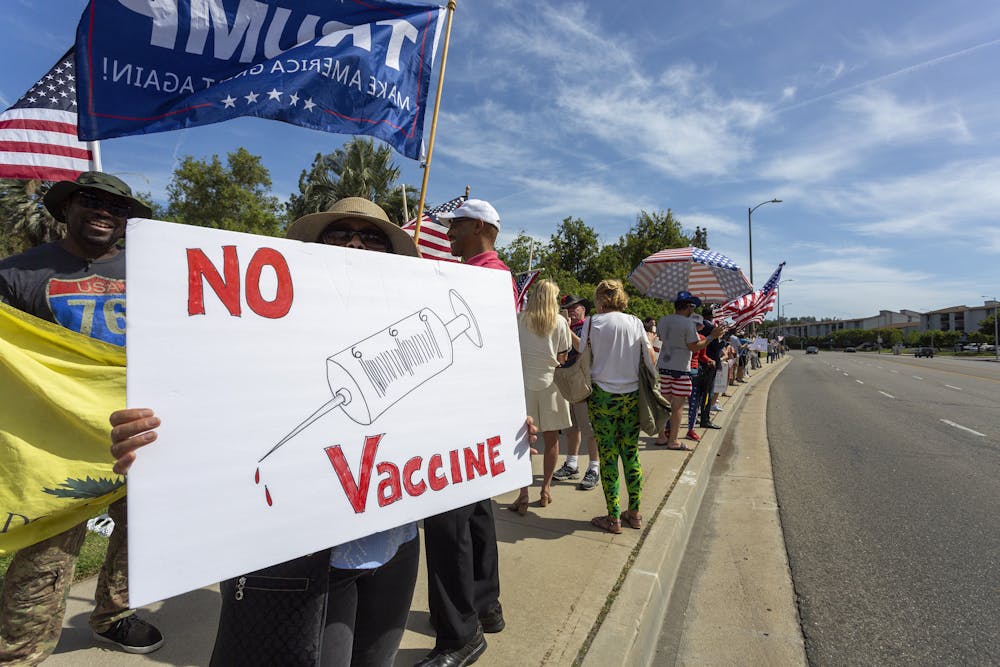
Today, with COVID-19 already highly politicized – polls suggest that a minority of Americans will decline to take any vaccine – it is critical to administer an effective vaccine delivery program in a manner that builds trust rather than undermines it.
Scattered reports of allergic reactions to the COVID-19 vaccine have generated not the denials of the Eisenhower administration but rather honest and realistic responses from the Centers for Disease Control and Prevention. Particularly for vaccines that require multiple inoculations – both Pfizer and Moderna vaccines require two shots administered with a 21- or 28-day gap – mass inoculations will require not just an initial willingness to get the first dose but the maintenance of trust sufficient to get people back for the followup.
There are significant differences in the social-political contexts of the era in which the polio vaccine was distributed and today, including the nature and threat of the two diseases and the technologies of the vaccines. But time and again, the COVID-19 pandemic has revealed disconcerting parallels with mistakes made in the past. The good news is vaccination works – no case of polio has originated in the U.S. since 1979.
[Research into coronavirus and other news from science Subscribe to The Conversation’s new science newsletter.]
Bert Spector, Associate Professor of International Business and Strategy at the D'Amore-McKim School of Business, Northeastern University
This article is republished from The Conversation under a Creative Commons license. Read the original article.