 How to resolve AdBlock issue?
News
- Details
- Written by: Robert Speel, Penn State
As states continue to count their ballots in the 2020 election, it seems possible that Democrats and Republicans will end up in court over whether President Trump will win a second term in the White House.
President Trump has said he’s going to contest the election results – going so far as to say that he believes the election will ultimately be decided by the Supreme Court. Meanwhile, Democratic presidential candidate Joe Biden has a team of lawyers lined up for a legal battle.
Unprecedented changes in voting procedures due to the coronavirus pandemic have created openings for candidates to cry foul. Republicans argued earlier this year that extending deadlines to receive and count ballots will lead to confusion and fraud, while Democrats believe Republicans are actively working to disenfranchise voters.
Should either Trump or Biden refuse to concede, it wouldn’t be the first time turmoil and claims of fraud dominated the days and weeks after the elections.
The elections of 1876, 1888, 1960 and 2000 were among the most contentious in American history. In each case, the losing candidate and party dealt with the disputed results differently.
1876: A compromise that came at a price
By 1876 – 11 years after the end of the Civil War – all the Confederate states had been readmitted to the Union, and Reconstruction was in full swing. The Republicans were strongest in the pro-Union areas of the North and African-American regions of the South, while Democratic support coalesced around southern whites and northern areas that had been less supportive of the Civil War. That year, Republicans nominated Ohio Gov. Rutherford B. Hayes, and Democrats chose New York Gov. Samuel Tilden.
But on Election Day, there was widespread voter intimidation against African-American Republican voters throughout the South. Three of those Southern states – Florida, Louisiana and South Carolina – had Republican-dominated election boards. In those three states, some initial results seemed to indicate Tilden victories. But due to widespread allegations of intimidation and fraud, the election boards invalidated enough votes to give the states – and their electoral votes – to Hayes. With the electoral votes from all three states, Hayes would win a 185-184 majority in the Electoral College.
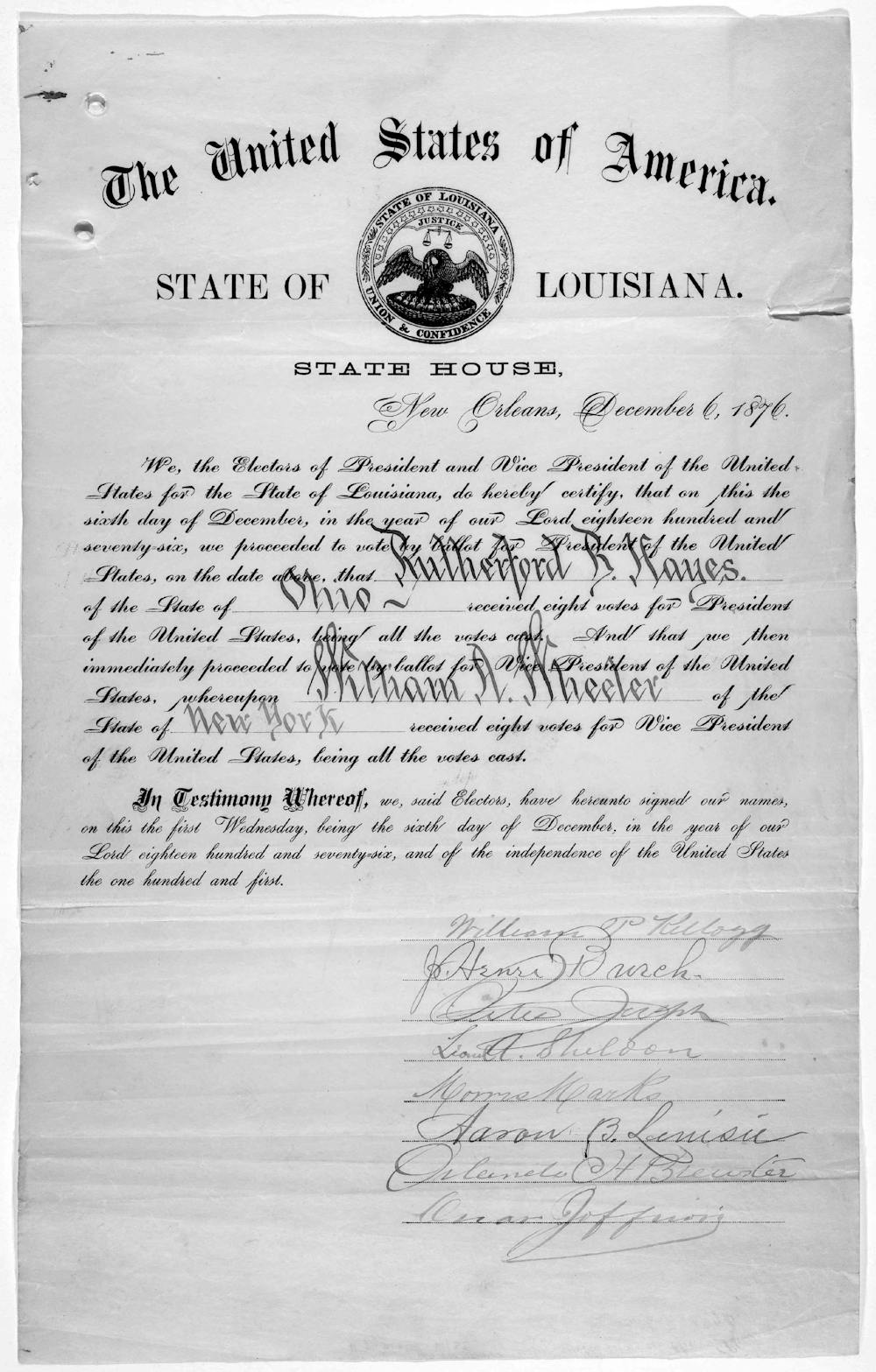

Competing sets of election returns and electoral votes were sent to Congress to be counted in January 1877, so Congress voted to create a bipartisan commission of 15 members of Congress and Supreme Court justices to determine how to allocate the electors from the three disputed states. Seven commissioners were to be Republican, seven were to be Democrats, and there would be one independent, Justice David Davis of Illinois.
But in a political scheme that backfired, Davis was chosen by Democrats in the Illinois state legislature to serve in the U.S. Senate. (Senators weren’t chosen by voters until 1913.) They’d hoped to win his support on the electoral commission. Instead, Davis resigned from the commission and was replaced by Republican Justice Joseph Bradley, who proceeded to join an 8-7 Republican majority that awarded all the disputed electoral votes to Hayes.
Democrats decided not to argue with that final result due to the “Compromise of 1877,” in which Republicans, in return for getting Hayes in the White House, agreed to an end to Reconstruction and military occupation of the South.
Hayes had an ineffective, one-term presidency, while the compromise ended up destroying any semblance of African-American political clout in the South. For the next century, southern legislatures, free from northern supervision, would implement laws discriminating against blacks and restricting their ability to vote.
1888: Bribing blocks of five
In 1888, Democratic President Grover Cleveland of New York ran for reelection against former Indiana U.S. Sen. Benjamin Harrison.
Back then, election ballots in most states were printed, distributed by political parties and cast publicly. Certain voters, known as “floaters,” were known to sell their votes to willing buyers.
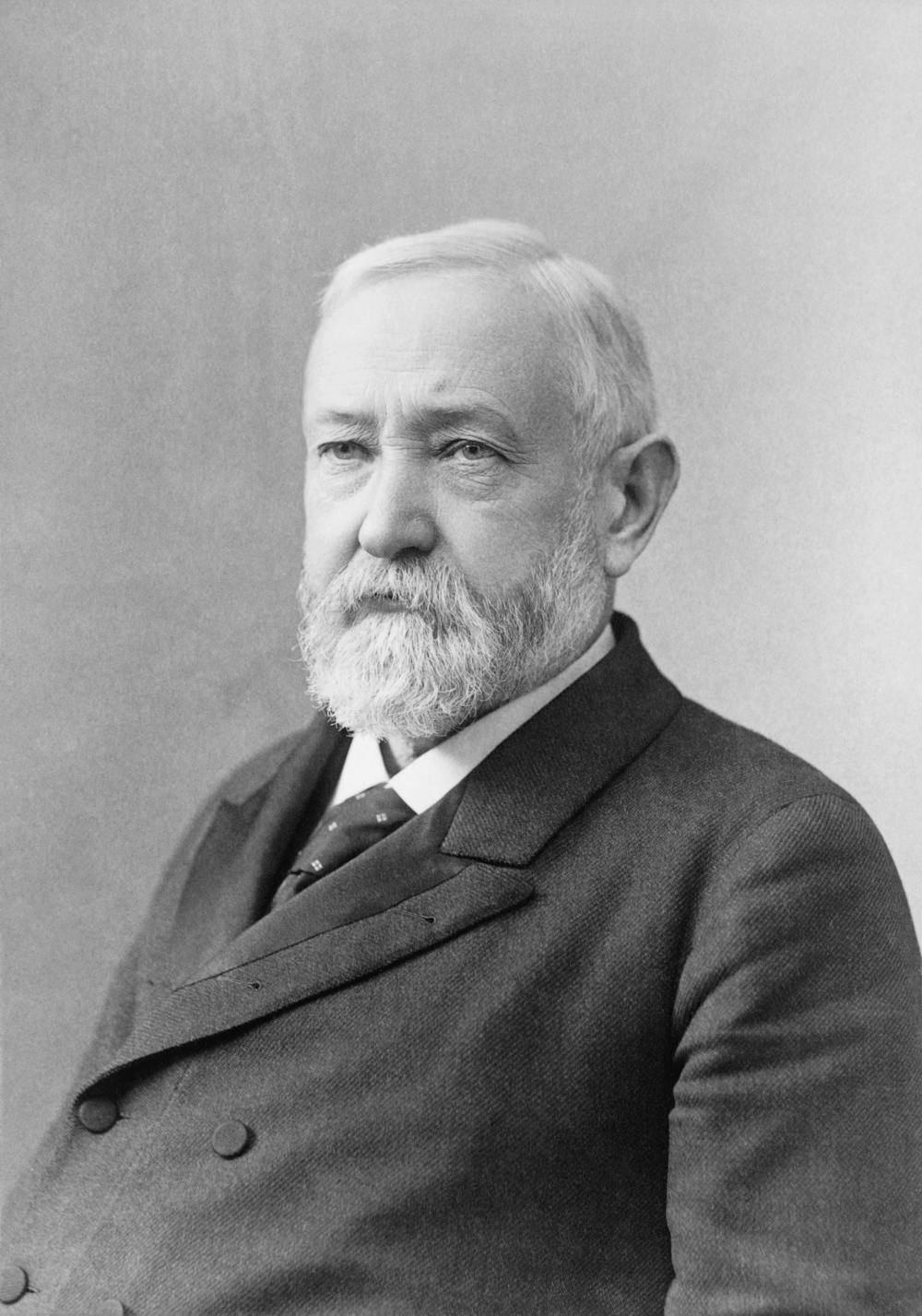

Harrison had appointed an Indiana lawyer, William Wade Dudley, as treasurer of the Republican National Committee. Shortly before the election, Dudley sent a letter to Republican local leaders in Indiana with promised funds and instructions for how to divide receptive voters into “blocks of five” to receive bribes in exchange for voting the Republican ticket. The instructions outlined how each Republican activist would be responsible for five of these “floaters.”
Democrats got a copy of the letter and publicized it widely in the days leading up to the election. Harrison ended up winning Indiana by only about 2,000 votes but still would have won in the Electoral College without the state.
Cleveland actually won the national popular vote by almost 100,000 votes. But he lost his home state, New York, by about 1 percent of the vote, putting Harrison over the top in the Electoral College. Cleveland’s loss in New York may have also been related to vote-buying schemes.
Cleveland did not contest the Electoral College outcome and won a rematch against Harrison four years later, becoming the only president to serve nonconsecutive terms of office. Meanwhile, the blocks-of-five scandal led to the nationwide adoption of secret ballots for voting.
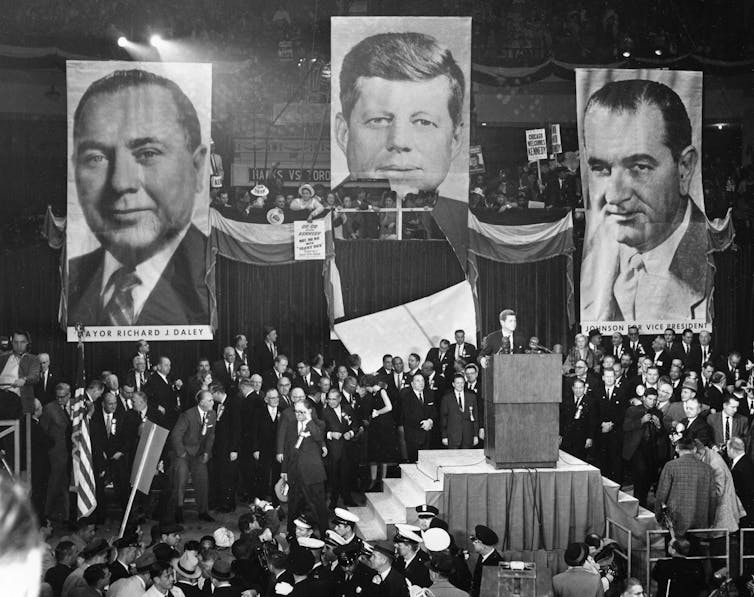
1960: Did the Daley machine deliver?
The 1960 election pitted Republican Vice President Richard Nixon against Democratic U.S. Sen. John F. Kennedy.
The popular vote was the closest of the 20th century, with Kennedy defeating Nixon by only about 100,000 votes – a less than 0.2 percent difference.
Because of that national spread – and because Kennedy officially defeated Nixon by less than 1 percent in five states (Hawaii, Illinois, Missouri, New Jersey, New Mexico) and less than 2 percent in Texas – many Republicans cried foul. They fixated on two places in particular – southern Texas and Chicago, where a political machine led by Mayor Richard Daley allegedly churned out just enough votes to give Kennedy the state of Illinois. If Nixon had won Texas and Illinois, he would have had an Electoral College majority.
While Republican-leaning newspapers proceeded to investigate and conclude that voter fraud had occurred in both states, Nixon did not contest the results. Following the example of Cleveland in 1892, Nixon ran for president again in 1968 and won.
2000: The hanging chads
In 2000, many states were still using the punch card ballot, a voting system created in the 1960s. Even though these ballots had a long history of machine malfunctions and missed votes, no one seemed to know or care – until all Americans suddenly realized that the outdated technology had created a problem in Florida.
Then, on Election Day, the national media discovered that a “butterfly ballot,” a punch card ballot with a design that violated Florida state law, had confused thousands of voters in Palm Beach County.
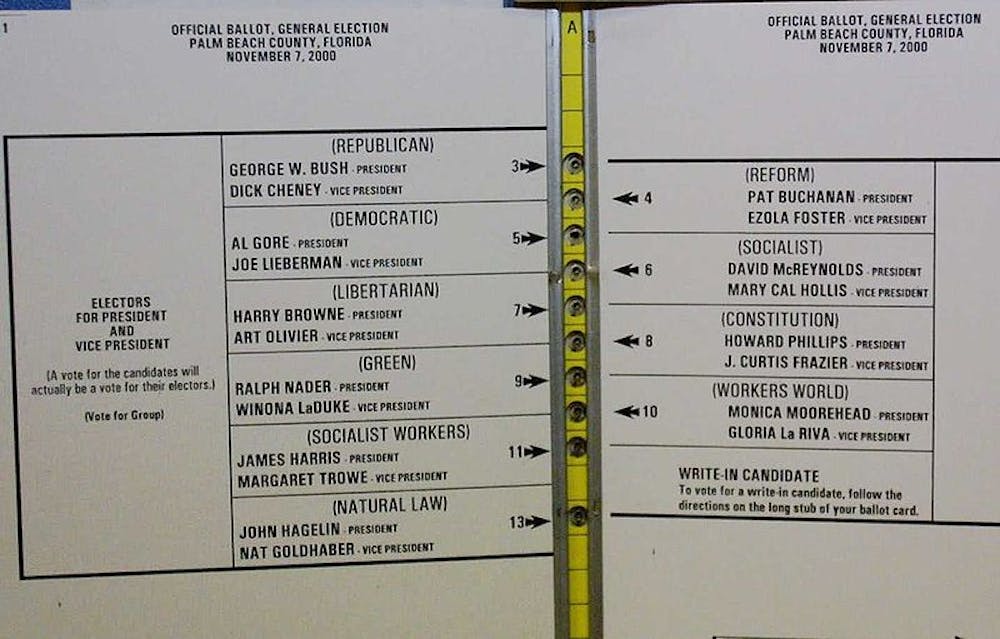

Many who had thought they were voting for Gore unknowingly voted for another candidate or voted for two candidates. (For example, Reform Party candidate Pat Buchanan received about 3,000 votes from voters who had probably intended to vote for Gore.) Gore ended up losing the state to Bush by 537 votes – and, in losing Florida, lost the election.
But ultimately, the month-long process to determine the winner of the presidential election came down to an issue of “hanging chads.”
Over 60,000 ballots in Florida, most of them on punch cards, had registered no vote for president on the punch card readers. But on many of the punch cards, the little pieces of paper that get punched out when someone votes – known as chads – were still hanging by one, two or three corners and had gone uncounted. Gore went to court to have those ballots counted by hand to try to determine voter intent, as allowed by state law. Bush fought Gore’s request in court. While Gore won in the Florida State Supreme Court, the U.S. Supreme Court ruled at 10 p.m. on Dec. 12 that Congress had set a deadline of that date for states to choose electors, so there was no more time to count votes.
Gore conceded the next day.
The national drama and trauma that followed Election Day in 1876 and 2000 could be repeated this year. Of course, a lot will depend on the margins and how the candidates react.
Most eyes will be on Trump, who hasn’t said whether or not he’ll accept the result if he loses. On election night, he announced he had won before all the votes had been counted in a number of battleground states.
This is an updated version of an article originally published on Nov. 1, 2016.
Robert Speel, Associate Professor of Political Science, Erie campus, Penn State
This article is republished from The Conversation under a Creative Commons license. Read the original article.
- Details
- Written by: Elizabeth Larson
The following dogs are ready for adoption or foster.

‘Banjo’
“Banjo” is a male American Staffordshire Terrier mix with a short tan and white coat.
He is dog No. 4267.

‘Bella’
“Bella” is a female American Bully mix.
She has a short beige and tan coat.
She is dog No. 3537.

‘Carusoe’
“Carusoe’ is a small male adult German Shepherd mix.
He has a short tan and black coat.
He is dog No. 4297.
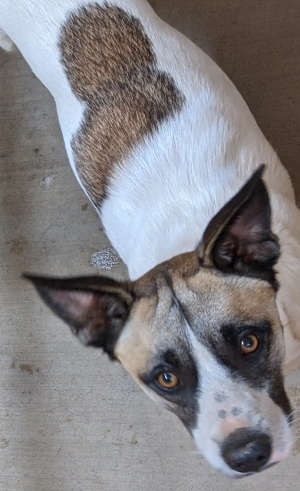
‘Chex’
“Chex” is a male adult terrier with a short brindle and white coat.
He is dog No. 4341.

‘Inky’
“Inky” is a male German Shepherd mix.
He has a long smooth black coat.
He is dog No. 4324.
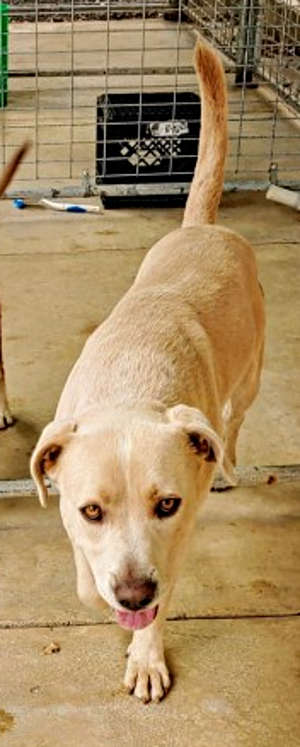
‘Jack’
“Jack” is a male Labrador Retriever mix with a short yellow coat.
He is dog No. 4155.
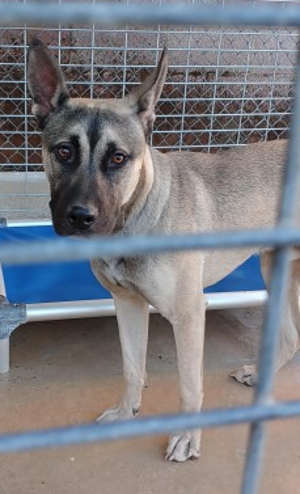
‘Orrie’
“Orrie” is a male German Shepherd mix.
He has a short tan and black coat.
He is dog No. 4342.
The shelter is open by appointment only due to COVID-19.
Call the Clearlake Animal Control shelter at 707-273-9440, or email
Visit Clearlake Animal Control on Facebook or on the city’s website.
Email Elizabeth Larson at
- Details
- Written by: Preston Dyches
What's up for November? Cool autumn evenings are a great time to look for the Pleiades star cluster. You'll also have a couple of great opportunities to observe the Moon with Jupiter and Saturn. Plus, check out the phenomenon known as Earthshine.
Evenings in November are a good time to start looking for the Pleiades. This bright cluster of stars is a well-known sight to most stargazers, and is best enjoyed in the cooler fall and winter months in the Northern Hemisphere.
The Pleiades is what's known as an open star cluster – it's a loosely bound grouping of a couple thousand stars that formed together and are slowly drifting apart over time. A handful of the brightest stars in the cluster are visible with the unaided eye, and with binoculars or a telescope, you can see hundreds.
Astronomers estimate the age of the cluster is only about 100 million years. It's located a bit more than 400 light years away. The brightest stars in the Pleiades are many times brighter than our own star, the Sun. In fact, if you were to visit the Pleiades and look homeward, you wouldn't even be able to see the Sun without a small telescope.
On cool November evenings, look for the Pleiades in the east in the couple of hours after dark. The cluster rises to its highest point around midnight.
On Nov. 18 and 19, enjoy a lovely crescent moon near Jupiter and Saturn after sunset. The two planets have been brilliant highlights of the night sky for much of this year, and are now getting closer together in advance of their super close pairing in mid-December. More about that next month, but for now, be sure to watch as they draw a little nearer to each other each week.
You may have marveled at how brightly a full moon can light up a nighttime landscape, but have you noticed how Earth can illuminate the night side of the Moon? This eerily beautiful glow is called Earthshine. It's sunlight that's been reflected off of Earth, then bounced off the Moon and back to our eyes.
Earthshine is easiest to observe in the few days before and after the new moon, when the part of the Moon that's directly lit by the Sun appears as a slim crescent. This is partly because there's less of the bright, sunlit surface to compete with the dimmer Earthshine-lit portion, and partly because the phases of Earth and the Moon are complimentary: when the Moon is a slim crescent in our sky, Earth seen from the Moon looks nearly full.
Occasionally, NASA spacecraft use this phenomenon to make the night side of other planets and moons visible – for example Saturnshine on Saturn's moons and ringshine lighting up Saturn itself, as seen by NASA's Cassini spacecraft.
The best times to observe Earthshine in November are on the 17th through the 20th, following sunset, and before dawn on the 9th through the 12th.
And for an added treat, on the 12th, the Moon, illuminated by both sunshine and Earthshine, will appear just above the "Morning Star," Venus.
You can catch up on all of NASA's missions to explore the solar system and beyond at www.nasa.gov.
Preston Dyches is with NASA's Jet Propulsion Laboratory.
- Details
- Written by: Elizabeth Larson
Tuesday’s presidential election was unique primarily due to the impact of COVID-19, which had resulted in more than 22 million vote-by-mail ballots being issued statewide, including 37,717 issued to the registered voters in Lake County.
On Wednesday, an update on the preliminary count issued by Lake County Registrar Maria Valadez’s office showed that 11,157 ballots had been tallied as part of the initial count in the races for president, and state offices and propositions.
Based on past practice, once it has given preliminary reports on the count either by Election Night or the following day, the elections office doesn’t issue any additional updates on race counts until the election is certified in early December.
However, the registrar does report on unprocessed ballots early in the process, and that was the report Valadez issued on Thursday.
Valadez said that altogether her office has approximately 18,270 ballots still to count over the coming weeks, in addition to the more than 11,000 counted so far.
Those 18,270 ballots break down as follows:
– Vote-by-mail ballots received through Election Day, Nov. 3: 9,983.
– Vote-by-mail ballots received on Nov. 4: 232.
– Vote-by-mail ballots received on Nov. 5: 73.
– Vote-by-mail ballots dropped off at the polls on Election Day: 4,344.
– Provisional and conditional ballots voted at the polls on Election Day: 2,950.
– Provisional and conditional ballots voted at the Elections Office: 159.
– Vote-by-mail ballots that require further review for various reasons: 529.
That overall count is still subject to change in the coming weeks.
Normally, state election law allows ballots to be counted if they were postmarked on or before Election Day and arrived no later than three days after the date of the election.
However, a newly enacted state election law, Elections Code section 3020(d), changed the deadline for election officials to receive vote-by-mail ballots returned by mail for the Nov. 3, 2020, General Election only.
Valadez said that new law allows county elections officials to count a vote-by-mail ballot if it is postmarked on or before Election Day and delivered to the elections office by the US Postal Service or a private mail delivery company no later than 17 days after Election Day, or Nov. 20.
Based on the numbers provided so far by Valadez’s office, Lake County appears to be on track for a voter turnout of well over 70 percent.
Ongoing counts common following elections
Having large numbers of ballots still to count following elections, especially for key federal and state offices, is typical, not just in Lake but in other counties across the state and nation.
For comparison, for the Nov. 8, 2016, general election, the Lake County Registrar of Voters Office’s report on unprocessed ballots showed that it had 11,911 ballots remaining to count following Election Day, a number which included 1,497 provisionals – half of this year’s total – and 9,453 vote-by-mail ballots received either by mail, at the polls or the elections office by Election Day, about 5,000 less than this year.
The California Secretary of State’s Office on Thursday issued its reports on the estimated number of unprocessed ballots for the Nov. 3 General Election, reporting that there are 4,523,196 uncounted ballots statewide.
That breaks down as 4,079,126 vote-by-mail ballots, 68,619 provisionals, 285,993 conditional voter registration provisionals – a result of the “same day” voter registration process that’s new this year – and 89,458 ballots classified as “other.”
Overall, the total number of unprocessed ballots in California this year is only about 200,000 less than the number the state reported just after the Nov. 8, 2016, general election.
The biggest difference between the 2016 and 2020 presidential elections, when it comes to the state’s unprocessed ballot numbers, is that in 2016 vote-by-mail ballots totaled just over 3.1 million, compared to just over four million this year.
In 2016, there were more than one million provisional ballots, compared to 354,612 provisions – 68,619 regular provisionals and 285,993 conditional registration provisionals – this year.
The election count is considered preliminary until the official canvass is completed and the election certified in early December.
Valadez’s office has until Dec. 1 to report Lake County’s presidential election results to the Secretary of State’s Office, with a Dec. 4 deadline for state and local contests.
The state in turn will certify results by Dec. 11, three days before the Electoral College is due to meet.
Editor’s note: On Friday, the Registrar of Voters Office issued an updated report which increased the number of vote-by-mail ballots received through Election Day from 9,947 to 9,983. The overall number of ballots still to be counted in that revised report remained at 18,270, the same as in the initial report from Thursday.
Email Elizabeth Larson at