 How to resolve AdBlock issue?
News
- Details
- Written by: Elizabeth Larson
The commission will meet virtually via webinar beginning at 5:30 p.m. Wednesday, Aug. 12.
The agenda can be found here.
To speak on an agenda item, access the meeting remotely here or join by phone by calling 914-614-3429 or toll-free, 866-952-8437. The access code is 499-692-147; the audio pin will be shown after joining the webinar. Those phoning in without using the web link will be in “listen mode” only and will not be able to participate or comment.
Comments can be submitted by email to
Please indicate in the email subject line "for public comment" and list the item number of the agenda item that is the topic of the comment. Comments that read to the council will be subject to the three minute time limitation (approximately 350 words). Written comments that are only to be provided to the council and not read at the meeting will be distributed to the council prior to the meeting.
The commission’s main item of consideration is a commercial self-storage facility proposed by Jonathan and Doug Bridges of Kelseyville-based Bridges Construction.
The Bridges want to develop the 35,800 facility on a 6.6-acre property at 1296 and 1320 Craig Ave.
They’ve applied for a general plan amendment, zone change, and an architectural and design review.
The staff report said a 28-unit single-family development previously had been approved for the site, as had a use permit and architectural design review for the development of a private school. However, those projects haven’t been pursued.
Also on Wednesday, the commission will get an update from city staff regarding COVID-19 and will review the pending projects list.
On the consent agenda – items considered noncontroversial and usually accepted as a slate on one vote – are approval of the completed minutes for the commission’s regular meetings on Feb. 12, April 8, May 13 and June 10 meetings.
Email Elizabeth Larson at
- Details
- Written by: Lake County News reports
The CHP’s Ukiah Area office did not release the name of the driver in its Sunday night report.
Just before 6 p.m. Saturday the CHP said its Ukiah Communications Center received several 911 calls about a traffic collision on Highway 20 just west of the Bushay campground entrance.
While units were en route, one of the reporting parties informed the dispatch center that the driver of the pickup involved in the wreck had jumped off the bridge, the CHP said.
The CHP said its officers and Mendocino County Sheriff’s deputies responded to the scene, arriving to find the pickup on its side, blocking the westbound lane of Highway 20 on the bridge.
Off-duty medical personnel were on the scene rendering aid to the male subject who had jumped from the bridge, the CHP said.
The CHP said the individual died of his injuries.
The incident is still under investigation, according to the Sunday night report.
- Details
- Written by: Lake County News reports
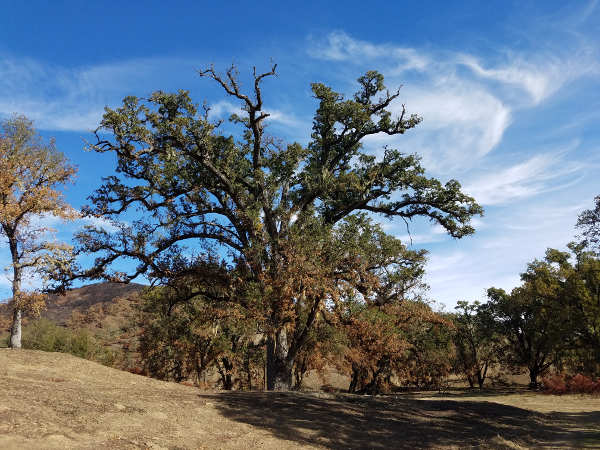
LAKE COUNTY, Calif. – Officials said the newly completed acquisition of a ranch near Lakeport will offer more public access to staging and camping for the South Cow Mountain OHV Management Area.
The Bureau of Land Management Ukiah Field Office and its partners announced the recent acquisition of the nearly 1,400-acre Blue Oak Ranch.
Located along Highway 175 near Lakeport in Lake County, the ranch was purchased with funding from the Land and Water Conservation Fund and the California State Park Off-Highway Motor Vehicle Recreation Division Grants Program.
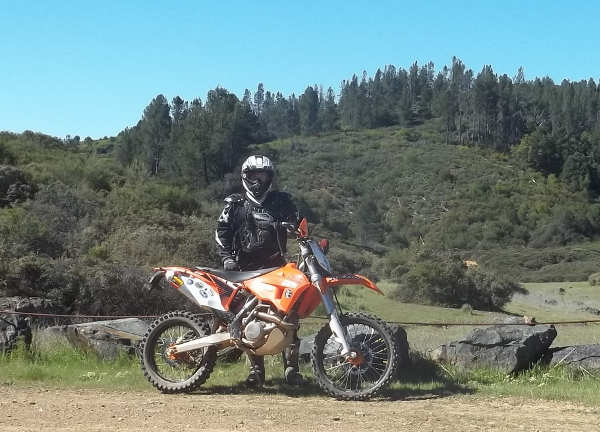
The South Cow Mountain OHV Management Area encompasses approximately 23,000 acres of public land in the Mayacamas Mountains that has more than 90 miles of designated roads and trails ranging from easy to extremely difficult and the recommended vehicle type depending on the width of the trail appropriate for motorcycles, OHVs and four-wheel drive vehicles.
“This acquisition will allow the BLM to protect and conserve the area for cultural and environmental resources, sustain and enhance current use at the South Cow Mountain, and allow for paved access to future camping, staging and trail opportunities,” said BLM Ukiah Field Manager Ryan Cooper. “This acquisition would not have happened without the strong collaboration between the ranch owner, recreation community, California State Parks and the BLM.”
The additional staging and camping area will enhance existing facilities. Currently there are two developed OHV staging areas within South Cow Mountain with graveled access roads accessible by two-wheel drive vehicles. Access roads into these areas are narrow and winding. Travel trailers and large recreational vehicles are not recommended.
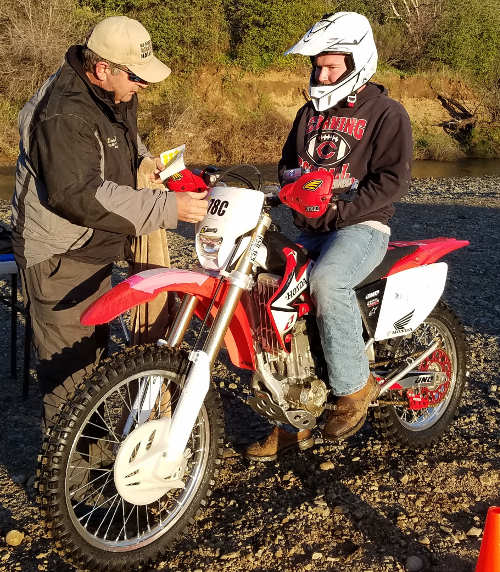
“Acquisition of the Blue Oak Ranch is a significant milestone in the history of the South Cow Mountain OHV Area in that it will provide much-needed camping and staging opportunities with easy public access from a paved road,” said Don Amador, government affairs lead for AMA District 36.
“I know the OHV community appreciates the agency’s effort over the last four to five years to purchase this property from a willing seller who wanted to see it used for both casual trail use and permitted events,” Amador said. “The BLM, landowner, California OHV Grant Program and the many other partners it took to make this happen can be proud of this historic moment as they continue efforts to provide sustainable high-quality OHV recreation at South Cow Mountain for current and future generations.”
The area offers beautiful views of Ukiah and Lake County; pockets of old-growth fir; several species of oak; willows; more than 31 miles of stream; 13 reservoirs; and habitat for blacktail deer, bear, wild turkey and other upland species.
Amador told Lake County News that the Forest Service and BLM started more collaboration efforts with user groups about 10 years ago to help them flesh out ideas, to help them provide relevant services and make better planning decisions.
He said the effort was unique in that it used collaboration with partners and funding from the
Land and Water Conservation Fund and OHV Grant Program to make a land purchase happen.
“I think it is a model for future efforts to acquire land from willing sellers so agencies can provide more high-quality recreation opportunities in California,” he said.
To learn more about the South Cow Mountain OHV Management Area visit www.blm.gov/visit/search-details/10004875/2 .
- Details
- Written by: Kathleen Scavone
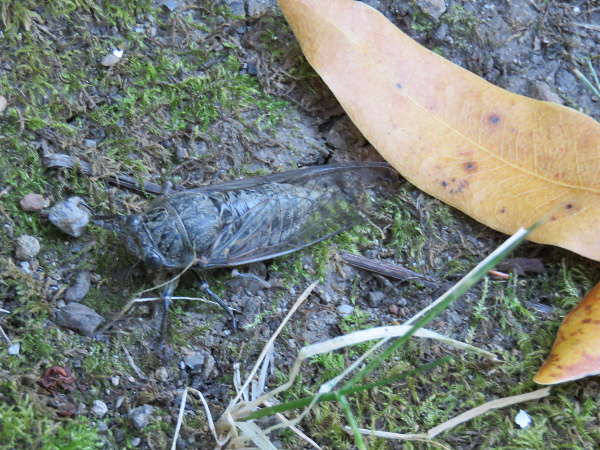
LAKE COUNTY, Calif. – Their humming, thrumming, clicking sounds provide a summer soundtrack on warm days.
When I happened upon a cicada under a bay tree, I immediately brightened and searched around for more. I thought, "That's right! The cicadas are emerging from their 17-year hideouts!"
After a quick web search I realized my mistake. Here in California where there are 65 species of cicadas, we won't meet up with the throngs of bugs brought out of 17 years of hiding, but instead will find cicadas in smaller numbers who emerge annually.
Cicadas in California begin their egg-to-nymph-to-adult life cycles beginning with around 400 eggs which have been laid in, or on tree branches.
Next, nymphs hatch by ascending a tree trunk to shed their now useless skins, then burrow underground to dine on the juicy plant roots found there. They will surface from their burrows beneath the earth every year.
Cicadas can use the sound produced by their wings to attract a mate. After mating they scope out a willow, oak or madrone bough on which to lay their eggs. Watch for the distinctive diagonal blemishes left behind on branches they have selected.
According to the University of California Press publication, “The Cicadas of California,” here in Lake County we can find eight kinds of cicadas as reported to them through county records.
These alien-looking creatures have prominent, OK, I'll say it – bug eyes – and are considered a superfamily called Cicadoidea, who have “cousin” species around the world numbering in the thousands.
Like dragonflies, they have been in existence for millions of years. According to fossil records, cicadas are known to have existed since the Upper Permian period.
It is believed that the mysterious breeding cycle of the Southern United States' 17-year cicada is due to, what else? Self-preservation. In order to evade predators who eat these bugs, they have “figured out” how to emerge every 17 years. Then, around 1.5 million hungry cicadas per acre will participate in the phenomenon.
These southern cicadas, although not as destructive as locusts, are still voracious and impressive in both their noise and appetites.
Entomologists report that besides the din of millions of cicada's chirps and clicks that are used by males of the species to garner a mate, these cicadas are poised to drink the sap of trees and can be quite destructive in large numbers.
Cicadas have many predators: squirrels, wasps, bats, birds, spiders and more.
If you look, you will find cicadas featured throughout mythology, art and music. These humble creatures were portrayed in Aristotle's “History of Animals,” in the Japanese novel, “The Tale of Genji” and in myths of many cultures, such as a myth known as “Kapampangan” from the Philippines.
In ancient Greece cicadas were consumed during meals, and their husks used in Chinese traditional medicine.
Since cicadas don't sting or bite, they deserve a closer look!
Kathleen Scavone, M.A., is a retired educator, potter, freelance writer and author of “Anderson Marsh State Historic Park: A Walking History, Prehistory, Flora, and Fauna Tour of a California State Park” and “Native Americans of Lake County.”