 How to resolve AdBlock issue?
News
- Details
- Written by: Lake County News reports
“Seniors comprise almost 25 percent of Lake County’s overall population,” said Executive Director Lisa Morrow. “While undertaking such an expansion of services in the midst of a pandemic certainly presents its challenges, we are excited to now be serving this important section of our community – especially during these challenging times.”
During pandemic restrictions, the Senior Center Wellness program continues with classes such as Tai Chi offered via Zoom.
Meals on Wheels is still serving the Northshore and has expanded its services to also include those who previously joined the senior center for onsite dining.
Seniors interested in Wellness Zoom classes or those wanting to sign up for meal delivery should call the senior center at 707-263-4218 or Lake Family Resource Center at 707-279-0563.
The Meals on Wheels Thrift Store located in Lakeport is open. New thrift store hours will be Monday through Friday from 9 a.m. to 4 p.m.
Once it’s safe to do so, Lake Family Resource Center looks forward to reopening the Activities Center for group meals, a variety of wellness classes and workshops and other gatherings.
Lake Family Resource Center officials said they also look forward to adding robust programming and services to reach out to and engage seniors in a variety of ways.
“We not only look forward to continuing current programming, we’re excited about exploring additional programming. We envision support groups, more wellness activities as well as home visits for the seniors of Lake County,” said Morrow.
She also wants to engage seniors as volunteers to rock infants and provide comfort to the youngest of the clients served by Lake Family Resource Center.
“With the addition of the senior population to our clients, we are now extremely well-rounded, serving every facet of our community from Pre-K through gray,” Morrow said. “This gives us an outstanding opportunity to enrich the lives of many community members of every age group.”
The Lakeport Senior Center will remain its own separate nonprofit organization with Lake Family Resource Center managing its operations and administration through a contract.
Denise Johnson, a lifetime resident of Lake County, will be the senior center’s director of operations. Johnson has been with Lake Family Resource Center for almost four years, functioning as the housing services coordinator, a program she herself developed.
Prior to joining the Lake Family Resource Center, Johnson was employed by the District Attorney’s Office as a victim services advocate for elders experiencing abuse.
Lake Family Resource Center has been serving Lake County families since 1995 to achieve safe, sustainable, healthy families and community. A 501c3 nonprofit organization, most services are provided at no cost and are funded through government grants and community donations.
Before this expansion with the Lakeport Senior Center, Lake Family Resource Center served approximately 1,400 families and 4,500 individuals each year.
For more information about the center and its services, call 707-279-0563 or visit its website.
- Details
- Written by: Gerard Buckley, Rochester Institute of Technology
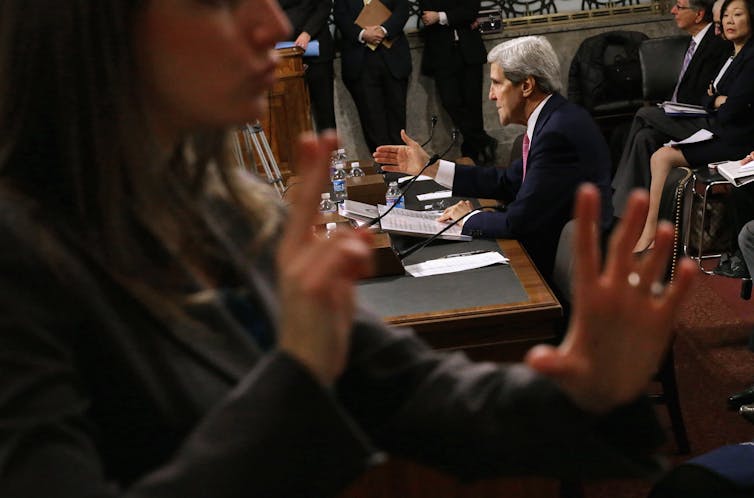
The Americans with Disabilities Act is 30 years old.
For young people who have grown up with the ADA, the results of this landmark legislation are part of everyday life – sometimes in ways they may not even realize.
I was there at the beginning. As a young deaf man in 1990, I attended the Rose Garden ADA signing ceremony. I clearly recall the sun was shining brilliantly and the joy among leaders in the disability community who had long worked to bring about this civil rights legislation.
In the decades since, I have witnessed the ADA’s profound impact as an educator of deaf and hard-of-hearing students for this population and the U.S. as a whole.
A decades-long journey
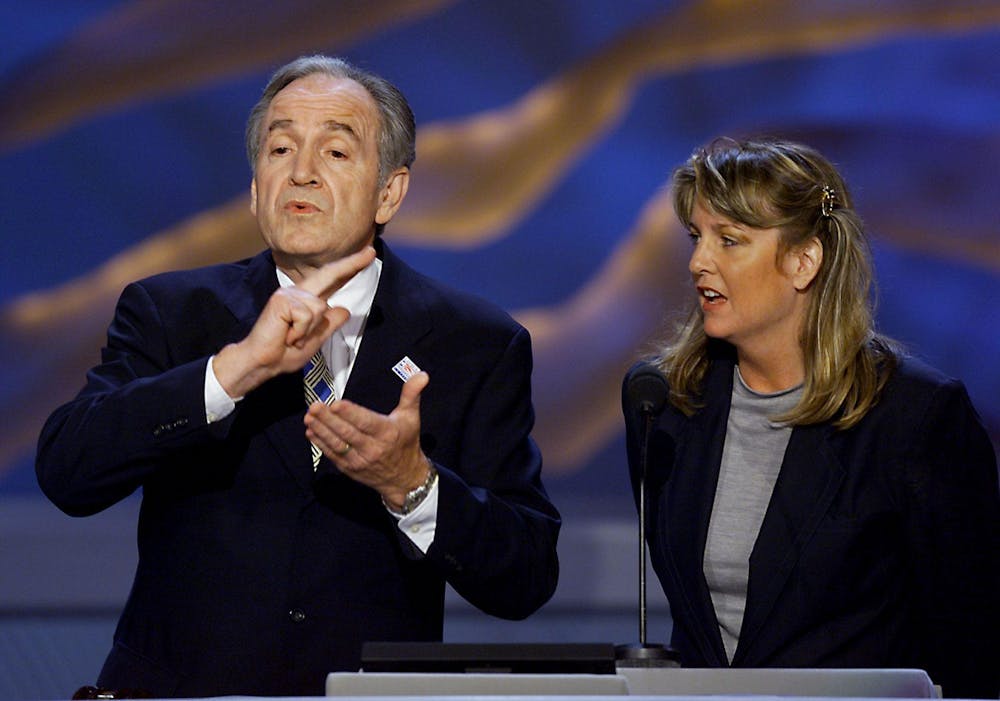
Four senators who were major supporters of the ADA in the 1980s had personal connections to the issue. Edward Kennedy of Massachusetts had an intellectually disabled sister. Iowa’s Tom Harkin had a brother who was deaf. Bob Dole of Kansas had been disabled in World War II. Connecticut’s Lowell Weicker had a son with Down syndrome. A seminal moment at the passage of the ADA was Harkin’s address to Congress in sign language – the first time the body had been addressed this way.
The ADA prohibits discrimination against persons with disabilities in employment, state and local government services, businesses that are public accommodations or commercial facilities and in transportation.
In many ways, I feel the most important changes brought about by the legislation relate to making it easier for deaf people to communicate. In his book “A Phone of Our Own: The Deaf Insurrection Against Ma Bell,” historian Harry Lang described the long struggle in the deaf community to gain access to the telephone. The ADA provided a huge leap forward by requiring the establishment of nationwide telecommunications relay services. This system provided telephone access 24/7 to deaf citizens who previously had relied on volunteer services with limited hours. No longer would deaf individuals be excluded from employment opportunities requiring the use of the phone. And it enabled deaf people to participate in the mainstream of the American life by being free to call for pizza or to wish a loved one happy birthday.
A more entertaining life
Title III of the ADA required that public facilities, such as hospitals, bars, shopping centers and museums – but, importantly, not movie theaters – provide access to verbal information on televisions, films or slide shows.
Stiff opposition from the motion picture and cable industry prevented the ADA from including a requirement for closed captioning in films and on cable television. However, as a concession, Congress did include a requirement for all federally funded public service announcements to be captioned.
The historian Lang examines the history of access to films and television through captioning. He describes how the ADA was a milestone greatly affecting efforts to make educational and entertainment films accessible to deaf persons.
Creating a ‘deaf middle class’
ADA and Section 504, which guarantees accessibility and accommodations in public schools, provided educational opportunities for many deaf and hard-of-hearing students to attend college. This helped create, as educators and authors Carol Padden and Tom Humphries referred to it, a deaf middle class of community leaders and an ever-increasing number of deaf lawyers, doctors and PhDs.
While great strides have been made, people with disabilities still are twice as likely to be unemployed as those without disabilities. The employment gap between deaf and hearing people in the United States is significant. Only 53.3% of deaf people ages 25-64 were employed in 2017, compared to 75.8% of hearing people an employment gap of 22.5 percent. In round numbers, nearly 10 million Americans are hard of hearing and close to 1 million are functionally deaf.
Deaf college graduates fare much better. The college I lead, Rochester Institute of Technology’s National Technical Institute for the Deaf, puts a high emphasis on building relationships with employers. Historically, 95% of our graduates find employment.
New pandemic challenges
As the world navigates the COVID-19 pandemic, new challenges are arising. Masks make communication difficult for those who rely on speechreading, endless Zoom meetings bring more fatigue for those who rely on visual communication, and access to health care and emergency information can be spotty.
But there are bright spots when one considers progress since passage of the ADA. Recognition of American Sign Language and the importance of ASL interpreters for access has grown tremendously over the past 30 years as deaf and hard-of-hearing citizens have sought greater inclusion in the mainsteam of American society. Captioning is used by more than 60% of students with disabilities, and 50% of those with no reported disabilities. Prior to the current employment crisis, the Bureau of Labor Statistics predicted increased demand for sign language interpreters. Automatic speech recognition apps allow for increased interaction between deaf and hearing colleagues, classmates and friends. These advancements benefit not only the students on my campus, but at other campuses with deaf populations such as Gallaudet University and California State University, Northridge.
[Deep knowledge, daily. Sign up for The Conversation’s newsletter.]
The ADA proclaimed accessibility as a civil right. Just as ADA-sanctioned accommodations such as sidewalk ramps originally designed to benefit those with mobility issues was a positive for families with strollers and bicycles, closed captioning designed as a service for deaf and hard-of-hearing individuals now is ubiquitous on televisions, computers and smart phones in hearing households as well.
The deaf community has historically been able to work around challenges and find solutions to communication barriers. This time in our history is no different. Innovative thinkers continually find ways to advocate, modify and make current and emerging technologies work for everyone.
Gerard Buckley, President of the National Technical Institute for the Deaf, Rochester Institute of Technology
This article is republished from The Conversation under a Creative Commons license. Read the original article.
- Details
- Written by: Elizabeth Larson
Dogs available for adoption this week include mixes of Anatolian Shepherd, Belgian Malinois, chow chow, pit bull and shepherd.
Dogs that are adopted from Lake County Animal Care and Control are either neutered or spayed, microchipped and, if old enough, given a rabies shot and county license before being released to their new owner. License fees do not apply to residents of the cities of Lakeport or Clearlake.
The following dogs at the Lake County Animal Care and Control shelter have been cleared for adoption (additional dogs on the animal control Web site not listed are still “on hold”).
Call Lake County Animal Care and Control at 707-263-0278 or visit the shelter online at http://www.co.lake.ca.us/Government/Directory/Animal_Care_And_Control.htm for information on visiting or adopting.
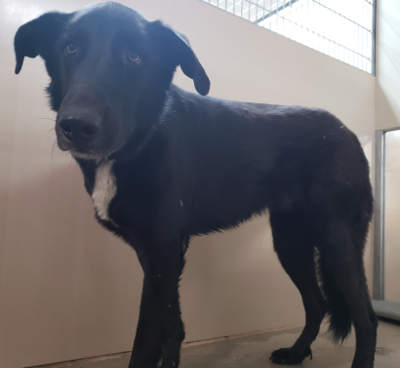
Male Anatolian Shepherd
This male Anatolian Shepherd has a medium-length black coat with white markings.
He has been neutered.
He is in kennel No. 13, ID No. 13803.

Male pit bull terrier
This male pit bull terrier has a black coat.
He is in kennel No. 18, ID No. 13772.
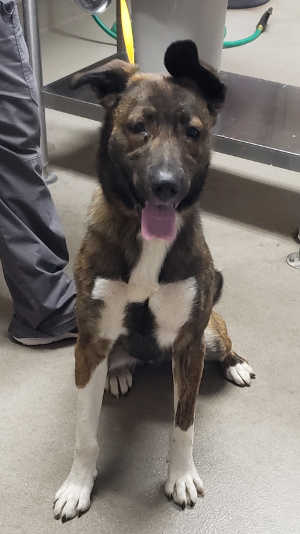
Shepherd mix
This female shepherd mix has a brindle and white coat.
She is in kennel No. 22, ID No. 13776.
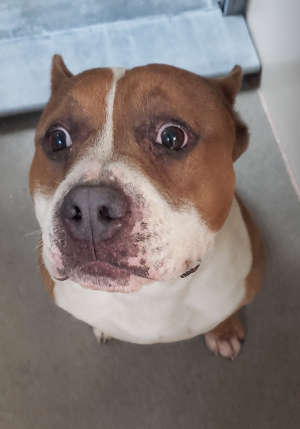
‘Mugsy’
“Mugsy” is a male pit bull terrier with a short tan and white coat.
He is in kennel No. 26, ID No. 13797.

Female Belgian Malinois
This female Belgian Malinois Shepherd has a short black and tan coat.
She is in kennel No. 31, ID No. 13793.
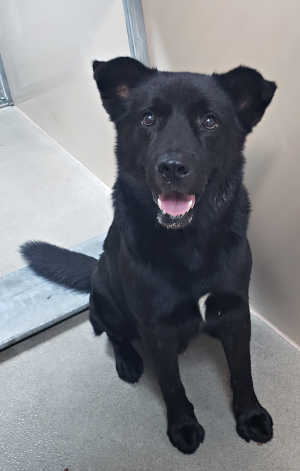
Male chow chow
This male chow chow has a medium-length black coat.
He is in kennel No. 33, ID No. 13795.
Email Elizabeth Larson at
- Details
- Written by: Robert Sanders
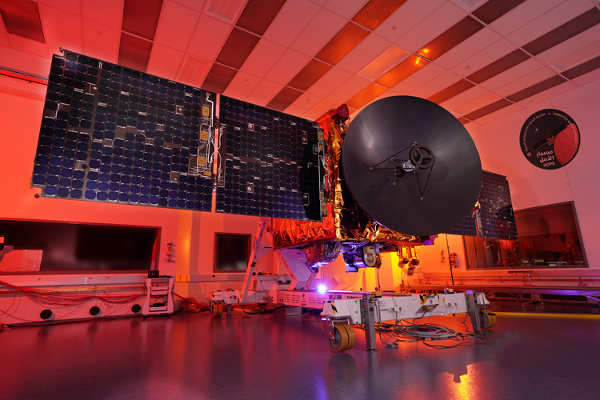
At 2:58 p.m. PDT July 19, the United Arab Emirates successfully launched an interplanetary probe — the first by any country in the Arab world — thanks, in part, to science collaboration, training and instrument components provided by the University of California, Berkeley’s Space Sciences Laboratory.
The Emirates Mars Mission’s Hope Probe is scheduled to arrive at Mars in February 2021 and spend two years orbiting the “red planet,” providing an unprecedented global view of the Martian atmosphere. It will also give scientists greater insight into how our Earth may have evolved and enable greatly improved weather forecasting to help support future human missions to Mars.
The mission is led by Emirati engineers and scientists, with significant sharing of expertise and technical knowledge by colleagues at UC Berkeley and three other U.S. institutions — the University of Colorado at Boulder, Arizona State University and Northern Arizona University — jump-starting an interplanetary space program in a nation that, until now, had produced only Earth observation satellites. The Hope Probe was launched from a site on Tanegashima, an island in Japan, aboard a Japanese H-IIA rocket.
An hour and a half after launch, the solar panels deployed and the probe was officially on its way to Mars. “The launch has been a success,” said a relieved Robert Lillis, SSL associate director for planetary science and the UC Berkeley lead for the Mars mission, who monitored the launch from California.
In the five years before launch, the Space Sciences Laboratory, or SSL, hosted 10 undergraduate students — five women and five men — for a summer research experience in space science in which they analyzed data and simulations of the Martian upper atmosphere.
The SSL also provided mentorship in master’s degree-level research via weekly Skype meetings with Emirati engineers as part of the mission’s Science Apprentices Program.
The SSL scientists also visited United Arab Emirates, or UAE, universities and girls’ and boys’ schools, many in rural/desert regions, to encourage interest in science.
“With the Mars mission, the Emirates is trying to inspire young people to go into technical fields, as part of a larger vision for a post-oil world,” said Lillis. “The government has invested heavily in education, especially women's education, to lay the groundwork for a future in which entrepreneurs, inventors and ideas — not oil — are funding their economy.”
Overall, about one-third of the 150 Emirati scientists and engineers on the mission team are women, while women make up about 80 percent of the science team, according to a recent article in the New York Times. The team’s average age is 27.
“Working on this unique international partnership has been such a rewarding experience,” Lillis said. “I’ve witnessed firsthand the drive, professionalism, curiosity and ambition of the UAE team; not only their excellent engineers, but the several science apprentices and summer undergraduate interns we have had the privilege of working with at Berkeley these last five summers.”
An eye-opening experience
One of the students Lillis and his SSL team worked with was Maryam Al Hosani, now a senior majoring in computer engineering in the UAE at the American University of Sharjah, in Abu Dhabi.
"My experience as part of the REU program at UC Berkeley was insightful, educational and, most importantly, memorable,” she wrote in an email. “I learnt so much about the many tools and databases used in studying the Martian atmosphere and the data collection techniques used in planetary science. One of the many things I enjoyed in California were the conversations I had with the people I met there. The diversity in culture, beliefs and ideologies was truly eye-opening."
Al Hosani’s work at SSL contributed to the Emirates Mars Ultraviolet Spectrometer, or EMUS, one of three instruments aboard the Hope Probe. It was a collaboration between SSL and the Laboratory for Atmospheric and Space Physics at the University of Colorado.
"The UAE team set out to inspire Emirati youth,” said Sasha Courtade, an SSL systems engineer. “In doing so, they’ve also inspired those of us who had the pleasure of collaborating with them. The team started with an ambitious goal and aggressive timeline to launch and remained optimistic and dedicated every step of the way."
During Khalid Al Awar’s summer as a student doing research at SSL, he analyzed data from two instruments onboard the MAVEN space probe currently orbiting Mars with instruments built at SSL. The MAVEN, like the Hope Probe, is helping scientists understand the evolution of the thin atmosphere of Mars, which may once have had a thicker atmosphere and perhaps flowing water.
“The efforts serve a more holistic purpose of understanding why gas is escaping the Mars atmosphere and how this has affected its climate evolution,” Al Awar wrote in an email. “Beyond desk work, I got to observe how space is a collaborative journey between scientists and engineers from different cultures and backgrounds, all aimed towards the betterment of mankind and unlocking new possibilities. It became very clear to me that space agencies from all over the world collaborate with each other and share more openly than any other field I have seen.”
Al Awar, who graduated in 2017 from Khalifa University, is currently working as business development lead at Astrolabs, a capability building academy and network of collaborative coworking communities in the UAE and Saudi Arabia. Other summer interns came from United Arab Emirates University; American University of Sharjah; Khalifa University in Abu Dhabi; and the Abu Dhabi campuses of both Paris-Sorbonne University and New York University (NYU).
‘Hope’ for Arab world
The spacecraft, which is about the size of a small car with two solar panels, was built and tested at the Laboratory for Atmospheric and Space Physics at the University of Colorado, Boulder, in collaboration with Mohammed bin Rashid Space Centre, or MBRSC, in Dubai, one of the UAE’s seven emirates.
The mission, which cost several hundred million dollars, was named Hope (“al amal” in Arabic) to send a message of optimism to millions of young Arabs, according to Sheikh Mohammed bin Rashid Al Maktoum, the ruler of the Emirate of Dubai for whom MBRSC is named.
The EMUS instrument (codeveloped by SSL) will provide a unique view of the upper layers of the Martian atmosphere, Lillis said. These upper layers are known as the thermosphere — the region between 100 and 200 kilometers’ altitude, where particles still collide frequently with each other — and the exosphere, a region above 200 kilometers where collisions are rare and particles can escape Mars’ gravity.
The EMUS will track how matter and energy move within and between these regions, monitoring key gases like oxygen, hydrogen and carbon monoxide.
Such data are necessary to understand how the connections within and between the upper and lower atmospheres drive atmospheric escape. This escape has helped to shape Mars’ evolution from a warm, episodically wet world in the ancient past to the cold, dry planet we see today. Unique to Hope is its orbit, which enables near-complete daily and geographic coverage, providing a weather-satellite style view of all layers of the Martian atmosphere from the surface to space.
In addition to EMUS, the Hope orbiter includes a multi-band camera, the Emirates eXploration Imager, or EXI, and an infrared spectrometer, the Emirates Mars Infrared Spectrometer (EMIRS).
The EXI is capable of taking high resolution images and will measure properties of water, ice, dust, aerosols and ozone in Mars’ atmosphere. It was developed at the University of Colorado, Boulder, in collaboration with MBRSC.
The EMIRS will provide a unique view of the lower and middle atmosphere of the planet, measuring the distribution of dust particles and ice clouds, while tracking the movement of water vapor and heat through the atmosphere. It was developed at Arizona State University, in collaboration with MBRSC.
Robert Sanders writes for the UC Berkeley News Center.