 How to resolve AdBlock issue?
News
- Details
- Written by: Lake County News reports
Just last week alone, the California Employment Development Department paid $4.1 billion in benefits, about $3.5 billion more than the highest week of the Great Recession – $542 million in February 2010.
In addition, the EDD has processed a total of 8.7 million claims in the last four and a half months between the regular Unemployment Insurance program, extensions, and the separate Pandemic Unemployment Assistance, or PUA, program – more than the entire highest year of the recession (8.1 million in 2010).
Status of unemployment benefits as $600 federal stimulus payments end
The extra $600 federal stimulus payments are known as Pandemic Additional Compensation, or PAC, in California.
Unless the federal government takes action to extend the PAC payments that the EDD automatically adds to regular Unemployment Insurance, or UI, plus extension and PUA benefits, the extra boost on benefits will no longer be available for any weeks of unemployment or reduced hours for weeks from July 26 on.
Weeks of unemployment up through July 25 will still be eligible for the extra $600, even if the associated UI, extension or PUA benefits for weeks between March 29 and July 25 are processed later.
• Maximum weekly benefit amounts: Claimants certifying for benefits for next week and beyond will only receive the maximum weekly benefit amount they qualify for on their regular UI, extension, or PUA claim. Those weekly amounts range from $40 - $450 a week for regular UI and from $167 - $450 for PUA, depending on income earned previously.
• Extension benefits for regular UI: If an individual runs out of their up to 26 weeks of benefits available on their regular UI claim, another up to 13 weeks of benefits is available on the Pandemic Emergency Unemployment Compensation, or PEUC, extension provided by the federal government until the end of the year. If an individual runs out of PEUC benefits, up to another 20 weeks of benefits are available on a FED-ED extension if the individual meets eligibility requirements. The EDD is sweeping the system daily to identify these individuals and proactively file an extension claim where possible. Claimants will be sent notices in the mail as well as provided updates on their UI Online accounts. See Top FAQs of the Week for more information on the extensions and how EDD is proactively assisting claimants.
• Text message alerts: To help keep customers informed on when either a PEUC extension or a FED-ED extension has been filed on their behalf, the EDD is also sending them SMS text messages. Since mid-May, the EDD has sent more than 6 million text messages to our customers. Texts are also sent for other developments including when a claim is processed in our system, when a first benefit payment is issued, when documents are required to verify a
claimant’s identity, and when an identity has been verified.
• Extended Pandemic Unemployment Assistance benefits: State legislation (AB 103) helped maximize federal unemployment support available through this pandemic, allowing another seven weeks of benefits to be added to PUA for eligible self-employed individuals and others who don’t qualify for a regular UI claim. The EDD is working to complete programming needed to increase the maximum PUA benefits available from 39 weeks to up to 46 weeks until the PUA program sunsets at the end of the year. Since May 20, the EDD has been increasing an initial minimum PUA benefit amount of $167 if there is enough in reported 2019 income to support that increase. Some claims take more time because they require complex recomputations, and the EDD has redirected additional staff to help complete these re-computations required to increase the PUA benefit amounts as quickly as possible.
School closures and eligibility for UI benefits
Working parents or guardians may be eligible for unemployment benefits if their child’s school is shut down or offering distance learning only and parents have to miss work to care for their child.
These individuals can apply for UI benefits through UI Online and our EDD representatives will determine eligibility on a case-by-case basis by potentially scheduling a phone interview for more information if needed.
• If a parent or guardian quits a job, the EDD is required by law to determine if the individual had “good cause” for doing so before determining potential eligibility for UI benefits. Generally, an individual must continue to remain able and available to work in order to be eligible for benefit payments. But individuals could qualify for benefits if, for example, there are no other options for child care available.
• If an employer has temporarily allowed a parent or guardian to work less than full-time hours due to a child care situation, those individuals could be considered eligible for reduced unemployment benefits. That would all depend on the amount of the individual’s weekly earnings and whether he or she meets all other eligibility requirements.
The first $25 or 25 percent of wages, whichever is the greater amount, is not counted as wages earned and will not be reduced from a UI weekly benefit amount. For example, if the individual earned $100 in a week, the Department would not count $25 as wages and would only deduct $75 from the weekly benefit amount. For someone who has a weekly benefit amount of $450, the individual would be paid a reduced amount of $375.
• In the event that an individual is not eligible for regular UI benefits and they have primary caregiving responsibility for a child who is unable to attend school as a direct result of COVID-19, Pandemic Unemployment Assistance benefits may be available.
- Details
- Written by: Jan Cook
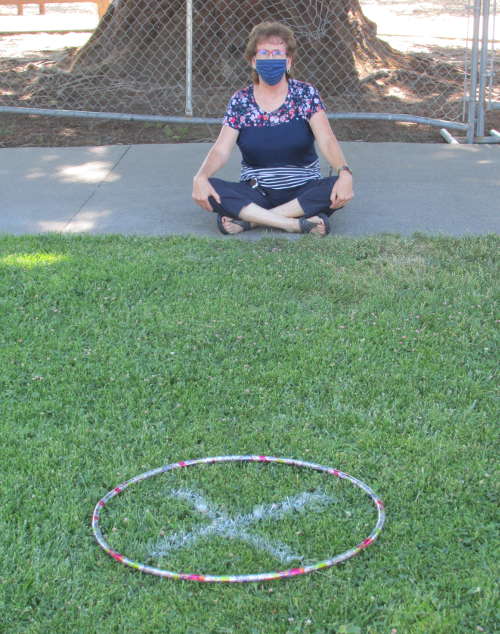
LAKEPORT, Calif. – The Lakeport Library has moved its popular storytimes for children to Library Park.
Barbara Green presents Lake County Library Storytime in the Park in Lakeport’s Library Park every summer.
Due to the coronavirus, this year the program will look a little different. Instead of crafts and games, storytime participants will sit 6 feet apart outside with masks on while listening to a few stories and participating in gentle movement exercises.
The following rules and procedures have been established to make storytime as safe as possible.
Something new for this year is that registration is required for storytime programs Wednesday through Friday morning. You must register and receive a confirmation before being allowed to attend storytime.
Registration is open on the library website. Just click “Events” and then “Storytime” for the link to the registration form. Contact Barbara at the Lakeport Library for more information about how to register. Her number is 707-263-8817 extension 17102.
Only 10 participant families are allowed at each program. Those showing up without registration will not be allowed to participate. Registration is first-come, first-served.
After registration participants will be assigned to one of three groups for the rest of the summer. Participants cannot switch groups later to avoid mixing.
In accordance with the California Department of Health guidance for the use of face coverings, masks are required for all adults and children over the age of 2. Parental guardians and caregivers must remain with their children during the program.
Any family member or child that is experiencing symptoms of illness or COVID-19 should not participate in storytime and is not allowed to attend. All participants are asked to perform a symptoms self-check before attending.
Families will be asked to practice social distancing of six feet at all times while at storytime. Seating will be marked and assigned. The library is asking families to bring their own blankets or towels to sit on the grass.
When arriving and leaving storytime participants will be required to remain in the designated area, while social distancing, before being directed to their assigned seating area or leaving.
While there will be no crafts at storytime, Grab & Go crafts to be used at home may be provided at the conclusion of the program.
The library is taking these precautions to make the program as safe as possible. At this point, the best way to prevent infection is to minimize potential exposure to the virus that causes it. Everyone is susceptible to contracting COVID-19 upon exposure. There is currently no vaccine or cure. The safest course of action is to remain sheltered in place at home.
Bringing your children to storytime is the perfect way to introduce them to the magic of books and to help them develop a love of reading. Children who love reading and develop strong literacy skills by grade three are ready to learn for the rest of their lives. If you can’t make it to Storytime in the Park, there are also recorded video Storytimes available on the library website and Grab & Go crafts available at your local branch.
Jan Cook is a library technician for the Lake County Library.
- Details
- Written by: Kevin J. Krizek, University of Colorado Boulder
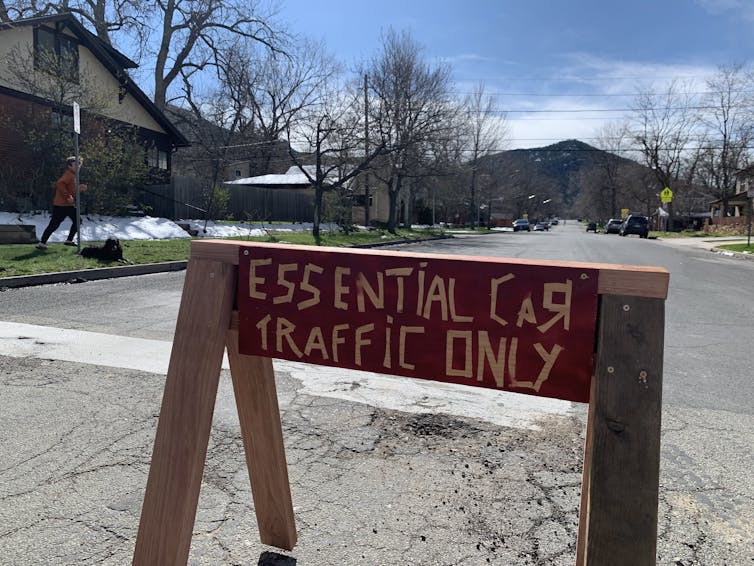
Sticking closer to home because of COVID-19 has shown many people what cities can be like with less traffic, noise, congestion and pollution. Roads and parking lots devoted to cars take up a lot of land. For example, in Phoenix, Los Angeles and New York City these spaces account for over one-third of each city’s total area.
When stay-at-home orders went into effect in many parts of the U.S. in March, streets and parking lots went dormant seemingly overnight. Within days, municipalities across the U.S. started shifting these spaces to other uses that better suit people.
As a professor of environmental design and transport, I’ve worked for decades to unravel the many factors that keep people reliant on cars, SUVs and trucks. Weather, time constraints, children – there are many reasons that prevent people from using transportation modes like bicycles. Yet with a simple first step – starting to reconfigure city streets – meaningful change can begin to break down traditional transportation barriers and usher in a new culture of getting around town by means other than cars.
The dangerous, expensive automobile
In large U.S. cities, nearly half of all car trips are less than four miles. Using cars to travel such short distances has many costs.
For example, consider traffic fatalities. Two pedestrians or cyclists die every hour on U.S. city streets, a national trend that’s been worsening in recent years, even though cycling and walking rates are steady or declining. Pollution from cars contributes to climate change and worsens air quality. Designing cities around cars marginalizes individuals who don’t have them.
In my view, this is the time to move beyond the “grab the keys” mentality on the way out the door, as millennials and GenXers already are doing. New visions for streets, where cars use less space and are replaced by smaller vehicles built for individual riders, are gaining currency.
These modes of transport might be new forms of e-bikes, e-scooters or hoverboards. These novel vehicles, which were already attracting attention before COVID-19, complement conventional bicycles, whose sales have boomed during the pandemic.
New thinking, different results
Increasingly, thinking about the future of cities suggests that chiefly relying on cars as a form of transport has run its course. By minimally modifying the existing infrastructure, it is possible for city leaders to repurpose roads and parking spaces while ensuring the same ease of being able to reach daily services.
Emerging forms of mobility and changing mindsets can help deliver these opportunities. Bicycles and bicycle-like vehicles provide a catalyst to shift how city streets are used.
Research demonstrates that people will adopt new ways of getting around town when they are confident that an entire route, including intersections and parking lots, is safe for travel. Some COVID-19-induced street changes that have emerged recently, such as reducing the number of traffic lanes and closing streets to traffic, are a good first step. But they lack the network component.
Networks quickly develop the more people use them. The quickest way to build one that is scaled and purposed for people begins by identifying streets used to make short trips. These are places near neighborhood retail districts, schools and other activity centers.
Informed by local data, leaders can make decisions about which streets should give priority to vehicles such as bicycles, not cars. Changes might include physically demarcated lanes and signs making statements like “Cars are guests.” Initially, these changes might require waivers to exempt them from adhering to current engineering guidelines and standards – restrictions that stifle innovation.
Now large and small U.S. cities are experimenting with different strategies and contending with long-standing equity concerns about which streets to change. For example, Minneapolis has closed a number of parkways to cars, reserving them exclusively for cyclists and walkers.
Pioneering cities like Portland, Oregon, Seattle and Oakland are using this time to test ways of sharing a broader array of streets among cyclists, walkers and car users. Researchers are providing tools to identify the most promising places to reallocate space for pop-up cycle ways.
Enacting change now – in a strategic manner and while travel levels are down – may be an opportunity to reap quick gains with high impact. I believe that a better transport future is within reach by taking advantage of the space dominated by automobiles. This is the time to leverage current low-traffic conditions so that streets and roads can be converted to accommodate new technology and transport.
Kevin J. Krizek, Professor of Environmental Design, University of Colorado Boulder
This article is republished from The Conversation under a Creative Commons license. Read the original article.
- Details
- Written by: DENNIS FORDHAM
Mineral rights are the ownership rights to underground resources, such as oil or natural gas. Mineral rights can be severed (separated) from the ownership of the surface land and so be owned by a different person.
Such rights can be acquired by purchase, lease, gift or inheritance, either outright or in trust.
Depending on where the mineral rights are located, the relevant state law may treat mineral rights within its state as either real property or personal property.
Examining the title instrument by which the mineral rights were acquired usually tells you whether it is real property or personal property.
Mineral rights may be transferred into a trust for ongoing management and future distribution as part of one’s estate planning.
Oftentimes, a person owns only a very small fraction or fragment of the total mineral rights associated with real property.
This often occurs because the land involved is very large and/or because mineral rights have to be repeatedly subdivided from one generation to the next. This fractionalization can be avoided by assigning mineral rights to a corporate entity for management and ownership purposes.
Interests in the corporate entity can then instead be gifted from one generation to the next.
When a petroleum company produces oil from such property, a Division Order will be issued to all the mineral right owners to fix, “… the exact decimal interest (Net Revenue Interest or NRI) owned within a well, lease, production unit, or field-wide unit.”
The Division Order determines what royalties each mineral rights owner receives from the production of oil.
Ownership of mineral rights can sometimes generate valuable royalty income. Not all mineral rights, however, are productive assets. Ownership of mineral rights can sometimes be a long term wait and see game.
The good news may come unexpectedly when a letter from an oil production company asking to lease your mineral rights arrives. Owning non-productive mineral rights, however, presents a problem for a trustee because a trustee has a duty to make all trust assets productive.
Mineral rights are a special asset within one’s overall estate planning. Estate planning for Mineral rights can be done using either one’s will or trust.
However, before transferring mineral rights to a trust it is important to determine whether such transfer may affect or eliminate the income tax cost depletion allowance (tax deduction) on that ownership interest.
Special powers should be also be provided in the will or trust for a variety of reasons, including the following: to enable the representative to manage and lease the mineral rights; or to pool, consolidate, or unitize such mineral rights with others for exploration, development, management, or administration.
Combining multiple owners’ mineral rights may be necessary given fractionalization or fragmentation of the mineral rights associated with the land.
Lastly, some people own mineral rights and/or are owed unpaid oil and gas royalty income and do not even know it. Anyone wondering if they own mineral rights may wish to hire a title company to examine the chain of title in the county recorder’s office.
Also, one can also go to the state’s unclaimed oil and gas royalty website to examine for unclaimed royalty income. Otherwise, unclaimed property eventually escheats (belongs) to the state after a certain number of years.
The foregoing is a general discussion of a much more involved subject. Anyone confronting any issues discussed above should seek professional guidance and not draw any conclusions from this article.
Dennis A. Fordham, attorney, is a State Bar-Certified Specialist in estate planning, probate and trust law. His office is at 870 S. Main St., Lakeport, Calif. He can be reached at