How to resolve AdBlock issue?
News
- Details
- Written by: Kathleen Scavone
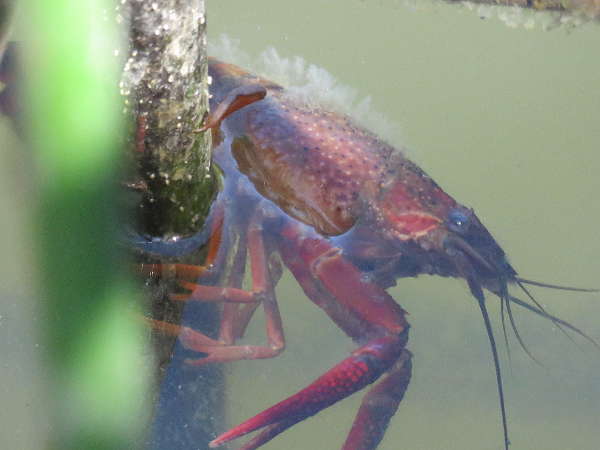
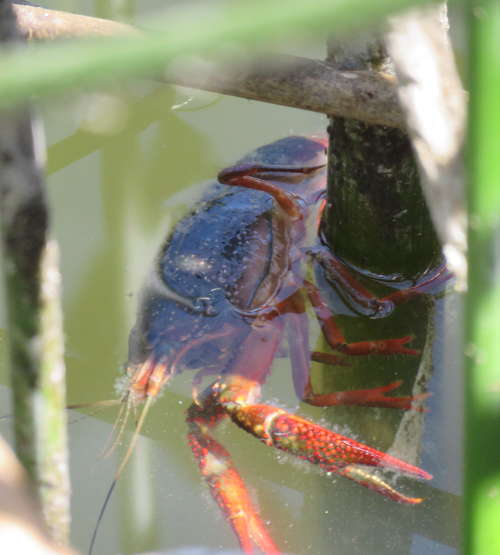
LAKE COUNTY, Calif. – Crawdads, crayfish, craydids: whatever you choose to call those crustaceans that bear a resemblance to mini-lobsters, they are probably not native to our creeks and waters.
Did you know that the one remaining native species of crawdad to California is the Shasta crawdad?
The signal crayfish is a prolific crustacean found in Lake County. Many of the crawdads that you find in our lakes and streams today are descendants of those brought in around 1912 from Oregon and Washington.
Some species may have made their way west from southern states during the Gold Rush era when miners had a hankering for some vittles from home.
According to researchers, there are around 400 species of crawdads in the U.S.A. with almost half on the endangered or threatened list.
The good, the bad and the ugly of crawdads is that some species are important food for river otters, herons, egrets and raccoons – and many humans love to eat crawdads and use them for bait, as well.
However, invasive crawdads have been known to consume important species like California newts, and they devour frogs and fish of all manner by utilizing their imposing and complex claws and jaws.
As they ascend from burrowing under gravel, mud and rocks they can stir up detritus and cause nuisance amounts of sediment in the water which can disturb fish life. In irrigated agricultural areas the crawdads often clog up irrigation pipes.
These freshwater animals possess two large claws, like a Maine lobster. Here in California, the fully mature crawdad can be 3 to 6 inches in length. Colors of crawdads vary from brick red to grey to green hues.
According to the California Department of Fish and Wildlife, there are regulations regarding the catching of crawdads. They can only be caught using the following methods with a valid fishing license: by hand, hook and line, or through the use of a net if its dimensions reach no larger than 3 feet.
The regulations state that, "Crayfish can be caught year-round, and there is no bag limit on them (CCR Title 14, section 5.35)."
The California Department of Fish and Wildlife goes on to explain that there are protections in place for the Shasta crayfish since it is the only native crayfish and also holds an endangered species status.
One more item of importance from the Department of Fish and Wildlife: "There are also special laws and rules in place throughout the state to prevent the spread of Quagga and Zebra mussel infestations. The use of crayfish caught in contaminated water for bait may not be prohibited, but it is illegal to move adult or larval Quagga and zebra mussels from infested waters."
Crawdads are consumed worldwide in tasty bisques, boils or in soups, but in the Czech Republic, they are fitted with sensors to monitor water used in brewing their beer. If the crawdads display changes in their pulse, the waters are screened for pollutants.
In Australia, there are fossil records of crawdads that reach past the 30 million year mark, along with evidence displayed in the strata of some fossils found in the early Mesozoic era.
Those crawling crustaceans have definitely made themselves at home in the world.
Kathleen Scavone, M.A., is a retired educator, potter, freelance writer and author of “Anderson Marsh State Historic Park: A Walking History, Prehistory, Flora, and Fauna Tour of a California State Park” and “Native Americans of Lake County.”
- Details
- Written by: Elizabeth Larson
Dogs available for adoption this week include mixes of border collie, Chihuahua, husky, Labrador Retriever, pit bull, shepherd and terrier.
Dogs that are adopted from Lake County Animal Care and Control are either neutered or spayed, microchipped and, if old enough, given a rabies shot and county license before being released to their new owner. License fees do not apply to residents of the cities of Lakeport or Clearlake.
The following dogs at the Lake County Animal Care and Control shelter have been cleared for adoption (additional dogs on the animal control Web site not listed are still “on hold”).
Call Lake County Animal Care and Control at 707-263-0278 or visit the shelter online at http://www.co.lake.ca.us/Government/Directory/Animal_Care_And_Control.htm for information on visiting or adopting.
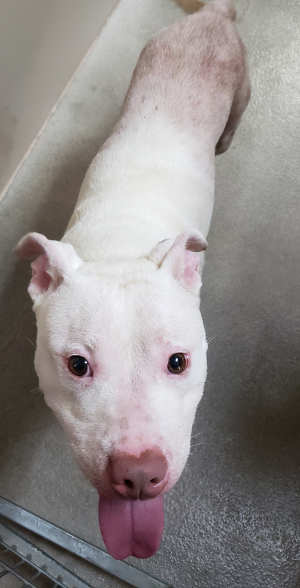
Male pit bull
This male pit bull terrier has a short white coat.
He is in kennel No. 15, ID No. 13790.
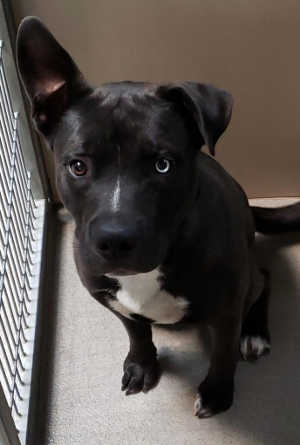
Male pit bull terrier
This male pit bull terrier has a black coat.
He is in kennel No. 18, ID No. 13772.
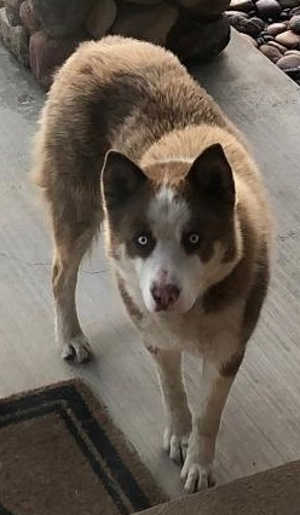
Male husky
This male husky has a medium-length red and white coat.
He is in kennel No. 20, ID No. 13774.
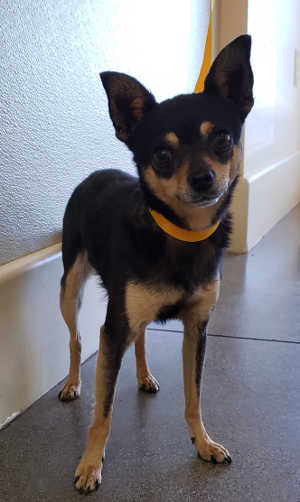
Female Chihuahua
This female Chihuahua has a short black and brown coat.
She is in kennel No. 21, ID No. 13792.
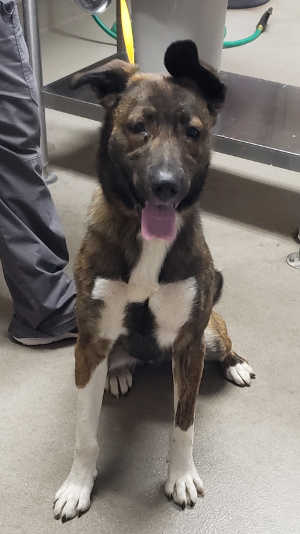
Shepherd mix
This female shepherd mix has a brindle and white coat.
She is in kennel No. 22, ID No. 13776.
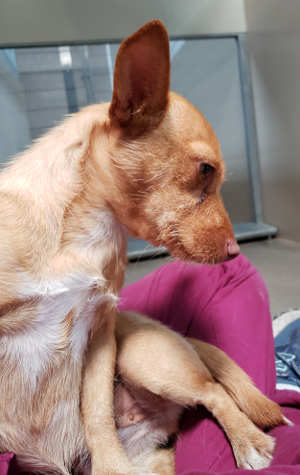
Female terrier
This female terrier has a coarse tan coat.
She is in kennel No. 23, ID No. 13784.
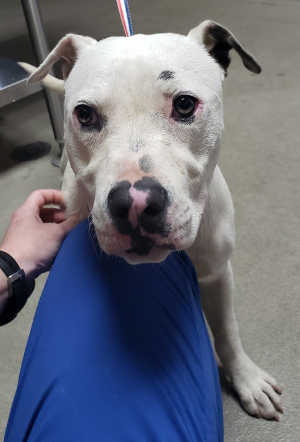
Female pit bull
This female pit bull has a short black and white coat.
She is in kennel No. 24, ID No. 13777.
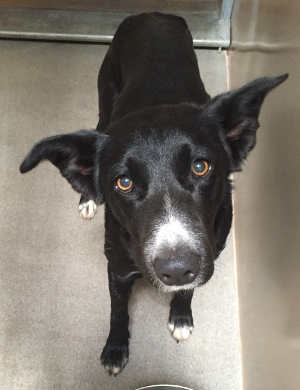
‘Socci’
“Socci” is a female Labrador Retriever-border collie mix with a black and white coat.
She has been spayed.
She is in kennel No. 25, ID No. 4924.
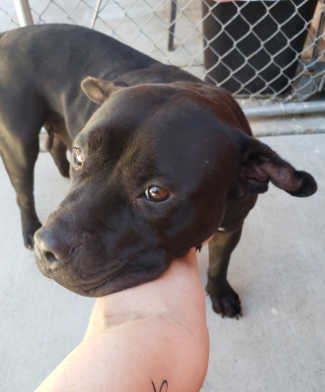
Female pit bull
This female pit bull has a short black coat.
She has been spayed.
She’s in kennel No. 27, ID No. 13783.
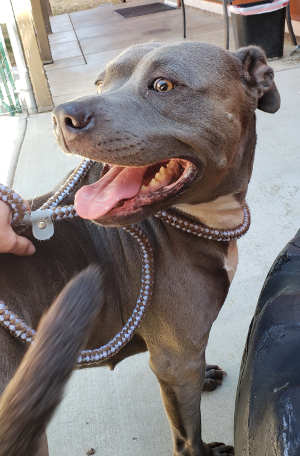
Female pit bull
This female pit bull has a short blue coat.
She is in kennel No. 28, ID No. 13778.
Email Elizabeth Larson at
- Details
- Written by: Lake County News reports
Best Friends Animal Society has released its 2020 pet lifesaving findings, which gives a national overview of the number of dogs and cats that enter shelters each year in the United States, and the number of dogs and cats that are leaving those shelters alive.
The year-over-year data shows that the number of dogs and cats killed annually nationally has dropped from about 733,000 in 2018 to 625,000 during 2019 (or about 1,700 killed per day). Across the U.S., about 5.4 million dogs and cats entered shelters in 2019, and 4.2 million were saved making the national save rate 79.02 percent (2018 was 76.6 percent).
“We are seeing continued momentum and progress towards the goal of ending the killing of dogs and cats in U.S. shelters by the year 2025, with the overall number of pets being killed in the U.S. continuing to go down and the number of shelters that are no kill going up,” said Julie Castle, chief executive officer, Best Friends Animal Society.
In addition, this year, Best Friends is releasing an inaugural state-by-state ranking that shows where the most dogs and cats need to be saved, and where the most dogs and cats are being killed.
Currently, the state in the country with the most shelter deaths is California, with 100,239 dogs and cats killed in 2019. Cats are getting killed in California at the rate of nearly four to every one dog, reflecting outdated laws, ordinances and road blocks in some communities that prevent the implementation of effective trap-neuter-return programs that are proven to save lives and reduce the free-roaming cat population.
Overall, California has a 76 percent save rate, with 90 percent considered to be the benchmark for no-kill.
However, there are strong signs of progress and commitment across California, with the number of dogs and cats dying in shelters declining from 110,239 in 2018 to 100,239 in 2019, an approximate 10 percent decrease. Additionally, California saved 540,248 dogs and cats in 2019, the most of any state in the country. And recently, California Governor Gavin Newsom and the state legislature agreed to provide $5 million to fund lifesaving work in California by the pioneering experts at the UC Davis Koret Shelter Medicine Program.
The top five states where the most dogs and cats need to be saved are California, Texas, North Carolina, Florida and Louisiana, who together make up more than 50 percent of the nation’s shelter killing of dogs and cats.
Over the past three years, Best Friends has spearheaded a first-of-its-kind extensive data collection process that involved coordinated outreach to every shelter in America followed by additional research, data analysis, and technology development.
To create the most comprehensive data set on animal welfare ever published, Best Friends collected data directly from shelters, state and local coalitions, government websites, and even FOIA requests.
The Best Friends 2020 dataset – consisting of statistics collected during 2019 – of U.S. shelters has a total net intake of 5,360,060 animals representing 4,850 known shelters.
Of this intake total, 92 percent of the data is based on collected information from 3,608 brick and mortar shelters. The remaining 8 percent is estimated to cover the uncollected shelters and their respective counties.
The solution to getting to no-kill lies within individual communities and its residents, as Castle illustrated.
“Best Friends has always believed that anyone can help homeless pets. You don’t need a rescue label, special credentials or permission to help save animals. Individual community members are the no-kill movement’s greatest resource,” she said. “Putting this data directly into the hands of the public allows individual community members and advocates like the members of our 2025 Action Team to gain a better understanding of exactly which shelters and types of pets are most in need of help and helps to connect them to those shelters.”
To view the 2020 lifesaving findings and find out about adopting, fostering, volunteering, donating, or spaying/neutering in your community, visit http://bestfriends.org .
- Details
- Written by: NATIONAL AERONAUTICS AND SPACE ADMINISTRATION
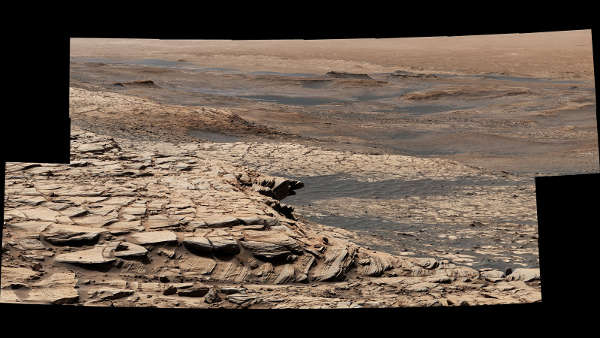
NASA's Curiosity Mars rover has started a road trip that will continue through the summer across roughly a mile of terrain.
By trip's end, the rover will be able to ascend to the next section of the 3-mile-tall Martian mountain it's been exploring since 2014, searching for conditions that may have supported ancient microbial life.
Located on the floor of Gale Crater, Mount Sharp is composed of sedimentary layers that built up over time. Each layer helps tell the story about how Mars changed from being more Earth-like – with lakes, streams and a thicker atmosphere – to the nearly-airless, freezing desert it is today.
The rover's next stop is a part of the mountain called the "sulfate-bearing unit." Sulfates, like gypsum and Epsom salts, usually form around water as it evaporates, and they are yet another clue to how the climate and prospects for life changed nearly 3 billion years ago.
But between the rover and those sulfates lies a vast patch of sand that Curiosity must drive around to avoid getting stuck.
Hence the mile-long road trip: Rover planners, who are commanding Curiosity from home rather than their offices at NASA's Jet Propulsion Laboratory in Southern California, expect to reach the area in early fall, although the science team could decide to stop along the way to drill a sample or study any surprises they come across.
Depending on the landscape, Curiosity's top speeds range between 82 and 328 feet per hour. Some of this summer road trip will be completed using the rover's automated driving abilities, which enable Curiosity to find the safest paths forward on its own. Rover planners allow for this when they lack terrain imagery. (Planners hope for more autonomy in the future; in fact, you can help train an algorithm that identifies Martian drive paths.)
"Curiosity can't drive entirely without humans in the loop," said Matt Gildner, lead rover driver at JPL. "But it does have the ability to make simple decisions along the way to avoid large rocks or risky terrain. It stops if it doesn't have enough information to complete a drive on its own."
In journeying to the "sulfate-bearing unit," Curiosity leaves behind Mount Sharp's "clay-bearing unit," which the robotic scientist had been investigating on the lower side of the mountain since early 2019. Scientists are interested in the watery environment that formed this clay and whether it could have supported ancient microbes.
Extending across both the clay unit and the sulfate unit is a separate feature: the "Greenheugh Pediment," a slope with a sandstone cap. It likely represents a major transition in the climate of Gale Crater.
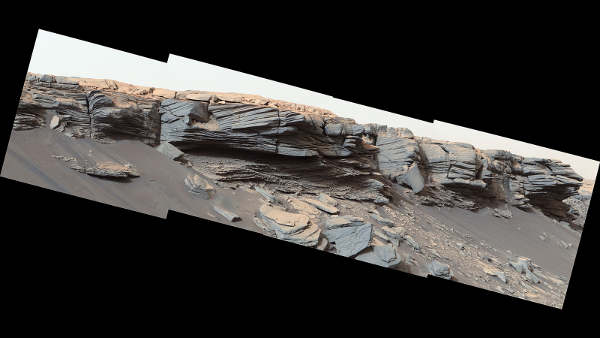
At some point, the lakes that filled the 96-mile-wide crater disappeared, leaving behind sediments that eroded into the mountain we see today. The pediment formed later (though whether from wind or water erosion remains unknown); then windblown sand blanketed its surface, building into the sandstone cap.
The northern end of the pediment spans the clay region, and though the slope is steep, the rover's team decided to ascend Greenheugh back in March for a preview of terrain they'll see later in the mission. As Curiosity peeked over the top, scientists were surprised to find small bumps along the sandstone surface.
"Nodules like these require water in order to form," said Alexander Bryk, a doctoral student at University of California, Berkeley who led the pediment detour. "We found some in the windblown sandstone on top of the pediment and some just below the pediment. At some point after the pediment formed, water seems to have returned, altering the rock as it flowed through it."
These bumps may look familiar to Mars rover fans: One of Curiosity's predecessors, the Opportunity rover, found similar geologic textures dubbed "blueberries" back in 2004.
Nodules have become a familiar sight throughout Mount Sharp, though these newly discovered ones are different in composition from what Opportunity found.
They suggest water was present in Gale long after the lakes disappeared and the mountain took its present shape. The discovery extends the period when the crater hosted conditions capable of supporting life, if it ever was present.
"Curiosity was designed to go beyond Opportunity's search for the history of water," said Abigail Fraeman of JPL, who has served as deputy project scientist for both missions. "We're uncovering an ancient world that offered life a foothold for longer than we realized."
For more about Curiosity visit https://mars.nasa.gov/msl/home/ or https://nasa.gov/msl/ .