 How to resolve AdBlock issue?
News
- Details
- Written by: Elizabeth Larson
On June 30, after a three-month suspension of in-person board meetings, the supervisors returned to a remodeled board chambers to begin a “hybrid” version of its meetings.
The public can still watch online or participate via Zoom, however, small numbers of individuals are allowed to come into the chambers to give public comment or view the proceedings.
The chambers now include plexiglass cubicles around each of the fives supervisors’ seats on the dais and around staff seating area, with the seating in the audience removed and replaced by a maximum of 25 chairs that adhere to social distancing requirements.
Last week, the county also implemented a new eComment platform to take public comments.
On June 30, Lake County’s confirmed COVID-19 cases totaled 60. On Tuesday, they reached 122. In the weeks since, Lake County Public Health has also reported the first death of a county resident attributed to COVID-19.
Board Chair Moke Simon had asked last week that a discussion of the meeting procedures be placed on the Tuesday agenda.
He suggested that, in light of the rising cases, the meetings should be closed again to in-person participation out of concern that they had opened up too early.
Simon and Supervisor Tina Scott were not in the board chambers for the meeting, but both participated from their homes via Zoom.
On the dais in the chambers were Rob Brown, who was not wearing a mask because he said he can’t, and EJ Crandell and Bruno Sabatier, both of whom were masked. All of them were separated by the plexiglass dividers.
Simon said he wanted to be proactive instead of reactive, and citing the recent rise in COVID-19 numbers he suggested closing the meetings and reviewing the situation in 30 days.
Sabatier noted that the July 7 meeting and Tuesday’s meeting both had about half a dozen people in the audience, with a good-sized crowd still participating online. He said some people don’t have access to watch on the Internet.
“If it’s not safe for us, it’s not safe for our employees,” said Sabatier, noting that if it’s not safe for in-person meetings, they should go all the way and say no one should be there.
He said he thought the hybrid model is working fine.
Simon said his concern was that they can’t control where people who come into the meetings have been.
Brown said people should do whatever they’re comfortable with and leave the meetings in their current form as an option.
“I feel safe here,” he said, adding that not all employees have the opportunity to work at home.
Scott had previously attended one of the hybrid meetings in person but returned to participating from home.
“It was difficult for me to be in there and watch a screen across the room,” Scott said.
Like Brown and Sabatier, she felt the meeting format is working and that they can continue to monitor how they are working.
Crandell said he was good with either continuing the meetings or taking Simon’s suggestion.
The only public comment came from Lakeport resident Michael Green.
“This is just very unfortunate,” said Green, criticizing the board for “terrible messaging” and noncompliance with the health order, with half of them masked.
Green suggested they’re broadcasting noncompliance with state orders in their meetings while conceivably putting themselves at risk.
“You’re supposed to provide a safe meeting space and enforce social distancing and you can’t even enforce social distancing on the dais,” he said.
Neither Simon nor any of the other supervisors offered a motion, as the consensus was to continue the hybrid meetings.
City councils to continue virtual meetings
While the supervisors have allowed the public to be in the board chambers for meetings, the city councils of Clearlake and Lakeport are continuing to only allow public participation virtually because of health concerns.
The Clearlake City Council’s members have primarily been in the council chambers for meetings, with council members and staff sitting several feet apart and the chambers closed to the public.
The city has a new Open Town Hall page on its website so community members can submit comments and meetings are broadcast on the PEG TV Youtube page.
City Manager Alan Flora had reported previously that there were plans to begin allowing for limited public access to City Hall for the meetings beginning this week.
However, he told Lake County News on Tuesday, “We are going to walk back having the public at our meetings starting Thursday. We did notice a couple of appeal hearings and so we will be allowing them to come into the meeting after a screening process and with masking, social distancing etc. Otherwise we will be continuing with the remote public input process utilized over the past several months.”
The Lakeport City Council has not met in the chambers but continues to meet via the GoToMeeting platform, with the public allowed to call in or ask comments virtually.
City Manager Margaret Silveira said Tuesday that format will continue.
“We are not planning on having in-person attendance for the public at this time. We have discussed having in-person for the council members, which can be seated with social distancing. We are awaiting the arrival of technical equipment to make that possible,” Silveira said.
Email Elizabeth Larson at
- Details
- Written by: Lake County News reports
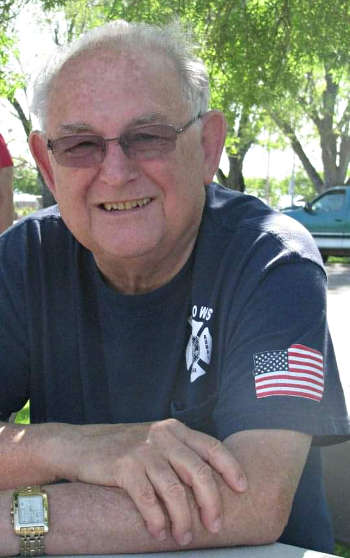
NORTHERN CALIFORNIA – The Mendocino National Forest and officials around the region are honoring the memory of a longtime National Forest Service employee and former Glenn County supervisor who died last month.
“It is with a heavy heart that the Mendocino National Forest announces the loss of former Forest Aviation and Staff Officer Denton “Denny” Bungarz who passed away June 25, 2020,” Forest officials said in a statement.
Bungarz came to the Mendocino in 1978 and retired in December 1989. Altogether, he gave the USDA Forest Service 37 years of committed service.
His Forest Service career started in 1955 with a 10-month appointment at the Trinity National Forest. In 1958, he served as a prevention technician at the Hayden Flat Guard Station. He had ideas about becoming a smokejumper but never pursued that career. He graduated from Humboldt State in 1966 with a bachelor’s degree in forestry.
The next year, Bungarz and his family moved to the Plumas National Forest where he worked as a district resource advisory. He also became qualified as an air attack supervisor or (spotter) for the north region in addition to obtaining his personal pilot’s license.
From the Plumas, Bungarz’s career took him to the Los Padres National Forest in 1973 and he was promoted to the district ranger of the Santa Barbara District. He had a fond friendship with Ronald Reagan during his time on the Los Padres.
Then in 1978, he moved to the Mendocino National Forest where he served as the forest aviation and staff officer (now known as forest fire and aviation management officer).

While on the Mendocino, he was instrumental in introducing and developing the aerial ignition program, not only to the forest and the region, but also to the rest of the lower 48 states. Aerial ignitions (or helitorch) were first used on the Mendocino in 1979.
Bungarz took his leadership skills to a new level when he was selected as an incident commander for the California Team 4 Incident Management Team in 1987. He demonstrated his extensive incident management skills in the summers of 1987 (Siege of 87 fires) and 1988 on the Yellowstone Fire where he was one of many Type 1 Incident commanders.
After retiring, Bungarz was hired to develop the National Wildfire Apprentice Program in 1990. The Forest Service assumed this program in 1997. He remained an integral part of this program and was invited to speak at some of the graduations including the one from which his soon-to-be stepdaughter Shilo Springstead graduated.
In addition to his illustrious Forest Service career, Bungarz made a huge mark within the community of Willows in Glenn County. He was elected to the Willows City Council, served on the Glenn County Board of Supervisors, was the co-founder of the Westside Domestic Violence Shelter and helped obtain funding through the Glenn County Rural Conservation District for needed projects in the community and within the Mendocino National Forest.
He is survived by his wife, Judi Bungarz; daughter, Joyce Trammel; son, Doug Bungarz; brothers, Bob and George Bungarz; four stepchildren; eight grandchildren; nine step-grandchildren; four step-great-grandchildren; and six great-great-grandchildren.
A celebration of life will be planned in the future. Any donations in the name of Denny Bungarz can be made to Willows Auxiliary, Wildland Firefighter Foundation or the National Museum of Forest Service History.
“The passing of Denton (Denny) Bungarz is a tremendous loss for the Forest Service and the community. He will be sorely missed,” the Mendocino National Forest concluded in its statement.
- Details
- Written by: Lake County News reports
Intentional attacks or detainments of reporters and members of the press in the United States in 2020 have increased significantly, particularly during the nationwide anti-racism protests, according to the US Press Freedom Tracker, the Freedom of the Press Foundation and the Committee to Protect Journalists.
During recent protests, reporters have been hit by rubber bullets, struck with batons, sprayed with tear gas, and detained, all while performing their critical role of documenting and informing the public of current events.
State Sen. Mike McGuire introduced SB 629, which will enhance and extend access and protections to members of the media who are attending demonstrations in order to gather vital information.
“Members of the press risk their personal health and safety each time they attend protests or rallies to get the public the information they need and deserve. Rubber bullets, tear gas, and even detainment cannot be the new norm for an essential pillar of our nation’s democracy. California must lead the way to ensure the right of the press and the First Amendment are protected and held to the highest standard,” Sen. McGuire said. “SB 629 – The Press Freedom Act – will help ensure journalists can perform these critical roles while being protected under the law from any law enforcement officer intentionally assaulting, obstructing or interfering with their duties while they are gathering the news.”
SB 629 will ensure that journalists are protected as they attend demonstrations, marches, protests, and rallies. It will prohibit law enforcement officers from obstructing, detaining, assaulting or otherwise preventing the press from fulfilling their constitutional mandate in reporting on these events by making it a misdemeanor for any peace officer to do so.
Recent police action demonstrates that these statutory protections are critical to ensure our democratic system has access to newsworthy information to inform the discussion on the crucial issues that California and the nation face.
During protests throughout California in May, numerous reporters were injured during incidents with law enforcement.
For example, a reporter for KCRW, a Santa Monica NPR affiliate, was reporting at Beverly Boulevard and Fairfax Avenue when she was hit by a rubber bullet. She was holding her press badge above her head at the time.
A Buzzfeed News reporter was detained by the Santa Monica Police while documenting a protest.
A KPIX CBS affiliate reporter was detained by law enforcement while reporting on protests in Oakland.
A San Diego Union-Tribune reporter was shot with pepper balls while he was documenting protests in La Mesa.
While California law allows reporters and members of the press to enter natural disaster emergency areas for the purpose of gathering information, these protections do not expressly extend to protests. SB 629 provides these protections.
The legislation is supported by the California News Publishers Association, The California Broadcasters Association, California Black Media, Impremedia, Ethnic Media Services and the First Amendment Coalition.
The legislation is co-authored by Senators Hertzberg, Hill, Wiener, Gonzalez, Portantino and Skinner and Assemblymember Wicks.
SB 629 will be heard in the Assembly Public Safety Committee in the coming weeks.
- Details
- Written by: Lake County News reports
“Testing is a critical tool that helps us diagnose and treat those who become infected by COVID-19. Testing also helps us understand how COVID-19 moves through our communities so we can identify areas where transmission is occurring. Today we are redoubling our commitment to ensure testing remains a top priority for California,” Dr. Ghaly said Tuesday.
“Our testing capacity has increased exponentially in recent months. At the same time, new national supply chain challenges and large volumes of specimens sent to commercial laboratories have resulted in growing delays in processing times,” Ghaly said.
“Consequently, it is critical we continue to be deliberate and creative about testing. We must do this so that testing is readily available and affordable to those who need it, especially those communities experiencing the worst impacts of COVID-19 and those who are at the highest risk. Testing is a responsibility of our entire healthcare delivery system. Clinics, doctors, and other care sites should provide convenient testing to their patients who need a test,” Ghaly added.
The new plans Ghaly announced include the following.
Testing prioritization
The California Department of Public Health released updated testing guidance that focuses on testing hospitalized individuals with signs or symptoms of COVID-19 and people being tested as part of the investigation and management of outbreaks, including contact tracing.
The testing guidance also prioritizes individuals who have COVID-19 symptoms and individuals without symptoms who fall into high-risk categories, including people who live and work in nursing homes, homeless shelters and prisons, healthcare workers, and patients in hospitals.
The new guidance will ensure that Californians who most need tests get them even if there are limited supplies.
New Testing Task Force co-chairs and goals
Two new co-chairs will lead California’s Testing Task Force, the state’s private-public partnership that has taken the lead role in expanding both the collection and processing of specimens for COVID-19 testing.
Leading the task force starting immediately are Dr. Gilbert Chavez, founding chief of the California Department of Public Health’s Center for Infectious Diseases, and Dr. Bechara Choucair, senior vice president and chief health officer for Kaiser Foundation Health Plan Inc.
Chavez, the state’s former epidemiologist who has led the response to disease outbreak and emerging health threats, is coming out of retirement to help lead the task force.
Dr. Choucair oversees Kaiser’s efforts focused on addressing the social health of its 12.4 million members and the 68 million people who live in the communities it serves.
The task force, which was launched in April, created testing locations where there were none, expanded laboratory capability and helped build a testing supply pipeline, scaling up from just 2,000 tests per day to more than 100,000 tests per day.
Under the leadership of Chavez and Choucair, the task force will recommend testing priorities, continue to create equitable access to testing and support for state-operated community testing sites, and review options to lower overall testing costs.
Health plan coverage of testing
To help ensure that testing is widely available to all Californians, the state is working collaboratively with health insurers to provide reimbursement for testing and with private providers to create additional in-office testing capacity.
With more providers performing tests in the office rather than referring patients to labs or testing sites, the state would have more resources to focus on underserved and high-risk populations.
The state is preparing to file emergency regulations that will classify COVID-19 testing as medically necessary urgent care for essential health workers and people with symptoms of or possible exposure to COVID-19.