 How to resolve AdBlock issue?
News
- Details
- Written by: Lake County News reports
LAKE COUNTY, Calif. – The COVID-19 crisis is affecting us all, and with entire industries declared non-essential, local businesses are in need of support.
Resources are available, through both state and federal programs.
The following links offer current program information.
The Governor’s Office has established a resource page: https://business.ca.gov/coronavirus-2019/ .
This link includes information on everything from loan opportunities to guidance on whether businesses are considered essential or non-essential in light of COVID-19.
The U.S. Small Business Association also offers guidance and loan resources: https://www.sba.gov/page/coronavirus-covid-19-small-business-guidance-loan-resources .
These pages are regularly updated, and with programs changing due to legislative action at the federal and state levels, business owners are encouraged to frequently visit these webpages to stay current on the latest opportunities available.
On Thursday afternoon, Gov. Gavin Newsom announced new supports for small businesses.
The California Office of Emergency Services said that as of Friday, California small businesses impacted by the COVID-19 crisis can apply for a loan from the federal government for up to $10 million. The program is first-come, first-serve and the governor encourages all eligible California small businesses to contact their lender to learn more.
This federal program is called the Paycheck Protection Program, and is authorizing up to $349 billion in total funding.
For more information visit https://home.treasury.gov/policy-issues/top-priorities/cares-act/assistance-for-small-businesses .
The application for borrowers is available here: https://home.treasury.gov/system/files/136/Paycheck-Protection-Program-Application-3-30-2020-v3.pdf .
CalOES also reported that the governor announced that the state is allocating $50 million to the California Infrastructure and Economic Development Bank for loan guarantees to small businesses to help eliminate barriers to capital for individuals who do not qualify for federal funds, including low wealth and undocumented immigrant communities.
The state is also allowing small businesses to defer payment of sales and use taxes of up to $50,000, for up to 12 months.
Lake County Economic Development Corporation also recently produced a webinar, which can be seen above, to help local businesses understand and access available resources.
Lake County Economic Development Corp. can be reached at 707-279-1540, Extension 101.
- Details
- Written by: Elizabeth Larson
The shelter has moved most of its dogs into foster. Potential adopters can make appointments to meet and adopt available dogs.
The following dogs are ready for adoption or foster.
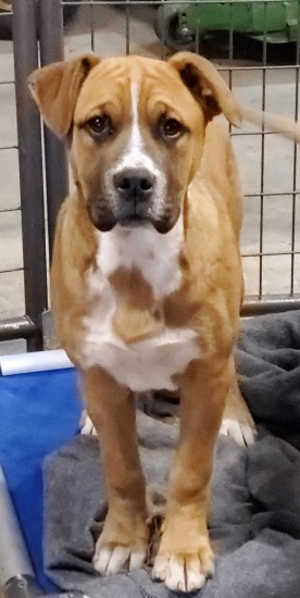
‘Aaron’
“Aaron” is a male boxer mix puppy with a short brown coat with black and white markings.
He is dog No. 3726.
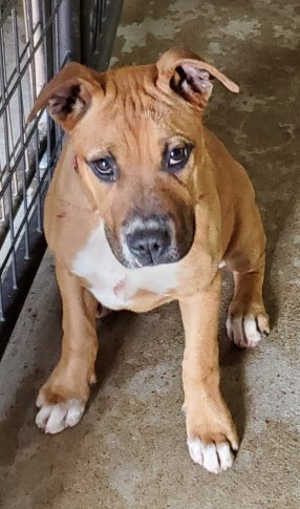
‘Angel’
“Angel” is a female boxer mix puppy with a short brown coat with black and white markings.
She is dog No. 3727.
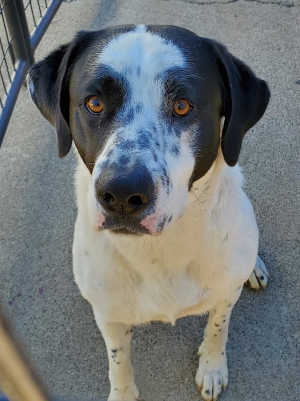
‘Buddy’
“Buddy” is a male spaniel mix with a black and white coat.
He is dog No. 3667.
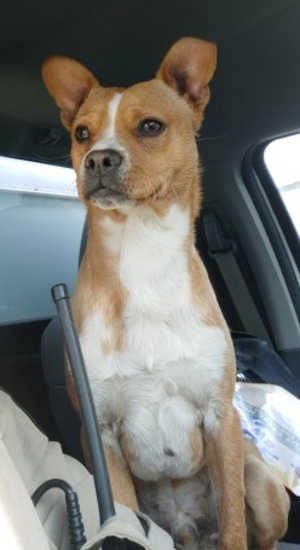
‘Cha-Chi’
“Cha-Chi” is a male Chihuahua with a short gold and white coat.
He is dog No. 3661.

‘Duchess’
“Duchess” is a female Chihuahua puppy with a short tan coat.
She is dog No. 3618.
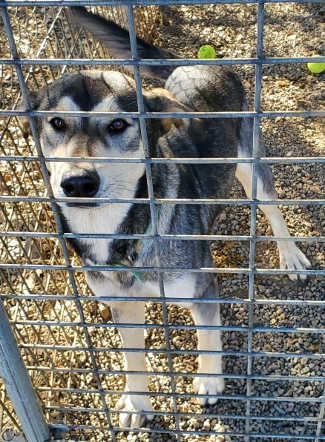
‘Fable’
“Fable” is a female husky with a smooth brown and buff coat.
She is dog No. 3044.
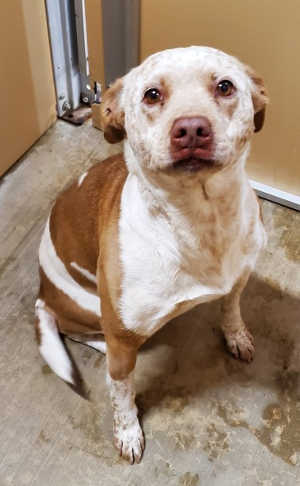
‘Freckles’
“Freckles” is a female Australian Cattle Dog mix with a short red and white coat.
She has been spayed.
She is dog No. 3668.
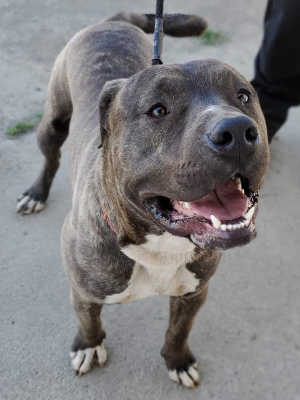
‘Lucious’
“Lucious” is a male American Staffordshire Terrier mix with a short gray and white coat.
He is dog No. 3690.
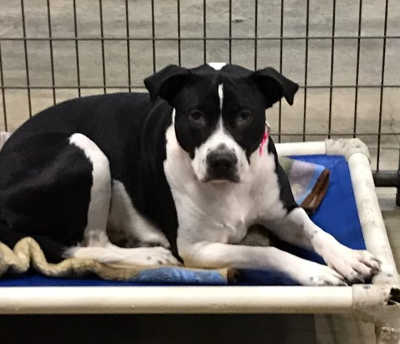
‘Phoebe’
“Phoebe” is a female American Pit Bull Terrier mix with a short black and white coat.
She is dog No. 3483.
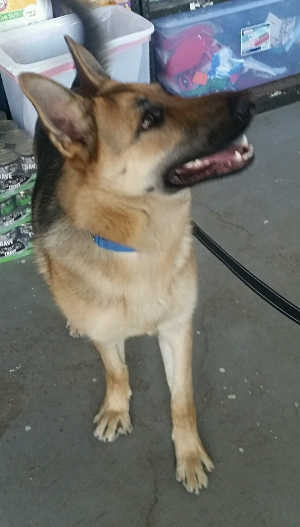
‘Princess’
“Princess” is a female German Shepherd with a black and tan coat.
She has been spayed.
Princess is young and energetic. She previously lived around a smaller dog and has been around the office cat. She will benefit from training and attention.
She is dog No. 3669.
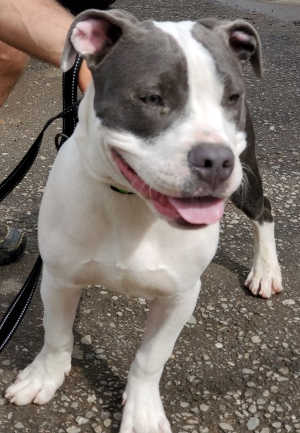
‘Tucker’
“Tucker” is a male American Staffordshire Terrier puppy with a short white and gray coat.
He is dog No. 3717.
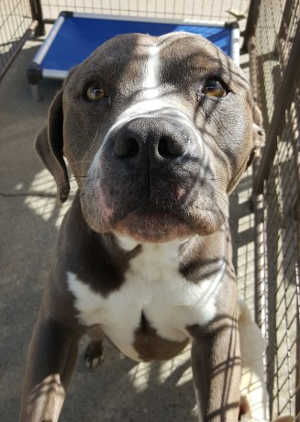
‘Tyson’
“Tyson” is a male American Staffordshire Terrier with a short gray and white coat.
He has been neutered.
He is dog No. 1863.
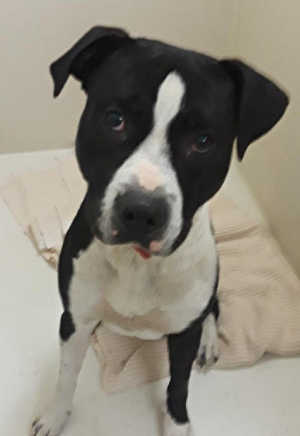
‘Woodrow’
“Woodrow” is a male Staffordshire Bull Terrier with a black and white coat.
He is dog No. 3281.
Clearlake Animal Control’s shelter is located at 6820 Old Highway 53, off Airport Road.
Hours of operation are noon to 4 p.m. Tuesday through Saturday. The shelter is closed Sundays, Mondays and major holidays; the shelter offers appointments on the days it’s closed to accommodate people.
Call the Clearlake Animal Control shelter at 707-273-9440, or email
Visit Clearlake Animal Control on Facebook or at the city’s website.
Email Elizabeth Larson at
- Details
- Written by: DENNIS FORDHAM
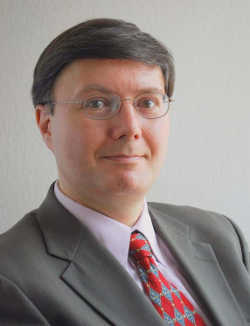
Estate planning is best done at times of ease when there is no compelling reason to do so.
Now during the COVID 19 pandemic, here in California – and elsewhere – some people want to create, or update, their estate planning documents during the crisis.
Normally, estate planning entails in-person meetings with your attorney to discuss, review, and to sign, witness and notarize documents.
Since Gov. Newsom’s stay at home order and social distancing order such meetings essentially became unavailable.
This is especially true for residents at skilled nursing facilities and assisted living homes who are prohibited from receiving any visitors.
So how can California residents proceed with their estate planning during the pandemic? With attorneys working from home, client communications are now done by phone and on-line meetings (such as Zoom).
Documents can be drafted and sent to clients by email or facsimile for review and signing by clients. While regular mail is still available it may mean the attorney making a trip to the post office.
The challenge for everyone is with executing the documents. Estate planning typically involves signing a trust and/or will, trust transfer deeds (to convey real property into a trust) powers of attorney for financial, property and legal affairs, and an advanced health care directive and HIPAA release. Each has their own required manner of execution.
A trust, or an amendment to a trust, is only required to be signed by the settlor(s) and is not required to be notarized. Notarization is simply the best and usual practice. Often the drafting attorney is also a notary. California, unlike some other states, does not allow online notarization where the notary interacts with the signor by means of a webcam.
Signing a deed to convey title to real property into one’s trust, therefore, presents a challenge. Notary services can be obtained at some essential businesses, for example a UPS Store. Otherwise some mobile notaries, when facilitating real estate refinancing of mortgages and sales, are meeting clients on their porch and using both social distancing and hand sanitizers to minimize the risk.
The notary’s journal, the signor’s identification card, and documents to be signed are placed on a porch table and each person takes turns going to the table.
Fortunately signing the trust transfer deed can be delayed till after the pandemic.
The pledging of the real property by means of a declaration of trust assets and/or assignment of trust assets typically ensures that even if the settlor were to die or become incapacitated during the pandemic period that the successor trustee can later petition the court (once normal operations resume) for a court order to confirm the pledged real property (and other pledged assets) as belonging to the trust.
A successful petition means avoiding an otherwise unnecessary probate.
A will that is drafted by an attorney must be signed by the testator and witnessed by two disinterested witnesses. Nowadays, the will signing can either take place with everyone staying 6 feet apart and using hand sanitizers (like the porch scenario), or can be witnessed remotely by webcam (in real-time) and the witnesses can separately sign the witness attestation page.
Alternatively, a person can handwrite a so-called “holographic” will to give specific assets (such as personal property), make monetary gifts, and to divide the rest of the estate.
The will should also name an executor and say whether the executor’s bond requirement is waived; a bond is an expense paid by the estate to safeguard the estate against any wrongful acts by the personal representative.
In California, powers of attorney, advance health care directives and HIPAA releases can all be witnessed by two disinterested persons who are not named in these documents. That said, such documents are normally notarized but these are extraordinary times.
Anyone who wishes to proceed with estate planning may wish to call a qualified estate planning attorney and discuss how that attorney is handling such work. They may also wish to call a UPS Store or a mobile notary to discuss notarization of deeds and trustee certifications of trust, as relevant.
Dennis A. Fordham, attorney, is a State Bar-Certified Specialist in estate planning, probate and trust law. His office is at 870 S. Main St., Lakeport, Calif. He can be reached at
- Details
- Written by: Preston Dyches
What's up for April? The Seven Sisters meet the evening star, Mars continues its getaway, and unpacking the moon illusion.
At the beginning of April, look to the west each evening in the couple of hours after sunset as Venus visits the Pleiades.
Watch each night from the 1st through the 5th, as Venus climbs higher in the sky each evening, crossing through the Pleiades star cluster.
The planetary quartet of Jupiter, Saturn, Mars and the moon once again make a showing in mid-April.
Since giving Jupiter and Saturn the slip last month, the Red Planet continues its getaway from the gas giants in this month's morning skies. Mars begins the month just beneath Saturn, but by the middle of April, it's moved a decent distance away.
The moon swings by on the 14th, 15th and 16th. The three planets won't appear close together in the sky again for a couple of years, so catch them now if you can!
Earth is currently catching up to Mars in its orbit, as the two planets come into the right position for the launch of NASA's Mars 2020 mission and its newly named Perseverance rover.
Most of us have had the experience of watching the full moon rise in the distance, maybe over a city or a distant mountain, and it looks HUGE.
In fact, it's got the very appropriate (if unimaginative) name of "the moon illusion." Although this illusion has been known for thousands of years, there still isn't a truly satisfying scientific explanation for why we see it.
Now the moon is essentially the same width in the sky on any specific night, whether it's rising, setting or overhead. (There are a variety of experiments you can do to prove this for yourself.)
Photographers can simulate the moon illusion by taking shots of the moon low on the horizon using a long lens with buildings, mountains or trees in the frame.
It's known not to be an optical effect of our atmosphere, though the atmosphere does add to the yellowish color of the rising and setting moon, much as it makes the rising and setting sun look redder.
Even airline pilots and astronauts have reported seeing the moon illusion – in the absence of trees, buildings and mountains to help provide a sense of scale.
Researchers have shown that it's definitely something going on in our brains that has to do with the way we perceive the size of distant objects near the horizon, versus high in the sky, but the precise explanation for why it happens is still elusive.
So until someone puzzles out exactly what our brains are up to, it's probably best to just enjoy the moon illusion, and the moody, atmospheric and sometimes downright haunting vistas it creates.
Preston Dyches works for NASA's Jet Propulsion Laboratory.