 How to resolve AdBlock issue?
News
- Details
- Written by: Lake County News reports
So far, there are no suspected or confirmed cases of COVID-19 in the Lake County Jail and none in the county at large, officials said.
As of Friday, March 27, and continuing until further notice, the sheriff’s office said the public will not be admitted into the jail reception area to drop off money orders for inmates. The money orders will need to be sent by mail.
The commissary program will continue as normal. The money orders sent by mail will be credited to the inmate’s books. Only money orders will be accepted; cash will not be accepted, officials said.
The sheriff’s office said money orders must be filled out as follows: the inmate’s legal name must be written on the recipient line, the sender’s name and address must be written on the purchaser line and they must be signed by the sender on the front.
The mailing address for the Lake County Jail is 4913 Helbush Drive, Lakeport, CA 95453.
Stay up to date on the Centers for Disease Control and Prevention’s COVID-19 response and prevention recommendations at https://www.cdc.gov/coronavirus/2019-ncov/index.html .
“We look forward to resuming normal operations as soon as it can be done safely. Staff at the Lake County Sheriff’s Office continue their efforts to ensure the safety and security of the people who live and work in our jail,” Lt. Corey Paulich said in an update on the jail situation.
- Details
- Written by: LAKE COUNTY NEWS REPORTS
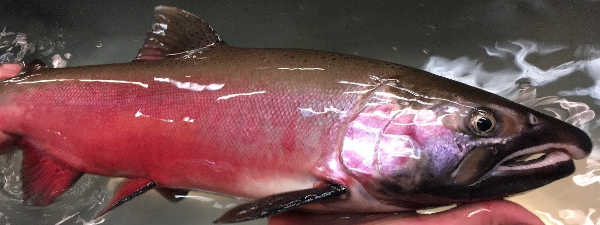
NORTHERN CALIFORNIA – Coho salmon are getting a boost from the California Department of Fish and Wildlife strategic plan to prioritize salmon restoration and habitat improvement projects in coastal watersheds from Santa Cruz to Mendocino counties.
In most of these watersheds, coho salmon are in severe decline or locally extinct due to human alterations to land and water resources.
The Priority Action Coho Team, or PACT, is designed to focus much-needed restoration to help maintain, stabilize and increase localized coho salmon populations.
The approach of the PACT initiative is to identify and implement specific short-term actions, drawing from existing state and federal coho salmon recovery plans, to bring immediate benefits.
"PACT employs six strategies emphasizing planning actions and collaboration to accelerate coho salmon recovery from Santa Cruz to Mendocino counties," said Kevin Shaffer, CDFW Branch chief. "We look forward to working with the National Oceanic and Atmospheric Administration's National Marine Fisheries Service (NOAA Fisheries) and our many partners on collaborating to recover this amazing fish."
Watersheds where PACT restoration projects are being implemented include Scott Creek in Santa Cruz County and the Russian River in Sonoma County, where a range of projects to restore and improve stream and estuarine habitat have been carried out.
These initiatives include recovery actions such as stream habitat restoration, water conservation, captive rearing and fish rescue, together with improvements to permitting, regulatory and enforcement processes.
PACT was developed jointly by CDFW and NOAA Fisheries, and is part of several initiatives to accelerate the implementation of ecological restoration and stewardship projects in California.
Complimentary efforts include the Cutting the Green Tape initiative recently launched by the California Natural Resources Agency, other state agencies and the North Coast Salmon Project.
More information about the PACT process, as well as the link to the report, can be found on the CDFW website.
- Details
- Written by: Anne McClain
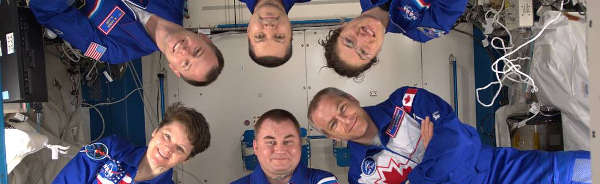
One thing astronauts have to be good at: living in confined spaces for long periods of time.
Here are some tips for all who find yourself in a similar scenario.
Nearly 20 years successfully living on the International Space Station and more than 50 flying in space did not happen by accident. NASA astronauts and psychologists have examined what human behaviors create a healthy culture for living and working remotely in small groups.
They narrowed it to five general skills and defined the associated behaviors for each skill. NASA astronauts call it “Expeditionary Behavior,” and they are part of everything we do.
When it goes well, it's called “good EB.”
Here are the five good expeditionary behavior skills.
Skill 1: Communication
Definition: Communication means to talk so you are clearly understood. To listen, and question to understand. Actively listen, pick up on non-verbal cues. Identify, discuss, then work to resolve conflict.
To practice good Communication EB, share information and feelings freely. Talk about your intentions before taking action. Use proper terminology. Discuss when your or others’ actions were not as expected. Take time to debrief after success or conflict. Listen, then restate messages to ensure they are understood. Admit when you are wrong.
Skill 2: Leadership/Followership
Definition: How well a team adapts to changed situations. A leader enhances the group's ability to execute its purpose through positive influence. A follower (aka a subordinate leader) actively contributes to the leader’s direction. Establish an environment of trust.
To practice good Leadership/Followership EB, accept responsibility. Adjust your style to your environment. Assign tasks and set goals. Lead by example. Give direction, information, feedback, coaching and encouragement. Ensure your teammates have resources. Talk when something isn’t right. Ask questions. Offer solutions, not just problems.
Skill 3: Self-Care
Definition: Self-Care means keeping track of how healthy you are on psychological and physical levels. It includes hygiene, managing your time and your stuff, getting sleep, and maintaining your mood. Through self-care, you demonstrate your ability to be proactive to stay healthy.
To practice good Self-Care EB, realistically assess your own strengths and weaknesses, and their influence on the group. Learn from mistakes. Identify personal tendencies and their influence on your success or failure. Be open about your weaknesses and feelings. Take action to mitigate your own stress or negativity (don't pass it on to the group). Be social. Seek feedback. Balance work, rest, and personal time. Be organized.
Skill 4: Team Care
Definition: Team Care is how healthy the group is on psychological, physical and logistical levels. Recognize that this can be influenced by stress, fatigue, sickness, supplies, resources, workload, etc. Nurture optimal team performance despite challenges.
To practice good Team Care EB, demonstrate patience and respect. Encourage others. Monitor your team for signs of stress or fatigue. Encourage participation in team activities. Develop positive relationships. Volunteer for the unpleasant tasks. Offer and accept help. Share credit; take the blame.
Skill 5: Group Living
Definition: Group Living skills are how people cooperate and become a team to achieve a goal. Identify and manage different opinions, cultures, perceptions, skills and personalities. Demonstrate resilience in the face of difficulty.
To practice good Group Living EB, cooperate rather than compete. Actively cultivate group culture (use each individual's culture to build the whole). Respect roles, responsibilities and workload. Take accountability; give praise freely. Then work to ensure a positive team attitude. Keep calm in conflict.
You can be successful in confinement if you are intentional about your actions and deliberate about caring for your team. When we work together, we will continue to be #EarthStrong.
This was adapted from a Twitter thread by Anne McClain.
- Details
- Written by: Elizabeth Larson
The board chambers at the Lake County Courthouse will be closed, so members of the public who want to provide real-time input during any upcoming board meeting should write the clerk to the Board of Supervisors at
Input on any board item can likewise be shared via
The meeting can be viewed at https://countyoflake.legistar.com/Calendar.aspx .
In response to Gov. Gavin Newsom’s Executive Order 33-20, the state Public Health officer recently designated a list of “essential critical infrastructure workers,” those who must continue working despite the statewide order to shelter-in-place.
The governor’s order defines essential critical infrastructure workers by sector including health care and public health, emergency services sector, food and agriculture, energy, water and wastewater, transportation and logistics, communications and information technology, critical manufacturing, hazardous materials, financial services, chemical and defense industrial base, according to a report to the board from County Administrative Officer Carol Huchingson.
The Board of Supervisors was additionally given authority to define, “Critical government workers.”
At its Tuesday meeting, the board began discussing the workers’ definitions and assigned an ad hoc committee consisting of Huchingson, Board Chair Moke Simon, Supervisor Bruno Sabatier and County Counsel Anita Grant to work with department heads toward final recommendations, which will be presented during Friday’s emergency meeting.
Huchingson said the committee’s goals were the safety of county employees and compliance with shelter in place order and as many employees as possible working productively from home.
During the COVID-19 shelter in place order, the committee concluded that the county “must be focused on critical duties that cannot wait because they are essential to the County’s continuity of operations and/or on critical infrastructure work (as defined above in the 12 specific sectors) to support disaster response efforts,” Huchingson said.
“The committee found, and department heads concurred, that general office workers who are responsible to provide support work, such as reception, clerical, and other internal and/or routine functions are not essential workers during the disaster and such workers should shelter in place,” Huchingson wrote. “The committee found that such non-essential workers, when feasible to do so, should be allowed to work remotely. For those situations where it is not feasible to work remotely, non-essential employees should be offered work as Disaster Service Workers, subject to assignment by the Lake County Emergency Operations Center.”
She said that the committee also found that department heads are best equipped to serve as decision-makers with respect to the nonessential workforce “and should be afforded flexibility to make changes in their determinations due to the fluid nature of the crisis.”
The ad hoc committee suggests directing department heads to immediately send workers they have determined to be nonessential to shelter in place during the COVID-19 disaster; that the board should authorize department heads to periodically adjust their determinations of nonessential workers due to the fluid nature of the disaster; department heads should provide remote work assignments to nonessential workers when feasible, offer disaster service work or approve such employees the use of accruals and other leave benefits while sheltering in place and not working; and direct the ad hoc committee to continue to be available to department heads to assist with resolution of issues that arise and return to the Board no later than April 14.
Once those determinations are made, the board will consider a resolution amending its previously approved Resolution No. 2020-32 relating to workplace safety, employee leave and remote work in response to COVID-19.
In other business, Health Services Director Denise Pomeroy will ask the board to consider appointing Dr. Charlie Evans as the county’s designated alternate Public Health officer and approve a professional services agreement with him.
Pomeroy said that Public Health Officer Dr. Gary Pace has been working 12-hour days, seven days a week.
“This Agreement would allow Dr. Pace to receive assistance when needed and take a day off if necessary. Dr. Pace has worked with Dr. Evans over the last several years and recommends him as Designated Alternate Health Officer,” Pomeroy wrote.
Pomeroy said the agreement states that Dr. Evans may only act as alternate health officer when mutually agreed upon in writing by her or Dr. Pace.
Evans graduated with honors from University Of California, San Francisco School of Medicine in 1982 and has more than 38 years of medical experience, including work in emergency medicine, family medicine and public health, specializing in tuberculosis control.
He has served as the communicable disease health officer at the Mendocino County Health Department for 18 years, works as an emergency medicine specialist in Ukiah and has affiliations with several regional hospitals.
Email Elizabeth Larson at