How to resolve AdBlock issue?
This story was published with the assistance of the Journalism & Women Symposium (JAWS) Health Journalism Fellowship, supported by The Commonwealth Fund.
LAKE COUNTY, Calif. – Imminent federal cuts to health care and food assistance are expected to strip benefits from thousands of Lake County residents while shifting new costs onto a county already under financial strain, local officials say.
More than half the county’s 68,000 residents rely on Medi-Cal, California’s version of Medicaid, and roughly a quarter depend on CalFresh, federally known as the Supplemental Nutrition Assistance Program, or SNAP. That makes Lake County one of California’s most federally dependent counties and particularly vulnerable to federal cuts.
The cuts stem from H.R. 1, signed by President Donald Trump in July and dubbed the “One Big Beautiful Bill.” The law mandates sweeping reductions to social services and health care funding, including an estimated $911 billion cut to Medicaid over the next decade.
California could lose up to $9.5 billion a year under the latest projections.
Statewide, H.R. 1 could strip Medi-Cal coverage from up to two million residents and put more than three million households at risk of losing some or all CalFresh benefits, according to the California Budget & Policy Center.
For Lake County, these changes translate into thousands losing benefits and a direct strain on county finances and core services.
In an April 7 advocacy letter to state legislators, the Lake County Board of Supervisors warned that H.R. 1 “fundamentally shifts fiscal responsibility for health and human services programs from the federal government to states and counties,” and they joined other county leaders statewide in requesting billions in state budget to address the gap and “prevent our safety net from crumbling.”
The coalition of counties, including Lake County, is seeking $1.9 billion in 2026-27 and $4.5 billion in 2027-28 to offset the impact of H.R. 1.
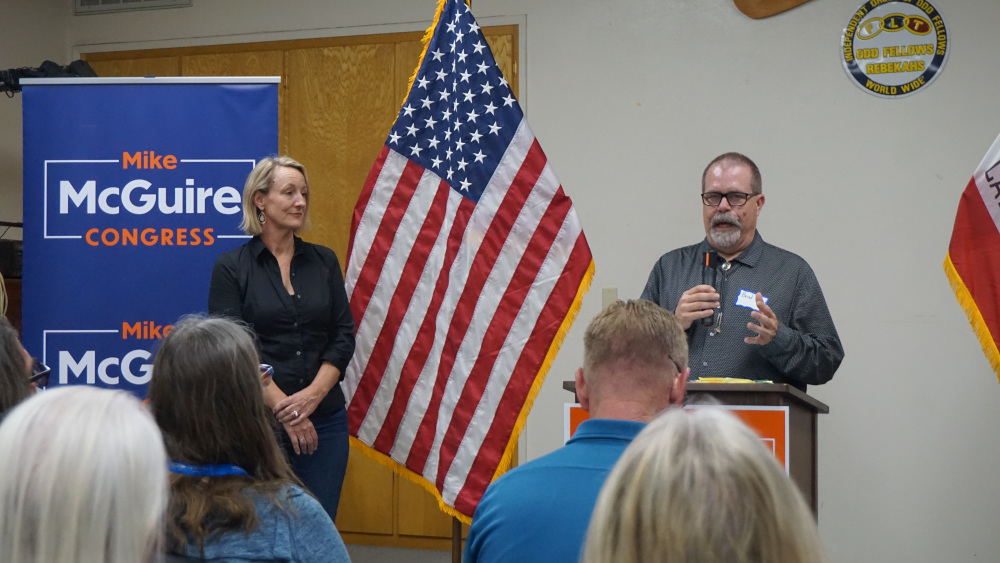
“H.R. 1 has the potential to really crush counties like ours,” Supervisor Jessica Pyska said at Sen. Mike McGuire’s town hall last Wednesday in Lakeport. “Most of the people in Lake County live very near – below or just above – the poverty line; we don't have extra money in our pocket.”
“This is a financial impact that we cannot shoulder at this point in time,” Supervisor Bruno Sabatier said after a recent board presentation on the funding cuts.
Thousands in Lake County could lose benefits
H.R. 1 is expected to result in 6% to 8% of Lake County recipients losing Medi-Cal and 1.5% to 2% losing CalFresh benefits, according to Social Services Director Rachael Dillman Parsons, who presented an update on the situation to the Board of Supervisors on March 24.
That amounts to an estimated 2,000 to 2,500 residents losing health coverage and another 1,000 to 1,200 losing food assistance. CalFresh losses are expected to begin June 1 – less than two months away.
Cuts to food assistance would not only deepen the county’s long-standing food insecurity, but could also, according to Dillman Parsons, result in a loss of about $3 million per year to the local economy as recipients fall off the program.
“Folks take their benefits to local grocery stores – that's how a lot of local grocery stores are able to stay in business,” said Sen. McGuire at his town hall last week in Lakeport, highlighting the economic importance of federal food assistance to rural communities. “This is not just putting food on the table; it's about making a stronger economy.”
“As the state works through the budget, we need them to understand how frail our systems are and how vulnerable our populations are,” Pyska said at Sen. McGuire’s town hall last week.
H.R. 1 impact rolling out in stages
The legislation’s effects will roll out in stages, delaying its full impact until after the midterm elections.
Reduction to Medi-Cal access has already begun, with the reinstatement of property limits and a freeze on new enrollment for undocumented adults.
Additional changes are set to follow: new CalFresh work requirements beginning June 1; funding cuts to federally qualified health centers, rural health clinics and immigrant dental coverage starting July 1; and a reduced federal match for emergency Medi-Cal, with costs shifting to the state beginning Oct. 1.
Also beginning Oct. 1, the Children's Health Insurance Program will be eliminated for many immigrants, “including certain legal immigrants,” Dillman Parsons said, noting that more than 8% of Lake County residents are immigrants.
Further Medi-Cal work requirements and more frequent eligibility checks are set to begin in 2027, adding new administrative demands.
Officials and advocates say the staggered timeline delays the most significant impacts until after the 2026 midterm elections. At his town hall, McGuire called the Trump administration’s timing approach “sneaky.”
In fact, the effects of H.R. 1 cuts had already surfaced locally two months after passage of the law.
In October, Adventist Health Clear Lake abruptly announced withdrawing a $50 million proposal for a new clinic citing projected funding losses and “uncertainty surrounding future Medicaid funding.”
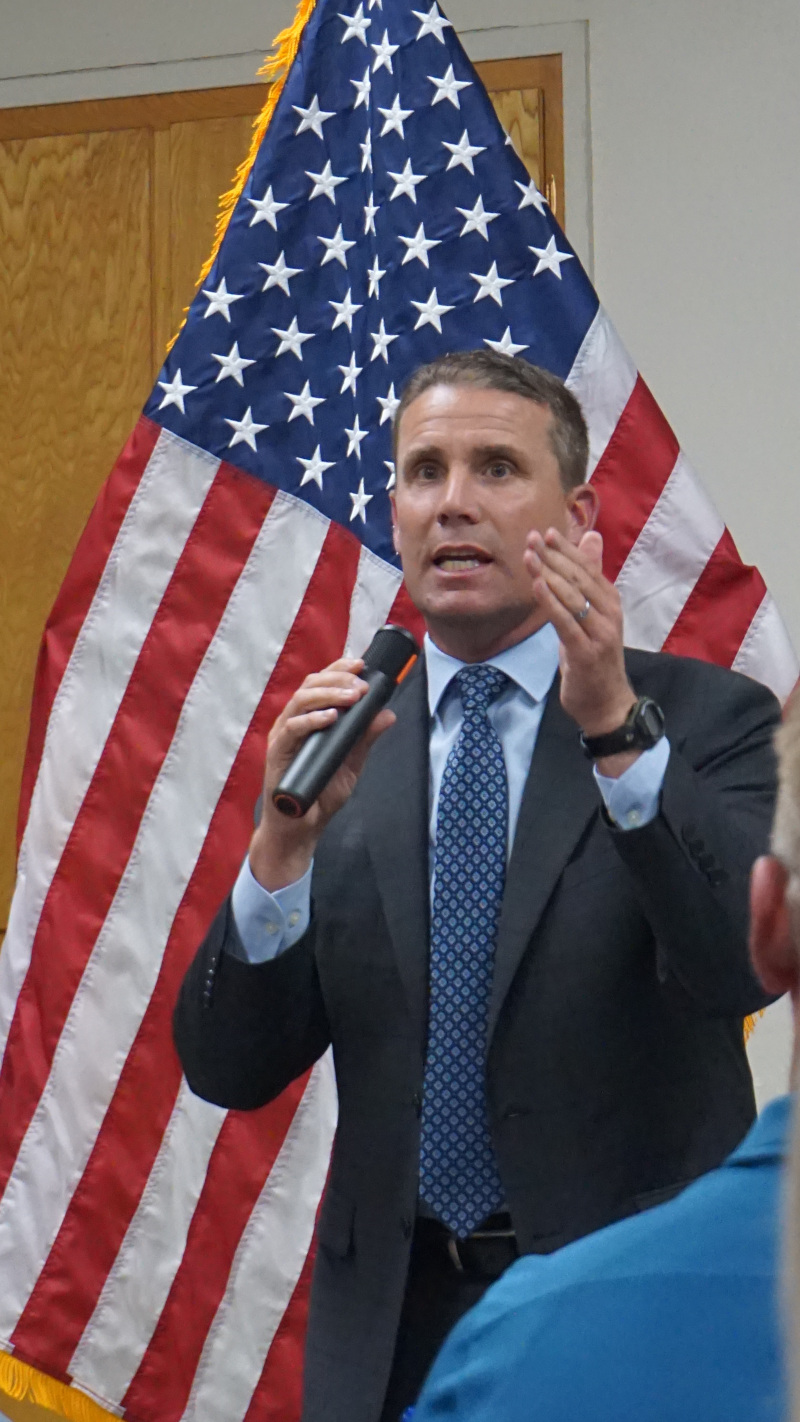
Rep. Mike Thompson said the loss of the project demonstrated "very harmful consequences of the reckless Medicaid cuts" in a statement.
Even before H.R. 1 was signed into law, Lake County’s two major hospitals – Sutter Lakeside and Adventist Health Clear Lake – had been identified by Sen. Edward Markey as at "disproportionate risk of closure, conversion, or service reductions," as a result of the proposed federal cuts.
Sutter Lakeside and Adventist were included alongside 336 other rural hospitals nationwide on a list Markey released in June.
County social services braces for budget, operational strain
As residents lose benefits, the county’s Social Services Department – which administers both Medi-Cal and CalFresh – is also bracing for a significant increase in workload alongside worsening financial conditions.
The governor’s January budget proposal shifts additional costs to counties, including requiring counties to cover 20% of CalFresh administrative costs starting Oct. 1.
Dillman Parsons warned that change alone could deplete the department’s reserves within two years.
“It is a big shift in funding cost,” she said, adding that the county is working with state and national partners to try to prevent those costs from being passed down locally.
At the same time, added federal administrative requirements are expected to significantly increase workload.
Beginning June 1, new federal work requirements for “able-bodied adults without dependents” are expected to add additional administrative steps for CalFresh eligibility verification. Beginning 2027, many adult Medi-Cal recipients will be subject to new work requirements and required to renew coverage every six months.
Dillman Parsons raised concerns about enforcing employment requirements during a time of “dipping” job growth, noting the changes will also substantially increase staff workload without providing the funding to manage it.
“We’re looking at at least a doubling of the workload and staff without any additional administrative funding,” she said.
Dillman Parsons said much of the anticipated loss of coverage is “just due to administrative bureaucracy” of proving and recertifying. There are also “very real fiscal penalties” on delayed processes.
“We will lose funding if we don’t process on time,” she said.
Beginning October 2027, H.R. 1 will also require states to pay a portion of CalFresh benefits. While it is not yet clear how those costs will be divided, “It’s entirely possible the state would want to pass a portion of this on to counties,” Dillman Parsons said.
Measures the department has taken to address the fiscal and workload impact include freezing nonemergency overtime, which saves costs but delays work. The department is also researching artificial intelligence to assist with cases.
In addition, “We are reducing the number of facilities,” Dillman Parsons said, adding that they were going to colocate services at separate facilities into one at Anderson Ranch, starting April 1.
A hiring freeze is also under consideration, “if it really comes push to shove,” she said. “But there is more work to do, so I don’t think that is a great strategy.”
Other critical programs at risk, including disaster response
Lake County’s situation is further complicated by federal actions outside H.R. 1, Dillman Parsons said, including a proposed freeze of child care funding that is currently tied up in litigation.
Federal judges have temporarily blocked the Trump administration’s attempt to freeze more than $10 billion in child care and family program funding in two separate rulings in February and late March.
“Hopefully the litigation will go our way,” Dillman Parsons said.
She also pointed to disaster response funding as a concern, noting that the county often fronts costs for emergency response before being reimbursed by state or federal agencies – a process that can take years.
As reserves decline, Dillman Parsons warned, “That’s something that we may not be able to do in the future.”
Following the recent 2.9-million-gallon Robin Lane sewage spill, the Social Services Department responded by purchasing and installing 1,500-gallon water tanks for households with well water contamination concerns before the formal incident command response was in place.
Broader risks to local systems
The H.R. 1 cuts come as Lake County is grappling with instability across key public services.
The Board of Supervisors terminated its Public Health officer last week, just two weeks after dismissing its Health Services director, pushing the county’s public health work under interim leadership at the moment.
In March, Behavioral Health announced the closure of two mental health wellness centers – including one serving local tribes – citing “budgetary changes” resulting from state legislation.
The county is already facing financial strains in major departments, including Behavioral Health which is on a $2 million loan from county funds and the Community Development Department, which is operating in deficit.
Lake County also faces persistent food insecurity. The federal SNAP freeze during last year’s government shutdown worsened the crisis, prompting the county to allocate $140,000 to support local food distribution over five weeks. Food banks reported “never-before-seen lengths” of food lines.
As fiscal responsibilities for critical services shift downward, the mounting local pressures echo warnings issued more than a year ago.
In February 2025, Rep. Thompson along with local health care leaders cautioned that proposed federal cuts would “devastate” Lake County’s safety net.
For the bulk of benefit recipients in Lake County, “This is truly a matter of life and death,” Behavioral Health Director Elise Jones said at that time. “Protecting these programs protects people.”
Lingzi Chen is a staff reporter at Lake County News and a 2024-2026 California Local News Fellow. Email her at lchen@lakeconews.com.