How to resolve AdBlock issue?
Dr. Glen Holstein
This is a tale of how a rare wildflower, alkali milkvetch, brought me to Tuleyome and still inspires me.
I came to UC Davis for grad school with a passion for saving nature honed by seeing sprawl destroy so much of it in southern California. Soon that got me on TV news for the successful campaign to save Bannon Island at the Sacramento-American River confluence just north of Discovery Park from becoming a marina.
Then I worked with then UCD Chancellor James Meyer to create Stebbins Cold Canyon Natural Reserve, with then-California Resources Secretary Huey Johnson to create the Cosumnes River Preserve, with Nature Conservancy leader Steve McCormick to make Carrizo Plain the first National Monument dedicated to wildflowers, and with Eva Butler to create the Mather vernal pool preserve and its Sacramento Splash environmental education program.
These efforts and others brought me the Environmental Council of Sacramento Environmentalist of the Year Award in 2013 and the Sierra Club Mother Lode Chapter Conservationist of the Year Award in 2018.
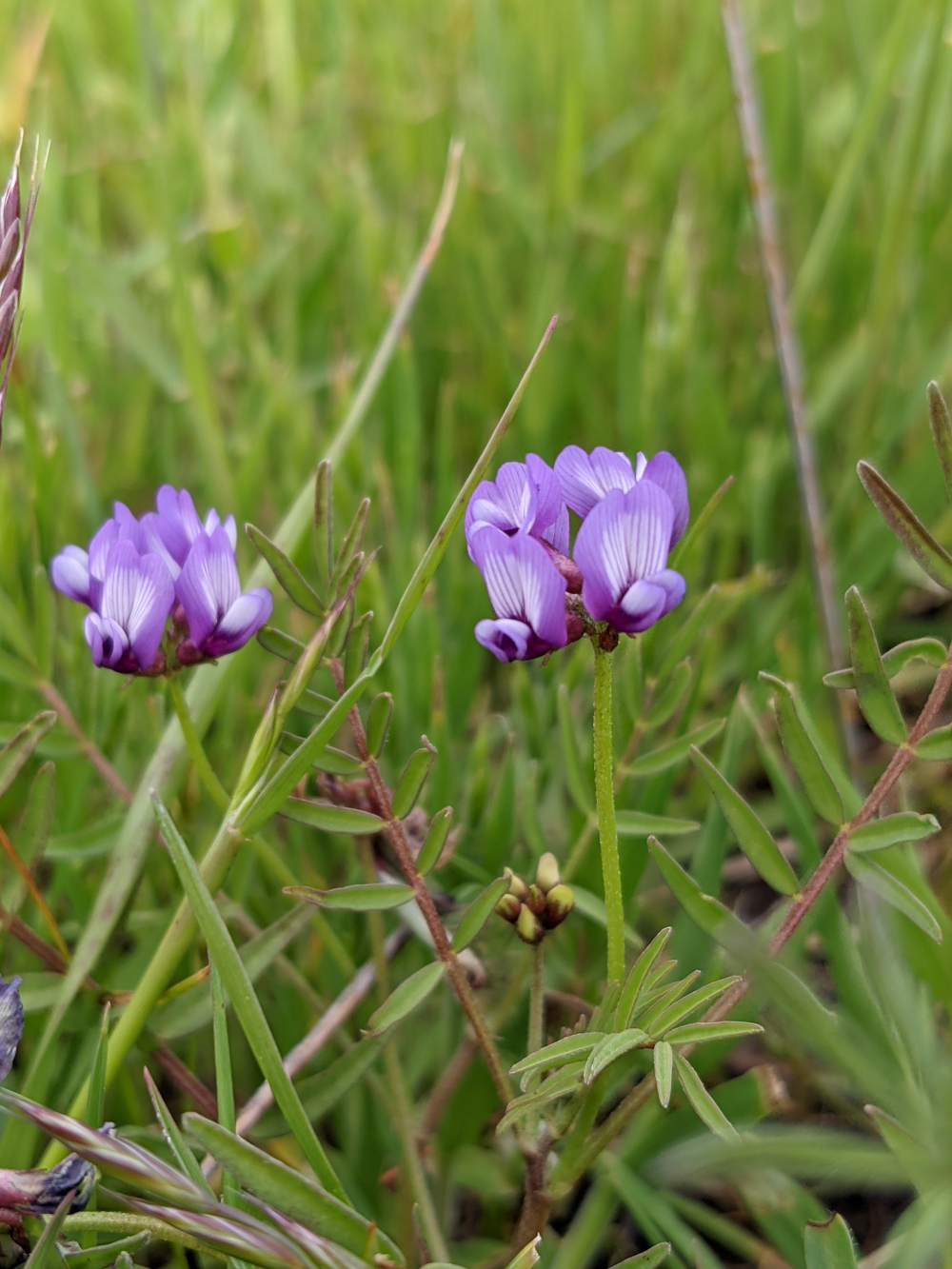
But there were heartbreaks as well. Field botanist Marianne Showers mapped an area in central Yolo County as dominated by alkali milkvetch (Astragalus tener var. tener) that likely contained many thousands of individuals. It is a beautiful small wildflower endemic to California, meaning it only occurs there, and even in California it is endemic only to alkaline vernal pools mostly in the urban corridor between Sacramento and the Bay Area, a difficult place for its survival.
Consequently, while not officially endangered, it is in the same maximum agency endangerment class as plants that are.
The alkali milkvetch population Showers found was the largest then known in Yolo County and possibly the entire world, but unfortunately it was destroyed by an infrastructure project.
Losing so many rare wildflowers brought sadness but also analysis of why it happened. An important factor was that many of my environmental allies were across the Sacramento River. More were needed here in Yolo County.
Then I heard former Tuleyome leader Bob Schneider talk inspiringly on the need to make part of Cache Creek a wild and scenic river. It was such a good idea that we communicated with then-Gov. Arnold Schwarzenegger about it, and he soon surprised many by making much of the creek officially wild and scenic.
Bob invited me on to the Tuleyome Board and I was soon working with it to create Berryessa Snow Mountain National Monument in 2015 and add the important Molok Luyuk missing piece in 2024.
Eventually I got a call that alkali milkvetch was present on Woodland city land proposed for a shopping mall. There were only dozens there instead of the many lost that Showers mapped, but there was more palmate bird’s beak (Chloropyron palmatum), a federally listed endangered plant.
Although it took some persuasion and time, Tuleyome made protecting this place its first conservation campaign in the Central Valley.
Finally, on May 17, 2025, at the new Woodland Regional Park and Preserve’s grand opening speakers like Yolo Habitat Conservancy founder Petrea Marchand, Tuleyome President Lyndsay Dawkins of Tuleyome, Yolo Supervisors Mary Sandy and Lucas Frerichs, and State Senator Chris Cabaldon as well as many others all acknowledged the victory for conservation it represented.
Despite such victories for nature, I still felt sadness for the thousands of lost alkali milkvetch that once brought me to Tuleyome.
Then, like a miracle, an environmental impact report, or EIR, prepared for a group considering building houses at a site just north of Davis found a previously unknown population of over a thousand alkali milkvetch.
But the EIR also found that toxic groundwater from an adjacent former dump was immediately below the site’s surface.
Since groundwater surfaces are not fixed but sink in withdrawal zones and rise in recharge zones that irrigating lawns and gardens of planned new homes would create, the potential for toxics to reach the surface is concerning, especially since disturbance during their construction could increase underlying soil porosity.
It is unlikely the environmentally respected group that ordered the EIR relished what it found. Fortunately, however, they have an alternative to houses.
The May 17 Woodland Park opening could be a model for the site, which even has a large newly-found population of the federally listed endangered animal vernal pool tadpole shrimp (Lepidurus packardi) as well as outstanding habitat for many threatened species like Swainson’s Hawk (Buteo swainsoni).
It is not too much to imagine a day when an event honors those who ordered the EIR and then became environmental heroes by responding smartly and bravely to its unexpected findings by helping to create a nature park for the people of Davis much like the one now so loved by the people of Woodland.
I hope you enjoyed this brief tale of my work conserving nature. Its experiences and views are solely mine rather than those of any organization.
Tuleyome is a 501 (c)(3) nonprofit conservation organization based in Woodland, California. For more information go to www.tuleyome.org. Dr. Glen Holstein is a longtime Tuleyome volunteer board member. His local expertise and experience in a wide array of topics in our region have earned him several prestigious awards.