How to resolve AdBlock issue?
Refresh this page
Lake County News,California
  • Home
    • Registration Form
  • News
    • Education
    • Veterans
    • Community
      • Obituaries
      • Letters
      • Commentary
    • Police Logs
    • Business
    • Recreation
    • Health
    • Religion
    • Legals
    • Arts & Life
    • Regional
  • Calendar
  • Contact us
    • FAQs
    • Phones, E-Mail
    • Subscribe
  • Advertise Here
  • Login
How to resolve AdBlock issue?
Refresh this page

News

US solar manufacturers lag skyrocketing market demand


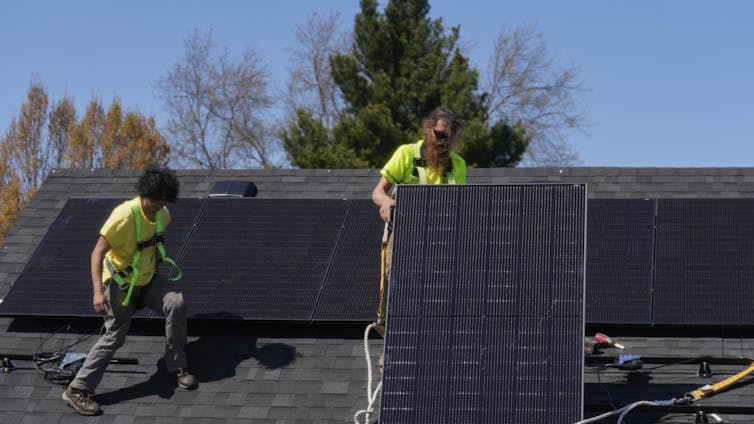
Americans continue to want solar energy. AP Photo/Sue Ogrocki

U.S. consumer demand for renewable energy continues to grow, with more solar panel capacity installed in 2024 than in 2023, which saw more than in 2022. But U.S. trade policy is in flux, and high tariffs have been imposed on imported solar panels, which may cause shortages.

I am a scholar who studies the Sun, as well as an entrepreneur who is working to harness its power here on Earth by creating new designs for generating solar electricity. As part of that effort, I’ve studied market trends and manufacturing capabilities in the U.S. and abroad. Right now, U.S. manufacturers do not produce enough solar panels to meet the nation’s demand, but industry investments and federal tax incentives have been making progress, though recent federal moves have created uncertainty.

In 2024, U.S. installers put up enough solar panels to generate 50 gigawatts of electricity – enough to power New York City for a year.

U.S. manufacturers made only a small fraction of that – 4.2 GW of solar modules in the first half of 2024. That was a big boost, though – a 75% increase compared with the same period in 2023. And the prices were roughly three times the cost of imports.

A look at recent imports

In 2024, the U.S. imported far more panels than the country needed, suggesting developers may be stockpiling panels for future projects.

Most of those imported panels were made in Asia, particularly Malaysia, Vietnam and Thailand. In fact, nearly all of the U.S.-made panels used at least some components from overseas. China currently makes about 97% of the world’s supply of photovoltaic wafers, which are building blocks of solar panels.

The effects of proposed U.S. trade policies on the solar industry remain unclear. Through 2024, manufacturing continued a yearslong ramp-up to take advantage of government policies favoring domestic manufacturing. And imported panels seem slated to suffer from ever-increasing tariffs, which drive up costs.

Domestic production rises

Since 2010, U.S. solar panel production has increased about eightfold. But U.S.-made panels are more expensive than imported alternatives. In 2024, U.S.-made panels typically cost 31 cents per watt, but imported panels, even including tariffs that existed before President Donald Trump’s second term, cost about one-third of that: 11 cents per watt.

But domestic manufacturers are bringing costs down by ramping up production while relying on the government to maintain or increase tariffs on imports, which may make U.S. panels more competitive domestically in the future.

Reliance on overseas sources

Despite that increase in domestic production, U.S. demand for solar panels has grown even faster. To meet demand, the U.S. imports a substantial portion of its solar photovoltaic modules.

Tariffs, including a 30% tariff on solar cells and solar panels starting in 2018, aimed to boost domestic manufacturing.

But those tariffs and falling global prices made solar installations more costly in the U.S. than in the rest of the world. The average global cost of installed solar systems dropped from $1.15 per watt in 2012 to $0.72 per watt in 2016, nearly half that of U.S. installations.

The 2018 tariffs, as well as earlier rounds in 2012 and 2014, have shifted the source of U.S. imports of solar panels – from China and Taiwan to Malaysia and South Korea. Manufacturers are also building solar panels in Singapore and Germany to maintain access to the U.S. market. And Chinese companies are even investing in U.S. solar manufacturers to take advantage of federal incentives and avoid tariffs.

New tariffs emerge

Trump’s proposal for new tariffs on foreign-made solar goods, including panels and components, particularly target Chinese-owned companies in Southeast Asia.

They could include a potential 375% tariff on Thai products – nearly quadrupling prices – and a 3,500% tariff on products from Cambodia.

In contrast, U.S.-made solar panels will be cheaper. But a reduced supply of solar panels will raise prices even of domestic-made panels, at least until U.S. manufacturing can catch up with the demand. Some developers have begun to delay or cancel solar installations to address rising costs.

Domestic investment

Due in large part to the Biden administration’s Inflation Reduction Act, enacted in 2022, the U.S. solar panel industry has seen significant investments.

Since the law’s enactment, more than 95 GW of manufacturing capability have been added across the solar supply chain in the U.S., including new facilities that in a year can construct enough solar panels to produce nearly 42 GW, beyond existing manufacturing levels. This growth in manufacturing capabilities is largely located in Texas and Georgia.

Still, the new administration’s shifting priorities and trade policies make the landscape uncertain. Before Trump began discussing various solar-related trade policies, the industry projected it would install an average of 45 GW of solar panels every year for the next decade.The Conversation

Mojtaba Akhavan-Tafti, Associate Research Scientist, University of Michigan

This article is republished from The Conversation under a Creative Commons license. Read the original article.

Lake County Animal Care and Control to take part in free adoption event June 7

A large variety of dogs and cats will be available for adoption during Lake County Animal Care and Control’s free adoption event on Saturday, June 7, 2025. Courtesy photos.


LAKE COUNTY, Calif. — An upcoming free adoption event will offer the chance to empty out the shelter at Lake County Animal Care and Control.

Animal Care and Control announced that it is participating in the second annual free adoption event put on by the ASPCA and San Francisco SPCA.

The event will take place from 11 a.m. to 3 p.m. Saturday, June 7, at the shelter, 4949 Helbush Drive in Lakeport.

The adoptions will include spay/neuter surgeries, microchips, rabies vaccinations, heartworm testing and licensing.

Shelter staff invites the public to come and find a new companion to add to their family as they attempt to empty the shelter of the many dogs and cats waiting there.

To get a preview of the available pets, visit the shelter’s website.

For more information, call the shelter at 707-263-0278.

Email Elizabeth Larson at This email address is being protected from spambots. You need JavaScript enabled to view it.. Follow her on Twitter, @ERLarson, and on Bluesky, @erlarson.bsky.social. Find Lake County News on the following platforms: Facebook, @LakeCoNews; X, @LakeCoNews; Threads, @lakeconews, and on Bluesky, @lakeconews.bsky.social. 

Caltrans District 1 ceremony honors fallen highway workers

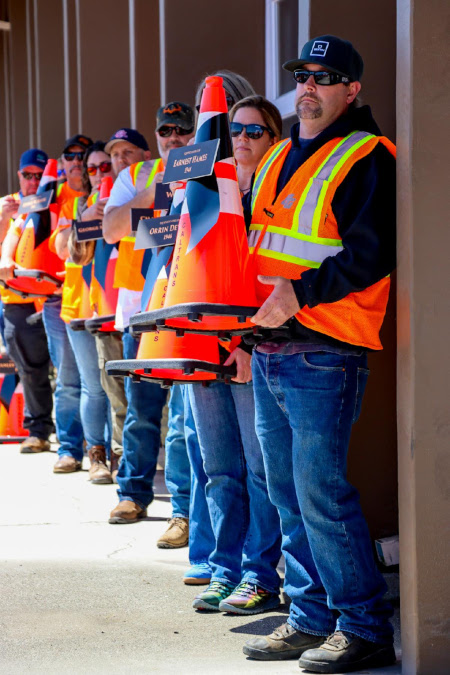
Caltrans Equipment Operator Jory Fry holds a cone in honor of Earnest Hames, a Maintenance worker who died in the line of duty on Aug. 9, 1944. Courtesy photo.


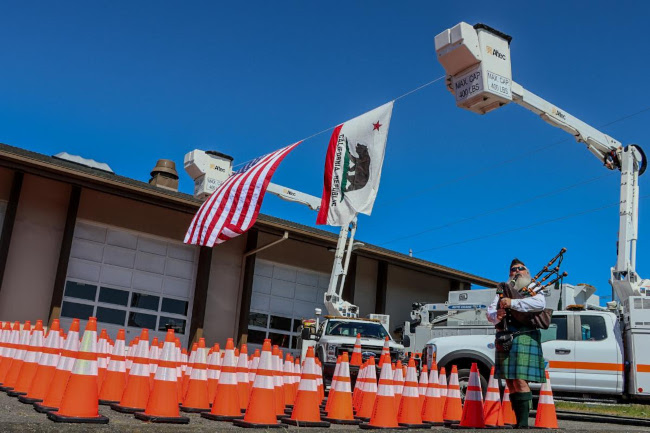
NORTH COAST, Calif. — At the annual Workers’ Memorial in Eureka on Wednesday, Caltrans District 1 staff and local officials gathered to honor highway workers who lost their lives in the line of duty. 

Caltrans District 1 serves approximately 940 miles of coastal and inland state highways in Humboldt, Del Norte, Lake and Mendocino counties.

With work zone fatalities and serious injuries on the rise in California since 2010, the event underscored the critical need for increased safety awareness among workers and motorists alike. Workers put their lives at risk every day to ensure roads and bridges remain safe for the traveling public.

“It’s always a solemn reminder when we gather to honor those who have made the ultimate sacrifice to protect others on state highways,” said Caltrans District 1 Director Matt Brady. “Safety has always been, and will continue to be, our top priority. This ceremony enables us to reinforce our focus on safety and providing the public with vital information on potential hazards.”

Motorists are reminded to slow down, stay alert, avoid distractions, and move over when they see amber flashing lights — simple actions that help protect highway workers. 

Since 1921, 194 Caltrans employees statewide have lost their lives while working on California's state highway system.

A moment of silence was observed during the ceremony, followed by a tribute in which Caltrans staff presented 17 orange cones as District 1 Maintenance Manager Paul Johnson read the names of the fallen workers from the district.

Alongside Brady, featured speakers included Acting Division Chief of Maintenance Bobi Hettick, Deputy District 1 Director Tom Fitzgerald, North Region Construction Manager Sebastian Cohen, Humboldt County Second District Supervisor Michelle Bushnell and Ukiah Area California Highway Patrol Commander Lt. Gabe Parker.

Roddy Ross performs Amazing Grace at the annual Workers' Memorial in Eureka, California, on Wednesday, May 21, 2025. Courtesy photo.

Research: Yes, social media might be making kids depressed

As rates of depression and suicide in youth spike, experts are asking whether social media makes kids depressed — or whether depressed kids simply spend more time on social media?

A new study provides answers. 

Researchers at UC San Francisco found that as preteens used more social media, their depressive symptoms increased. 

Yet the reverse wasn’t true — a rise in depressive symptoms didn’t predict a later increase in social media use.

On average, kids’ social media use rose from seven to 73 minutes per day over the three years of the study and their depressive symptoms went up 35%. 

The study, which was supported by grants from the National Institutes of Health, or NIH, was published in JAMA Network Open.

The research team, led by Jason Nagata, MD, MSc, associate professor in UCSF’s Department of Pediatrics, examined data following nearly 12,000 kids aged 9 to 10 years and then three years later at 12 to 13. 

The study is among the first to use within-person longitudinal data, meaning researchers could track changes over time in each child to accurately assess the link between social media and depression.

“There has been ongoing debate about whether social media contributes to depression or simply reflects underlying depressive symptoms,” said Nagata. “These findings provide evidence that social media may be contributing to the development of depressive symptoms.”

While it’s unclear why social media increases depressive symptoms, prior research points to risks such as cyberbullying and disrupted sleep. 

In fact, Nagata and team just published a separate study in The Lancet Regional Health - Americas looking at the same cohort of participants, focusing instead on the effects of cyberbullying.

One year after reporting being cyberbullied, 11- to 12- year-olds were:

• 2.62 times more likely to report suicidal thoughts or a suicide attempt.
• 2.31 times more likely to experiment with a substance (4.65 times more likely with marijuana, 3.37 with nicotine, and 1.92 with alcohol).

The study found kids aged 11 to 12 years who were cyberbullied were 2.62 times more likely to report suicidal ideation or a suicide attempt one year later. Additionally, those kids were also 2.31 times more likely to experiment with a substance (4.65 times more likely with marijuana, 3.37 with nicotine, and 1.92 with alcohol) in the following year.

Increasingly, the youngest generations find themselves facing a catch-22, with growing evidence that social media is associated with depressive symptoms and risky behavior yet also a primary area for them to connect and communicate with friends.

To address this reality, the American Academy of Pediatrics suggests using the tools in its Family Media Plan to create healthier digital habits for both kids and parents.

“As a father of two young kids, I know that simply telling children to ‘get off your phone’ doesn’t really work,” said Nagata. “Parents can lead by example with open, nonjudgmental conversations about screen use. Setting screen-free times for the whole family, such as during meals or before bed, can help build healthier digital habits for everyone, including adults.”

Authors: UCSF authors are Jason M. Nagata, M.D., Christopher D. Otmar, Ph.D., Joan Shim, M.P.H., Priyadharshini Balasubramanian, M.P.H., Chloe M. Cheng, M.D., Elizabeth J. Li, M.P.H., Abubakr A.A. Al-Shoaibi, Ph.D., and Iris Y. Shao, Ph.D.  For all authors, see the paper.

Funding: This work was supported by the National Institutes of Health (K08HL159350 and R01MH135492) and the Doris Duke Charitable Foundation (2022056). For all funding, see the paper.

Jared Marsh writes for UC San Francisco.

Making eye contact and small talk with strangers is more than just being polite − the social benefits of psychological generosity


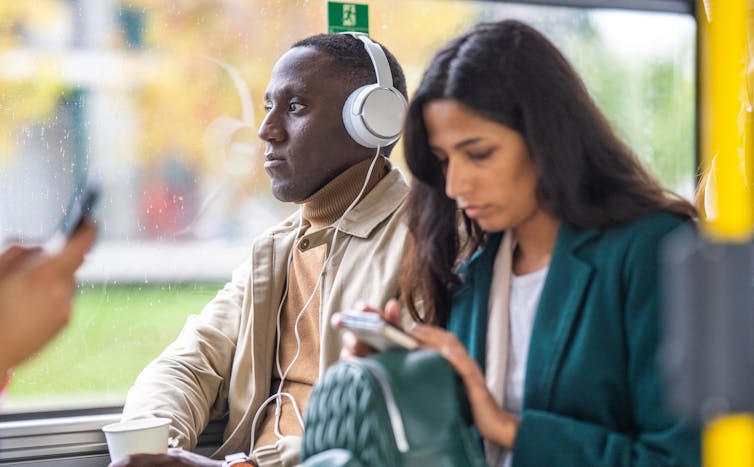
Eyes down, headphones on – what message are you sending? vm/E+ via Getty Images

How much do you engage with others when you’re out in public? Lots of people don’t actually engage with others much at all. Think of commuters on public transportation staring down at their phones with earbuds firmly in place.

As a professor of social psychology, I see similar trends on my university campus, where students often put on their headphones and start checking their phones before leaving the lecture hall on the way to their next class.

Curating daily experiences in these ways may appeal to your personal interests, but it also limits opportunities for social connection. Humans are social beings: We desire to feel connected to others, and even connecting with strangers can potentially boost our mood.

Though recent technological advances afford greater means for connection than at any other moment in human history, many people still feel isolated and disconnected. Indeed, loneliness in the American population has reached epidemic levels, and Americans’ trust in each other has reached a historic low.

At the same time, our attention is increasingly being pulled in varied directions within a highly saturated information environment, now commonly known as the “attention economy.”

It is perhaps not surprising, then, that so many Americans are experiencing a crisis of social connection. Research in social psychology helps to explain how the small behaviors and choices we make as individuals affect our experiences with others in public settings.

Where you focus your attention

One factor shaping people’s experiences in public settings concerns where they focus their attention. Since there is more information out in the world than anyone could ever realistically take in, people are driven to conserve their limited mental resources for those things that seem most crucial to navigating the world successfully. What this means is that every person’s attention is finite and selective: By attending to certain bits of information, you necessarily tune out others, whether you’re aware of doing so or not.

More often than not, the information you deem worthy of attention also tends to be self-relevant. That is, people are more likely to engage with information that piques their interest or relates to them in some way, whereas they tend to ignore information that seems unrelated or irrelevant to their existence.

These ingrained tendencies might make logical sense from an evolutionary perspective, but when applied to everyday social interaction, they suggest that people will limit their attention to and regard for other people unless they see others as somehow connected to them or relevant to their lives.

One unfortunate consequence is that a person may end up treating interactions with other people as transactions, with a primary focus on getting one’s own needs met, or one’s own questions answered. A very different approach would involve seeing interactions with others as opportunities for social connection; being willing to expend some additional mental energy to listen to others’ experiences and exchange views on topics of shared interest can serve as a foundation for building social relationships.

young woman walks past a young man who is staring down at his phone
It can feel alienating to be surrounded by people who have basically hung out a ‘do not disturb’ sign. Drazen/E+ via Getty Images

How others interpret your actions

Also, by focusing so much attention on their own individual interests, people may inadvertently signal disinterest to others in their social environments.

As an example, imagine how it would feel to be on the receiving end of those daily commuting rituals. You find yourself surrounded by people whose ears are closed off, whose eyes are down and whose attention is elsewhere – and you might start to feel like no one really cares whether you exist or not.

As social creatures, it’s natural for human beings to want to be seen and acknowledged by other people. Small gestures such as eye contact or a smile, even from a stranger, can foster feelings of connection by signaling that our existence matters. Instead, when these signals are absent, a person may come to feel like they don’t matter, or that they’re not worthy of others’ attention.

How to foster connection in public spaces

For all these reasons, it may prove valuable to reflect on how you use your limited mental resources, as a way to be more mindful and purposeful about what and who garner your attention. As I encourage my students to do, people can choose to engage in what I refer to as psychological generosity: You can intentionally redirect some of your attention toward the other people around you and expend mental resources beyond what is absolutely necessary to navigate the social world.

Engaging in psychological generosity doesn’t need to be a heavy lift, nor does it call for any grand gestures. But it will probably take a little more effort beyond the bare minimum it typically takes to get by. In other words, it will likely involve moving from being merely transactional with other people to becoming more relational while navigating interactions with them.

A few simple examples of psychological generosity might include actions such as:

  • Tuning in by turning off devices. Rather than default to focusing attention on your phone, try turning off its volume or setting it to airplane mode. See if you notice any changes in how you engage with other people in your immediate environment.

  • Making eye contact and small talk. As historian Timothy Snyder writes, eye contact and small talk are “not just polite” but constitute “part of being a responsible member of society.”

  • Smiling and greeting someone you don’t know. Take the principle of “innocent until proven guilty” to the realm of social relations, by showing your willingness to welcome other people rather than displaying disinterest and avoidance. Such simple acts may help to foster feelings of belonging and build a sense of community with others.

Woman taps her bus pass and smiles at the driver
Acknowledging another human with a smile, even when using an automated system, can help them feel seen and valued. izusek/E+ via Getty Images

Among the most cynical, examples like these may initially be written off as reflecting pleas to practice the random acts of kindness often trumpeted on bumper stickers. Yet acts like these are far from random – they require intention and redirection of your attention toward action, like any new habit you may wish to cultivate.

Others might wonder whether potential benefits to society are worth the individual cost, given that attention and effort are limited resources. But, ultimately, our well-being as individuals and the health of our communities grow from social connection.

Practicing acts of psychological generosity, then, can provide you with opportunities to benefit from social connection, at the same time as these acts can pay dividends to other people and to the social fabric of your community.The Conversation

Linda R. Tropp, Professor of Social Psychology, UMass Amherst

This article is republished from The Conversation under a Creative Commons license. Read the original article.
New bench honors work of Mike and Kim Riley at Highland Springs Reservoir

mikeandkimriley.jpg
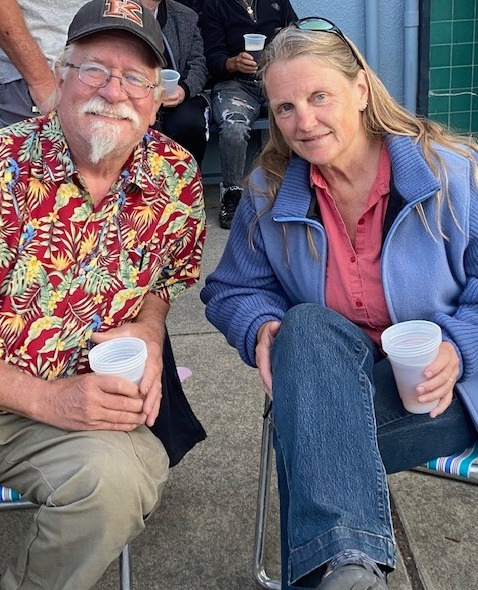
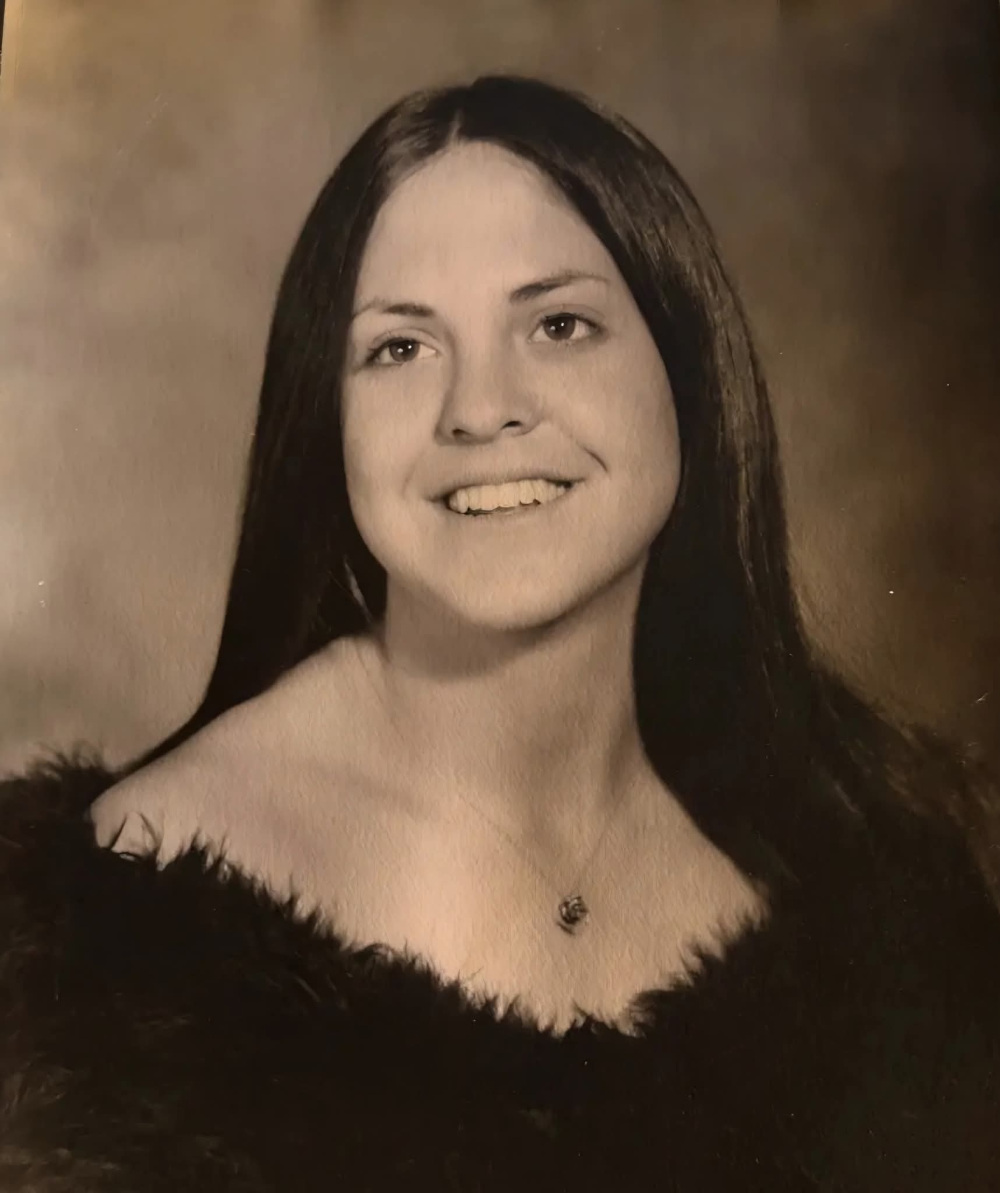
Mike and Kim Riley. Courtesy photo.

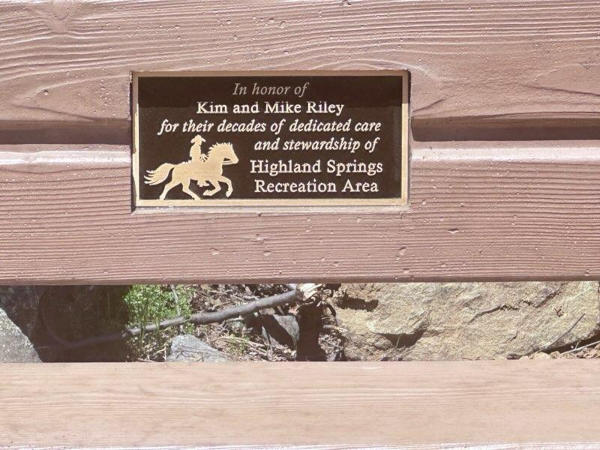
LAKE COUNTY, Calif. — A memorial bench honoring Lake County's Kim and Mike Riley was installed recently at the lower end of Highland Springs Reservoir. 

The fixture commemorates the Rileys' some 20-plus years of volunteer labor in the creation and maintenance of trails in what is now known as Highland Springs Recreation Area.

Mike Riley died unexpectedly in April 2023 at the age of 64. His widow and lifetime partner, Kim Riley, mourns his loss enormously and reflected recently on Mike's contributions to Lake County's premier hiking, biking and equestrian recreation area.

"He was the worker bee," she said. "And he was always passionate about community service." 

Kim explained that he believed strongly in public access to nature.

The Rileys' work began when Lake County's water resources director at the time, Bob Lossius, said his department "didn't have funding to make their vision of the trail system" a reality, according to Kim. 

The creation of trails in the Highland Springs Recreation Area fell to a community of volunteers including the Rileys and a team of many others, she said. 

Working in coordination with county officials, the Rileys and their team, spearheaded by Kelseyville's Karen Sullivan and aided by the late Quincy Andrus, set out to turn existing features such as firebreaks and bulldozer tracks into recreational trails for humans. 


rileybench2.jpg
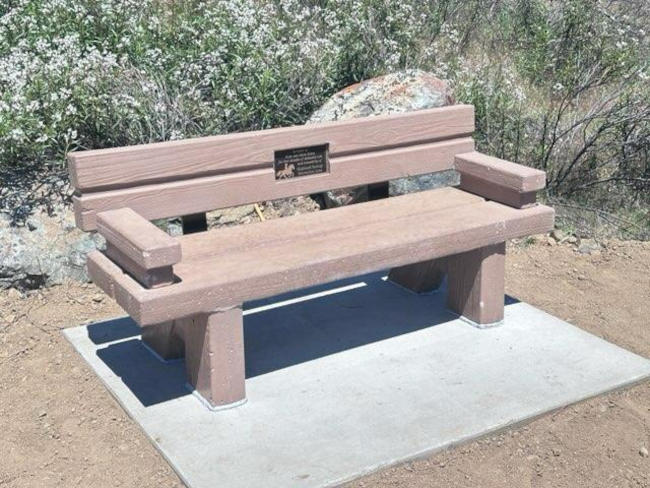
The new memorial bench honoring Lake County's Kim and Mike Riley. Courtesy photo.


They also restored grown-over trails created by Ann and Wayne Dunnebeck.

“Mike would come home (from his job with PG&E) and we'd go to work,” Kim said. "We'd grab the horses ... he had a chainsaw in his backpack, I had loppers and a handsaw ... we'd ride out and tie up for a few hours." 

The couple cleared and maintained trails throughout the recreation area.

Kim Riley said she loves the 3,200-acre county-owned site for the diversity of its ecosystems. She said it hosts forested areas, open range, shaded areas and several watersheds that feed into Clear Lake.

The Rileys, who made Lake County their home 40 years ago, lived just south of Kelseyville most of that time. They both retired about 12 years ago. They have two children, Sean Riley and Katie Lecoq.

The memorial bench was designed and purchased using discretionary funds allotted to District 5 Supervisor Jessica Pyska. 

"The Rileys define 'good citizen' and their contribution to the Highland Springs Recreation Area is priceless," Pyska said. "As a community, we have been very fortunate to have them walk among us."

She added, “The sudden tragic loss of Mike was devastating. I like the idea of having a place to sit and look over the water to think about the enormity of his gift."

Maile Field is a longtime Lake County resident, journalist, farmer and county planning commissioner.


rileybench.jpg

A closeup of the plaque on the new memorial bench for Kim and Mike Riley. Courtesy photo.
  • 226
  • 227
  • 228
  • 229
  • 230
  • 231
  • 232
  • 233
  • 234
  • 235

Community

  • Sheriff’s Activities League and Clearlake Bassmasters offer youth fishing clinic

  • City Nature Challenge takes place April 24 to 27

Public Safety

  • Lakeport Police logs: Wednesday, Feb. 11

  • Lakeport Police logs: Tuesday, Feb. 10

Education

  • Ramos measure requiring school officer training in use of anti-opioid drug moves forward

  • Lake County Chapter of CWA announces annual scholarships 

Health

  • California ranks 24th in America’s Health Rankings Annual Report from United Health Foundation

  • Healthy blood donors especially vital during active flu season

Business

  • Employment law summit takes place March 9

  • Two Lake County Mediacom employees earn company’s top service awards

Obituaries

  • Terry Knight

  • Ellen Thomas

Opinion & Letters

  • Who should pay for AI’s power? Not California ratepayers

  • Crandell: Supporting nephew for reelection in supervisorial race

Veterans

  • State honors fallen chief warrant officer killed in conflict in Iran

  • CalVet and CSU Long Beach team up to improve data collection related to veteran suicides

Recreation

  • April Audubon program will show how volunteers can help monitor local osprey nests

  • First guided nature walk of spring at Anderson Marsh State Historic Park April 11

  • Second Saturday guided nature walks continue at Anderson Marsh State Historic Park

  • Wet weather trail closure in effect on Upper Lake Ranger District

Religion

  • Kelseyville Presbyterian Church plans Easter service

  • Easter ‘Sonrise’ Service returns to Xabatin Community Park

Arts & Life

  • ‘CIA’ delves into the shadowy world of an espionage thriller

  • ‘War Machine’ shifts the battlefield into uncharted territory

Government & Politics

  • Lake County Democratic Central Committee endorses Falkenberg

  • Crandell launches reelection campaign plans March 15 event

Legals

  • April 23 hearing on Lake Coco Farms Major Use Permit

  • NOTICE OF 30-DAY PUBLIC COMMENT PERIOD & NOTICE OF PUBLIC HEARING

How to resolve AdBlock issue?
Refresh this page