How to resolve AdBlock issue?
Refresh this page
How to resolve AdBlock issue?
Refresh this page
Lake County News,California
  • Home
    • Registration Form
  • News
    • Community
      • Obituaries
      • Letters
      • Commentary
    • Education
    • Veterans
    • Police Logs
    • Business
    • Recreation
    • Health
    • Religion
    • Legals
    • Arts & Life
    • Regional
  • Calendar
  • Contact us
    • FAQs
    • Phones, E-Mail
    • Subscribe
  • Advertise Here
  • Login

Your bird flu questions, answered

Avian flu does not currently pose a widespread risk to human health. However, California farmworkers are on the front lines of rising human case numbers as the virus burns through California’s poultry and dairy industries. And the effects of the flu are hitting the state’s agricultural economy hard and jacking up the price of eggs for all.

It's also causing havoc for wild animals, including right here at UC: The peregrine falcons that nest in the bell tower at UC Berkeley haven’t been seen for two months, and are presumed to have died of the virus.

“Avian influenza is not new — it has been around for decades,” said Mark Stetter, dean of the UC Davis School of Veterinary Medicine. “But what is new is this virus is changing, and it’s changing in multiple ways that have raised concerns lately.”

Stetter spoke at a recent UC Health Grand Rounds, where he joined a panel of experts from UC Davis to share the latest information about the virus — also known as H5N1 — and how it’s affecting people and animals across the Golden State.

Why did scientists start to take notice of this outbreak?

“The current H5N1 outbreak has been going on for longer than you may realize,” said Dr. Ashley Hill, director of the California Animal Health and Food Safety Laboratory at UC Davis. This strain of the virus has been infecting waterfowl around the world since 2020, and has since spilled over into other wild birds, domestic poultry and several species of mammals, including house cats.

In 2023, UC Davis researchers documented an outbreak among seabirds and marine mammals along the coast of South America that eventually killed over 17,000 animals. It was “the first indication that we were then entering an entirely new scenario for H5N1,” said Dr. Christine Johnson, professor of epidemiology and ecosystem health at UC Davis. Not only was the virus on that continent for the first time, but it seemed to be spreading not just from birds to mammals, but from mammal to mammal.

Then, in March 2024, the virus spread from a wild bird to a dairy cow in Texas, and it’s now circulating widely between cows and dairies across the United States.

Altogether, “We are now in a new, much more complicated scenario for H5N1,” Johnson said. The wider H5N1 spreads among animals and the more times it jumps from an animal to a human, the more chances it has to mutate into a form that could spread between people. “Human-to-human transmission would, of course, facilitate the type of rapid spread that we saw in the pandemic most recently,” Dr. Johnson said.

Can it spread to people?

Yes. Over 900 cases of H5N1 in humans have been documented since 1997. Aside from a single case in 2022, it’s only been in the past year that H5N1 has been detected in people in the United States. At least 70 people in 13 states have tested positive, the majority of them in California. Nearly all of people who've contracted the disease were exposed to sick animals on poultry or dairy farms, making California farmworkers a community of special concern for public health officials responding to the virus's spread.

Are people with avian flu contagious?

Epidemiologists have yet to find direct evidence that H5N1 can spread from person to person. A study last fall followed nearly a hundred people who had close contact with an infected patient, and none of those close contacts ended up testing positive for the virus. However, so far three people have tested positive despite not having any obvious exposure to sick animals — meaning the possibility of their having caught the virus from another person can’t be ruled out.

Is the virus particularly dangerous for humans?

Right now, experts say the virus poses a low risk to humans. Most people who’ve tested positive for H5N1 have not gotten seriously ill and have made full recoveries. It can cause severe illness, however, especially in people with pre-existing conditions. In January, a patient in Louisiana became the first person in the U.S. to die from the virus.

Is there a vaccine?

The U.S. has a small stockpile of several different vaccines, each developed using a strain of H5N1 that was circulating in the early 2000s, said Dr. Angel Desai, professor of infectious disease at the UC Davis School of Medicine. None of the existing vaccines are currently commercially available, but a new mRNA vaccine against H5N1 is planned for a late-stage clinical trial.

The seasonal flu shot does not protect against H5N1, “but it’s still very important,” said Dr. Desai. For one thing, the more people are protected against the seasonal flu, the lower the odds that someone could catch that flu and H5N1 at the same time. “It may reduce the very rare chance of these influenza viruses mixing in a way that could make H5N1 more virulent to humans,” Desai said.

Could I get bird flu from my food?

“The short answer is no,” said Dr. Hill — though she notes one exception for raw milk. Infected poultry start to show symptoms quickly, and once farmers or tests spot a sick bird, the standard practice is to cull the whole flock before contaminated meat and eggs enter the food supply. The virus does transmit through cow’s milk, but most dairies pasteurize their milk before it’s sold, which inactivates the virus.

About raw milk: California dairies, including those that sell raw milk to consumers, are tested once a week, and follow a weeks-long quarantine program if any cows or milk test positive for H5N1. “But with samples a week apart, it’s still possible that raw milk with the virus can get into the food chain,” Hill said. “Raw milk does carry risks.”

UC experts lead international pandemic preparedness panel

“How can we anticipate problems and get ahead of them, rather than continuing the reactive ways we’ve approached crises?” said UC Riverside professor Richard Carpiano, co-chair of an international commission convened by the medical journal The Lancet to make communities worldwide more resilient to pandemics.

Of the more than 25 commissioners representing a diversity of expertise, 10 are from UC.

Aside from the risks to human health, what else is at stake with this virus right now?

The risks to people of contracting H5N1 or getting seriously ill from it are both low, and UC scientists are among those keeping a watchful eye on the situation, ready to sound the alarm if that should change.

The effects of the virus are noticeable for many in the price of eggs. Poultry farmers in California have lost or culled 23 million birds in the past year. That means 150 million fewer eggs making it to supermarket shelves every week, a shortage that’s driving a $1.3 billion cost increase for consumers of California eggs since this time last year.

“But what we can say for certain already is that we have had unprecedented mass mortality events in our wild species,” Dr. Johnson said, with effects that will ripple throughout ecosystems around the world.

Julia Busiek writes for the University of California.
Details
Written by: Julia Busiek
Published: 09 March 2025

Space News: A nearby supernova could end the search for dark matter

An artist's concept of a highly magnetized neutron star. According to current theory, axions would be created in the hot interior of the neutron star. UC Berkeley astrophysicists say that the strong magnetic field of the star will transform these axions into gamma rays that can be detected from Earth, pinpointing the mass of the axion. (Image credit: Casey Reed, courtesy of Penn State; reproduction is permitted under a Creative Commons Attribution Non-Commercial 3.0 License).


The search for the universe's dark matter could end tomorrow — given a nearby supernova and a little luck.

The nature of dark matter has eluded astronomers for 90 years, since the realization that 85% of the matter in the universe is not visible through our telescopes. The most likely dark matter candidate today is the axion, a lightweight particle that researchers around the world are desperately trying to find.

Astrophysicists at the University of California, Berkeley, now argue that the axion could be discovered within seconds of the detection of gamma rays from a nearby supernova explosion. Axions, if they exist, would be produced in copious quantities during the first 10 seconds after the core collapse of a massive star into a neutron star, and those axions would escape and be transformed into high-energy gamma rays in the star's intense magnetic field.

Such a detection is possible today only if the lone gamma-ray telescope in orbit, the Fermi Gamma-ray Space Telescope, is pointing in the direction of the supernova at the time it explodes. Given the telescope's field of view, that is about one chance in 10.

Yet, a single detection of gamma rays would pinpoint the mass of the axion, in particular the so-called QCD axion, over a huge range of theoretical masses, including mass ranges now being scoured in experiments on Earth. The lack of a detection, however, would eliminate a large range of potential masses for the axion, and make most current dark matter searches irrelevant.

The problem is that, for the gamma rays to be bright enough to detect, the supernova has to be nearby — within our Milky Way galaxy or one of its satellite galaxies — and nearby stars explode only on average every few decades. The last nearby supernova was in 1987 in the Large Magellanic Cloud, one of the Milky Way's satellites. At the time, a now defunct gamma-ray telescope, the Solar Maximum Mission, was pointing in the supernova's direction, but it wasn't sensitive enough to be able to detect the predicted intensity of gamma rays, according to the UC Berkeley team's analysis.

"If we were to see a supernova, like supernova 1987A, with a modern gamma-ray telescope, we would be able to detect or rule out this QCD axion, this most interesting axion, across much of its parameter space — essentially the entire parameter space that cannot be probed in the laboratory, and much of the parameter space that can be probed in the laboratory, too," said Benjamin Safdi, a UC Berkeley associate professor of physics and senior author of a paper that was published in November in the journal Physical Review Letters. "And it would all happen within 10 seconds."

The researchers are anxious, however, that when the long-overdue supernova pops off in the nearby universe, we won't be ready to see the gamma rays produced by axions. The scientists are now talking with colleagues who build gamma-ray telescopes to judge the feasibility of launching one or a fleet of such telescopes to cover 100% of the sky 24/7 and be assured of catching any gamma-ray burst. They have even proposed a name for their full-sky gamma-ray satellite constellation — the GALactic AXion Instrument for Supernova, or GALAXIS.

"I think all of us on this paper are stressed about there being a next supernova before we have the right instrumentation," Safdi said. "It would be a real shame if a supernova went off tomorrow and we missed an opportunity to detect the axion — it might not come back for another 50 years."

Safdi's co-authors are graduate student Yujin Park and postdoctoral fellows Claudio Andrea Manzari and Inbar Savoray. All four are members of UC Berkeley's physics department and the Theoretical Physics Group at Lawrence Berkeley National Laboratory.

QCD axions

Searches for dark matter originally focused on faint, massive compact halo objects (MACHOs) theoretically sprinkled throughout our galaxy and the cosmos, but when those didn't materialize, physicists began to look for elementary particles that theoretically are all around us and should be detectable in Earth-bound labs. These weakly interacting massive particles (WIMPs) also failed to show up. The current best candidate for dark matter is the axion, a particle that fits nicely within the standard model of physics and solves several other outstanding puzzles in particle physics. Axions also fall neatly out of string theory, a hypothesis about the underlying geometry of the universe, and might be able to unify gravity, which explains interactions on cosmic scales, with the theory of quantum mechanics, which describes the infinitesimal.

"It seems almost impossible to have a consistent theory of gravity combined with quantum mechanics that does not have particles like the axion," Safdi said.

The strongest candidate for an axion, called a QCD axion — named after the reigning theory of the strong force, quantum chromodynamics — theoretically interacts with all matter, though weakly, through the four forces of nature: gravity, electromagnetism, the strong force, which holds atoms together, and the weak force, which explains the breakup of atoms. One consequence is that, in a strong magnetic field, an axion should occasionally turn into an electromagnetic wave, or photon. The axion is distinctly different from another lightweight, weakly-interacting particle, the neutrino, which only interacts through gravity and the weak force and totally ignores the electromagnetic force.

Lab bench experiments — such as the ALPHA Consortium (Axion Longitudinal Plasma HAloscope), DMradio and ABRACADABRA, all of which involve UC Berkeley researchers — employ compact cavities that, like a tuning fork, resonate with and amplify the faint electromagnetic field or photon produced when a low-mass axion transforms in the presence of a strong magnetic field.

Alternatively, astrophysicists have proposed looking for axions produced inside neutron stars immediately after a core-collapse supernova, like 1987A. Until now, however, they've focused primarily on detecting gamma rays from these axions' slow transformation into photons in the magnetic fields of galaxies. Safdi and his colleagues realized that that process is not very efficient at producing gamma rays, or at least not enough to detect from Earth.

Instead, they explored the production of gamma rays by axions in the strong magnetic fields around the very star that generated the axions. That process, supercomputer simulations showed, very efficiently creates a burst of gamma rays that is dependent on the mass of the axion, and the burst should occur simultaneously with a burst of neutrinos from inside the hot neutron star. That burst of axions, however, lasts a mere 10 seconds after the neutron star forms — after that, the production rate drops dramatically — though hours before the outer layers of the star explode.

"This has really led us to thinking about neutron stars as optimal targets for searching for axions as axion laboratories," Safdi said. "Neutron stars have a lot of things going for them. They are extremely hot objects. They also host very strong magnetic fields. The strongest magnetic fields in our universe are found around neutron stars, such as magnetars, which have magnetic fields tens of billions of times stronger than anything we can build in the laboratory. That helps convert these axions into observable signals."

Two years ago, Safdi and his colleagues put the best upper limit on the mass of the QCD axion at about 16 million electron volts, or about 32 times less than the mass of the electron. This was based on the cooling rate of neutron stars, which would cool faster if axions were produced along with neutrinos inside these hot, compact bodies.

In the current paper, the UC Berkeley team not only describes the production of gamma rays following core collapse to a neutron star, but also uses the non-detection of gamma rays from the 1987A supernova to put the best constraints yet on the mass of axion-like particles, which differ from QCD axions in that they do not interact via the strong force.

They predict that a gamma ray detection would allow them to identify the QCD axion mass if it is above 50 microelectron volts (micro-eV, or μeV), or about one 10-billionth the mass of the electron. A single detection could refocus existing experiments to confirm the mass of the axion, Safdi said. While a fleet of dedicated gamma-ray telescopes is the best option for detecting gamma rays from a nearby supernova, a lucky break with Fermi would be even better.

"The best-case scenario for axions is Fermi catches a supernova. It's just that the chance of that is small," Safdi said. "But if Fermi saw it, we'd be able to measure its mass. We'd be able to measure its interaction strength. We'd be able to determine everything we need to know about the axion, and we'd be incredibly confident in the signal because there's no ordinary matter which could create such an event."

The research was supported by funds from the U.S. Department of Energy.

Robert Sanders writes for the UC Berkeley News Center.
Details
Written by: Robert Sanders
Published: 09 March 2025

Kelseyville Unified’s Conrad receives Honor Coach Award

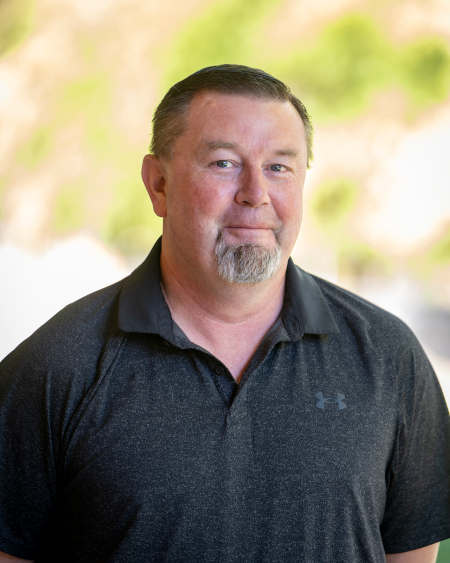
Kelseyville Elementary School Principal Scott Conrad. Courtesy photo.

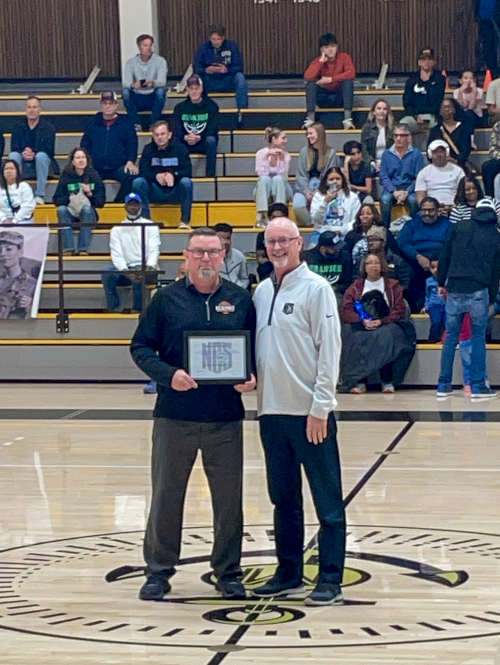
KELSEYVILLE, Calif. — Kelseyville Unified School District is proud to announce that Kelseyville Elementary School Principal Scott Conrad has been named this year’s California Interscholastic Federation North Coast Section Honor Coach Award recipient for his work as Kelseyville High School varsity basketball coach from 2006-2018.

Nominees for the prestigious Honor Coach Award must have coached their respective sport at the interscholastic level for a minimum of five years at the varsity or non‐varsity interscholastic level. They need not be currently coaching a sport.

The award is based on a coach’s outstanding coaching accomplishments, additional contributions to school and community, and general service to their sport.

Conrad was chosen because he exemplifies these qualifications, according to Kelseyville Unified Superintendent Dr. Nicki Thomas.

For Conrad, coaching runs in the family. His grandfather was the first basketball and baseball coach at Sacramento State University and various family members have coached since then.

His father was also a longtime teacher and coach in Kelseyville, and Conrad grew up seeing the impact his father’s coaching had on kids.

Based on that, “I knew this was a path I wanted to take,” Conrad said.

“What I loved most and still miss about coaching was being at practice, teaching the game, and building relationships with kids. I feel fortunate to have been able to coach for so many years,” he continued.

Conrad began coaching Little League baseball when he was still in high school. He then coached every year of his life, even through college, until a few years ago. In addition to varsity basketball and Little League baseball, he coached JV baseball, volleyball, track, and football.

He said that in 30 years of coaching, he witnessed “some pretty special student-athletes.”

With regard to the Honor Coach Award, Conrad said he is appreciative and humbled. He noted that “there were a bunch of other amazing coaches who are deserving,” and that he would like to thank all the people who have been part of his coaching and teaching experience, from colleagues to students, parents, and his wife “who cared for our kids while I was in the gym coaching.”

Kelseyville Elementary School Principal Scott Conrad receiving the California Interscholastic Federation North Coast Section Honor Coach Award. Courtesy photo.
Details
Written by: LAKE COUNTY NEWS REPORTS
Published: 08 March 2025

Daylight saving time and early school start times cost billions in lost productivity and health care expenses


Daylight saving time kicks in on March 9, 2025, but some say it leads to more heart attacks, depression and car accidents. Lord Henri Voton/E+ via Getty Images

Investigations into the 1986 Space Shuttle Challenger disaster revealed that key decision-makers worked on little sleep, raising concerns that fatigue impaired their judgment. Similarly, in 1989, the Exxon Valdez oil spill resulted in a massive environmental catastrophe. The official investigation revealed the third mate, in charge of steering the ship, was running on too little sleep, among other problems.

While these specific disasters were not caused by daylight saving time, they are conclusively linked to fatigue, based on postaccident investigations and reports. They underscore the well-documented dangers of sleep deprivation and fatigue-related errors. Yet a vast body of research shows that every year, the shift to daylight saving time needlessly exacerbates these risks, disrupting millions of Americans’ sleep and increasing the likelihood of accidents, health issues and fatal errors.

Imagine a world where one simple decision – keeping our clocks aligned with the natural cycle of the Sun – could save lives, prevent accidents and improve mental well-being. It’s not just about an hour of lost sleep; it’s about how small disruptions ripple through our health, our workplaces and even our children’s futures.

I’m a neurologist who specializes in sleep health. I’ve seen firsthand the negative impacts of poor sleep; it has enormous personal and economic consequences.

Yet despite overwhelming research supporting better sleep policies – such as delaying school start times to align with adolescent biology and the adoption of permanent standard time – these issues remain largely overlooked in public policy discussions.

Sleep deprivation comes with real costs

Chronic sleep deprivation does more than leave people tired. It costs an estimated US$411 billion annually in lost productivity and health care costs. Poor sleep leads to workplace mistakes, car accidents and long-term health issues that strain businesses, families and the economy as a whole.

Fortunately, there’s a fix. Smarter sleep policies – such as permanent standard time and later school start times – can boost efficiency, improve health and save lives.

In a classroom setting, students take an exam.
Sleep-deprived teens have lower test scores and graduation rates. skynesher/E+

Up before dawn

Teenagers are the most sleep-deprived age group in the U.S. Multiple studies and surveys show that anywhere from 71% to 84% of high school students report getting insufficient sleep.

This is largely due to early school start times, which force teens to wake up before their biological clocks are ready. If you have a teenager, you probably see it every day: The teen struggling to wake up before sunrise, rushing out the door without breakfast, then waiting in the dark for the school bus.

More than 80% of public middle and high schools in the U.S. start before 8:30 a.m., with 42% starting before 8 a.m. and 10% before 7:30 a.m. As a result, some districts have bus pickups as early as 5 a.m.

Teenagers are going through a natural shift in their circadian rhythms by about two hours. This shift, driven by hormones and biology, makes it hard for them to fall asleep before around 11 p.m. The bodies of teens aren’t wired for these schedules, yet schools and society have designed a system that forces them to function at their worst.

Declining scores, drowsy driving and depression

Sleep-deprived teens have lower grades and test scores, more car crashes caused by drowsy driving, more alcohol and drug use and higher rates of depression, anxiety suicide and aggressive behavior, including carrying weapons.

Along with the health benefits, studies have found that moving school start times to 8:30 am or later could add $8.6 billion to the economy within two years, partly by increased graduation rates.

While concerns about increased transportation costs exist, such as the need for additional buses or drivers due to staggered school start times, some districts have found that optimizing bus routes can offset expenses, making the change cost-neutral or even cost-saving. For instance, a study in Boston found that reorganizing bus schedules using advanced algorithms reduced the number of buses needed and improved efficiency, which allowed high school students to start later and better align with their natural sleep cycles. This change not only supported adolescent sleep health but also saved the district $5 million annually.

Studies show that daylight saving time does not reduce energy use.

More heart attacks, car wrecks and suicide

Every March, most Americans shift their clocks forward for daylight saving time. Studies show this change disrupts sleep and leads to measurable adverse outcomes, including a significant increase in heart attacks. These effects linger for days after the shift, as sleep-deprived workers struggle to adjust.

The mental health impact is also severe. Suicide rates increase in the weeks following the switch, particularly for those already vulnerable to depression.

Unlike daylight saving time, standard time follows the body’s natural circadian rhythm, which is primarily regulated by exposure to sunlight. Our internal clocks are most stable when morning light exposure occurs early in the day, signaling the body to wake up and regulate key biological functions such as hormone production, alertness and metabolism. In contrast, daylight saving time artificially extends evening light, delaying the body’s release of melatonin and making it harder to fall asleep at a biologically appropriate time.

Studies have found that adopting permanent standard time could prevent up to 5,000 suicides annually by reducing seasonal depression, decrease errors, injuries and absenteeism in the workplace and make roads safer, potentially preventing 1,300 traffic deaths each year.

Times are changing

The U.S. tried permanent daylight saving time in 1974. It was so unpopular that Congress repealed it within nine months.

Russia tried it too, in 2011, but switched back three years later. The United Kingdom dropped permanent daylight saving time in 1971 after three years, and Portugal in 1996 after four. All of these countries found that the switch caused widespread public dissatisfaction, health concerns, more morning car accidents and disrupted work schedules. No country is currently on year-round daylight saving time.

These examples provide real-world evidence that permanent DST is undesirable due to public dissatisfaction, safety concerns and negative health effects – all three countries attempted it and ultimately reversed course. Since 2022, there has been renewed debate, largely driven by former U.S. Sen. Marco Rubio’s Sunshine Protection Act, which aims to make DST permanent.

However, the name is misleading because it doesn’t “protect” sunshine but rather eliminates critical morning light, which is essential for regulating circadian rhythms. Major health organizations, along with the National Safety Council, strongly oppose permanent DST due to its well-documented risks.

There are signs that suggest the U.S. is finally waking up to these problems. Out of 13,000 school districts, 1,000 have independently adopted later school start times. California and Florida have enacted laws requiring high schools to start no earlier than 8:30 a.m. California’s mandate went into effect in 2022, and Florida’s is set to begin in 2026.

Permanent standard time and later school start times are not radical ideas. They’re practical, evidence-based solutions based on human biology. Implementing these changes nationally would require congressional action. However, current federal law already allows states to adopt permanent standard time, as Arizona and Hawaii have done, setting a precedent for the rest of the country.The Conversation

Joanna Fong-Isariyawongse, Associate Professor of Neurology, University of Pittsburgh

This article is republished from The Conversation under a Creative Commons license. Read the original article.

Details
Written by: Joanna Fong-Isariyawongse, University of Pittsburgh
Published: 08 March 2025
  • 345
  • 346
  • 347
  • 348
  • 349
  • 350
  • 351
  • 352
  • 353
  • 354

Public Safety

  • Lakeport Police Department celebrates long-awaited new headquarters

  • Lakeport Police Department investigates flag vandalism cases

  • Lakeport Police Department thanks Kathy Fowler Chevrolet for donation

Community

  • Hidden Valley Lake Garden Club installs new officers

  • 'America's Top Teens' searching for talent

  • 'The Goodness of Sea Vegetables' featured topic of March 5 co-op talk

Community & Business

  • Annual 'Adelante Jovenes' event introduces students, parents to college opportunities

  • Gas prices are dropping just in time for the holiday travel season

  • Lake County Association of Realtors installs new board and presents awards

  • Local businesses support travel show

  • Preschool families harvest pumpkins

  • Preschool students earn their wings

How to resolve AdBlock issue?
Refresh this page