How to resolve AdBlock issue?
News
LAKEPORT, Calif. — The Lake County Planning Commission will discuss permits for a new boat rental facility in Lakeport during its meeting this week.
The meeting will begin at 9 a.m. Thursday, May 22, in the board chambers on the first floor of the Lake County Courthouse, 255 N. Forbes St., Lakeport.
The agenda is here.
To participate in real-time, join the Zoom meeting by clicking this link.
The webinar ID is 994 1760 2765, the pass code is 155982.
Access the meeting via one tap mobile at +16699006833,,99417602765#,,,,*155982# or dial in at 669-900-6833.
The meeting also can be viewed on the county’s website or Facebook page.
At 9:05 a.m., the commission will hold a public hearing to consider a lakebed encroachment permit and variance request for the Disney Boat Rental Facility, which will be located on a six-acre parcel at 2200 Lakeshore Blvd. in Lakeport.
The applicant is Brandon Disney, owner of Disney’s Boat Rentals.
The staff report notes that, “Although the planning entitlements and building permits for the Disney Development Project are within the City of Lakeport’s jurisdiction, the installation of two floating docks and buoys require a Lakebed Encroachment Permit from the Lake County Water Resources Department, in accordance with Chapter 23, Clear Lake Shoreline, of the Lake County Municipal Code.”
The hearing documents explain that Disney’s Boat Rentals intends to relocate its existing operations from downtown Lakeport to this Lakeshore Boulevard site, where the business plans to build a two story, 4,778-square-foot building that would serve as a rental office, shop and boat storage facility, including space for the repair of fleet boats, as well as installation of two
floating docks.
Staff is recommending approval of the project’s permits.
The other main item of business on Thursday’s agenda is a public hearing, scheduled for 9:20 a.m., to consider a major use permit for commercial cannabis cultivation for up to 5.69 acres and a draft Initial study/mitigated negative declaration for Poverty Flats Ranch, with applicants Kurt and Bobby Barthel. The project is located at 10535 High Valley Road, Clearlake Oaks.
Email Elizabeth Larson atThis email address is being protected from spambots. You need JavaScript enabled to view it. . Follow her on Twitter, @ERLarson, and on Bluesky, @erlarson.bsky.social. Find Lake County News on the following platforms: Facebook, @LakeCoNews; X, @LakeCoNews; Threads, @lakeconews, and on Bluesky, @lakeconews.bsky.social.
The meeting will begin at 9 a.m. Thursday, May 22, in the board chambers on the first floor of the Lake County Courthouse, 255 N. Forbes St., Lakeport.
The agenda is here.
To participate in real-time, join the Zoom meeting by clicking this link.
The webinar ID is 994 1760 2765, the pass code is 155982.
Access the meeting via one tap mobile at +16699006833,,99417602765#,,,,*155982# or dial in at 669-900-6833.
The meeting also can be viewed on the county’s website or Facebook page.
At 9:05 a.m., the commission will hold a public hearing to consider a lakebed encroachment permit and variance request for the Disney Boat Rental Facility, which will be located on a six-acre parcel at 2200 Lakeshore Blvd. in Lakeport.
The applicant is Brandon Disney, owner of Disney’s Boat Rentals.
The staff report notes that, “Although the planning entitlements and building permits for the Disney Development Project are within the City of Lakeport’s jurisdiction, the installation of two floating docks and buoys require a Lakebed Encroachment Permit from the Lake County Water Resources Department, in accordance with Chapter 23, Clear Lake Shoreline, of the Lake County Municipal Code.”
The hearing documents explain that Disney’s Boat Rentals intends to relocate its existing operations from downtown Lakeport to this Lakeshore Boulevard site, where the business plans to build a two story, 4,778-square-foot building that would serve as a rental office, shop and boat storage facility, including space for the repair of fleet boats, as well as installation of two
floating docks.
Staff is recommending approval of the project’s permits.
The other main item of business on Thursday’s agenda is a public hearing, scheduled for 9:20 a.m., to consider a major use permit for commercial cannabis cultivation for up to 5.69 acres and a draft Initial study/mitigated negative declaration for Poverty Flats Ranch, with applicants Kurt and Bobby Barthel. The project is located at 10535 High Valley Road, Clearlake Oaks.
Email Elizabeth Larson at
COBB, Calif. — Residents, forestland owners, and fire and forestry service business owners are invited to attend the first Cobb Mountain Forest Summit on June 7 from 9 a.m. to 3 p.m. at the historic Little Red Schoolhouse in Cobb.
Space is limited and registration is required at www.sscra.org.
The program, produced by the Seigler Springs Community Redevelopment Association, or SSCRA, will kick off the development of a Cobb Mountain Area Community Wildfire Protection Plan, or CWPP.
Cobb was the epicenter of the 2015 Valley Fire and the community has been active continuously since then, working diligently to reduce hazardous fire fuels while re-creating a local culture of fire-adaptation based on the recognition that fire is an important part of the local natural environment.
Event co-organizer Magdalena Valderrama encouraged local residents to attend the Summit saying that, "In recent years, Cobb has been at the forefront in our county when it comes to community-based wildfire readiness. But careful planning and consistent application of best practices in adapting to a fire ecology, including cultural approaches, can make living in this area much, much safer."
The CWPP kickoff Summit will feature presentations on the Cobb area forest ecology, traditional tribal practices that kept people safe for thousands of years, building a local business sector that can do the work necessary to keep the community fire safe, organizing local "Firewise Community" groups, and the state of fire insurance in California. Booths staffed by local fire and forest groups will offer additional information.
The event is free to the public. Registered attendees will be served lunch and also receive a free black oak seedling donated by Lawrence Ray.
Lake County approved a countywide CWPP in 2023, which qualified any organization in the county to apply for significant federal grants to clear hazardous fuel buildups throughout local forestlands.
The new Cobb Mountain CWPP will dive deeper into specific challenges in the Cobb Area, including a complex mountainous landscape, a patchwork of medium sized land holdings, many out-of-area land owners, subdivisions nestled deep in the forest landscape, and the need to support local businesses to do the work needed to fully adapt the area to its natural fire ecology.
Community involvement in creating the new Cobb Mt. CWPP will also cultivate active relationships with local tribes whose ancestral territories included the Cobb Area and whose traditional indigenous knowledge systems hold important lessons for the challenges we face today.
The project to complete a Cobb Area CWPP is expected to take two years and involve extensive data gathering, local outreach and further coalition building.
The complete CWPP will then qualify the area to apply for additional federal funding to do the work outlined in the plan.
The event is made possible with support from the Cobb Area Council, North Coast Opportunities, the Sierra Club Lake Group, Cal Fire and the Cobb Mountain Lions Club.
For more information visit the SSCRA website at www.sscra.org.
Space is limited and registration is required at www.sscra.org.
The program, produced by the Seigler Springs Community Redevelopment Association, or SSCRA, will kick off the development of a Cobb Mountain Area Community Wildfire Protection Plan, or CWPP.
Cobb was the epicenter of the 2015 Valley Fire and the community has been active continuously since then, working diligently to reduce hazardous fire fuels while re-creating a local culture of fire-adaptation based on the recognition that fire is an important part of the local natural environment.
Event co-organizer Magdalena Valderrama encouraged local residents to attend the Summit saying that, "In recent years, Cobb has been at the forefront in our county when it comes to community-based wildfire readiness. But careful planning and consistent application of best practices in adapting to a fire ecology, including cultural approaches, can make living in this area much, much safer."
The CWPP kickoff Summit will feature presentations on the Cobb area forest ecology, traditional tribal practices that kept people safe for thousands of years, building a local business sector that can do the work necessary to keep the community fire safe, organizing local "Firewise Community" groups, and the state of fire insurance in California. Booths staffed by local fire and forest groups will offer additional information.
The event is free to the public. Registered attendees will be served lunch and also receive a free black oak seedling donated by Lawrence Ray.
Lake County approved a countywide CWPP in 2023, which qualified any organization in the county to apply for significant federal grants to clear hazardous fuel buildups throughout local forestlands.
The new Cobb Mountain CWPP will dive deeper into specific challenges in the Cobb Area, including a complex mountainous landscape, a patchwork of medium sized land holdings, many out-of-area land owners, subdivisions nestled deep in the forest landscape, and the need to support local businesses to do the work needed to fully adapt the area to its natural fire ecology.
Community involvement in creating the new Cobb Mt. CWPP will also cultivate active relationships with local tribes whose ancestral territories included the Cobb Area and whose traditional indigenous knowledge systems hold important lessons for the challenges we face today.
The project to complete a Cobb Area CWPP is expected to take two years and involve extensive data gathering, local outreach and further coalition building.
The complete CWPP will then qualify the area to apply for additional federal funding to do the work outlined in the plan.
The event is made possible with support from the Cobb Area Council, North Coast Opportunities, the Sierra Club Lake Group, Cal Fire and the Cobb Mountain Lions Club.
For more information visit the SSCRA website at www.sscra.org.
LAKE COUNTY, Calif. — Community members are being invited to participate in a process that is studying Lake County’s transportation needs.
The Lake Area Planning Council, or Lake APC, is updating the Regional Transportation Plan/Active Transportation Plan for the Lake County region and would like to hear from members of the community about transportation needs, deficiencies, and mobility barriers.
The purpose of the long-range planning document is to guide local decision-makers on transportation needs, improvements and investments over the next 20 years.
It will identify needs and priority projects for all modes of transportation including streets and roads, highways, bicycle and pedestrian facilities, and public transit.
Lake APC wants the community’s input on the plan.
Fill out a brief survey to let them know your transportation needs and priorities in the region, and become eligible to win a $25 Amazon gift card.
In addition, feel free to use the Lake APC’s interactive mapping tool in which you can provide specific details and comments on a map of the region by zooming into specific locations within your community or area of interest.
Click the link to take the survey: https://www.surveymonkey.com/r/LakeRTP2026.
Click the link to add your priorities to the map: https://greendotmaps.com/lake-county-rtp-atp-2026.
For additional questions or comments, email Senior Transportation Planner John Speka atThis email address is being protected from spambots. You need JavaScript enabled to view it. or call 707-263-7799.
For information on previous and current Regional Transportation Plans and Active Transportation Plans, click here.
The Lake Area Planning Council, or Lake APC, is updating the Regional Transportation Plan/Active Transportation Plan for the Lake County region and would like to hear from members of the community about transportation needs, deficiencies, and mobility barriers.
The purpose of the long-range planning document is to guide local decision-makers on transportation needs, improvements and investments over the next 20 years.
It will identify needs and priority projects for all modes of transportation including streets and roads, highways, bicycle and pedestrian facilities, and public transit.
Lake APC wants the community’s input on the plan.
Fill out a brief survey to let them know your transportation needs and priorities in the region, and become eligible to win a $25 Amazon gift card.
In addition, feel free to use the Lake APC’s interactive mapping tool in which you can provide specific details and comments on a map of the region by zooming into specific locations within your community or area of interest.
Click the link to take the survey: https://www.surveymonkey.com/r/LakeRTP2026.
Click the link to add your priorities to the map: https://greendotmaps.com/lake-county-rtp-atp-2026.
For additional questions or comments, email Senior Transportation Planner John Speka at
For information on previous and current Regional Transportation Plans and Active Transportation Plans, click here.
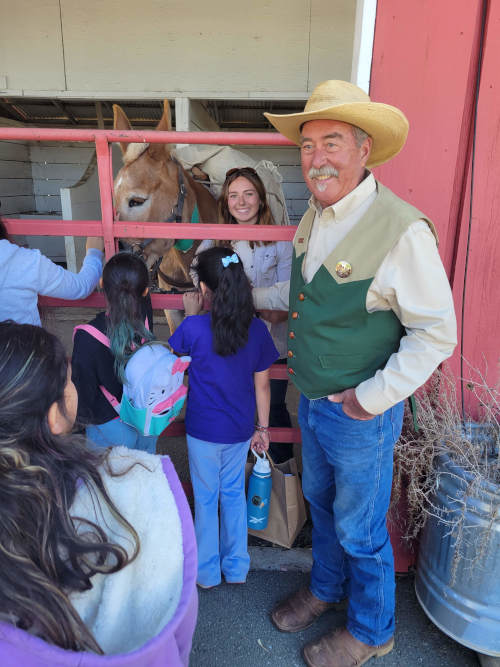
LAKEPORT, Calif. — Schoolchildren from around the community once again had the chance to see up close the working of Lake County’s agriculture industry.
On Wednesday, May 7, the sixth annual Lake County Ag & Natural Resources Day was held at the Lake County Fairgrounds in Lakeport.
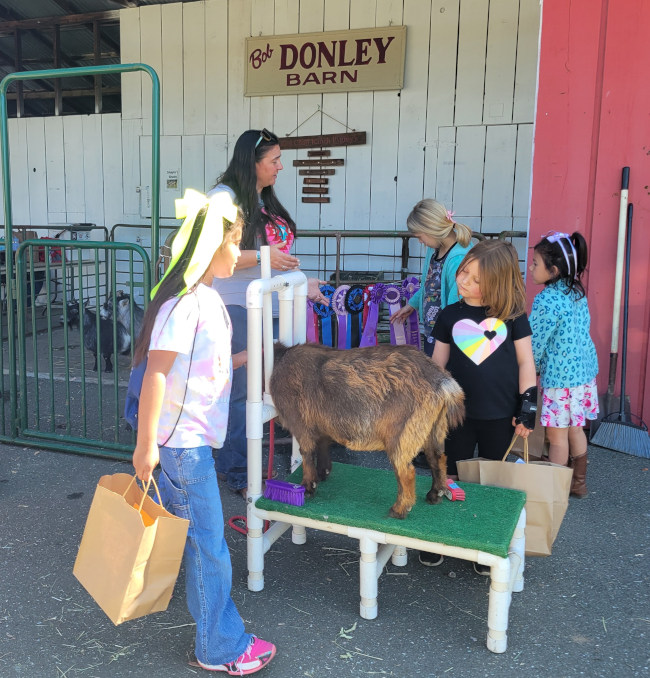
Since its inception in 2017, this unique educational event has welcomed K–6 grade students from across Lake County, offering them a hands-on opportunity to learn about the importance of agriculture and natural resources in our community.
This year, organizers said they hosted more than 600 students, along with their teachers and chaperones, for a day of discovery and interactive learning.
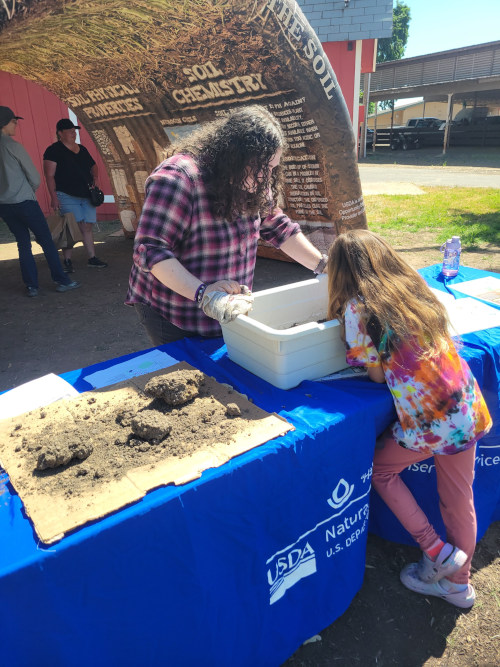
The goal of Ag & Natural Resources Day is to provide engaging, hands-on educational experiences for local students, highlighting the importance of agriculture and natural resources, as well as the science and technology driving these industries in our community.
Organizers said they aim to inspire curiosity and awareness, planting the seeds for the next generation of agriculture and natural resource enthusiasts.
This event is the result of a strong collaborative effort among the Lake County Fair Foundation, the Lake County Farm Bureau, the Lake County 4-H Program and the Lake County Fairgrounds.
Thanks is offered to the 2025 sponsors for their generous support. They are Redwood Credit Union, Reynolds Systems Inc., American AgCredit and Adventist Health. Organizers said their contributions make this impactful event possible.
LAKE COUNTY, Calif. — April saw Lake County’s jobless rate dropping, at the same time as unemployment rates at the state and federal levels remained unchanged.
The California Employment Development Department’s latest jobless report said Lake County had a 6.8% rate in April, down from 7.3% in March. The April 2024 rate was 6.5%.
On the state level, unemployment remained unchanged at 5.3%, the Employment Development Department said.
The Bureau of Labor Statistics, which tracks the national unemployment picture, said unemployment remained at 4.2% in April, the same rate as reported in March.
In Lake County, industries and employment sectors that showed growth in April included the federal government, 7.1%; mining, logging and construction, 6.3%; leisure and hospitality, 3.5%; financial activities, 2.9%; and other services.
Sectors showing the most decline over the month were total farm, down 21.3%, durable goods, -14.3%; and manufacturing, -3%. The total farm category also is down 30% from where it was a year ago.
Lake County’s jobless rate ranked it No. 44 out of California’s 58 counties, tying it with neighboring Glenn County.
Lake’s neighboring county jobless rates and ranks last month were: Colusa, 14.2%, No. 57; Glenn, 6.8%, No. 44; Mendocino, 5.5%, No. 29; Napa, 3.8%, No. 6; Sonoma, 4%, No. 10; and Yolo, 5.2%, No. 27.
Statewide, payroll jobs rose from 17,982,400 in March 2025 to 18,000,100 in April, the Employment Development Department said.
The number of Californians employed in April was 18,699,200, an increase of 39,300 persons from March’s total of 18,659,900 and up 118,700 from the employment total in April 2024. At the same time, the Employment Development Department said the number of unemployed Californians was 1,055,000 in April, an increase of 400 over the month, and up 41,800 in comparison to April 2024.
Since April 2024, California’s unemployment rate has increased by 0.1 percent, compared to the national unemployment rate, which has increased by 0.3 percent over the same period, according to the report.
In the five years since the state started rebounding from the COVID-19 pandemic in April 2020, the Employment Development Department said California has gained 3,080,300 jobs, an average of 51,338 per month.
Five of California's 11 industry sectors gained jobs in April, with private education and health services (+9,400) posting a gain for the 39th straight month, the state reported.
The largest gains in health care and social assistance (+8,100) subsectors include job increases in fields like nursing, partly due to California’s aging population, which has driven more demand for medical services, the Employment Development Department said.
Government (+4,500) also posted a month-over job gain with the largest increase coming from Local Government (+3,400). State government (+1,300) also increased, while Federal Government (-200) lost jobs in April, based on the report.
Professional and business services (-2,400) posted the state’s largest month-over loss with the majority of the losses coming from employment services, which typically represents a slowdown in the hiring of temporary workers.
The Employment Development Department said the number of jobs in the agriculture industry decreased from March by 10,800 to a total of 414,300 jobs in April. The agriculture industry had 4,900 more farm jobs in April 2025 than it did in April of last year.
In related data that figures into the state’s unemployment rate, the Employment Development Department said there were 402,004 people certifying for Unemployment Insurance benefits during the April 2025 sample week.
That compares to 424,213 people in March and 411,413 people in April 2024. Concurrently, 42,222 initial claims were processed in the April 2025 sample week, which was a month-over increase of 1,229 claims from March and a year-over decrease of 2,914 claims from April 2024.
Email Elizabeth Larson atThis email address is being protected from spambots. You need JavaScript enabled to view it. . Follow her on Twitter, @ERLarson, and on Bluesky, @erlarson.bsky.social. Find Lake County News on the following platforms: Facebook, @LakeCoNews; X, @LakeCoNews; Threads, @lakeconews, and on Bluesky, @lakeconews.bsky.social.
The California Employment Development Department’s latest jobless report said Lake County had a 6.8% rate in April, down from 7.3% in March. The April 2024 rate was 6.5%.
On the state level, unemployment remained unchanged at 5.3%, the Employment Development Department said.
The Bureau of Labor Statistics, which tracks the national unemployment picture, said unemployment remained at 4.2% in April, the same rate as reported in March.
In Lake County, industries and employment sectors that showed growth in April included the federal government, 7.1%; mining, logging and construction, 6.3%; leisure and hospitality, 3.5%; financial activities, 2.9%; and other services.
Sectors showing the most decline over the month were total farm, down 21.3%, durable goods, -14.3%; and manufacturing, -3%. The total farm category also is down 30% from where it was a year ago.
Lake County’s jobless rate ranked it No. 44 out of California’s 58 counties, tying it with neighboring Glenn County.
Lake’s neighboring county jobless rates and ranks last month were: Colusa, 14.2%, No. 57; Glenn, 6.8%, No. 44; Mendocino, 5.5%, No. 29; Napa, 3.8%, No. 6; Sonoma, 4%, No. 10; and Yolo, 5.2%, No. 27.
Statewide, payroll jobs rose from 17,982,400 in March 2025 to 18,000,100 in April, the Employment Development Department said.
The number of Californians employed in April was 18,699,200, an increase of 39,300 persons from March’s total of 18,659,900 and up 118,700 from the employment total in April 2024. At the same time, the Employment Development Department said the number of unemployed Californians was 1,055,000 in April, an increase of 400 over the month, and up 41,800 in comparison to April 2024.
Since April 2024, California’s unemployment rate has increased by 0.1 percent, compared to the national unemployment rate, which has increased by 0.3 percent over the same period, according to the report.
In the five years since the state started rebounding from the COVID-19 pandemic in April 2020, the Employment Development Department said California has gained 3,080,300 jobs, an average of 51,338 per month.
Five of California's 11 industry sectors gained jobs in April, with private education and health services (+9,400) posting a gain for the 39th straight month, the state reported.
The largest gains in health care and social assistance (+8,100) subsectors include job increases in fields like nursing, partly due to California’s aging population, which has driven more demand for medical services, the Employment Development Department said.
Government (+4,500) also posted a month-over job gain with the largest increase coming from Local Government (+3,400). State government (+1,300) also increased, while Federal Government (-200) lost jobs in April, based on the report.
Professional and business services (-2,400) posted the state’s largest month-over loss with the majority of the losses coming from employment services, which typically represents a slowdown in the hiring of temporary workers.
The Employment Development Department said the number of jobs in the agriculture industry decreased from March by 10,800 to a total of 414,300 jobs in April. The agriculture industry had 4,900 more farm jobs in April 2025 than it did in April of last year.
In related data that figures into the state’s unemployment rate, the Employment Development Department said there were 402,004 people certifying for Unemployment Insurance benefits during the April 2025 sample week.
That compares to 424,213 people in March and 411,413 people in April 2024. Concurrently, 42,222 initial claims were processed in the April 2025 sample week, which was a month-over increase of 1,229 claims from March and a year-over decrease of 2,914 claims from April 2024.
Email Elizabeth Larson at
The traditional kick off to summer travel season starts with a record breaking number of people expected to travel for Memorial Day this year, according to newly released AAA data.
AAA projects about 45.1 million people will travel at least 50 miles from home beginning Thursday, May 22 to Monday, May 26.
This represents an increase of 1.4 million travelers compared to last year, surpassing the previous record set in 2005 with 44 million people. More than 5.8 million of those travelers will be from California, marking a 4 percent increase over 2024 and setting a new record for the state.
Travelers are choosing to vacation in the Bay Area this year with AAA booking data listing San Francisco in the top 10 for Memorial Day destinations.
Many Americans say they’re taking advantage of the long weekend to spend time with loved ones, even if they are staying closer to home amid concerns over travel costs.
Memorial Day travelers by mode of transportation
By car: Driving is the preferred mode of transportation during holiday travel periods with 87% of Memorial Day travelers choosing to take road trips. AAA projects 39.4 million people will travel by car nationwide over Memorial Day weekend with more than 4.8 million being from California. This year, drivers have the benefit of cheaper gas prices thanks to lower crude oil prices.
By air: AAA projects 3.61 million air passengers, a nearly 2% increase over last year when 3.55 million travelers took to the skies. Of those, about 622,000 will be Californians. AAA booking data shows the cost for domestic flights are up 2% compared to last year.
By other modes: AAA projects 2.08 million people will travel by train, bus, or cruise nationwide over Memorial Day weekend, an 8.5% increase over last year. About 424,000 travelers will be Californians. Travelers are turning to cruises in record numbers. AAA projects a record 19 million people plan to take cruises in 2025.
AAA projects about 45.1 million people will travel at least 50 miles from home beginning Thursday, May 22 to Monday, May 26.
This represents an increase of 1.4 million travelers compared to last year, surpassing the previous record set in 2005 with 44 million people. More than 5.8 million of those travelers will be from California, marking a 4 percent increase over 2024 and setting a new record for the state.
Travelers are choosing to vacation in the Bay Area this year with AAA booking data listing San Francisco in the top 10 for Memorial Day destinations.
Many Americans say they’re taking advantage of the long weekend to spend time with loved ones, even if they are staying closer to home amid concerns over travel costs.
Memorial Day travelers by mode of transportation
By car: Driving is the preferred mode of transportation during holiday travel periods with 87% of Memorial Day travelers choosing to take road trips. AAA projects 39.4 million people will travel by car nationwide over Memorial Day weekend with more than 4.8 million being from California. This year, drivers have the benefit of cheaper gas prices thanks to lower crude oil prices.
By air: AAA projects 3.61 million air passengers, a nearly 2% increase over last year when 3.55 million travelers took to the skies. Of those, about 622,000 will be Californians. AAA booking data shows the cost for domestic flights are up 2% compared to last year.
By other modes: AAA projects 2.08 million people will travel by train, bus, or cruise nationwide over Memorial Day weekend, an 8.5% increase over last year. About 424,000 travelers will be Californians. Travelers are turning to cruises in record numbers. AAA projects a record 19 million people plan to take cruises in 2025.