How to resolve AdBlock issue?
Refresh this page
How to resolve AdBlock issue?
Refresh this page
Lake County News,California
  • Home
    • Registration Form
  • News
    • Community
      • Obituaries
      • Letters
      • Commentary
    • Education
    • Veterans
    • Police Logs
    • Business
    • Recreation
    • Health
    • Religion
    • Legals
    • Arts & Life
    • Regional
  • Calendar
  • Contact us
    • FAQs
    • Phones, E-Mail
    • Subscribe
  • Advertise Here
  • Login

County seeks members for Public Defender Oversight Committee

LAKE COUNTY, Calif. — The Board of Supervisors is seeking applicants to fill vacancies on the Public Defender Oversight Committee.

The current bylaws require two members of the general public and one attorney to be appointed to this advisory board.

The purpose of this committee is to receive and review reports on the Lake County Public Defender Program and discuss the performance and ability to meet the needs of the county, the Courts and those who utilize these services.

Applications are available at the Lake County Courthouse, Clerk of the Board Office, Room 109, 255 North Forbes Street, Lakeport, California, or online at https://www.lakecountyca.gov/1116/Board-of-Supervisors.

The membership on the committee is voluntary.
Details
Written by: LAKE COUNTY NEWS REPORTS
Published: 05 March 2025

State wildlife officials report on California’s wolf population

CDFW wolf collaring January 2025 photo by Malia Byrtus/California Wolf Project.


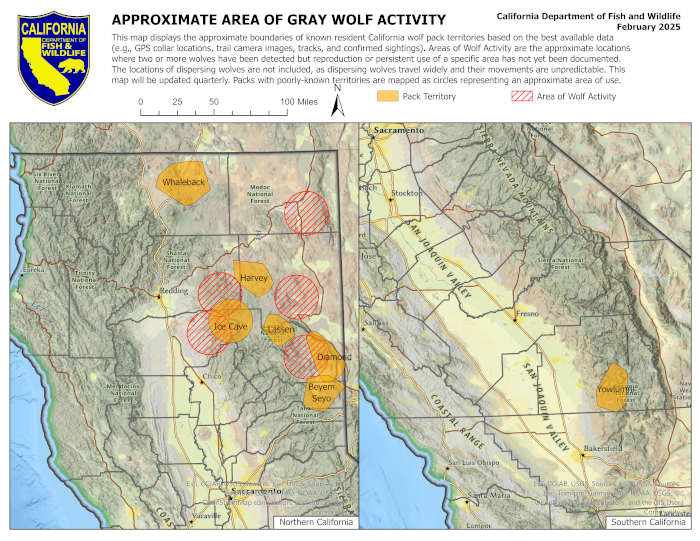
The California Department of Fish and Wildlife reported Tuesday that the state currently has seven known wolf families amid changing pack dynamics and areas of new wolf activity.

The department’s latest map depicts where wolves are ranging within the state.

California now has around 50 known wolves, according to the state wolf coordinator — up from around 49 at the end of 2023. That modest increase comes despite 30 pups known to have been born in spring 2024.

“I’m a little concerned by what seems like slower population growth, but the evolving dynamics of California’s returning wolves are thrilling as we see wolves meet up with each other to establish or merge packs,” said Amaroq Weiss, a senior wolf advocate at the Center for Biological Diversity. “I’m encouraged by how dynamic these animals are, and it’s important to remember that California’s wolf recovery is still in its early days.”

Tuesday’s report indicates that the nine packs confirmed at the end of September 2024 have declined to seven.

The Beckwourth pack no longer exists and another pack, the Antelope pack, merged with the Beyem Seyo pack. The merged pack will continue to be called Beyem Seyo. The agency also reported new areas of wolf activity in five locales in Northern California.

The department’s quarterly report covered known wolf information from October through December 2024.

During this time the department confirmed the existence of seven packs whose territories span portions of Siskiyou, Lassen, Plumas, Shasta, Sierra, Tehama and Tulare counties.

New areas of wolf activity were also documented: These consist of small groups of two or three wolves each in Lassen, Modoc, Plumas, Shasta and Tehama counties.

The report indicates wolf numbers for the two newest packs, Diamond and Ice Cave. The Diamond pack has a minimum of two wolves, and the Ice Cave pack had two adults and two pups as of last August. The report does not provide current numbers for the state’s other five wolf families, which are the Lassen, Whaleback, Beyem Seyo, Harvey and Yowlumni packs. The department will begin issuing annual wolf reports containing minimum wolf counts starting later this spring.

However, at a rangeland symposium held in mid-February at UC Davis the state wolf coordinator for the department, Axel Hunnicutt, advised that the total confirmed wolf count in California currently stands at around 50. Spring 2025 will likely see new pups.

“Strong legal protections for California’s wolves ensure that state wolf management doesn’t devolve into disturbing and unscientific wolf-killing sprees like we see in the Northern Rockies,” said Weiss. “I’m proud of California for protecting these remarkable animals, who are essential to healthy, wild nature and a welcome part of our state’s natural heritage.”

The first wolf in nearly a century to make California part of his range was OR-7, a radio-collared wolf from Oregon that entered California in late 2011. OR-7 traveled across seven northeastern counties in California before returning to southwestern Oregon, where he found a mate and settled down, forming the Rogue pack.

Several of OR-7’s offspring have since come to California and established packs. Those include the original breeding male of the Lassen pack and the breeding female of the Yowlumni pack residing in Tulare County. The Shasta pack, California’s first confirmed wolf pack in nearly 100 years, was discovered in 2015 but disappeared a few months later.

The gray wolf (Canis lupus) is native to California but was driven to extinction in the state by the mid-1920s. After OR-7 left Oregon for California, the Center and allies successfully petitioned the state to fully protect wolves under California’s endangered species act. Wolves are also federally protected in California under the federal Endangered Species Act. It is illegal to intentionally kill any wolves in the state.

Details
Written by: LAKE COUNTY NEWS REPORTS
Published: 05 March 2025

Cutting Medicaid and federal programs are among 4 key Trump administration policy changes that could make life harder for disabled people


Disabled people’s employment rights and access to free health care are among the policy issues that the Trump administration is aiming to change. Catherine McQueen/Moment/Getty Images

While policy debates on immigration, abortion and other issues took center stage in the 2024 presidential election, the first months of the Trump administration have also signaled major changes in federal disability policy.

An estimated 20% to 25% of Americans have a disability of some kind, including physical, sensory, psychological and intellectual disabilities.

Disability experts, myself included, fear that the Trump administration is creating new barriers for disabled people to being hired at a job, getting a quality education and providing for basic needs, including health insurance.

Here are four key areas of disability policy to watch over the coming years.

A group of people stand and sit, in a wheelchair, on a street. They hold black and white signs. One of them says 'Elevator Fail.'
People hold signs at a protest in June 2024 demanding subway elevator reliability for disabled people in New York. Erik McGregor/LightRocket via Getty Images

1. Rights at work

The Americans with Disabilities Act, which became law in 1990, requires that employers with more than 15 employees not discriminate against otherwise qualified candidates on the basis of their disability. It also requires that employers provide reasonable accommodations to disabled workers. This means, for instance, that a new or renovated workplace should have accessible entrances so that a worker who uses a wheelchair can enter.

Despite these protections, I have spoken to many disabled workers in my research who are reluctant to ask for accommodations for fear that a supervisor might think that they were too demanding or not worth continuing to employ.

Trump’s actions in his first days in office have likely reinforced such fears.

In one of the many executive orders Trump signed on Jan. 20, 2025, he called for the relevant government agencies to terminate what he called “all discriminatory programs,” including all diversity, equity, inclusion and accessibility policies, programs and activities that Trump deems “immoral.”

The next day, Trump put workers in federal DEIA and accessibility positions on administrative leave.

The following week, a tragic plane crash outside Washington, D.C., killed 67 people. Trump, without any evidence, blamed the crash on unidentified disabled workers in the Federal Aviation Administration, enumerating a wide and seemingly unrelated list of disabilities that, in his mind, meant that workers lacked the “special talent” to work at the FAA.

Advocates quickly pushed back, pointing out that disabled workers meet all qualifications for federal and private sector jobs they are hired to perform.

2. The federal workforce

Many government disability programs have complex rules designed to limit the number of people who qualify for support.

For instance, I study Supplemental Security Income, a federal program that provides very modest cash support – on average, totaling US$697 a month in 2024 – to 7.4 million people who are disabled, blind or over 65 if they also have very low income and assets.

It can take months or even years for someone to go through the process to initially document their disability and finances and show they qualify for SSI. Once approved, many beneficiaries want to make sure they don’t accidentally put their benefits at risk in situations where they are working very limited hours, for example.

To get answers, they can go to a Social Security office or call an agency phone line. But there are already not enough agency workers to process applications or answer questions quickly. I spoke in 2022 with SSI beneficiaries who waited on hold for hours while they tried to get more information about their cases, only to receive unclear or conflicting information.

Such situations may grow even more severe, as Trump and billionaire Elon Musk try to eliminate large numbers of federal employee positions. So far, tens of thousands of federal workers have been laid off from their jobs in 2025. More layoffs may be coming – on Feb. 12, 2025, Trump instructed federal agency heads to prepare for further “large-scale reductions in force.”

At the same time, multiple Social Security Administration offices have also been marked for closure since January 2025. An overall effect of these changes will be fewer workers to answer questions from disabled citizens.

3. Educational opportunities

Students with disabilities, like all students, are legally entitled to a free public education. This right is guaranteed under the Individuals with Disabilities Education Act, passed in 1975. IDEA is enforced by the federal Education Department.

But Trump is reportedly in the process of dismantling the Education Department, with the goal of eventually closing it. It is not clear what this will mean for Individuals with Disabilities in Education Act enforcement, but one possibility is laid out in the Project 2025 Mandate for Leadership, a policy blueprint with broad support in Trump’s administration.

Project 2025 proposes that Individuals with Disabilities in Education Act funds “should be converted into a no-strings formula block grant.” Block grants are a funding structure by which federal funds are reduced and each state is given a lump sum rather than designating the programs the funds will support. In practice, this can mean that states divert the money to other programs or policy areas, which can create opportunities for funds to be misused.

With block grants, local school districts would be subject to less federal oversight meant to ensure that they provide every student with an adequate education. Families who already must fight to ensure that their children receive the schooling they deserve will be put on weaker footing if the federal government signals that states can redirect the money as they wish.

4. Health care

Before President Barack Obama signed the Affordable Care Act into law in 2010, many disabled people lived with the knowledge that an insurer could regard a disability as a preexisting condition and thereby deny them coverage or charge more for their insurance.

The ACA prohibited insurance companies from charging more or denying coverage based on preexisting conditions.

Republicans have long opposed the ACA, with House Speaker Mike Johnson promising before the 2024 election to pursue an agenda of “No Obamacare.”

About 15 million disabled people have health insurance through Medicaid, a federal health insurance program that covers more than 74 million low-income people. But large Medicaid cuts are also on the Republican agenda.

These deep cuts might include turning Medicaid into another block grant. They could also partly take the form of imposing work requirements for Medicaid beneficiaries, which could serve as grounds on which to disqualify people from receiving benefits.

While proponents of work requirements often claim that disabled people will be exempt, research shows that many will still lose health coverage, and that Medicaid coverage itself often supports people who are working.

Medicaid is also a crucial source of funding for home- and community-based services, including personal attendants who help many people perform daily activities and live on their own. This helps disabled people live independently in their communities, rather than in institutional settings. Notably, Project 2025 points to so-called “nonmedical” services covered under Medicaid as part of the program’s “burden” on states.

When home- and community-based services are unavailable, some disabled people have no options but to move into nursing homes. One recent analysis found that nursing homes housed roughly 210,000 long-term residents under age 65 with disabilities. Many nursing facilities are understaffed, which contributed to the brutal toll of the COVID-19 pandemic in nursing homes.

In response to both the pandemic and years of advocacy, the Biden administration mandated higher staffing ratios at nursing homes receiving Medicare and Medicaid reimbursement. But Republicans are eyeing repealing that rule, according to Politico’s reporting.

Three women wearing formal blazers stand at a wooden podium, next to a sign that says 'Whose health care are they taking away?'
U.S. Sen. Maggie Hassan, a Democrat, right, speaks during a press conference in Washington, D.C., on Feb. 19, 2025, on efforts to protect Medicaid from cuts. Nathan Poser/Anadolu via Getty Images

Daunting task

Tracking potential changes to disability policy is a complicated endeavor. There is no federal department of disability policy, for example.

Instead, relevant laws and programs are spread throughout what we often think of as separate policy areas. So while disability policy includes obvious areas such as the Americans with Disabilities Act, it is also vitally relevant in areas such as immigration and emergency response.

These issues of health care, education and more could impact millions of lives, but they are far from the only ones where Trump administration changes threaten to harm disabled people.

Different programs have their own definitions of disability, which people seeking assistance must work to keep track of.

This was a daunting task in 2024. Now it may become even more difficult.The Conversation

Matthew Borus, Assistant Professor, Department of Social Work, Binghamton University, State University of New York

This article is republished from The Conversation under a Creative Commons license. Read the original article.
Details
Written by: Matthew Borus, Binghamton University, State University of New York
Published: 05 March 2025

Measure U cost Lake County less than $4,000, Registrar reports

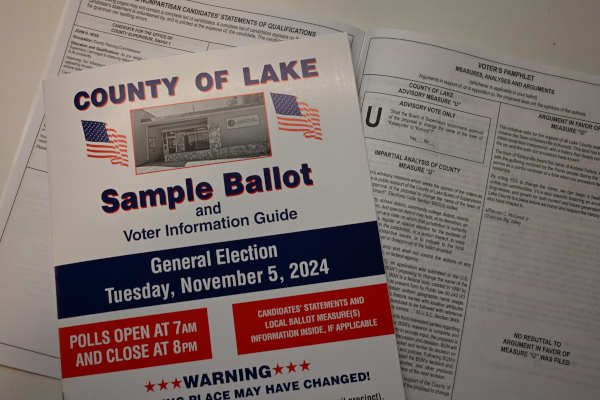
The Nov. 5, 2025, sample ballot booklet, which featured advisory Measure U on the proposed name change of the town of Kelseyville to Konocti. Photo by Lingzi Chen/Lake County News.


LAKE COUNTY, Calif. — The contentious Measure U — an countywide advisory vote on whether to rename Kelseyville to Konocti — cost Lake County no more than $4,000, according to the Registrar of Voters, nearly four months after the November election.

After consolidating all expenses, the 2024 General Election in Lake County totaled $237,807.99, excluding labor, Registrar of Voters Maria Valadez said in an interview at her office on Thursday.

Valadez said this amount covered costs for official ballots, sample ballots, postage, publication, services, supplies and printing.

Measure U accounted for $3,931.50 of that total, including $3,113.58 for additional sample booklet pages and $819.99 for translation services. No additional labor costs were incurred, Valadez said.

“That is the only over-and-above cost,” Valadez said, emphasizing that no extra postage or miscellaneous expenses were added.

“The election was going to happen regardless of Measure U,” she explained. “The question is always — how much more does Measure U cost?”

Valadez provided collated tables of bills detailing election costs, including expenses for all 16 ballot types across nine election districts.

She pointed to two financial differences between having and not having Measure U.

First, under California Election Code 10520, each district must reimburse the county for the actual costs of running an election in its jurisdiction. Since Measure U was on all ballots countywide, it changed how costs were distributed among districts compared to an election without it.

Second, Measure U itself added $3,931.50 to the overall cost. Without it, the election would have cost $233,876.49, Valadez said. Measure U increased the cost by 1.68%.

Valadez emphasized that while Measure U affected cost distribution among districts, it only increased the total election cost by $3,931.50.

In terms of labor, Valadez said that 3,400 hours of work was dedicated specifically to the election.

“So the hours worked for extra help and permanent hours did not increase because Measure U was on the ballot,” she said. “The hours are that for all elections, no matter what.”

Regarding the finalized cost of Measure U, Valadez said it ended up being less than $50,000, which was the maximum amount she previously had estimated it would cost.

Valadez: ‘Measure U cost the county $50,000’ was a misunderstanding

On July 31, the Board of Supervisors voted 3-2 to place the renaming of Kelseyville to Konocti before voters.

This was the board’s first and only collective action on the matter after the U.S. Board on Geographic Names, often referred to as the BGN, requested a recommendation 2024, following an October 2023 application of the name change from the local group Citizens for Healing.

During the contentious three-hour meeting, supervisors asked Valadez about the potential costs of adding the countywide measure to the ballot.

Based on past experience, Valadez said at that time that she estimated it to cost no more than $50,000. The figure was then repeated throughout the meeting, but Valadez was not given the opportunity to offer further clarification.

After that meeting, Valadez told Lake County News that standalone elections can run around $250,000. However, since there was already an election in November, the advisory measure itself would be folded into that election, hence lowering the cost, she said.

The figure of $50,000 was not only repeated during the special board meeting, but also referred to in following meetings about the name change and circulated on social media when people discussed the cost of Measure U.

For Valadez, that has been a misunderstanding that needs clarification.

“I said it shouldn’t cost more than $50,000; I never said it was going to cost $50,000. I was just providing an estimate,” Valadez said. “At that time, I didn’t know how many districts were actually going to the election and until that happens, you don’t know what the actual election cost is.”

Measure U went on the Nov. 5 ballot as an advisory measure. A "yes” vote on the measure supported the Board of Supervisors recommending approval of the town name from Kelseyville to Konocti whereas a “no” vote opposes it.

More than 70% of voters said “no” in the election. However, in a December Board of Supervisor meeting, supervisors voted 3-2 to recommend the name change and sent out a formal letter of recommendation to the BGN.

Ultimately, dislike of Measure U has been a common point of agreement among both supporters and opponents of the name change.

Supporters of the name change argued that it should be a moral decision, not determined by a majority vote. Opponents contended that the vote was a waste of time and money if the Board of Supervisors would not respect the results.

Email staff reporter Lingzi Chen at This email address is being protected from spambots. You need JavaScript enabled to view it.. 
Details
Written by: LINGZI CHEN
Published: 04 March 2025
  • 349
  • 350
  • 351
  • 352
  • 353
  • 354
  • 355
  • 356
  • 357
  • 358

Public Safety

  • Lakeport Police Department celebrates long-awaited new headquarters

  • Lakeport Police Department investigates flag vandalism cases

  • Lakeport Police Department thanks Kathy Fowler Chevrolet for donation

Community

  • Hidden Valley Lake Garden Club installs new officers

  • 'America's Top Teens' searching for talent

  • 'The Goodness of Sea Vegetables' featured topic of March 5 co-op talk

Community & Business

  • Annual 'Adelante Jovenes' event introduces students, parents to college opportunities

  • Gas prices are dropping just in time for the holiday travel season

  • Lake County Association of Realtors installs new board and presents awards

  • Local businesses support travel show

  • Preschool families harvest pumpkins

  • Preschool students earn their wings

How to resolve AdBlock issue?
Refresh this page