Pandora, NASA’s newest exoplanet mission, is one step closer to launch with the completion of the spacecraft bus, which provides the structure, power, and other systems that will enable the mission to carry out its work.
“This is a huge milestone for us and keeps us on track for a launch in the fall,” said Elisa Quintana, Pandora’s principal investigator at NASA’s Goddard Space Flight Center in Greenbelt, Maryland. “The bus holds our instruments and handles navigation, data acquisition, and communication with Earth — it’s the brains of the spacecraft.”
Pandora, a small satellite, will provide in-depth study of at least 20 known planets orbiting distant stars in order to determine the composition of their atmospheres — especially the presence of hazes, clouds, and water. This data will establish a firm foundation for interpreting measurements by NASA’s James Webb Space Telescope and future missions that will search for habitable worlds.
“We see the presence of water as a critical aspect of habitability because water is essential to life as we know it,” said Goddard’s Ben Hord, a NASA Postdoctoral Program Fellow who discussed the mission at the 245th meeting of the American Astronomical Society in National Harbor, Maryland. “The problem with confirming its presence in exoplanet atmospheres is that variations in light from the host star can mask or mimic the signal of water. Separating these sources is where Pandora will shine.”
Funded by NASA’s Astrophysics Pioneers program for small, ambitious missions, Pandora is a joint effort between Lawrence Livermore National Laboratory in California and NASA Goddard.
“Pandora’s near-infrared detector is actually a spare developed for the Webb telescope, which right now is the observatory most sensitive to exoplanet atmospheres,” Hord added. “In turn, our observations will improve Webb’s ability to separate the star’s signals from those of the planet’s atmosphere, enabling Webb to make more precise atmospheric measurements.”
Astronomers can sample an exoplanet’s atmosphere when it passes in front of its star as seen from our perspective, an event called a transit. Part of the star’s light skims the atmosphere before making its way to us. This interaction allows the light to interact with atmospheric substances, and their chemical fingerprints — dips in brightness at characteristic wavelengths — become imprinted in the light.
But our telescopes see light from the entire star as well, not just what’s grazing the planet. Stellar surfaces aren’t uniform. They sport hotter, unusually bright regions called faculae and cooler, darker regions similar to sunspots, both of which grow, shrink, and change position as the star rotates.
Using a novel all-aluminum, 45-centimeter-wide (17 inches) telescope, jointly developed by Livermore and Corning Specialty Materials in Keene, New Hampshire, Pandora’s detectors will capture each star’s visible brightness and near-infrared spectrum at the same time, while also obtaining the transiting planet’s near-infrared spectrum. This combined data will enable the science team to determine the properties of stellar surfaces and cleanly separate star and planetary signals.
The observing strategy takes advantage of the mission’s ability to continuously observe its targets for extended periods, something flagship missions like Webb, which are in high demand, cannot regularly do.
Over the course of its year-long prime mission, Pandora will observe at least 20 exoplanets 10 times, with each stare lasting a total of 24 hours. Each observation will include a transit, which is when the mission will capture the planet’s spectrum.
Pandora is led by NASA’s Goddard Space Flight Center. Lawrence Livermore National Laboratory provides the mission’s project management and engineering. Pandora’s telescope was manufactured by Corning and developed collaboratively with Livermore, which also developed the imaging detector assemblies, the mission’s control electronics, and all supporting thermal and mechanical subsystems.
The infrared sensor was provided by NASA Goddard. Blue Canyon Technologies provided the bus and is performing spacecraft assembly, integration, and environmental testing. NASA’s Ames Research Center in California’s Silicon Valley will perform the mission’s data processing. Pandora’s mission operations center is located at the University of Arizona, and a host of additional universities support the science team.
Francis Reddy works for NASA’s Goddard Space Flight Center in Greenbelt, Maryland.
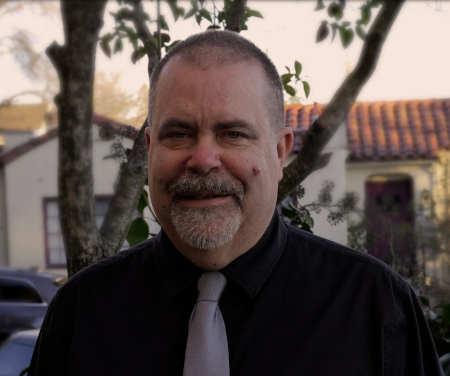
New District 4 Supervisor Brad Rasmussen. Courtesy photo.
LAKE COUNTY, Calif. — Lake County’s District 4 supervisor has gotten right to work, filling up his schedule and considering how to achieve the many goals he’s laid out for his tenure.
In his first week as the supervisor for District 4, Brad Rasmussen attended 12 meetings and was appointed to 17 out of more than 60 committees that govern various aspects of the county’s matters.
“It’s been a very busy week,” Rasmussen told Lake County News last Friday, after he was sworn into office on Tuesday, Jan. 7.
Over that first week, Rasmussen went to meetings, filled up his onboarding paperwork, and set up his office, computer and county cell phone.
While managing all of those tasks, Rasmussen said he had also spent the week trying to figure out “a good system” to efficiently track his work and get things done.
Rasmussen planned to work during the weekend too — preparing for the next Board of Supervisors’ meeting, which he expected to be a lengthy, all-day meeting.
There is also "constituent work” — responding to concerns from his district constituents and helping them navigate issues, Rasmussen said.
“This is more than a 40-hour-a-week job,” he added.
Rasmussen is well acquainted with jobs that require long hours. Last year, he retired as Lakeport longtime police chief, a position that often saw him working patrol along with his staff.
For the next few months, Rasmussen said he is planning to meet with department heads to learn about the 28 county departments.
His early goal in the job, Rasmussen said, is to “start building relationships and getting comfortable in the job and settled.”
Some of the committees Rasmussen was appointed to include the Airport Land Use Committee, Blue Ribbon Committee for the Rehabilitation of Clear Lake, the Continuum of Care Committee and the Children's Council.
As his district includes the city of Lakeport, Rasmussen said he was also going to “voluntarily” attend city meetings as much as possible such as the Lakeport City Council — where he was a fixture during his police chief tenure — as well as the fire district and school district meetings, besides the committees and municipal advisory councils of which he is a part.
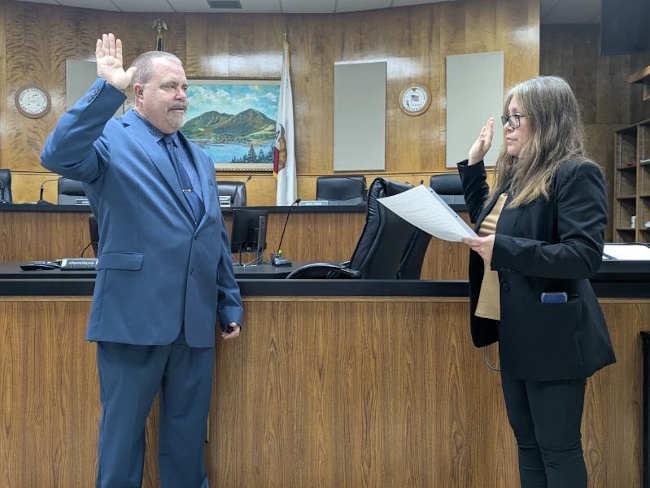
Brad Rasmussen takes his oath as supervisor of District 4 in Lake County, California, on Monday, Jan. 6, 2025, the day before his first Board of Supervisors meeting. Lake County Registrar of Voters Maria Valadez administered the oath. Courtesy photo. Goals and priorities
One of Rasmussen’s top priorities is public safety. For him, it does not only encompass law enforcement, but also fire prevention and mitigation, disaster responses and recoveries.
When it comes to public safety, Rasmussen said he wants to “Make sure that we're prepared to respond to any further disasters and to mitigate them and to do the best we can for the public.”
Rasmussen also said he aims to take care of Clear Lake, preserving the cultural history and keeping away invasive mussels.
“The lake is a huge economic drive for our county — it’s used extensively for recreation,” said Rasmussen. “It'd be devastating not only for the wildlife, but it would also be detrimental to our economy.”
Rasmussen said he wanted to “keep the rural aspect of Lake County” with recreation opportunities that a lot of people live here and come here for while keeping up with the development that is needed.
Also standing atop Rasmussen’s goals is to “set the stage” for transparency and accountability, starting from the Board of Supervisors.
“We need to hold ourselves accountable and expect the same accountability all the way down through the ranks,” he said. “We need to hold ourselves to the highest accountability before we can expect others to do it.”
Rasmussen said providing as much information to the community as possible, motivating the public to be more involved, and keeping citizens recruited to sit on various committees will be key.
First elected position
District supervisor is not Rasmussen’s first public service job.
In August, Rasmussen retired after serving 35 years at the Lakeport Police Department — 14 of them as chief.
Yet, this is his first elected position.
So how does being elected feel?
“It feels good,” Rasmussen said. “I feel like people voted for me because they trusted me to be knowledgeable and be able to handle this extensive position.”
Comparing the role as a supervisor to that of a police chief, Rasmussen said the difference lies in who he works for.
When he ran the police department, “I worked for the city manager. I made the decisions on how the police department operated, but they’re still working for a director,” Rasmussen said. “And in this case, I’m working for the people.”
“I want to work hard to exceed the expectations of the people; that’s my goal,” said Rasmussen.
At the board meeting on Jan. 7, after the swearing-in of the new supervisors, newly elected District 1 Supervisor Helen Owen nominated Rasmussen to serve as the board’s vice chair for 2025.
The nomination was immediately challenged by re-elected District 5 Supervisor Jessica Pyska, who pointed to a board policy requiring at least one year of experience for supervisors to be eligible for chair or vice chair roles.
County Counsel Lloyd Guintivano reviewed the policy and clarified that the one-year prerequisite applies solely to the chair position, not the vice chair. However, he added that the vice chair’s responsibility to act as chair in their absence could raise concerns about potential conflicts with the policy’s intent.
Despite the debate, with no other nominations brought forward, the board elected Rasmussen as vice chair.
When asked his thoughts on this short episode, Rasmussen seemed unbothered.
“I’ve read it a couple times,” Rasmussen said. “The intent [of the policy] is more that you just can’t be the chair.”
“I was comfortable accepting the vice chair position with the way the policy’s written,” he added.
Email staff reporter Lingzi Chen at This email address is being protected from spambots. You need JavaScript enabled to view it..
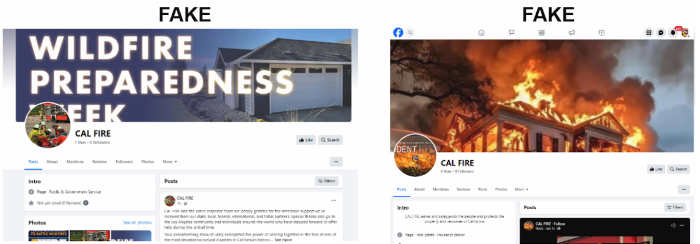
The California Department of Forestry and Fire Protection, or Cal Fire, is alerting the public about fraudulent social media accounts impersonating Cal Fire and soliciting donations.
Cal Fire said it does not solicit donations from the public, either in person or online.
Additionally, all of Cal Fire’s social media accounts are verified accounts and have the blue or gray checkmark and are categorized as a government organization. If you do not see the checkmark, it is not an official Cal Fire account.
While Cal Fire does not request donations, there are legitimate organizations that support victims affected by disasters, the fire service and first responders.
Anyone wishing to contribute to such organizations are encouraged to thoroughly research them to ensure their validity before making a donation.
Cal Fire urges the public to remain vigilant and report suspicious accounts or activity to the relevant social media platform or authorities. “Protecting our communities includes safeguarding them against scams and misinformation,” the agency said.
For official information and updates from Cal Fire, visit the agency’s verified website at www.fire.ca.gov or follow its official social media channels: @CALFIRE (Instagram); @CALFIRE (Facebook); and @CAL_FIRE (X).
Tips for confirming that a Government Organization’s social media account is valid:
• Make sure the social media handle matches what is listed on official websites. • Official government accounts generally post professional, relevant, and timely information. • Look for official announcements or references to other credible sources, such as links to government websites or trusted news outlets. • Be wary of accounts with low follower counts or sudden, rapid growth. • Government accounts will never ask for sensitive personal information via social media.
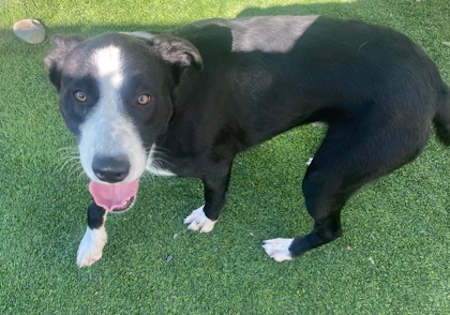
“Shadow.” Photo courtesy of Clearlake Animal Control. CLEARLAKE, Calif. — Clearlake Animal Control has friendly dogs waiting for new homes this week.
The shelter has 45 adoptable dogs listed on its website.
This week’s dogs include “Shadow,” a 2-year-old male border collie mix with a black and white coat.
Shelter staff said he wouldn't mind another dog friend in his new home. He loves to play with toys and he likes playing with water.
The shelter is located at 6820 Old Highway 53. It’s open from 9 a.m. to 6 p.m. Tuesday through Saturday.
For more information, call the shelter at 707-762-6227, email This email address is being protected from spambots. You need JavaScript enabled to view it., visit Clearlake Animal Control on Facebook or on the city’s website.
This week’s adoptable dogs are featured below.
Email Elizabeth Larson at This email address is being protected from spambots. You need JavaScript enabled to view it.. Follow her on Twitter, @ERLarson, and on Bluesky, @erlarson.bsky.social. Find Lake County News on the following platforms: Facebook, @LakeCoNews; X, @LakeCoNews; Threads, @lakeconews, and on Bluesky, @lakeconews.bsky.social.
 How to resolve AdBlock issue?