How to resolve AdBlock issue?
Refresh this page
Lake County News,California
  • Home
    • Registration Form
  • News
    • Education
    • Veterans
    • Community
      • Obituaries
      • Letters
      • Commentary
    • Police Logs
    • Business
    • Recreation
    • Health
    • Religion
    • Legals
    • Arts & Life
    • Regional
  • Calendar
  • Contact us
    • FAQs
    • Phones, E-Mail
    • Subscribe
  • Advertise Here
  • Login
How to resolve AdBlock issue?
Refresh this page

News

Being alone has its benefits − a psychologist flips the script on the ‘loneliness epidemic’


Studies show that choosing ‘me time’ is not a recipe for loneliness but can boost your creativity and emotional well-being. FotoDuets/iStock via Getty Images Plus
Virginia Thomas, Middlebury

Over the past few years, experts have been sounding the alarm over how much time Americans spend alone.

Statistics show that we’re choosing to be solitary for more of our waking hours than ever before, tucked away at home rather than mingling in public. Increasing numbers of us are dining alone and traveling solo, and rates of living alone have nearly doubled in the past 50 years.

These trends coincided with the surgeon general’s 2023 declaration of a loneliness epidemic, leading to recent claims that the U.S. is living in an “anti-social century.”

Loneliness and isolation are indeed social problems that warrant serious attention, especially since chronic states of loneliness are linked with poor outcomes such as depression and a shortened lifespan.

But there is another side to this story, one that deserves a closer look. For some people, the shift toward aloneness represents a desire for what researchers call “positive solitude,” a state that is associated with well-being, not loneliness.

As a psychologist, I’ve spent the past decade researching why people like to be alone – and spending a fair amount of time there myself – so I’m deeply familiar with the joys of solitude. My findings join a host of others that have documented a long list of benefits gained when we choose to spend time by ourselves, ranging from opportunities to recharge our batteries and experience personal growth to making time to connect with our emotions and our creativity.

Being alone can help remind people who they are.

So it makes sense to me why people live alone as soon as their financial circumstances allow, and when asked why they prefer to dine solo, people say simply, “I want more me time.”

It’s also why I’m not surprised that a 2024 national survey found that 56% of Americans considered alone time essential for their mental health. Or that Costco is now selling “solitude sheds” where for around US$2,000 you can buy yourself some peace and quiet.

It’s clear there is a desire, and a market, for solitude right now in American culture. But why does this side of the story often get lost amid the warnings about social isolation?

I suspect it has to do with a collective anxiety about being alone.

The stigma of solitude

This anxiety stems in large part from our culture’s deficit view of solitude. In this type of thinking, the desire to be alone is seen as unnatural and unhealthy, something to be pitied or feared rather than valued or encouraged.

This isn’t just my own observation. A study published in February 2025 found that U.S. news headlines are 10 times more likely to frame being alone negatively than positively. This type of bias shapes people’s beliefs, with studies showing that adults and children alike have clear judgments about when it is – and importantly when it is not – acceptable for their peers to be alone.

This makes sense given that American culture holds up extraversion as the ideal – indeed as the basis for what’s normal. The hallmarks of extraversion include being sociable and assertive, as well as expressing more positive emotions and seeking more stimulation than the opposite personality – the more reserved and risk-averse introverts. Even though not all Americans are extraverts, most of us have been conditioned to cultivate that trait, and those who do reap social and professional rewards. In this cultural milieu, preferring to be alone carries stigma.

But the desire for solitude is not pathological, and it’s not just for introverts. Nor does it automatically spell social isolation and a lonely life. In fact, the data doesn’t fully support current fears of a loneliness epidemic, something scholars and journalists have recently acknowledged.

In other words, although Americans are indeed spending more time alone than previous generations did, it’s not clear that we are actually getting lonelier. And despite our fears for the eldest members of our society, research shows that older adults are happier in solitude than the loneliness narrative would lead us to believe.

It’s all a balancing act – along with solitude, you need to socialize.

Social media disrupts our solitude

However, solitude’s benefits don’t automatically appear whenever we take a break from the social world. They arrive when we are truly alone – when we intentionally carve out the time and space to connect with ourselves – not when we are alone on our devices.

My research has found that solitude’s positive effects on well-being are far less likely to materialize if the majority of our alone time is spent staring at our screens, especially when we’re passively scrolling social media.

This is where I believe the collective anxiety is well placed, especially the focus on young adults who are increasingly forgoing face-to-face social interaction in favor of a virtual life – and who may face significant distress as a result.

Social media is by definition social. It’s in the name. We cannot be truly alone when we’re on it. What’s more, it’s not the type of nourishing “me time” I suspect many people are longing for.

True solitude turns attention inward. It’s a time to slow down and reflect. A time to do as we please, not to please anyone else. A time to be emotionally available to ourselves, rather than to others. When we spend our solitude in these ways, the benefits accrue: We feel rested and rejuvenated, we gain clarity and emotional balance, we feel freer and more connected to ourselves.

But if we’re addicted to being busy, it can be hard to slow down. If we’re used to looking at a screen, it can be scary to look inside. And if we don’t have the skills to validate being alone as a normal and healthy human need, then we waste our alone time feeling guilty, weird or selfish.

The importance of reframing solitude

Americans choosing to spend more time alone is indeed a challenge to the cultural script, and the stigmatization of solitude can be difficult to change. Nevertheless, a small but growing body of research indicates that it is possible, and effective, to reframe the way we think about solitude.

For example, viewing solitude as a beneficial experience rather than a lonely one has been shown to help alleviate negative feelings about being alone, even for the participants who were severely lonely. People who perceive their time alone as “full” rather than “empty” are more likely to experience their alone time as meaningful, using it for growth-oriented purposes such as self-reflection or spiritual connection.

Even something as simple as a linguistic shift – replacing “isolation” with “me time” – causes people to view their alone time more positively and likely affects how their friends and family view it as well.

It is true that if we don’t have a community of close relationships to return to after being alone, solitude can lead to social isolation. But it’s also true that too much social interaction is taxing, and such overload negatively affects the quality of our relationships. The country’s recent gravitational pull toward more alone time may partially reflect a desire for more balance in a life that is too busy, too scheduled and, yes, too social.

Just as connection with others is essential for our well-being, so is connection with ourselves.

Virginia Thomas, Assistant Professor of Psychology, Middlebury

This article is republished from The Conversation under a Creative Commons license. Read the original article.

Space News: NASA Astronaut Chris Williams assigned to first Space Station mission

Christopher Williams. Photo by Tiernan P. Doyle.

NASA astronaut Chris Williams will embark on his first mission to the International Space Station, serving as a flight engineer and Expedition 74 crew member.

Williams will launch aboard the Roscosmos Soyuz MS-28 spacecraft in November, accompanied by Roscosmos cosmonauts Sergey Kud-Sverchkov and Sergei Mikaev.

After launching from the Baikonur Cosmodrome in Kazakhstan, the trio will spend approximately eight months aboard the orbiting laboratory.

During his expedition, Williams will conduct scientific investigations and technology demonstrations that help prepare humans for future space missions and benefit humanity.

Selected as a NASA astronaut in 2021, Williams graduated with the 23rd astronaut class in 2024. He began training for his first space station flight assignment immediately after completing initial astronaut candidate training.

Williams was born in New York City, and considers Potomac, Maryland, his hometown. He holds a bachelor’s degree in Physics from Stanford University in California and a doctorate in Physics from the Massachusetts Institute of Technology in Cambridge, where his research focused on astrophysics.

Williams completed Medical Physics Residency training at Harvard Medical School in Boston. He was working as a clinical physicist and researcher at the Brigham and Women’s Hospital in Boston when he was selected as an astronaut.

For more than two decades, people have lived and worked continuously aboard the International Space Station, advancing scientific knowledge and making research breakthroughs not possible on Earth.

The station is a critical testbed for NASA to understand and overcome the challenges of long-duration spaceflight and to expand commercial opportunities in low Earth orbit. As commercial companies focus on providing human space transportation services and destinations as part of a robust low Earth orbit economy, NASA is able to more fully focus its resources on deep space missions to the Moon and Mars.

Learn more about International Space Station research and operations at https://www.nasa.gov/station.

Lake County marks Child Abuse Prevention Month

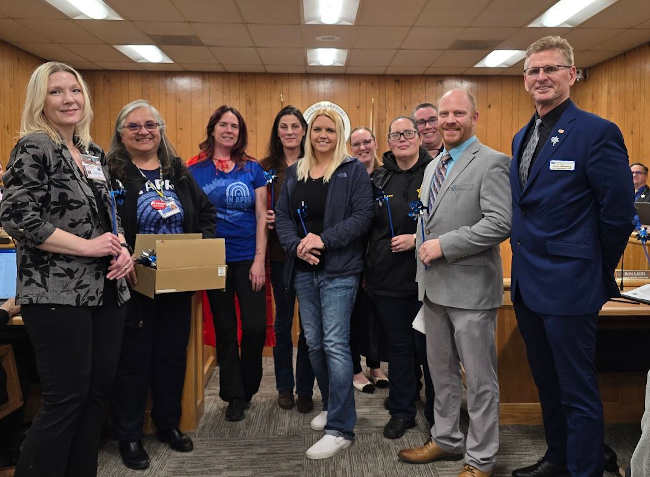
Lake County educators, advocates and officials during the Child Abuse Prevention Month proclamation presentation at Lakeport City Hall on Tuesday, April 1, 2025, in Lakeport, California. Photo by Lingzi Chen/Lake County News.


LAKE COUNTY, Calif. — April is Child Abuse Prevention Month, and Lake County is coming together to raise awareness and promote the well-being of children and families in our community.

This year, the Office of Child Abuse Prevention has selected the theme “Powered by Hope, Strengthened by Prevention,” emphasizes the importance of proactive efforts that support families, strengthen communities, and ensure all children have the opportunity for a bright future.

Locally, the Lake County Child Abuse Prevention Council has chosen the theme “Be a Hero,” encouraging individuals to either become their own hero or be a hero for someone else. These themes serve as a reminder that everyone has a role to play in ensuring the safety and well-being of children.

Throughout the month, local organizations, county departments and community members are hosting a variety of events designed to engage, educate and inspire action. These events provide opportunities for people to show their support and help create a safer, healthier environment for all children.

Proclamations

Public proclamations play a crucial role in raising awareness and demonstrating a unified commitment to preventing child abuse. They bring visibility to the issue, encourage community-wide participation, and reinforce the importance of collective action.

When local governments recognize Child Abuse Prevention Month, they help to amplify the message that child protection is a shared responsibility.

On April 1, both the Lake County Board of Supervisors and the City of Lakeport proclaimed April as Child Abuse Prevention Month, reaffirming their commitment to protecting the most vulnerable members of our community.

The city of Clearlake followed suit with its own proclamation on April 3 and the Board of Education will offer its proclamation on April 15, further emphasizing the collective dedication to this important cause.

Flag raising ceremonies: Honoring and remembering

Lake County is also hosting flag-raising ceremonies to symbolize our commitment to child safety. The Children’s Memorial Flag was raised at two locations on April 1, Lake Family Resource Center’s new Lakeport office and Lake County Probation’s Lower Lake office, serving as a visual pledge to protect and advocate for the well-being of all children.

The final flag-raising and closing ceremony will take place on April 25 at 9 a.m. at the Lake County Sheriff’s Office in Lakeport, providing a moment for the community to come together again to honor the children lost to child abuse and neglect.

Pinwheel gardens: A symbol of hope

Throughout April, pinwheel gardens will be planted across Lake County as a symbol of hope and a reminder of the importance of preventing child abuse.

This year, three lucky winners will be selected from the participants, adding an extra layer of excitement and engagement to this meaningful initiative. So, make sure to plant your pinwheel garden, post a picture on Facebook, and add the hashtag #resilientlakecounty.

Celebrating Creativity: Child Art Contest

Another activity is the children’s art contest, where young artists created artworks displaying what “Be A Hero” means to them.

The winning pieces will be proudly displayed on placemats and handed out at local restaurants, serving as a powerful reminder of the importance of nurturing and protecting our children.

This year’s participating restaurants are Taco Bell in Lakeport, Judy’s Junction, Pogos in Kelseyville, Grandpa’s Café, BBQ by Biscotti, Subway in Clearlake and Cabos.

Children's Festival & Advocacy Walk: April 12 and 26

Families are invited to the Children’s Festival and Memorial Walk at Xabatin Park in Lakeport on April 12 and again on April 26 at Austin Park in Clear Lake from 10 a.m to 3 p.m.

These special events are a chance to honor children who have been affected by abuse while celebrating the joy and resilience of childhood.

The festival will feature free fun activities, resources for families, and opportunities to learn more about prevention efforts.

Join the movement

Child Abuse Prevention Month is more than just a series of events — it’s a call to action. Every child deserves to grow up in a safe and nurturing environment, and it takes a united community to make that a reality.

Whether you participate in the festivals, attend a flag-raising ceremony, join the Children’s Council, or simply spread awareness, your involvement makes a difference.

Lake County is urged to stand together to protect our children and build a brighter future for all.

Clearlake Animal Control: “Kahlua” and the dogs

“Kahlua.” Photo courtesy of Clearlake Animal Control.

CLEARLAKE, Calif. — Clearlake Animal Control has more new dogs and puppies waiting for homes this week.

The shelter has 55 adoptable dogs listed on its website.

This week’s dogs include “Kahlua,” a 2-month-old German Shepherd mix puppy with a short silver and black coat.

The shelter is located at 6820 Old Highway 53. It’s open from 9 a.m. to 6 p.m. Tuesday through Saturday.

For more information, call the shelter at 707-762-6227, email This email address is being protected from spambots. You need JavaScript enabled to view it., visit Clearlake Animal Control on Facebook or on the city’s website.

This week’s adoptable dogs are featured below.

Email Elizabeth Larson at This email address is being protected from spambots. You need JavaScript enabled to view it.. Follow her on Twitter, @ERLarson, and on Bluesky, @erlarson.bsky.social. Find Lake County News on the following platforms: Facebook, @LakeCoNews; X, @LakeCoNews; Threads, @lakeconews, and on Bluesky, @lakeconews.bsky.social.


State attorney general secures order restoring $11 billion in critical public health funding

California Attorney General Bonta on Thursday issued a statement on the U.S. District Court for the District of Rhode Island’s decision granting a temporary restraining order that immediately restores $11 billion in critical public health funding to state and local public health agencies across the country, including $972 million to California.

“Two days after filing our 9th lawsuit against the Trump Administration, we have secured a temporary order that restores public health funding and ensures communities nationwide are prepared for public health threats,” said Attorney General Bonta. “As our lawsuit continues, we remain steadfast in our commitment to ensure state and local health agencies have what they need to keep Americans healthy and safe.”

Beginning on March 24, 2025, the U.S. Department of Health and Human Services, or HHS, abruptly, with no advance notice or warning, issued termination notices to state and local public health agencies across the country, purporting to end federal funding for grants that provide essential support for a wide range of urgent public health needs, including identifying, tracking, and addressing infectious diseases; ensuring access to immunizations; and modernizing critical public health infrastructure.

The federal funding was appropriated by Congress to ensure the United States is better prepared for future public health threats.

On Tuesday, Attorney General Bonta announced co-leading a coalition of 23 states and the District of Columbia in filing a lawsuit against the Trump Administration’s HHS and HHS Secretary Robert F. Kennedy, Jr. over the unlawful termination of public health funding.

On Thursday, the court responded by granting the requested temporary restraining order.

The order temporarily restores essential public health funding and vital programs that serve millions of Californians, including children, rural communities, and nursing homes, including:

• Over $800 million that the California Department of Public Health intended to use, in part, to vaccinate 4.5 million children statewide and assist hospitals in directing injured and ill patients to available health facilities during all types of emergencies, where efficient routing saves lives.
• $119 million to the California Department of Health Care Services which supports key programs, including substance use disorder prevention and early intervention services for youth in at least 18 counties.
• $45 million to the Los Angeles County Department of Public Health to use in part, to strengthen the county’s efforts to prevent the spread of measles, and seasonal and avian influenza.

California State Library receives notice of termination of federal funds

The California State Library has been notified by the federal Institute of Museum and Library Services, or IMLS, that, effective April 1, the 2024-25 federal grant awarded under the Library Services and Technology Act has been terminated.

In the current fiscal year, the State Library received $15,705,702 in funding to assist local
California libraries provide programs and services, as well as supporting the services provided by the State Library to state government, policymakers, and the public.

Over 21 percent of that funding has yet to be sent to California.

“We are deeply disappointed by this ill-informed decision, which immediately affects critical programs supported by these funds,” said California Deputy State Librarian Rebecca Wendt. “The California State Library remains committed to serving all of the people of California and will explore alternative means to ensure continued access to essential library services.”

The Library Services and Technology Act,or LSTA, has provided critical funding for a wide range of programs that benefit communities across California.

These funds support early learning and literacy programs, such as storytimes and play spaces for low-income families, summer reading initiatives that engage over a million children and teens, and programs that help at-risk youth develop workforce-readiness skills.

Additionally, LSTA funds have enabled State Library staff to assist with the expansion of the Student Success Card program, ensuring that all California students receive a public library card by third grade.

Beyond literacy, LSTA funding strengthens communities by supporting diverse programs that align with California’s cultural, educational, and environmental priorities.

Local libraries have used these funds to create climate education programs, community gardens, tool libraries, and telehealth privacy pods for individuals without home internet access.

Libraries also provide valuable services for veterans, formerly incarcerated individuals, and tribal and rural communities. High-speed broadband initiatives, along with programs like California Revealed and the Cultural Heritage Disaster Preparedness Program, ensure that California’s history and cultural treasures are preserved and accessible to the public.

LSTA funding also expands access to learning resources for Californians of all ages. It supports the state’s only shared eBook collection, free access to major news publications like The New York Times and CalMatters for Learning, and databases that serve state employees, lawmakers and the general public.

The Career Online High School program, supported by State Library staff, enables adults to earn their high school diplomas through local libraries, while the Braille and Talking Book Library ensures that visually impaired Californians have free access to books in accessible formats.

Additionally, these funds help strengthen California’s library workforce through statewide training, leadership development, and tuition reimbursement for those studying to become librarians.

Libraries also benefit from partnerships with state agencies, including the Departments of Aging, Public Health, and Technology, which allow public libraries to serve as vital hubs for government resources and community engagement.

Moreover, LSTA funds support programs that promote government transparency, such as cataloging and maintaining access to federal and state government documents.

From fostering literacy and lifelong learning to preserving history and expanding digital access, LSTA funding plays an essential role in ensuring that California’s libraries remain innovative and responsive to the evolving needs of the communities they serve.

The California State Library said it will provide further updates as additional information becomes available.
  • 262
  • 263
  • 264
  • 265
  • 266
  • 267
  • 268
  • 269
  • 270
  • 271

Community

  • Sheriff’s Activities League and Clearlake Bassmasters offer youth fishing clinic

  • City Nature Challenge takes place April 24 to 27

Public Safety

  • Lakeport Police logs: Wednesday, Feb. 11

  • Lakeport Police logs: Tuesday, Feb. 10

Education

  • Ramos measure requiring school officer training in use of anti-opioid drug moves forward

  • Lake County Chapter of CWA announces annual scholarships 

Health

  • California ranks 24th in America’s Health Rankings Annual Report from United Health Foundation

  • Healthy blood donors especially vital during active flu season

Business

  • Employment law summit takes place March 9

  • Two Lake County Mediacom employees earn company’s top service awards

Obituaries

  • Terry Knight

  • Ellen Thomas

Opinion & Letters

  • Who should pay for AI’s power? Not California ratepayers

  • Crandell: Supporting nephew for reelection in supervisorial race

Veterans

  • State honors fallen chief warrant officer killed in conflict in Iran

  • CalVet and CSU Long Beach team up to improve data collection related to veteran suicides

Recreation

  • April Audubon program will show how volunteers can help monitor local osprey nests

  • First guided nature walk of spring at Anderson Marsh State Historic Park April 11

  • Second Saturday guided nature walks continue at Anderson Marsh State Historic Park

  • Wet weather trail closure in effect on Upper Lake Ranger District

Religion

  • Kelseyville Presbyterian Church plans Easter service

  • Easter ‘Sonrise’ Service returns to Xabatin Community Park

Arts & Life

  • ‘CIA’ delves into the shadowy world of an espionage thriller

  • ‘War Machine’ shifts the battlefield into uncharted territory

Government & Politics

  • Lake County Democratic Central Committee endorses Falkenberg

  • Crandell launches reelection campaign plans March 15 event

Legals

  • April 23 hearing on Lake Coco Farms Major Use Permit

  • NOTICE OF 30-DAY PUBLIC COMMENT PERIOD & NOTICE OF PUBLIC HEARING

How to resolve AdBlock issue?
Refresh this page