 How to resolve AdBlock issue?
Next performance for 'Lake County Live!' set for April 29

LAKEPORT, Calif. – Lake County Live! returns to the Soper-Reese Community Theatre on Sunday, April 29, at 6 p.m.
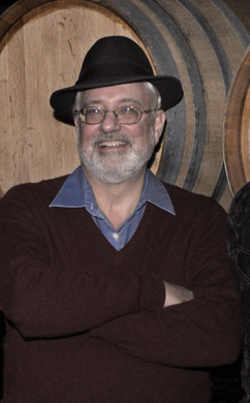
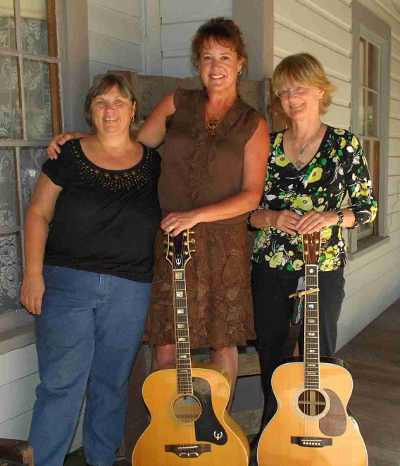
The fourth outing of this locally produced show will feature Three Deep, consisting of Jill Shaul Anna McAtee and Sarah Tichava, the flamenco guitar duo Austin and Owens, and local keyboard artist David Neft.
Lake County Live! has rapidly become a popular venue for local talent, performing live in the theater with an audience and broadcast live on Lake County Community Radio KPFZ 88.1 FM.
“We’ve had a great time with our first three shows, and look forward to number four with all the same enthusiasm and talent from our previous shows,” said creator and producer Doug Rhoades.
The show is supported by the Soper-Reese Community Theatre, KPFZ and Lake County News, www.lakeconews.com .
“Our next show will again feature great local talent, as well as the return of Ladies of the Lake, our recurring soap opera featuring Suna Flores, Kris Andre, Pamela Bradley and Vicky Parish Smith. Richard Smith, Mitchell Hauptman and Nick Reid will join us again for our program on April 29, giving our audience a great show and a glimpse of what goes into producing a live radio show,” said Rhoades.
Tickets for the next show are available at the Soper-Reese box office on Fridays from 10:30 a.m. to 5:30 p.m. and at the Travel Center in Lakeport, as well as on line at www.soperreesetheatre.com .
Information about the show or questions can be directed to
WATER: DWR increases State Water Project Allocation to 60 percent
SACRAMENTO – The Department of Water Resources (DWR) on Monday estimated it will be able to deliver 60 percent of requested State Water Project (SWP) water this year.
This is up from the 50 percent delivery estimate – or allocation – announced on Feb. 22.
Originally, DWR projected in November that it would be able to supply 60 percent of the slightly more than 4 million acre-feet of SWP water requested, but a dry December, January and February dropped that figure to 50 percent.
Monday’s increase is due to an unusually wet March and higher-than-average reservoir storage carried over from last winter.
“This is good news for our water supply as we approach summer’s peak-demand period,” said DWR Director Mark Cowin. “But we must remember that we still had a dry winter despite a partial recovery in March, and we need to be prepared for a potentially second consecutive dry year in 2013, when reservoir storage would be reduced.”
A 60 percent allocation is not unusually low.
Wet conditions last year allowed the SWP to deliver 80 percent of the slightly more than 4 million acre-feet requested by the 29 public agencies that supply more than 25 million Californians and nearly a million acres of irrigated farmland. An acre-foot is 325,851 gallons of water, enough to cover one acre to a depth of one foot.
The final allocation was 50 percent in 2010, 40 percent in 2009, 35 percent in 2008, and 60 percent in 2007.
The last 100 percent allocation – difficult to achieve even in wet years due to pumping restrictions to protect threatened and endangered fish – was in 2006.
Last month’s allocation-boosting storms came after unusually dry conditions up and down the state.
Much of California’s water comes from the mountainous country from Shasta Lake in the north to the American River in the south.
DWR’s precipitation gages covering this area recorded an impressive 130 percent of average rainfall in October, but only 43 percent in November, four percent of average in December, 84 percent of average in January, and 38 percent of normal in February. March, however, came in at 228 percent of normal.
Precipitation gages in the San Joaquin basin recorded125 percent of the average monthly precipitation for October, 32 percent for November, zero percent for December, 80 percent for January, and 35 percent for February. March recorded 110 percent of normal.
The mountain snowpack shows a north-to-south variance in this winter’s weather patterns. Water content in the statewide snowpack is only 68 percent of normal for the date, whereas the reading in the northern ranges is 101 percent of normal.
Reservoir storage remains high, largely due to carryover from last winter.
Lake Oroville in Butte County, the State Water Project’s principal reservoir, is at 110 percent of average for the date (88 percent of its 3.5 million acre-foot capacity).
Lake Shasta north of Redding, the federal Central Valley Project’s largest reservoir with a capacity of 4.5 million acre-feet, also is at 110 percent of average (93 percent of capacity).
Statewide snowpack readings from electronic sensors are available on the Internet at http://cdec.water.ca.gov/cgi-progs/snow/DLYSWEQ .
Electronic reservoir level readings may be found at http://cdec.water.ca.gov/cdecapp/resapp/getResGraphsMain.action .
UPDATE: Victim of fatal Sunday crash identified
THIS STORY HAS BEEN UPDATED WITH ADDITIONAL DETAILS ABOUT THE ARREST AND INVESTIGATION.
LAKE COUNTY, Calif. – The local woman who died in a fatal crash early Sunday morning has been identified.
Jennifer Clark, 31, of Clearlake was the victim in the crash, according to Sgt. Steve Brooks of the Lake County Sheriff’s Office.
Clark was the passenger in a 1984 Chevrolet El Camino driven by 27-year-old Danny Fields II of Clearlake when the crash occurred sometime between 5 a.m. and 7 a.m. Sunday, according to the California Highway Patrol.
Fields was driving southbound on Highway 29 north of Highway 53 near Lower Lake when his car went off the road, traveled down an embankment and hit a walnut tree, the CHP reported.
Fields then reportedly left the scene, was picked up by an unidentified driver and dropped off at the Tower Mart in Lower Lake. The CHP said Fields’ parents were contacted, and they picked him up from the Tower Mart and transported him to St. Helena Hospital Clearlake.
It was the hospital that contacted the CHP shortly before 9 a.m. Sunday to notify the agency that a traffic collision involving Fields had taken place.
The Lake County Sheriff’s Office, which assisted in the investigation, discovered Fields’ vehicle less than 20 minutes after the hospital reported the crash. Clark was found inside the vehicle and pronounced dead, the CHP said.
A blood sample was taken from Fields, as CHP investigators suspect that the crash may have been the result of driving under the influence. That blood sample has been sent to the California Department of Justice lab for analysis, according to CHP Sgt. Rick Okazaki.
Fields, who sustained major injuries in the crash, was placed under arrest for felony driving under the influence and felony hit and run causing death or injury, Okazaki said.
However, Fields was released after his arrest due to the extent of his injuries. That doesn’t preclude the CHP from refiling charges if the investigation concludes Fields was at fault, Okazaki said.
Fields is still hospitalized, Okazaki said.
Officer Joe Wind said Monday that the investigation is continuing, with officers speaking to witnesses in an effort to fully understand what took place.
“They’re busy working on different leads,” he said.
Email Elizabeth Larson at
Tribal chair’s preliminary hearing expected to be scheduled at May hearing
LAKE COUNTY, Calif. – A preliminary hearing is expected to be set next month for Robinson Rancheria’s tribal chair, who is alleged to have embezzled tens of thousands of dollars while she worked for another local tribe.
Following a federal investigation, Tracey Avila, 50, of Nice was arrested last September on a felony charge of grand theft, as Lake County News has reported.
She allegedly took more than $60,000 from Elem Colony of Clearlake Oaks while she worked as the tribe’s fiscal officer from February 2006 to September 2008, according to case documents.
Deputy District Attorney Rachel Abelson, who is prosecuting the case, said the discovery in the case is still being finalized, thus the delay in the proceedings.
She said the preliminary hearing is expected to be set at a hearing on May 22 in Judge Stephen Hedstrom’s Clearlake courtroom.
The case began after Elem conducted its own investigation and concluded that Avila had allegedly taken the funds.
In June 2009, the tribe’s general counsel sent a letter to Laura Yoshii, acting regional director for the U.S. Environmental Protection Agency's Pacific Southwest Region 9, requesting an investigation into the alleged embezzlement.
Within two weeks U.S. EPA’s Grants Management Office opened the investigation, which later was handed to special agents with the EPA Office of the Inspector General and HUD's Office of the Inspector General, according to investigative documents.
If convicted, Avila could face a maximum three years in state prison, according to Abelson. Avila may end up serving her prison time in the Lake County Jail due to correctional realignment.
E-mail Elizabeth Larson at




