 How to resolve AdBlock issue?
 Lakeport Police logs: Saturday, Jan. 10
Saturday, Jan. 10, 2026
00:00 EXTRA PATROL 2601100001
Occurred at Lake County Law Library on 3D....

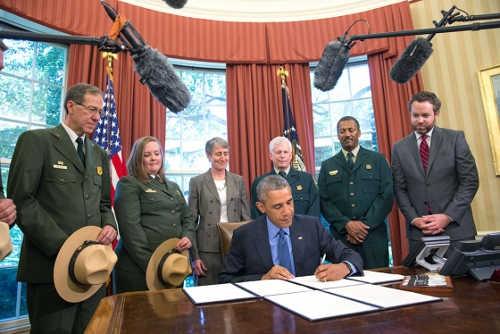
LAKE COUNTY, Calif. – On Friday President Barack Obama signed a proclamation giving the Berryessa Snow Mountain region national monument status, a designation that proponents say will aid the region's economy through tourism and recreation opportunities.
The new national monument region covers approximately 330,780 acres managed by federal agencies across seven counties – Lake, Colusa, Glenn, Mendocino, Napa, Yolo and Solano – and extends from Berryessa Peak to the eastern boundary of the Yuki Wilderness in Mendocino County. It does not include Lake Berryessa itself.
The map of the new national monument also shows that it encompasses both the Snow Mountain Wilderness and Cache Creek Wilderness areas.
A coalition of groups, individuals and local governments have worked for years to conserve the area, pursuing a congressional designation since 2012.
Congressman Mike Thompson is among those who had worked for the region’s protection.
Earlier this year, Thompson introduced HR 761, which would have designated the region as a national monument. Thompson's office said the benefits of the designation including placing all of the federal lands in the boundary under one management plan, allowing the region to be managed more efficiently and according to the site-specific needs.
However, Obama used his executive power under the Antiquities Act to give the designation instead.
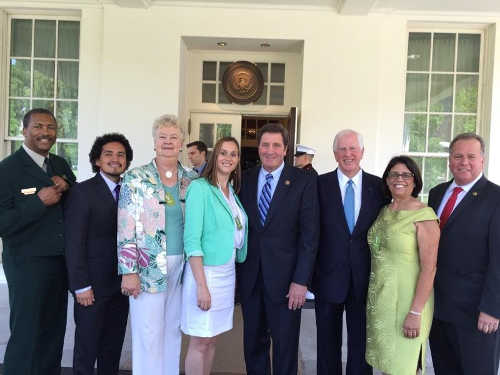
“After years of tireless work by countless numbers of people, the Berryessa Snow Mountain region is finally getting the permanent protection it deserves,” said Thompson, who attended the Friday signing ceremony at the White House. “This national monument designation will provide a boost to our local economy, enhance recreational opportunities for tens of thousands of people, and protect important wildlife.”
He thanked Interior Secretary Sally Jewell, Agriculture Secretary Tom Vilsack and US Sen. Barbara Boxer for their efforts, along with President Obama “for taking action to protect one of America's national treasures."
Lake County's other member of Congress, John Garamendi, also lauded Obama's action, calling it “a victory for local communities, local economies, and the environment.”
Garamendi added, “It will improve management of native wildlife, protect water quality in vital watersheds, and enhance the experience for the area’s numerous visitors.”
In January, Assemblyman Bill Dodd, who represents Lake County in the state Assembly, introduced a resolution petitioning Obama to give the Berryessa Snow Mountain region the national monument designation. It passed the state Legislature in April with bipartisan support and was forwarded to the president.
Dodd’s office said his resolution marked the first time the state of California has formally petitioned the White House for such a designation.
“The designation of the Berryessa Snow Mountain National Monument marks the culmination of a longstanding effort to promote and protect the Berryessa Snow Mountain Wilderness. This is a great win for California and our environment, our local economies, and future generations. President Obama has answered the call of our region and of our state to preserve these lands,” said Dodd.
The national monument and the region
The new Berryessa Snow Mountain National Monument is the second largest national monument in California after the San Gabriel Mountains National Monument, according to the US Department of Agriculture.
It's also the first national monument to cross into the boundaries of Lake County, which of the seven counties included in the region contains the largest portion of the new monument’s acreage. Maps of the new monument show it covers close to a third of Lake County’s total land area.
The new designation places Berryessa Snow Mountain among a total of 117 national monument designations across the United State and occupied territories, including celebrated American landmarks as the Grand Canyon, the Statue of Liberty and Muir Woods.
Officials said American Indians have inhabited the Berryessa Snow Mountain area for at least the last 11,000 years, leaving behind seasonal hunting camps and earth-covered round buildings.
Much of the Lake County land included in the monument is located in the mountains above the Northshore, based on the map.
Officials said the national monument designation only pertains to existing federal public lands, and will not affect any private properties or existing water rights.
Of the overall area, 197,214 acres of the new national monument is in the Mendocino National Forest and 133,566 acres is in Bureau of Land Management lands, according to Tamara Schmidt, a spokesperson for the Mendocino National Forest.
Schmidt said both agencies will retain management and responsibility of their respective lands.
“Both agencies will work on a management plan for the new Berryessa Snow Mountain National Monument,” Schmidt said. “This planning process will have maximum public involvement, including with tribes, permit holders, ranchers, interested partners and public, as well as state and local governments.”
Jill Ruzicka, public information officer for the county of Lake, said the county has not done a specific study about the potential benefits from the new designation for the local economy.
However, local, state and federal officials point to a study commissioned by the Winters Chamber of Commerce that projects $50 million in additional economic activity in the region due to the designation over the next five years.
Local leaders put their support behind the designation, with the Lake County Board of Supervisors and the Lakeport City Council joining government bodies across the region that voted to support making the region a national monument.
The coalition supporting the national monument designation for the Berryessa Snow Mountain region included the Woodland-based conservation group Tuleyome, which took a leadership role, as well as the California Wilderness Coalition, Conservation Lands Foundation, Defenders of Wildlife, Sierra Club and a host of others.
Trout Unlimited also praised the designation, pointing out that the Berryessa Snow Mountain public lands offer a variety of streams and lakes that support outstanding fishing for trout, bass and other species, and provide hunters a wilderness hunting experience for blacktail deer in the A and popular B-3 deer hunting zones.
The group said trout streams include the trophy trout fishery of Putah Creek – the California Department of Fish and Wildlife's newest designated Wild Trout water – and the headwaters of the Eel River, one of the state’s finest steelhead fisheries. The Middle Fork of Stony Creek in the Snow Mountain Wilderness is also designated Wild Trout water.
“Simply put, hunting and angling depend on healthy habitat. It is our responsibility as sportsmen to protect our wild country on public lands so we can pass this gift on to the next generation,” said David Lass, Trout Unlimited's California field director and campaign manager for the Berryessa Snow Mountain initiative. “Today, President Obama ensured the Berryessa Snow Mountain public lands will remain a great place to hunt and fish.”
Along with Berryessa Snow Mountain, President Obama also gave the national monument designation to the Basin and Range National Monument and Waco Mammoth Site National Monument.
Berryessa Snow Mountain now joins other California national monuments including:
– Muir Woods (T. Roosevelt, 1908; enlarged by Harding, F. Roosevelt and Truman);
– Devils Postpile (Taft, 1911);
– Cabrillo (Wilson, 1913; enlarged by Eisenhower and Ford);
– Lava Beds (Coolidge, 1925; enlarged by Truman);
– California Coastal (Clinton, 2000);
– Giant Sequoia (Clinton, 2000);
– Santa Rosa and San Jacinto Mountains (Clinton, 2000);
– Carrizo Plain (Clinton, 2001);
– Tule Lake Unit of WWII Valor in the Pacific National Monument (G.W. Bush, 2008);
– Cesar E. Chavez (Obama, 2012);
– Fort Ord (Obama, 2012);
– Point Arena-Stornetta (Obama, 2014; a unit of the California Coastal National Monument);
– San Gabriel Mountains (Obama, 2014).
With his action on Friday, President Obama has used the 1906 Antiquities Act to create or expand 19 national monuments that include more than 260 acres of public lands and waters.
The White House said Obama is responsible for protecting more lands for future generations than any other US president.
To see the president’s full proclamation, visit https://www.whitehouse.gov/the-press-office/2015/07/10/presidential-proclamation-establishment-berryessa-snow-mountain-national .
Email Elizabeth Larson at
Berryessa Snow Mountain National Monument Map
LAKE COUNTY, Calif. – The 2014-15 Lake County Grand Jury has wrapped up its investigations and reporting efforts, with its report released this week to the public.
The document was made available to local agencies and officials in its initial form last week, ahead of the public release on Monday.
“Our chief observation is that Lake County employees at all levels are highly dedicated and honorable people,” James Baur, the grand jury foreman, wrote in his letter to the county's citizens at the beginning of the report. “Often, they are dealing with low staffing levels, legal restrictions and other obstacles which they work hard to overcome.”
Baur also noted, “County staff was cooperative in the investigation process and forthcoming with information. A review of our final report will show a number of areas where improvements can be made.”
After reviewing the grand jury's report, Presiding Lake County Superior Court Judge Stephen Hedstrom wrote a letter to the jurors – dated June 7 – thanking them for their work and reporting that he found the report to be in compliance with the California Penal Code.
“While you have no power to enforce your recommendations, the law requires governing bodies, elected officials, and agency heads to provide meaningful responses to your findings and recommendations,” Hedstrom wrote. “Respect for your hard work and the importance of your final report should also motivate meaningful responses.”
Hedstrom added, “Your findings and recommendations, together with official responses and publicity should lead to honest debate and ultimately improve the fairness, quality, and efficiency of local government.”
The 59-page document includes reports on the county's detention holding facilities, food safety funding, In-Home Supportive Services, Lake Transit Authority and Lampson Field.
In reviewing the county's detention facilities – which the grand jury is mandated to review – it found them to be in compliance, although it noted a difficulty with a door at the South Lake Court.
In the case of Lake County Environmental Health, the grand jury investigated the division not only to follow up on recommendations and findings made by the 2013-14 grand jury, but to look at ways to increase revenue for the primarily self-funded agency.
The agency has to permit and inspect all of the county's food service providers – more than 370 of them – while dealing with staffing challenges, according to the report.
The 2013-14 Grand Jury Report had found that the agency was behind on inspections, an issue that since has been rectified, according to the latest grand jury report. However, it has an open inspector position – one of three – with staff not having received cost of living increases in eight years.
Recommendations include aggressively recruiting for a third inspector, making facilities pay fines for not complying with Health and Safety Code, increasing permit fees annually, charging other county departments or agencies for services, offering training for a fee, creating a safety rating system to inform the public, considering opening a testing laboratory and recruiting student interns.
The grand jury also took a close look at In-Home Supportive Services, the county's largest employer through the IHSS Public Authority, which assists nearly 2,000 local elderly and disabled recipients, who are eligible for Medi-Cal, to remain in their homes as opposed to having to live in convalescent facilities.
The grand jury followed up on IHSS this year based on last year's report, to see if issues raised last year concerning fraudulent activities by providers and recipients had been resolved.
“We were pleased to find that, to a large extent, this was the case,” the report said regarding resolutions about fraud concerns, adding that the grand jury found other areas needing improvement during the course of its investigation.
Based on its findings, the grand jurors recommended more extensive background checks for providers extending outside of California; random drug testing of providers; providing additional vehicles for IHSS social workers; increasing wages to attract and retain more qualified providers and provide a livable wage, as local providers receive $9.30 an hour; increasing training for providers; establishing a certificate program for advanced training for providers as part of a pay incentive program; and purchasing devices like tablets to allow social workers to report on conditions during home inspections.
Amongst its other reports, for the first time since 2009, the grand jury investigated the Lake Transit Authority, which provides public transportation through Lake County, with connecting bus service to parts of Mendocino and Napa counties.
Recommendations include creating a succession plan for the executive director, offering informational panels inside the buses regarding board of directors' meetings, and allowing for public services notices also to be posted there; creation of a link on the home page for board minutes and agendas listed on the Lake County/City Area Planning Council Web site; making bus schedules available on each bus in a visible and convenient location; creating a link on the LTA Web site to promote bus advertising; making it easier for riders to comment on issues by including the Web address, phone numbers and complaint/satisfaction forms on all buses; and adding a “find your bus now” page on the LTA Web site.
In response to a written citizen complaint regarding safety, the grand jury also looked at Lampson Field Airport, which was activated in 1941 and acquired by the county in 1955, according to the report.
“The Grand Jury conducted several onsite visits and concluded that Lampson Field was not visitor friendly,” the report said, citing only one portable bathroom, little or no visitor information, difficulty location information on tie-downs and hangars in need of repainting and repair.
The grand jury offered more than a dozen recommendations, including establishing an airport advisory committee to advise the Board of Supervisors on the airport's operation and collecting on past due accounts on lessees. The report noted that one lessee is currently more than $41,000 past due in lease payments.
Other grand jury recommendations for the airport include installing an information kiosk and improved signage, resolving sewage problems at the property, establishing a remote office at the site for the airport manager and maintenance personnel, installation of a security fence, performance by Lake County Public Works of periodic site inspections of airport facilities, and developing a five- to 10-year maintenance plan.
In addition to looking at various agencies, the report explains how the grand jury created its first “continuity committee,” based on a suggestion grand jurors heard at a training offered last summer by the California Grand Jury Association.
The committee is meant to provide “continuity and a smooth transition between the out-going and income grand juries,” the report explained.
That committee also “developed several tools and established new procedures to facilitate both the examination of previous reports and the writing of this year's final report.”
Those tools included a response chart for the 2013-14 final report, so it could track followup and response from the previous year; and a grand jury reports index that covered investigations done from 2009-10 forward, which is included near the end of the report.
The full document will be made available at public libraries and, in the near future, will be posted online at the Grand Jury's Web page, http://www.co.lake.ca.us/Government/Boards/Grand_Jury/FinalReports.htm . That page features final reports going back to 2001-02.
Email Elizabeth Larson at
CLEARLAKE, Calif. – During a quick regular Thursday night meeting the Clearlake City Council appointed voting delegates for a fall conference and turned down two proposed property donations.
In under half an hour council members worked through an agenda with only three business items.
In the first, they appointed Councilman Russell Perdock as the city's voting delegate to the League of California Cities' annual conference, which takes place in San Jose in September.
Vice Mayor Gina Fortino Dickson and Bruno Sabatier were appointed first and second alternates, respectively.
City Manager Greg Folsom presented to the council the two proposed property donations, both of which he recommended declining.
The first parcel up for consideration, located at 5768 Vallejo Ave., is owned by Georgeann Jolley.
“This is a fairly simple one,” said Folsom, who explained that the city's Public Works director, Doug Herren, went to look at the parcel.
“There's no current or future potential use for this property. It's very inaccessible,” said Folsom, noting that to get to it one has to take a dirt road.
There was no public comment on the proposed donation, which the council voted unanimously to decline.
The second parcel at 3497 Park St. is owned by Khaled Neouchy, and is a similar type of property to Jolley's, said Folsom, explaining it's also on a dirt road.
After a review by city staff, Folsom said it was determined that there are no current or future uses for that second parcel, either.
He explained that the city would take on additional liability if it accepted the property, and so he recommended not taking it.
No public comment was offered and the council followed up with another unanimous decision to decline the Neouchy parcel.
During his first official report to the council, Folsom thanked council members and the community for the warm welcome he's received since joining the city last month as its new city manager. It's his first city manager post.
“I've met a lot of people so far. Everybody has just been tremendously nice,” he said, noting that the friendly people he's met since interviewing for the position caused him to be interested in taking the job.
“Coming from the big city,” said Folsom, who most recently was in Riverside County, “you don't necessarily see that all the time, so it's kind of refreshing.”
Folsom also thanked the council for letting him overlap his first weeks on the job with the final weeks of retiring City Manager Joan Phillipe's tenure.
Folsom started work June 15, and Phillipe retired officially on June 30, although she attended the Tuesday Clearlake Planning Commission.
“She's been a tremendous asset to me, helping me to learn and get up to speed on a number of projects,” Folsom said, adding that Phillipe has been extremely gracious with her time and knowledge and an asset to the city overall.
As he's been getting settled in, Folsom also has managed to complete the county's Certified Tourism Ambassador program, met with local leaders, and was part of the joint council and commission meeting on June 30.
During council member reports, Councilwoman Joyce Overton reported that she has been hired as the new executive director for the Highlands Senior Services Center, effective July 1.
In his report, Perdock agreed with Folsom's perceptions of the community. “We do have nice people here. We have genuine people.”
Perdock thanked the Lakeshore Lions Club and the other community groups that helped put on the city's July 4 celebration.
Perdock said he wanted to send a letter of thanks to Pacific Gas and Electric, which made a nearly $7,000 donation to the city's fireworks show.
Fortino Dickson reported on her attendance at the League of California Cities' Executive Forum in Monterey, where communication and collaboration were key topics.
Based on her interactions with representatives from other communities, Fortino Dickson came away with a conviction that the city's leaders communicate well with each other, and that on the local level collaboration is successful.
“Here in Lake County we collaborate on a much bigger scale than other communities do,” while leveraging resources amongst agencies, she said.
Fortino Dickson also asked the council for consensus to bring forward a proposal for a plastic bag ban in the city, which the council had decided to hold off on pursuing following a previous discussion.
Considering the city's waterways and natural elements, “I think that a plastic bag would be something that, for our community, makes sense,” she said.
Fortino Dickson received the requested consensus from fellow council members who expressed their interest in discussing the plastic bag ban proposal at a future meeting.
Email Elizabeth Larson at
LAKEPORT, Calif. – The Lakeport City Council on Tuesday evening granted a 60-day continuance in a cell phone tower appeal case in order to allow for the exploration of additional sites and designs.
Complete Wireless Consulting, on behalf of Verizon Wireless, has applied for a permit to build a 72-foot monopine tower – which would be disguised to look like a pine tree – at 1875 N. High St. in order to increase cell coverage for about 3,400 Lakeport-area residents, according to a company representative.
The Lakeport Planning Commission approved the project in May, with Nancy Ruzicka, owner of the High Street Village shopping center, appealing it to the Lakeport City Council, which first heard it last month.
Both at its June 16 meeting and again on Tuesday night, the council appeared united in not believing the site is appropriate.
While zoned commercial, it's in the midst of neighborhoods where residents have said it would negatively impact the aesthetics and their property values.
The council had held the discussion over from last month, directing Community Development Director Kevin Ingram to return with a draft resolution containing findings to support Ruzicka's appeal.
Ingram did that, presenting the resolution to the council on Tuesday. The draft document cited inconsistent land uses, an incompatible design, the potential for the tower's building materials to break down over the long term and lack of evidence that other locations aren't more feasible.
He said the city had been in contact with the applicant, and it was possible that alternative locations that take into account both the cell coverage gap and residents' concerns can be found.
Jenny Blocker of Complete Wireless Consulting told the council that Verizon wanted 60 days to analyze alternative locations and designs for the project.
Mayor Martin Scheel asked City Attorney David Ruderman to explain what actions the city could take as part of the appeal process.
Ruderman explained that the council can modify conditions of permits or revoke permits granted by the commission, and could approve an alternate use permit.
“The council's decision is the final decision with respect to that location and that design,” he said.
Ingram explained that it would be a six- to eight-month process if the company applied for a new location.
Neighbors who spoke during public comment urged the council to disregard the continuance request and grant Ruzicka's appeal, pointing out that Verizon would have to reapply for a new location anyway.
Suzanne Lyons questioned why Blocker said at the June 16 meeting that the North High Street location was the only location the company was willing to consider, and now was asking to consider other options. “I really think the people have told you what they want.”
Lea Passantino, owner of a parcel at 11th Street which had been considered but eliminated for the cell tower site, said her property deserved a second look, as she is willing to have the tower on the property.
Ruzicka also wanted her appeal to be granted Tuesday night, saying she disagreed with some of the resolution's findings because she said they were incorrect. She wanted the city to accept a new application for another location at a later date.
During the meeting council members raised concerns about the potential for litigation, with Councilman Marc Spillman asking Ruderman about the potential dangers of granting the appeal.
Ruderman explained that, based on the federal Telecommunications Act, local jurisdictions can't make decisions about cell towers based on radio frequency emissions concerns.
He said carriers are able to build towers in areas that cover a significant gap in coverage. “They are entitled to put those towers in the least intrusive, feasible location,” he said.
If a court determines a city has denied a carrier's right to locate in such an area, that's considered a denial of service, and such a decision by a city can be overturned, Ruderman said.
“The danger is that Verizon would institute a lawsuit against the city and try to show there was no feasible, less intrusive or equally intrusive alternate site,” he explained.
Councilman Kenny Parlet asked about who decides what constitutes “least intrusive,” noting that Verizon had disregarded several other potential sites.
“They're writing the rules on what's feasible,” he said, amidst applause from the audience that Scheel silenced. “That's the problem I have.”
Parlet was concerned about the potential for Verizon to file a lawsuit against the city based on who determines a site's feasibility.
“A judge is going to decide what's feasible,” based on information put forward by the plaintiff and defendant in such a case, said Ruderman.
Ruderman said the city could hire its own expert to analyze Verizon's findings, an expensive measure that he said other cities have taken.
Councilwoman Stacey Mattina asked about the most business-friendly way of handling the matter.
Ruderman replied that, from a policy perspective, the council could say it wanted good cell coverage in the city and wants to work with Verizon to make that happen, but make clear that the location in question doesn't work.
Councilwoman Mireya Turner felt the resolution made the city's issues clear, adding that gaps in cell coverage present a real concern for local agencies such as law enforcement.
“Adequate cell phone coverage is essential,” she said, noting she was OK with granting the continuance in order for the city to work with Verizon to find a better location without the land use conflict.
Spillman asked Blocker if Verizon would be interested in the continuance if it only pertained to looking at new locations, not the one on North High Street.
“I would say, probably no,” said Blocker, adding. “We are trying to find a facility that will work for both parties.”
Mattina asked Blocker about her comments at the last meeting about Verizon simply moving on if the North High Street site isn't approved.
Blocker said that a decision about another site is ultimately up to a Verizon radio frequency engineer, maintaining that the company has not found another feasible location.
Turner asked if the company would withdraw its continuance request if only alternative sites were to be considered. Blocker said she didn't think so, explaining that the company wanted the ability to fully analyze if there are alternative locations and designs.
Mattina asked if the company ever does outreach into communities. “I would think this happens more frequently.”
Blocker said some jurisdictions – like Oakland, Berkeley and Cupertino – either require or strongly encourage community meetings on such projects. She said there was no such suggestion from city staff, which Mattina said should be noted for the future.
Scheel said he wasn't clear on the need for the continuance if the council was against the North High Street location.
“They may find our findings are not solid, and then we have a really big problem,” replied Mattina.
“The last thing I want to get into is some very contentious, expensive lawsuit,” said Parlet.
He said the city wants to work with Verizon to meet the needs of the community and public safety, but they don't want it at the North High Street location – no matter what design it has.
Spillman said he saw no advantage to the continuance, noting he didn't like making decisions based on fear of lawsuits versus what he believes is correct.
“I think the continuance is prudent from a legal standpoint, and not only that, a negotiation standpoint,” said Scheel, who added he was only looking at an alternative location option.
Mattina moved to grant the 60-day continuance, with Turner seconding and the council voting 4-1, with Spillman casting the lone no vote.
The matter is expected to be back on the council's agenda for its Sept. 1 meeting.
Also on Tuesday, the council voted to appoint Mattina as voting delegate, Turner as first alternate and Parlet as second alternate at the League of California Cities September conference; approved Ingram's request to issue a request for proposals for housing grant consulting services; and met new Administration Department intern Brittany Benner.
The presentation of a certificate of achievement to Finance Director Dan Buffalo for excellence in financial reporting given by the Government Finance Officers Association for the City’s Comprehensive Annual Financial Report was held over due to Buffalo being on vacation.
Email Elizabeth Larson at
Saturday, Jan. 10, 2026
00:00 EXTRA PATROL 2601100001
Occurred at Lake County Law Library on 3D....
Friday, Jan. 9, 2026
00:00 EXTRA PATROL 2601090001
Occurred at Lake County Law Library on 3D....