How to resolve AdBlock issue?
News
On these occasions, however, I sometimes find it a little awkward to explain to them that I must also meet alone with the clients sufficiently in order to discuss their major decisions.
As explained below, there are very legitimate reasons why I, and any other attorney, must insist on meeting with the elderly clients alone.
First, an attorney is required to faithfully and confidentially serve the interests of his client(s) only. For that reason, the attorney must meet alone when discussing the client’s important estate planning decisions. The attorney can then assure his clients that he works for them only and that he would not divulge any confidences to anyone else (except with the client’s own permission).
With these assurances, the attorney is more likely to get to know his clients, their circumstances and their desires, and so become reasonably certain about his client’s true wishes.
On the other hand, were the client’s children to participate at the meeting the children might take charge of the discussion and might prevent the elderly parent(s) from saying something that they would prefer not to say with the children listening.
A confidential meeting protects both the attorney and the client’s true objectives should someone later-on, in attacking the estate plan, allege that the estate plan is the product not of the client’s wishes but of someone else’s wishes.
Next, the attorney must also be satisfied that the client has the required mental capacity to sign estate planning documents. That is, he must examine the elderly clients’ abilities to communicate and understand what is being discussed; to understand and appreciate the nature and consequences of their decisions to themselves and others; and to make reasoned choices.
For example, in order to sign a will, a person must understand that a will takes effect at death and that it directs the distribution of their estate. They must also know the character and extent of their assets (e.g., that they own a home, two cars, a savings and a checking account), and know and recollect their close family members. And, they must be able to devise a way of giving what they have to whom they want.
If the attorney is uncertain about a client’s mental capacity he may wish to see the client again at a time when the client may be more alert. He may also want to seek the opinion of the client’s primary care physician, or if necessary a specialist, regarding the client’s mental capacity. Where possible, these alternatives should be first discussed privately with the clients.
Even with testamentary capacity present, the attorney also needs to know that the client is acting out of free will and is not subjected to “undue influence” of others pressuring the client about their estate planning.
Consider an elderly person who lives with one child, or spends time only with one child, who is isolated and does not communicate much with other friends and family. One can easily foresee in that case how other interested persons could later on allege that undue influence was exerted over the elderly person in order to attack the estate plan as someone else’s wishes.
Lastly, after as a sufficient meeting, the family can return to the room. Then, they may perhaps provide further relevant information and the attorney, with the client’s permission, may answer some questions. The purpose after all, is not to distance anyone but to do right by the client.
Dennis A. Fordham is an attorney licensed to practice law in California and New York. He earned his bachelor's degree at Columbia University, his juris doctorate at the State University of New York at Buffalo, and his LL.M in taxation at New York University. He concentrates his practice in the areas of estate planning and aspects of elder law. His office is at 55 First St., Lakeport, California. He can be reached by e-mail at dennis@dennisfordhamlaw , com or by phone at 707-263-3235.
LAKE COUNTY – Officials are still investigating the cause of a fire that burned near homes in north Lakeport on Wednesday.
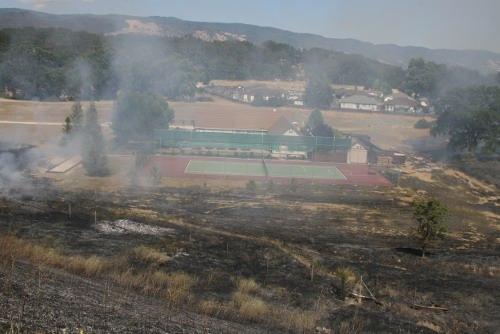
Two fires merged and created a larger blaze, which Cal Fire investigators on Thursday said burned a total of 22 acres.
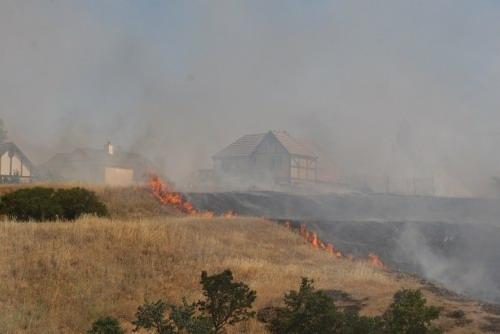
The fire threatened several dozen homes in the Lakeside Heights subdivision near Sutter Lakeside Hospital, as well as the subdivision's former clubhouse, now a private residence, and a recent development just east of the fire area.
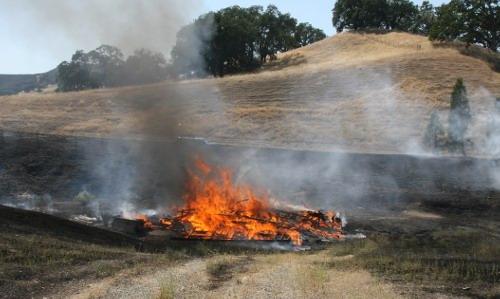
A single structure, located 600 feet west of the nearest residence, was destroyed in the blaze. The building was used as a storage area as well as housing utility and service equipment specific to the subdivision.
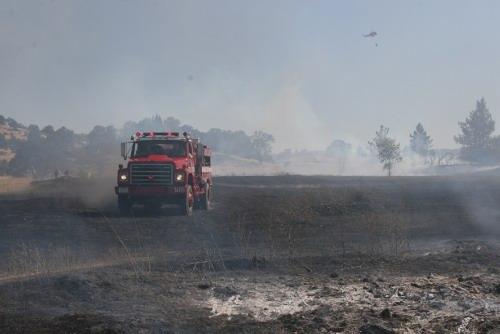
Lakeport Fire Protection District Chief Ken Wells said he had two engines and a water tender on scene from his agency, along with three engines from Northshore Fire, and an engine and a water tender from the US Forest Service.
Cal Fire had four engines, one helicopter, one air attack, three air tankers and a hand crew on scene, said Wells.
Only the helicopter dropped water – mostly on the burning building – while the air tankers and spotter circled overhead. “I held them in orbit for a while,” said Wells, explaining that the planes can help spot additional fires in such situations.
Each successive water drop by the helicopter extinguished the building's fire, with the resulting electrical arcing reigniting the heavy wood framing left smoldering under the buildings collapsed tile roof.
Firefighters eventually extinguished the remnants of the structure but were initially ordered not to attack the building from the ground due to the live heavy voltage electrical connections contained therein.
Wells initially had organized the response, which was then handed over to Cal Fire because the blaze was located in the state responsibility area (SRA).
Later, Wells said he looked toward Nice and saw smoke coming from the Robin Hill area off of Lakeshore. There, they found a third and separate grass fire, measuring about 100 feet by 100 feet, which they extinguished.
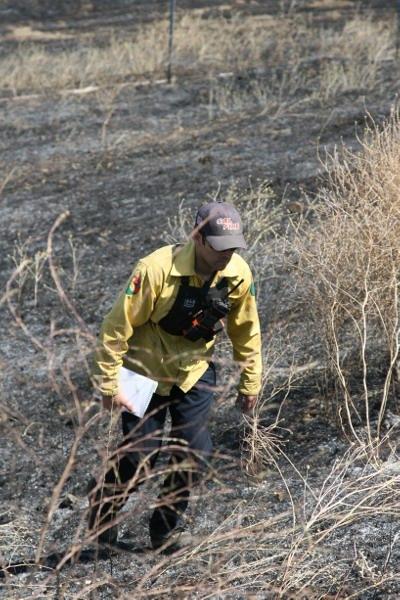
Cal Fire Capt. Bob Farias was called to the scene late Wednesday afternoon and began his investigation as soon as the bulk of ground personnel had left the site.
He said he's trying to determine the ignition points of the two separate fires as well as the cause of each.
He returned Thursday and was joined by a Cal Fire command engineer, and they began dissecting the clues left behind in the charred fuel bed.
By the end of the day Thursday, Farias could not offer any solid conclusions as to the cause of the two fires.
Also on scene Thursday were three AT&T trucks working to restore communication lines. Pacific Gas and Electric workers appeared to have their work completed earlier in the day.
Elizabeth Larson contributed to this report.
E-mail Harold LaBonte at

The low weather system that has predominated throughout the week pulling cool air from the north will move across Lake County on Saturday, allowing warmer temperatures that are closer to normal July temperatures to move back into the area beginning Saturday afternoon into Sunday.
The Weather Channel predicts that highs Friday and Saturday will reach the mid- to upper-80s, and begin increasing into the 90s on Sunday, which will then usher in a return to normal beginning on Monday, when highs should reach the mid-to upper-90s.
Skies should be sunny to mostly sunny Saturday and Sunday, according to The Weather Channel forecasts, with lows in the mid-5 to upper-50s throughout the weekend.
Tuesday is expected to be the warmest day next week, with a high temp near 100 degrees, but cooling a few degrees each day through mid-week.
The National Weather Service in Sacramento forecasts that Lake County weather will be a few degrees cooler each day than The Weather Channel predicts.
For updated weather, please follow the "Forecast" link on the LakeCoNews homepage.
E-mail Terre Logsdon at
Kim Louise Lemoine, 36, who passed counterfeit state government checks totaling $308,000, was sentenced on Wednesday to five years in prison on charges of identity theft, forgery and grand theft, according to a report from state Attorney General Edmund G. Brown Jr.'s office.
Two of Lemoine's associates are in custody; two remain at large.
"This band of counterfeiters fabricated 235 state government checks that looked and felt like the real thing," Brown said. "They were able to pass these forgeries and amass more than $300,000."
On March 11, 2009, Brown filed 63 criminal charges of grand theft, possession of counterfeit card making equipment, identity theft, forgery of a California driver's license, forgery of a check and forgery of the California state seal against:
Kim Louise Lemoine, 36, arrested on March 13, pled guilty in Sonoma County Superior Court on April 28 and was sentenced today to five years in prison;
Hiedi Lynn Roth, 36, arrested on April 22, and is expected to be sentenced to 8 years in prison on July 21;
Daria Inessa Sidorkina, 23, who is being held in Solano County jail on unrelated charges;
Laura Renee Harkey, 29, who remains at large; and
Mary Nicole Holstein, 35, who remains at large.
The defendants cashed 235 counterfeit checks at Bank of America branches located in 20 California counties from October 2007 until September 2008. The counterfeit checks ranged from $777 to $3,000.
Attorney General's Office spokesman Evan Westrup told Lake County News Wednesday that it doesn't appear, from a review of the case, that any of the counterfeit checks were passed in Lake County.
The counterfeit checks looked similar to state-issued checks and included the state seal, bank routing information, and the state Controller's signature. The driver's licenses that the defendants used to verify their identifications also appeared valid. In reality, both the checks and driver's licenses were forgeries, created at Lemoine's home in Sonoma County.
On July 28, 2008, a bank teller in Sebastopol refused to cash one of the checks. After being informed that the check would not be honored, the suspect grew angry and demanded the items back. The bank employee refused, and the bank's staff then contacted the California State Controller's Office.
The Controller's Office launched an investigation in conjunction with Brown's office. Last September, agents discovered counterfeiting equipment capable of producing fraudulent checks and driver's licenses, including laminating machines, printers, check paper and blank driver's license cards at Lemoine's home in Sonoma County.
The agents also discovered personal information for more than 50 individuals and businesses in a duffel bag. The information included credit reports, driver's license numbers, social security numbers, and dates of birth.
The U.S. Environmental Protection Agency (EPA) and the U.S. Department of Health and Human Service’s Indian Health Service (IHS) on Wednesday announced $90 million nationwide in “shovel ready” infrastructure projects designed to better protect human and environmental health in Indian Country.
“On tribal lands, 10 percent of homes lack access to safe drinking water compared to less than one percent of non-native homes. Together with the Indian Health Service, EPA is using Recovery Act funds to provide much-needed support for water and wastewater systems in Indian Country,” said Laura Yoshii, acting regional administrator for the U.S. EPA in the Pacific Southwest.
Yoshii said the funding creates jobs for tribal members, addresses critical infrastructure needs and will increase access to drinking water and basic sanitation services.
“By 2010, over 4,400 tribal homes in the Pacific Southwest are expected to receive piped drinking water or basic sanitation services for the first time,” she said.
The tribes receiving funds include the following:
Tule River Indian Reservation will receive $6,371,470 to upgrade its wastewater treatment plant serving 268 homes;
Round Valley Indian Tribes will receive $474,380 to expand its wastewater treatment facility serving 132 homes;
Redwood Valley Rancheria of Pomo Indians will receive $316,770 for improvements to its wastewater treatment plant serving 32 homes;
Grindstone Indian Rancheria of Wintun-Wailaki Indians of California will receive $205,310 to upgrade sewer connections serving 10 homes;
Redding Rancheria will receive $180,070 to expand sewer connections serving 13 homes;
Quechan Tribe will receive $340,630 to upgrade sewer lines serving 15 homes;
Campo Band of Kumeyaay Indians will receive $753,100 for drinking water treatment serving 29 homes.
Continuing a tradition spanning 20 years, EPA and IHS’s combined effort to improve water services in Indian Country contributed to their identification of 95 wastewater and 64 drinking water priority projects to be completed by IHS’s Sanitation Facilities Construction Program through EPA Recovery Act funds.
The projects exceed the Recovery Act requirement that 20 percent of the funds be used for green infrastructure, water and energy efficiency improvements and other environmentally innovative projects.
President Barack Obama signed the American Recovery and Reinvestment Act of 2009 on Feb. 17 and has directed that the recovery act be implemented with unprecedented transparency and accountability. To see how every dollar is being invested, visit www.recovery.gov .

THIS STORY HAS BEEN UPDATED WITH ADDITIONAL INFORMATION AND PICTURES.
LAKEPORT – About eight acres burned Wednesday afternoon as the result of what appears to be two separate fires that may have merged in the north Lakeport area.
The fires burned near Highway 29 in an area near a housing development not far from Sutter Lakeside Hospital, as Lake County News reported earlier this afternoon. Mop up work continued through the afternoon and early evening in the area.
One outbuilding was destroyed, and firefighters on scene estimated about eight acres were charred.
Nearby, homeowners wetted down their homes as gusts of wind carried the flames close to the houses, according to Lake County News correspondent Harold LaBonte, who was at the scene.
A helicopter made about six water drops on the outbuilding that burned, which appeared to be a major fire hot spot, as other aircraft flew over the scene.
No injuries were reported, and officials at the scene did not identify an ignition source for the fire.
Lakeport, Northshore and Kelseyville Fire Districts were on scene, along with Cal Fire, US Forest Service and Konocti Conservation Camp, according to Northshore Fire Chief Jim Robbins.
Robbins estimated a total of 40 firefighters from the various agencies were involved in fighting the fire.