How to resolve AdBlock issue?
News

This is the first of a two-part article on a new geothermal drilling project at The Geysers.
THE GEYSERS – In the coming months, a two-year project to test the viability of a developing geothermal technology will begin in The Geysers.
But while the technology is heralded by some in the geothermal industry as a promising new clean energy source, it's also known to cause sizable earthquakes at some of its test sites around the world.
That's raising concerns for the earthquake-prone Geysers area's residents, who already contend with small earthquakes on an almost daily basis.
AltaRock Energy, based in Sausalito and Seattle, is a venture capital company with $36 million in private investment and government funding which plans to try out its engineered geothermal system (EGS) at The Geysers.
The company will drill down thousands of feet and create fractures in bedrock, and then will inject water into those fractures in an effort to harness the heat deep in the earth to create steam for geothermal energy production.
Jeff Gospe, an Anderson Springs property owner and president of the Anderson Springs Community Alliance, has closely monitored seismic issues in the area over the years.
He said the community isn't against geothermal, but they feel AltaRock's project was rushed through a less-than-transparent process, that the company wasn't upfront about the problems inherent in EGS technology and that they ignored critical seismic data in their environmental assessment.
“It doesn't feel like a real honest process,” he said, adding that he wished there had been more study of the project.
Gospe said the geothermal industry is glossing over the fact that earthquake numbers near The Geysers are growing. There have been 360 earthquakes in the area this year alone, averaging about one a day that can be felt by residents. In addition, the numbers of earthquakes measuring 4.0 and above also are on the rise.
AltaRock Chief Executive Officer Don O'Shei and Senior Vice President Jim Turner said they wanted to work in The Geysers because it's the largest geothermal operation in the United States today, and has had a history of geothermal production going back to 1921.
Turner said The Geysers is operating at only half capacity, with some areas of its steamfield already depleted. It's also one of the best studied areas in the US, which helps their work since they'll know where the existing faults are located.
Murray Grande, geothermal facilities manager for the Northern California Power Agency (NCPA) – which owns and operates two geothermal power plants and a steamfield at The Geysers – said AltaRock has a two-year agreement with NCPA to conduct a demonstration project on its EGS technology.
NCPA's members include 15 municipalities and utilities around California, including Ukiah, Healdsburg and the Alameda Municipal Power. Lake County currently is not a member, although officials have mentioned joining the group, which benefits from local facilities.
AltaRock approached NCPA, said Grande, which agreed to let them use an unproductive well first drilled 20 years ago which since has been used for water injection. That well is located on property that NCPA leases from the Bureau of Land Management. The steam would be run to NCPA's power plant in order to generate electricity, Grande said.
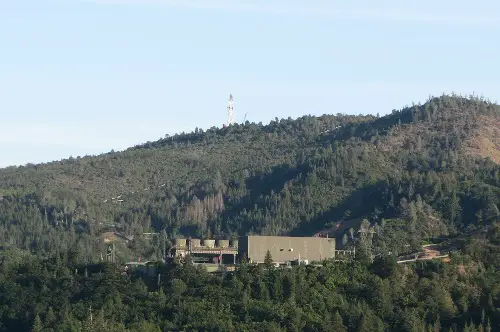
The infrastructure is in place for work to begin immediately, said Turner. Using a drill rig that sits at an elevation of 3,150 feet and is visible on a hill above Middletown, AltaRock has begun drilling down 3,200 feet through the well's casing. O'Shei said drilling has taken place in the area in the past with no incident.
The EGS technology has raised concerns because of a 2006 incident in Basel, Switzerland, where it triggered a 3.4-magnitude earthquake and another 3,500 quakes over the following year, with millions of dollars in insurance claims paid out in Switzerland, France and Germany. AltaRock wasn't involved in that project, Turner and O'Shei emphasized.
They explained that Basel – which suffered severe damage in a 14th century earthquake – has a large fault running underneath it. The Basel project – which located the drill in the middle of the medieval town – drilled down directly into the existing fault and injected water into it. There were no fatalities or injuries, but the populace was badly shaken up by the incident.
Faults build up stress and then release, said O'Shei. Injecting water into the fault at Basel lubricated the fault and caused a slippage which, he noted, likely would have happened at some point anyway.
The Basel project made a number of mistakes that “we're not looking to repeat,” said O'Shei.
Another EGS project is taking place in Soultz-sous-Forêts, France, where large amounts of water are being injected into fractures five kilometers deep, according to the Geophysical Journal International.
The project – which isn't AltaRock's – involves three wells. Between 2000 and 2005, 700 seismic events of magnitude 1.0 to 2.9, the journal reported. One of the wells had a greater seismic response due to being closer to large faults.
The journal noted, “The future EGS programme will have to drill wells in zones free of large faults to avoid poor hydraulic performance and inconvenience to the population.”
AltaRock's environmental assessment notes that EGS sites in Australia and the United Kingdom also experienced earthquakes of 3.7 and 3.1, respectively.
Because NCPA is a public agency, the project went through a California Environmental Quality Review, said Grande.
Grande said a seismologist will be on site 24 hours a day, seven days a week, to monitor seismicity.
Mark Dellinger, administrator for Lake County Special Districts, is one of the county's most knowledgeable officials when it comes to geothermal, having worked for years on The Geysers pipeline.
He said AltaRock submitted permits that went through the Community Development Department for seismic monitoring. Because the project is located on a federal lease, Dellinger said he's not sure those county permits technically were needed.
“I think there needs to be mitigations, and I think there are adequate mitigations for this project,” said Dellinger.
He added, “Nobody knows what's going to happen,” but he thinks monitoring is going to help. “That's a very important thing.”
The benefits to NCPA are twofold, said Grande. First, if it works, they'll have access to a new heat source. Second, they could then purchase the steam from AltaRock, which will allow NCPA to generate more renewable geothermal energy.
Grande said EGS technology has the potential to expand geothermal productive to areas across the western United States that haven't been traditional geothermal production areas.
“There's a a huge potential to create many many megawatts of energy that would otherwise not be available,” he said.
Calpine, which is reportedly looking at expanding its Geysers operations, said it won't use the EGS technology.
“They're not planning any of these new techniques,” said company spokesman Jason Barnett.
However, Dennis Gilles, Calpine's senior vice president of renewables growth, explained that the corporation is doing “enhanced geothermal system” work – also known as “EGS.”
Enhanced geothermal involves going into an existing geothermal reservoir, like The Geysers, and injecting water into the existing cracks in the in the bedrock, which heats the water to steam and facilitates geothermal production.
Calpine has received Department of Energy grants for its geothermal projects in the past, Gilles said.
The public process is faulted, say neighbors
Turner said AltaRock officials began attending community meetings in Anderson Springs last October, which they plan to continue doing. They're also attending twice-yearly seismic monitoring council meetings. He said the company wants to be active in the community and responsive to its concerns.
Rich Eastabrook, a petroleum engineer with the Ukiah BLM office, said the lease for the land where AltaRock's project will take place has been in effect since the 1970s.
He said an environmental assessment process took place, in partnership with NCPA, which was the lead agency under CEQA.
AltaRock solicited geophysicists to complete the 218-page project review, available on its Web site (http://altarockenergy.com/media.html), about the possible impacts. That document used as a source data from the environmental impact report completed on The Geysers pipeline, Grande said.
“It was pretty well concluded that, yes, there are going to be some microearthquakes that are generated by this project, but the impact of those are going to be fairly insignificant compared to what already occurs at The Geysers,” Grande said. They're also confident they won't additionally impact the neighboring Anderson Springs community.
The assessment said the largest earthquake that's been attributed to EGS is 4.6 in magnitude, with quakes measuring less than 3 in magnitude expected to result from AltaRock's project.
But Gospe and fellow Anderson Springs residents believe the project's environmental assessment document has problems. They said it relies on outdated information and omits or ignores a lot of readily available seismic data provided by the US Geological Service and even the community itself at its Web site, www.andersonsprings.org .
Meriel Medrano, who said AltaRock's drill rig is located up the hill about a mile and a half from her home, called the environmental assessment “absolutely ridiculous.” It didn't include any of the 12 years of information collected by the county's seismic monitoring committee – which has been meeting since 1997, said Gospe – but instead used outdated materials.
Getting information about the project out to the public in the first place drew criticism from residents.
BLM put a small public hearing notice in the legals section of the local newspaper on March 25, said Medrano. That notice announced a public meeting on the evening of April 9 at the Calpine Visitor Center in Middletown, which the night of the meeting was moved to a nearby church.
The public comment period on the project lasted from March 19 through April 17, said Medrano.
She said “very few” local residents attended, estimating at most there were 10 of them there.
Anderson Springs resident Joan Clay said the community meeting was the first time the community really had heard about the project. She said no notices were mailed to the community. Gospe said the only notice they saw was mailed to the Anderson Springs Community Services District.
Eastabrook said copies of the draft environmental assessment were sent to residents in the impacted areas, but he added, “We kind of dropped the ball a little bit there.”
“They dropped it but good,” said Medrano.
He said BLM relied on a mailing list provided by a project consultant and NCPA. “It turns out the mailing list was not as inclusive as it should have been,” with some residents in the target area of Anderson Springs and Cobb not getting the information that they should have gotten.
“We take full responsibility for that,” he said.
Although the noticing technically met the legal requirements, Eastabrook said BLM wants to go beyond that. So when they found out some residents hadn't received the documents, they had the assessments shipped out immediately.
At the hour-and-a-half-long April 9 meeting, Gospe presented updated seismic information along with the community's concerns, and AltaRock made some responses. He said the company never disputed his facts, instead claiming that they had no bearing on the project.
A permit already has been issued to deepen the existing geothermal well where AltaRock plans to drill, said Eastabrook. BLM also will issue a federal “sundry” notice.
Said Medrano, “It was a fast shuffle. It really was. It was very unfair to the community.”
Eastabrook said the project will have “fairly strict” monitoring requirements. There will be seismic trigger points; if those are reached, the drilling would have to be curtailed or suspended.
Just what the trigger points are hasn't been stated specifically in terms of magnitude. However, it has been described in terms of the Modified Mercalli Intensity Scale.
Quakes at a level IV – which awaken people at night, are felt indoors by man during the day and have a sensation like a heavy truck striking a building would result in modifications, according to project documents. A level V – felt by nearly everyone, breaking some dishes and windows, and awaking most people at night – could shut the project down.
“Our role is going to be one of monitoring, inspection and enforcement,” said Eastabrook.
He explained that BLM is supposed to get daily reports on the drilling. If anything goes wrong, he said, “We will not hesitate to take appropriate enforcement action.”
AltaRock was straightforward in sharing seismic data with BLM, said Eastabrook.
However, “They never told us that the Basel project had been shut down because of the seismicity,” Eastabrook said.
In fact, a word search for “Basel” in the environmental assessment document finds only two passing references to Basel, with no discussion of that project's impacts.
As well, Gospe accused AltaRock of a coverup because, at the April 9 meeting, he said they sold it as a demonstration project that they had done before. The big quake and the thousands of smaller quakes in Basel were omitted, he said.
“I don't think that's a deal killer,” Eastabrook said of Basel, adding, “I would have liked to have known that.”
But O'Shei said Basel is well known in the geothermal industry, and they didn't hide that fact. “There's nothing secret about what happened in Basel.”
An updated version of AltaRock's report does incorporate information provided by Gospe and Anderson Springs community members.
In the next installment, a seismologist describes the layout and operations of the Geysers steamfields, AltaRock gets involved in the community and company officials describe interest in renewable energy.
E-mail Elizabeth Larson at
Read the second part of this report here:
Company says proposed geothermal project holds promise for renewables

The annual vintage Volkwagen car show, held at Library Park, is sponsored by the Silver Circle Chapter of the Vintage Volkswagen Club of America .
About 50 cars participated in this year's show, with everything from sporty Karmann Ghias to Beetles to VW vans on display along Park Street.
Car owners and visitors alike grabbed whatever shade they could in between looking at the vehicles.
Another show and shine event is scheduled in Clearlake's Austin Park in August.
Harold LaBonte contributed to this report.




Cal Fire Captain George Gonzalez reported Sunday that the vegetation fire, located at Lake Berryessa's south end, was reported Saturday at 11:17 p.m.
Gonzalez said the fire was inaccessible by roads and firefighters had to be ferried across the lake by the Napa County Sheriffs Department Boat.
Cal Fire, Napa County Fire, California Department of Corrections and the Napa County Sheriff's Office joined forces to fight the blaze, which firefighters contained the fire at 7:41 a.m. Sunday, Gonzalez reported.
He said a total of 125 firefighters helped battle the 20-acre fire.
No injuries were reported and the cause of the fire is under investigation, Gonzalez said.
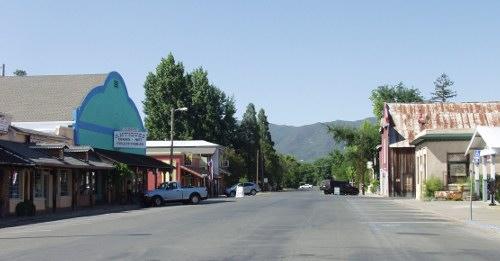
Lake County Redevelopment Agency officials said Upper Lake's improvements began this past week.
Redevelopment agency funds are paying for the $1.3 million project, which will make improvements to both sides of Main Street from the intersection at Highway 20 to the intersection at Second Street.
Officials said the scope of the project includes under-grounding of utilities; curb, gutter, and sidewalk improvements with bulb-out intersections formed from decorative stamped concrete; installation of decorative streetlights; reconstruction of Main Street; and the installation of a welcoming gateway arch across Main Street at the entrance from Highway 20.
While contractor Argonaut Constructors carries out the four-month-long project, it will still be business as usual for local shops, which will keep their doors open, redevelopment officials said.
Full closure of Main Street will encompass just 12 days of the project, according to the redevelopment agency. Traffic control on Main Street will begin on Monday, June 29, and will remain in effect over the course of the project.
The agency said it will issue updates regarding the timing of street closures and alternative parking locations will be made available as the project progresses.
“Once this project is completed, Upper Lake will still have its pioneer charm, but it will be more visible from the highway and the shops will be more accessible to customers and business owners,” said Kelly Cox, the county's administrative officer and executive director of its redevelopment agency.
Cox said the project will make the town “a great place to go for a stroll and enjoy shopping, dining and special events.”
Businesswoman Debbie Hablutzel, president of the Upper Lake Community Council, said they're very excited about the project, which will beautify Upper Lake, draw attention to downtown and light it up with blocks of new streetlights.
She said the council began talking about streetlights 15 years ago, and tried to raise money to do the project on their own.
The lights – which will extend over Main Street and feature small wagon wheels – were folded into the larger project, which she said went through design review in 2002, when the community worked on planning what they wanted.
It was in 2002 that the arch – which will have concrete pillars and a steel structure that passes over Main Street – was designed. Hablutzel said the arch will help draw people to the main part of town and let them know there is actually a town center.
Some people didn't feel the arch was necessary, said Hablutzel. Many people wanted to put it over Highway 20, just as Willits' arch passes over the highway, but Caltrans wasn't open to the proposal.
Despite criticism of the arch, “We weren't going to take it out,” said Hablutzel. “I think once it's done everyone is going to like it.”
The intersection of past and present
Upper Lake, founded as “Upper Clear Lake” in 1854, has always had its own distinctive look and feel – arising from both its twin ranching and timber heritages.
In the past century and a half, the little town has had to be resilient as it has passed through good times and bad.
A new set of historical plaques now grace the town, highlighting interesting facts in the town's fascinating history.
Upper Lake had its first post office in 1858. Other milestones include construction of the original Tallman Hotel in 1866; arrival of the first telegraph lines – stretching from Colusa County to Upper Lake – in 1874; and construction of the Odd Fellows Hall in 1898.
By the 1870s, schools, churches, the grange and the Odd Fellows had arrived. Also in the 1870s, Upper Lake served as the terminus for both the Cloverdale and Clear Lake stage lines, which brought visitors to nearby resorts – Witter Springs and Saratoga Springs, and Le Trianon at Blue Lakes.
But it may have been the many lumber mills in the area that had the greatest impact on the town. A plaque on the building that now houses Gracious Ladies on Main Street explains that by 1870 lumber mills were being built in the nearby Mendocino National Forest. At one time, as many as 42 such mills were in the forest.
Other important industries for the area were dairy farming, with a cheese factory at one point located on Sabini Street, and the Blue Lakes green bean cannery, which started business in 1896.
At one point, Upper Lake had all manner of shops – from dry goods to bakeries to ice cream parlors.
The town had its share of troubles. In 1895 the Tallman House Hotel burned down and later was rebuilt and later renamed for Hank Riffe, the son-in-law of the building's owner, Rufus Tallman, according to a history of the building at www.tallmanhotel.com .
But perhaps the greatest blow to the town was dealt in 1924, when a fire swept through Upper Lake, destroying much of it.
However, one portion of town at First and Main survived – the fire spared the rebuilt Riffe's Hotel and the livery stable next door, the Odd Fellow's Hall, the Bank of Upper Lake and the old ice house across the street. A few blocks away, the Harriet Lee Hammond Library also made it through.
The town rebuilt, and continued to be vibrant for decades. County Deputy Redevelopment Director Eric Seely, who grew up in Upper Lake, said his grandparents came to the area in the 1950s. “At that time Upper Lake was much more vibrant,” he said. “Timber was still a going concern.”
But in the 1970s Upper Lake began to face serious economic challenges, due in part to the depletion of the local timber stands.
“When the timber shut down, a lot of folks retired,” said Seely, and with that properties began to change hands, Main Street businesses closed and many like Seely watched the town go into a slow decline.
Remaining business owners in the 1970s worked to keep it looking look good with new awnings, said Seely. In the late 1980s, Main Street was reconstructed and repaved after the new sewer system was installed. Before that, the streets had been layer upon layer of chip seal.
Seely said he began to see improvements in the town in the 1990s.
Since then new property owners and business people, such as Tony Oliveira, who owns Oliveira's Antiques, and Linda Powell of Powell's Antiques, arrived and began renovating the downtown.
The town took another blow when it suffered a flood on New Year's Eve of 2005. Much of the downtown saw several feet of water flowing through businesses and homes. Once again, the town picked itself up, dusted itself off and got back to work.
Seely credits the town's residents for their work to rejuvenate Upper Lake. “The agency's goals are certainly to assist and partner,” he said.
Rebirth of a historical district
The town's future is closely tied to its past.
In fact, the redevelopment project now getting under way expanded thanks, in part, to investment in that historic core of buildings that survived the 1924 fire.
As business owners began bringing new shops to line the downtown, redevelopment was encouraging renovation of the historical buildings that anchored the far end of town.
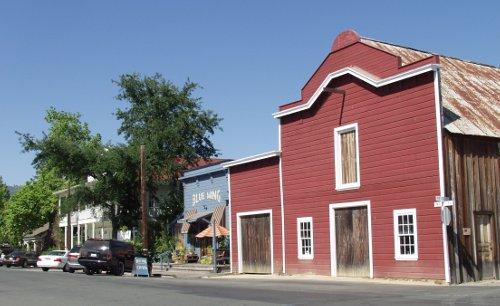
Several years ago Sheldon Steinberg purchased and renovated the livery stable, which in the 1880s had been one of three such stables serving the bustling town, according to the new historical plaque gracing the building.
Today, the livery stable houses “The Elegant Bowl,” an antique plumbing fixture business open by appointment and during special occasions such as the recent Wild West Day. A visit inside reveals dozens of ornate clawfoot tubs, delicate porcelain sinks and many a fancy water closet.
Next door to the livery stable had sat the empty Riffe's Hotel. After being purchased at a tax lien sale, the building sat empty for 40 years, looking like a fragile storefront from the set of “Gunsmoke.”
Then Lynne and Bernard Butcher came to the rescue, undertaking a painstaking but ultimately magnificent restoration and expansion. Next door, they built the Blue Wing Saloon & Tavern where once a similarly named establishment was located.
The Tallman Hotel was added to the California Register of Historical Resources as a point of historical interest in 2007. It's widely considered to be one of the Northshore redevelopment area's triumphs.
Across the street, Tom Carter took the old Bank of Upper Lake and renovated it. Today, it is home to Olivia's Organic's, a health food store. On the roof of the building sits a jaunty iron rooster.
The original conceptual plans for Upper Lake's redevelopment project go back several years, said Seely. Those plans stretched from Highway 20 down to Washington Street and included the planned archway at Main Street's entrance into town from the highway.
In 2006, after Deputy Redevelopment Director Andy Peterson retired, Cox and other members of the county's administrative office toured the town and evaluated the project's existing scope, Seely said.
Looking at the investment and improvements by Steinberg, the Butchers and Carter, Seely said county officials decided to add to the project in order to support the community's investment.
“Because of the capital investment the business and property owners were making, we felt it was appropriate to expand the project so that the public and private efforts had a greater synergistic effect than either one by themselves,” said Seely.
Seely credited the Butchers with making a tremendous investment in their property and, as a result, drawing a lot of business to the downtown.
As the project ties the livery stable, Tallman and Blue Wing into the rest of town, it will include better sidewalks and pedestrian access, as well as improvements to parking.
In another tip of the Stetson to the town's heritage, community members asked for the rustic wooden sidewalk in front of the saloon and hotel to remain, and so they were incorporated into the plan design, said Seely.
Argonaut Constructors also will construct samples of sidewalk finish treatments which Seely said community members will help select during the course of the project. Choices will range from concrete that's stamped and dyed to look like wood to use of a weathering technique to make new sidewalks blend in with the older ones that will remain.
Seely said he expects the project will move quickly, as paving will become more challenging as fall and winter arrive.
At the Lake County Wine Studio, across from the Tallman and Blue Wing, proprietor Susan Feiler said she thinks the redevelopment project will help the town. Upper Lake is a great area for business, and she said she hopes to see more shops locating there.
“I have high hopes for this area,” she said. “I really do.”
E-mail Elizabeth Larson at

The event provided home winemakers a forum in which to show off their hobby, and also gives local wineries a place to offer tastings of their products.
The festival is the largest annual fundraiser for CLPA, which promotes music education, community concerts and student scholarships in Lake County.
This year's festival was well-attended, with people from all areas of Northern California including Lake, Mendocino, Sonoma, Yuba, Colusa and other counties.
The festival was open from 1 p.m. to 5 p.m. In addition to the offerings from home brewers, small wineries and some of the larger local wineries, there was food, live music, and arts and crafts available.
There were several raffles and a silent auction held throughout the event, along with ribbons awarded to the brewers and winemakers. Local businesses were open throughout the event including Focused On Wine, Rosa D’Oro, and Wildhurst tasting rooms.
The competition's results follow.
People’s Choice Awards:
Best Booth – Two Dude Brew
Best Beer – Two Dude Brew
Best Wine – David Pretari for Cabernet Sauvignon 2007
Best Label – Paul Lew for Dark Horse Stout
Beer Awards:
Best in Show – Ron Chips, Irish Ale
Ale: First, tie – Ron Chips and Two Dude Brew; Second – Paul Lew
Porter/Stout: First – Paul Lew
Wheats: First – Two Dude Brew; Second – Paul Lew
IPA: First – Two Dude Brew
Wine Awards – Reds:
Best in Show Red Wine: Greg and Jeff Conley, Gamay 2006
Gamay: Gold – Greg and Jeff Conley, Conley Winery 2006
Merlot: Gold – John Bristow, Garden Hill Winery 2007; Silver – Dennis Koenig, Koenig Winery 2007; Bronze – Ed Bublitz, Full Moon Rising 2007
Malbec: Gold – Danny Morrow, Eastside Winery 2003; Silver – Danny Morrow, Eastside Winery 2004
Cabernet Sauvignon: Gold – Kirk DeAlba, Tres Amigos 2006; Silver – Kyle Mahoney and Nick Wolfe, Wolfe Mahoney Winery 2007; Bronze – Greg and Jeff Conley, Conley Winery 2007
Cabernet Franc: Gold – Kyle Mahoney and Nick Wolfe, Wolfe Mahoney Winery 2007; Bronze – Conn and June Murray, Muritage Winery 2006
Zinfandel: Gold – Kyle Mahoney and Nick Wolfe, Wolfe Mahoney Winery 2007; Bronze – Tom and Nancy Harty, Mother Mountain Winery 2007
Syrah/Petite Sirah: Gold – John Bristow, Garden Hill Winery 2007; Silver – Ron Chips, Ron Chips Winery 2006; Bronze – Danny Morrow, Eastside Winery 2006
Red Blend: Gold – Scott and Sue Simkover, Smiling Dogs Ranch 2008; Silver – Paul Spillane and Troy Shankels, Panty Dropper 2004; Bronze, tie – Tom and Nancy Harty, Mother Mountain Winery 2008 and Danny Morrow, Eastside Winery 2004.
Sangiovese: Gold – Clear Lake Performing Arts Wine Group 2006; Silver – Conn and June Murray, Muritage Winery 2006
Wine Awards – Whites:
Sauvignon Blanc: Gold – Conn anad June Murray, Muritage Winery 2006; Silver – Leo D’Agostino, D’Agostino Winery 2005.
Wine Awards – Fruit wines:
Best in Show and Gold – Bruce and Cindy Lightfoot, Lightfoot Pear Wine 2008
Wine Awards – Dessert wines:
Best in Show and Gold – Greg and Jeff Conley, Conley Winery, Zinfandel Port 2005.
Providing tastings were:
Cobb Mountain Brewing Co. – Wheat beer, brown, stout;
Dusinberre – Napa Valley Champagne;
Full Moon Rising – Cabernet Sauvignon, Syrah, Merlot;
Steele Winery – Sauvignon Blanc, Grenache, Zinfandel, Viognier;
Potter’s Honeycut – Merlot;
Bell Hill – Merlot;
Mother Mountain Wine – Zinfandel, Cabernet Sauvignon;
Muritage – Sauvignon Bland and Musque blend, Cab Franc, Sangiovese, Cabernet Sauvignon;
Ron and Cheryn Chips – Irish Red Ale, California Ale;
Cesar Toxqui Cellars – Chardonnay, Zinfandel, Cabernet Sauvignon, Pinot Noir;
Ployez Winery – Zinfandel;
Hidden Oaks Estate – Cabernet Sauvignon;
Barn Owl Winery – Syrah, Chardonnay, Cabernet Sauvignon;
David Petrari – Cabernet Sauvignon;
Garden Hill Winery – Syrah, Merlot;
High Valley Wines – Cabernet Sauvignon, Sauvignon Blanc, Fume Blanc;
Luna-Lake Syrah – Syrah;
Party Dropper Wines – California Red, Cabernet Sauvignon;
Wildhurst – Reserve Sauvignon Blanc, Reserve Chardonnay, Muscat Canelli, Reserve Zinfandel, Reserve Cabernet Sauvignon;
Six Sigma – Rose, Sauvignon Blanc;
Triangle – Meritage;
D’Agostino Vineyard and Winery – Sauvignon Blanc, Syrah;
Wolfe Mahoney – Cab Franc, Cabernet Sauvignon, Zinfandel;
The Lightfoots – Pear Wine, Cabernet/Syrah, Syrah/Cabernet;
Bill and Leanne Gilbert – Cabernet Sauvignon;
Shed Horn Cellars – Cabernet Sauvignon, Sauvignon Blanc;
Conley Wines – Zinfandel Port, Cabernet Sauvignon, Gamay;
Tres Amigos – Cabernet Sauvignon;
Eastside Winery – Red Wine Blend, Malbec, Cabernet Sauvignon, Petite Syrah;
Rosa D’Oro – Barbera, Syrah, Primitivo, Chardonnay, Muscat Canelli;
Koenig Family Cellars – Merlot;
Tulip Hill – Reserve Chardonnay, Zinfandel, White Mirage Rose;
Sommelier Stephanie Green of Focused on Wine was pouring – Amber Knolls Vineyard, Six Sigma “Piquenique,” and Girls on the Vineyard Cabernet.
If you would like to learn more about the Clear Lake Performing Arts, you can visit them online at www.clearlakeperformingarts.org or contact them at Clear Lake Performing Arts, P.O. Box 974, Lakeport, CA 95453.
Ross A. Christensen writes about food and wine for Lake County News.

BACHELOR VALLEY – This weekend, the first-ever Rainbow Bridge Festival is taking place on a hilltop overlooking nearby Bachelor Valley and Clear Lake.
The festival, which began Friday, continues through Sunday evening.
Offerings include music, vendors, yoga, meditation, drumming circles and a small electric car display.
Organizers also are honoring the late peace activist Marla Ruzicka, who was raised in Lake County and died in Iraq in 2005 as the result of a car bomb. Her mother, Nancy, and brother, Mark, spoke Friday at the dedication of the festival's peace garden.
On Saturday afternoon, as children played in an improvised swimming pool made from hay bales and a tarp, adults sat in the shade and listened to speakers including solar expert Harvey Wasserman.
Nearby, natural builder Massey Burke and a small group of volunteers toiled on a round “tea house” structure being built with earth, straw and bamboo.
Another full slate of events is planned for Sunday, including a talk by Kevin Danaher, a friend of Marla Ruzicka's, who will speak about her life at 10 a.m. on the festival's main stage. Wasserman also will will again on Sunday, discussing election protection and US history at 11 a.m.
Activities throughout the day will include yoga, nature hikes for children and plenty of music. A closing prayer and gratitude circle at the main stage will close the event at 10 p.m.
For a full schedule and driving directions, visit www.rainbowbridgefest.com/activities.html .
E-mail Elizabeth Larson at