How to resolve AdBlock issue?
News
SACRAMENTO – Cal Fire is urging homeowners to prepare for the fire season ahead by making sure the areas around their homes are clear of brush and other hazards that could fuel a fire.
Last summer’s wildfires charred over a million acres across California in one of the worst fire seasons in recorded history. These wildfires destroyed hundreds of homes and burned dangerously close to thousands of others.
As temperatures begin to increase and conditions continue to dry out, Cal Fire – or the California Department of Forestry and Fire Protection – is urging residents to take advantage of this time to create a 100-foot zone of defensible space around their homes.
Cal Fire said defensible space is homeowners’ responsibility.
“Last year’s wildfires once again highlighted how important it is for homeowners to prepare their homes to survive a wildfire,” said Chief Del Walters, Cal Fire director. “By simply removing dead and dying leaves, brush and trees 100 feet from homes and following a few simple steps, homeowners can dramatically decrease the chance of their home being destroyed by a wildfire.”
Here are some tips that can help homes survive wildfires:
– Remove all flammable vegetation 30 feet from all structures.
– In an additional 70 feet, space trees and plants away from each other.
– Clear all needles and leaves from roofs, eaves and rain gutters.
– Trim branches six feet from the ground.
– Use trimming, mowing and power equipment before 10 a.m. and after 6 p.m., not in the heat of the day and not during extremely dry and windy days.
– Landscape with fire resistant plants.
– Use fire ignition resistant building materials.
For more information on Defensible Space visit the Cal Fire Web site at www.fire.ca.gov.

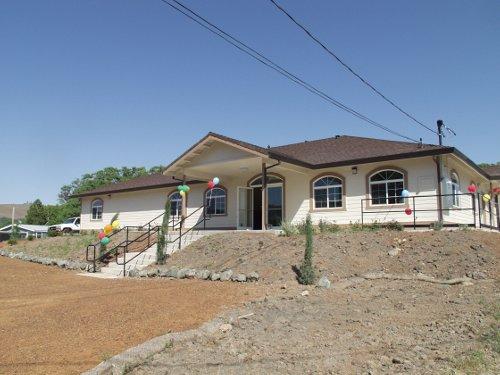
ELEM COLONY – The Elem Indian Colony celebrated a new chapter on Saturday, with the opening of its new community center.
The day-long celebration focused on the completion of the 3,150-square-foot building, which took four months to build, said Tribal Administrator Donald J. Rich.
Rich said the building project cost $576,000, and was funded in part by federal Housing and Urban Development Indian Community Development Block Grant funds awarded to the tribe in 2004.
The grant funding required a $315,000 match from the tribe, plus the land donation, said Rich. He said the tribe added another $75,000 to the project.
In the time between the funds being granted, Elem was the focus of a 2006 cleanup operation by the US Environmental Protection Agency, which has been the focus of allegations that the EPA failed to follow federal law and in doing so caused significant damage to cultural artifacts. That cleanup effort also resulted in new infrastructure for the rancheria and new homes.
The new building will locate in the heart of the rancheria a variety of social services – including housing and commodities distribution – that previously were offered out of the tribe's administrative offices on Highway 20 in Clearlake Oaks, said Rich. The tribe will continue to maintain that office for tribal leadership.
Rich said the community center also will house the tribal historian – they hope to someday build a separate museum facility dedicated to Elem's long and fascinating cultural history – and will offer a location for tribal meetings and conferences.
Tribal Chair Geraldine Johnson said Elem has about 100 members, 40 of which live at the colony.
Rich said the tribe plans to build more houses, including two to three in the coming year. He said the tribal council will make a decision soon on federal housing applications to support the new homes.
“The tribe is moving and things are happening for the tribe,” Rich said. He credited the tribal council with moving things in a positive direction for Elem.
The tribe's young shakehead dancers made the day complete, dancing through the hall in traditional costumes, tying the new building to an old culture.
E-mail Elizabeth Larson at
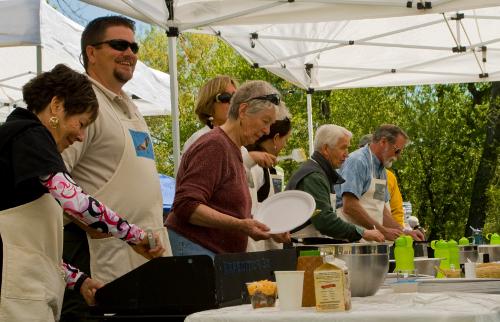
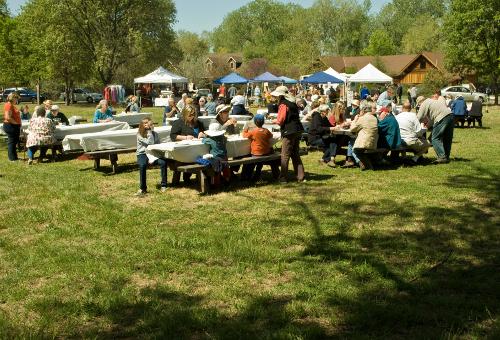
CLEAR LAKE STATE PARK – Lake County's 15th annual Heron Festival got started on Saturday at Clear Lake State Park, and continues Sunday with outdoor activities including boat tours and bird walks.
The event is sponsored by the Redbud Audubon Society and the Clear Lake State Park Interpretive Association.
On Saturday, things got started with the ever-popular Wildflower Brunch, with made-to-order omelets.
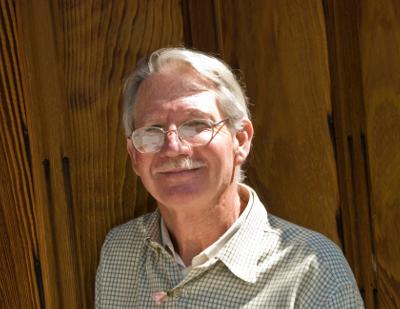
Philip Greene, an internationally known photographer of herons and egrets, was the event's keynote speaker on Saturday.
On Sunday, pontoon boat rides will continue, along with more bird walks, the nature fair, a presentation by Dr. Harry Lyons on Myths and Music of Clear Lake, and at 1 p.m. a live bird presentation, “Raptor Speak,” by Native Bird Connections, that will give visitors the opportunity to see raptor behavior up close.


Cactus Grill: 3900 Bayliss Ave., Clearlake, telephone 707-994-0905.
People keep telling me “Ross, you have to go to the Cactus Grill, they have the best food!” So when I was out and about recently my wife suggested we eat there.
Having been a SCUBA instructor for 10 years I’m well acquainted with good Mexican food since I’ve spent a lot of time diving down there. Your average American thinks Taco Bell is a fair representative of Mexican food but they couldn’t be more incorrect; that’s like saying McDonald's is New California cuisine.
The Cactus Grill is small, able to seat only about 30 people, but it’s quaintly decked out in the Americanized version of Mexican décor. The large cheerfully painted geckos hung on the wall add a whimsical touch. There are tables and chairs outdoors to accommodate more people.
When you sit down at the table they give you a bowl of tortilla chips, and I looked at my wife and asked “No salsa?” She responded with, “There is a salsa bar over there,” and pointed to the other side of the room. This made me wonder, “How does my wife know so much about this place?”
At the salsa bar there are several different types available such as fresca, cucumber, habañero and a couple of others. I’m a big fan of tomatillos so I went for the salsa verde, but the roasted salsa was also really good.
My penchant for flirting with pretty waitresses was thwarted when our server, a big guy named Ralph, came to our table. You could see Ralph was taken aback when he asked for my order and I responded with, “I want whatever you recommend.”
He asked me what I like and I told him I prefer seafood but I’ll eat anything. He recommended the paella burrito. Full of fish, shrimp, linguica, rice, and drizzled with a chipotle cream sauce, it was a good and filling meal. I actually had so much left over that I had to take it home. OK, I’ll admit I may have eaten too many tortilla chips and salsa.
My wife ordered the tostada, which showed up looking more like a salad in a fried tortilla bowl. She asked for it with chicken, which is charbroiled and lightly seasoned. The tostada also included black beans, tomatoes, cheese, and generous dollops of salsa, sour cream and guacamole.
My wife said she really liked the flavor of the charbroiled chicken because it was simple and authentic, not overly seasoned with “Mexican spices.” Now this may come as a surprise to some of you, but Mexicans don’t actually put chile powder in all their food. That’s more of a “Tex-Mex” principle.
Ralph was so poised and charming that my wife thought he might be the owner of the place. Her comment, “He has the air of propriety,” got me wondering again: “Why does my wife know so much about this place?”
We ordered some sodas to go with our meal and they were served in large, one-liter-sized cups so you definitely get your money’s worth with the drinks.
My wife’s Italian heritage keeps her loving Italian food but she was born in New Mexico and so she also loves all things southwestern. If you want that translated into its most basic form it means you can put black beans on a bowl of ramen noodles and she’ll like it more.
Her birthplace has given her problems when traveling. Not exaggerating at all here, swear to god, U.S. Customs officials have actually asked her, “If you were born in New Mexico, why do you have and American passport?”
I compound the problem by teasing her about it, saying she’s one of those immigrants stealing American jobs. I’m very lucky that she’s a beautiful woman but I have to wonder if she married me just to get a green card.
The menu is quite varied, and has a lot of seafood offerings on it, more than the usual restaurant of this kind. Prices are reasonable and the portions are generous. We were both so full when we left that we had to pass on ordering a dessert. My wife looked longingly at the flan on the menu, and said, “We’ll have to come back again to try it.”
She wants to go back? Is it really the dessert she wants? Or is it something else? I have to wonder …
Ross A. Christensen is an award-winning gardener and gourmet cook. He is the author of "Sushi A to Z, The Ultimate Guide" and is currently working on a new book. He has been a public speaker for many years and enjoys being involved in the community.
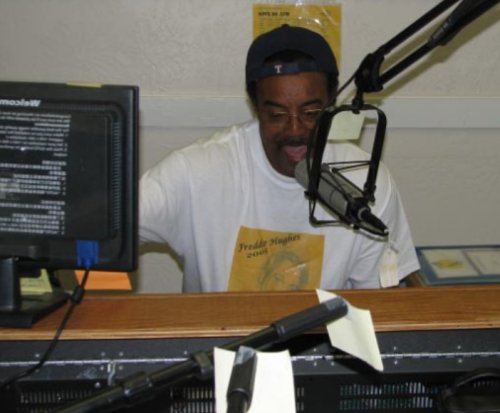
I’ve always found it a drag to hear an artist whose recorded output sounds better than a live performance. I’ve seen some pretty major artists whose live shows left a lot to be desired. This goes back to the early concert going days of my youth when the critical standard of measure that we used was, “Yeah, but did she or he sound like the record?”
The record of course, was what spurred us to the concert in the first place.
Since I’ve been in radio, the opportunity to preview many CDs has come my way. I would venture to vent forth that for every excellent one that comes my way, there is an equally bad one not to far behind. The vast majority of CDs fall in the middle of the two extremes.
Probably about six weeks ago, I received a CD introduction to the music of Wendy Dewitt. In all honesty, my first impression placed the CD in the middle category. Now, don’t get it twisted. The woman can play. That much is obvious from the first listen.
But, my CyberSoulfolks, The Wendy Dewitt live experience is all together a different matter.
Many of you are aware of the big little venue in Upper Lake known as the Blue Wing Café & Saloon and Tallman Hotel. I must confess that my knowledge of the largeness and scope of Bernie and Lynn Butcher’s entrepreneurial ventures had been limited to attending the Blue Monday sessions at the Blue Wing on Monday nights and the Blue Wing Blues Festival which occurs every August at the Tallman.
I was aware of the continuing Concerts with Conversations series but had never attended one. Since Ms. Dewitt’s forte is Boogie Woogie and Blues, I was only to glad to check it out.
The lobby of the finely appointed Tallman Hotel was buzzing with conversation, hors d'oeuvres, fine wine and sparkling cider. My date and I actually walked right into Wendy Dewitt’s path as we approached the front desk to obtain our tickets. She was stunningly taller than I anticipated from the pictures I’d seen.
The atmosphere was relaxed and friendly, definitely a people’s vibe. The small plate fare was great as were the beverages. It was kind of like a reception for the artist that lasted about an hour. We then adjourned next door to the meeting room for Wendy’s performance. There was appointed rich desserts, coffee, teas and a finely tuned console piano.
After a short pause, Bernie Butcher introduced Wendy Dewitt who explained her musical history, forte and muse. Drawn to anything musical as a child, she really started perusing the blues and boogie woogie when a friend gifted her with a great blues and boogie vinyl collection. This led to intense study of the styles of the great masters of Blues and Boogie piano players such as Chicago Blues great Otis Spann, Memphis Slim,
Big Maceo, Joe Duskin, Meade Lux Lewis, Little Brother Montgomery, Pete Johnson and others.
Ms. Dewitt led a spirited discussion on the differences between Chicago Blues, Boogie Woogie as well as their similarity to Texas Swing. She entertained stimulating questions from the audience which, incidentally contained generations ranging from a young aspiring pianist to some, I would guess octogenarians.
I found Wendy Dewitt’s playing to be exemplary. She displayed great equal strength and dexterity in both hands. Her choice of notes complimented her rhythmic sense. Put simply she swung and flowed easily from forte to pianissimo. Crucially, her sense of comedic timing had us in stitches. That especially is what separates the live from the recorded in Dewitt’s musical persona. She really swung those bluesy love ballads.
I believe she played and entertained for more than 90 minutes. She received a very sincere standing ovation. She then was whisked to the Blue Wing for a late dinner and the conversations extended for another hour or so for an enchanted party of friends and fans.
To sum it up, catch this great artist when you can. And check out what the Butchers are doing on Main Street in Upper Lake. They are bringing world class culture to the county of Lake. Oh and if you can, take a tour of the digs at the Tallman Hotel. You have to see it to believe it.
Keep prayin’, Keep thinkin’ those kind thoughts!
*****
Upcoming cool events:
MC Hammer (w/ Lake County’s Andre Williams), May 2, Club 88 at Cache Creek Casino, 14455 Highway 16, Brooks, telephone 888-77-CACHE.
The Spinners in concert at Robinson Rancheria Resort & Casino, 1545 E. Highway 20, Nice, telephone 800-809-3636.
T. Watts is a writer, radio host and music critic. Visit his Web site at www.teewatts.biz.
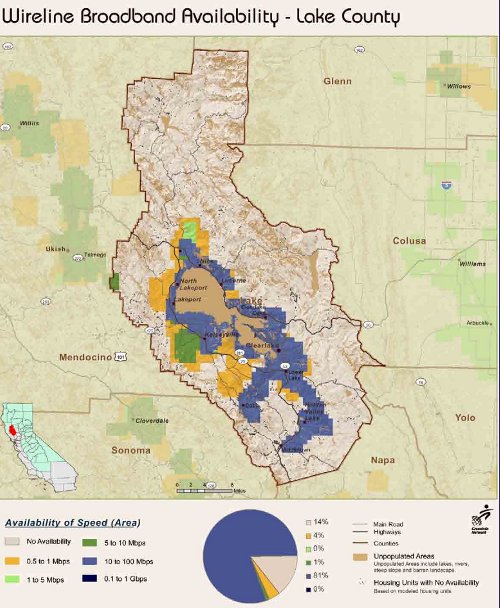
LAKEPORT – Local residents, businesses and officials gathered Friday afternoon to hear an update on the effort to map broadband access across Lake County.
The county of Lake hosted the afternoon meeting at the courthouse in Lakeport, where members of California State University, Chico's Center for Economic Development (CED) explained the Upstate California Connect regional broadband demand aggregation project.
“Upstate California Connect” is a group of five counties – Lake, Colusa, Glenn, Sutter and Yuba – that partnered with CED last year to propose a work plan to the California Emerging Technology Fund (CETF), a nonprofit organization established by the California Public Utilities Commission to improve access to broadband in underserved communities across California.
In late 2007, a group of North Coast counties received a CETF grant to expand broadband in rural areas, but Lake County wasn't included in that effort, as Lake County News has reported.
So County Administrator Kelly Cox approached Sunne McPeak, CETF's chief executive officer, to see if Lake County could be included. Instead, McPeak suggested Lake County become the lead agency in a new study. CETF gave the county $10,000 to cover preparing the grant application.
On Friday, CED officials Margaret Schmidt and Don Krysakowski explained the methodology behind the survey that will be used to gather input across the five-county region. Lake's meeting is the last of the public meetings CED has held on the survey, which is being conducted by phone.
Representatives of education, health care, small business and the Office of Emergency Services were among those present, all of them explaining the importance of broadband for everything from curriculum to expanding local business opportunities, including clean industry and telecommuting.
Krysakowski said the CETF provided initial funding for CED to conduct an initial feasibility study of broadband demand in 12 Northern California counties between July and September of 2008. That information ultimately will be used for a larger study effort. He said CED originally was tasked to do a demand survey.
This survey, expected to go out to 1,500 people across the five-county area, will be conducted in May, with results expected at the end of June, said Krysakowski. It will look at broadband's footprint in Lake and its partner counties. In three months CED hopes to return and update the community on the survey's findings.
Krysakowski noted that satellite Internet service does not count as broadband in the survey, due to speed issues.
Ultimately, the broadband demand information the survey is supposed to measure will be collected and put into a Web site so it can be queried, and will allow Internet service providers (ISPs) to use the information to make business decisions.
Krysakowski said the American Recovery and Reinvestment Act (ARRA) – or the stimulus bill – has $7.5 billion to expand broadband infrastructure in rural areas. He said ARRA funding will go to shovel-ready broadband projects, but the guidelines are still being written.
The ARRA also includes $350 million for broadband mapping. Krysakowski said CEFT and the California Public Utilities Commission are the bodies responsible for overseeing those funds.
Several individuals who attended the meeting wanted to know if the survey would result in more information about who provides what services. CED officials provided contradicting information to that question: One stated that the survey results would show the services but Schmidt said it was proprietary information.
She added, “The scope for this project is small.”
Cox told the group that he feels the project is important for economic development purposes, as well as helping preserve the environment.
“I look at this as one phase of the project,” Cox said.
Krysakowski told Lake County News that the definitions of shovel-ready broadband projects aren't yet clear, but they could lead to public, private or public-private partnerships to carry out infrastructure projects that expand broadband penetration.
The stimulus money is meant to help connect rural communities. He said a business model is being examined that was used during the 1930s to help bring electricity to rural areas.
In that instance, rural cooperatives were formed to support the nation's electrification goals in the 1930s and 1940s.
The ARRA funds won't result in full broadband buildout, Krysakowski said. “This is not a panacea.”
E-mail Elizabeth Larson at