How to resolve AdBlock issue?
News
The US Geological Survey reported that the quake took place at 11:41 a.m. and measured 3.2 on the Richter scale.
Its epicenter was located one mile north of The Geysers, five miles west southwest of Cobb and seven miles west northwest of Anderson Springs, according to the US Geological Survey. The quake occurred at a depth of 2.3 miles.
The area's most recent quakes measuring 3.0 or above occurred on Nov. 21, when a 3.0-magnitude earthquake was recorded near Anderson Springs, and a 3.5-magnitude temblor on Nov. 12 near The Geysers, as Lake County News has reported.
The last few weeks have seen substantial seismic activity around the North Coast, most notably a 5.9-magnitude earthquake that took place Nov. 28 off the coast of Humboldt County. That quake was centered 142 miles west of Petrolia at a depth of 3.5 miles, according to the US Geological Survey.
E-mail Elizabeth Larson at
{mos_sb_discuss:2}
For the third straight year Lake County is ranked No. 1 for the area with the most plants eradicated.
The California Department of Justice Bureau of Narcotic Enforcement (BNE) and other participants in the Campaign Against Marijuana Planting (CAMP), including the Drug Enforcement Administration (DEA) Field Division Offices in San Francisco, Los Angeles and San Diego, in conjunction with the United States Attorney’s Office in the Eastern District of California, reported on the seizures.
The marijuana eradication season begins in July and continues through October, officials reported.
The 2008 CAMP season and Operation Green Acres 2 netted a record-breaking combined total of 5,249,881, according to the report.
CAMP alone reported a second year of record breaking numbers of marijuana plants eradicated during the 2008 season at 2.9 million. Of the 2.9 million plants, two million were seized from public lands while the remainder was seized from private lands.
This year's seizures included 3,641,328 plants – or almost 70 percent – that were eradicated from state and federal public land, according to the Department of Justice. That's down slightly from the 75 percent found on public lands last year.
“California is Ground-Zero for domestically produced marijuana in the United States; more than half of the domestically produced marijuana in the United States is grown in California,” said BNE Chief John Gaines.
Lake was the county with the highest number of eradicated plants, 499,508, according to the report. While leading the state, that number was down slightly from last year, when 507,000 plants were seized, but up from 2006, when officials eradicated 344,241 plants, as Lake County News has reported.
The other counties in the top five for illegal eradications this year were the same as last year, only in slightly different order, with Tulare and Humboldt County changing places. Tulare more than doubled its numbers and Humboldt's were halved.
This year, Tulare ranked at No. 2 with 395,489 plants (up from No. 5 and 160,591 plants in 2007); Shasta, 394,375 (No. 3 with 270,728 plants in 2007); Mendocino, 231,802 (No. 4 and 220,436 plants in 2007); and Humboldt, 145,762 (No. 2 with 271,056 plants in 2007). All counties listed, except for Humboldt, had an increase in the number of marijuana plants eradicated.
During the 2008 season, 143 individuals were arrested and 142 weapons seized, the Department of Justice reported. Those statistics are nearly triple the amount of individuals arrested and weapons seizures from 2007, which numbered 53 and 41 respectively.
CAMP and its partner agencies are part of an organized, collaborative effort which is yielding the seizures.
CAMP has been operating for 26 years as a multi-agency task force comprised of local, state, and federal agencies including, Drug Enforcement Administration, Bureau of Land Management, U.S. Forest Service, National Parks Service, California Department of Fish and Game, Office of National Drug Control Policy-National Marijuana Initiative, California National Guard and Office of Emergency Services. The program is designed to help counties eradicate illegal marijuana cultivation and trafficking in California.
“Our forests and public lands cannot and will not be allowed to become safe havens for Mexican drug cartels operating massive marijuana cultivations. These criminal enterprises pose great risk to those simply seeking to enjoy these lands in the manner for which they were intended,” U.S. Attorney McGregor Scott said.
In addition to the 2008 CAMP season, DEA conducted their second year of Operation Green Acres, a four-week, statewide operation that began in late July and was concluded in August 2008. The operation was conducted by federal, state, and local law enforcement agencies, and primarily focused on marijuana grown outdoors.
As a result of Operation Green Acres 2, agents seized almost 1.4 million marijuana plants, with an estimated street value of $4.2 billion, according to the report.
Approximately 1.2 million of those plants were eradicated from public lands in California, a 73-percent increase from last year.
Additionally, 63 individuals were arrested statewide in connection with the operation, the report noted. Of those arrests, seven were charged in federal court in the Eastern District of California, while four were charged in federal court in the Central District of California. Nearly $200,000 in assets and 102 weapons were seized during the operation.
“Each year more marijuana is seized from California’s public lands. It destroys our national forests and threatens the safety of the residents and visitors who seek to enjoy California’s natural treasures. Only with collaborative law enforcement efforts, will we be able to make an impact against this serious problem,” stated DEA Special Agent in Charge Javier F. Peña.
Another important eradication effort, also undertaken last summer, was operation LOCUST, targeting large-scale marijuana cultivation in and around Sequoia National Park. This operation was spearheaded by Tulare County Sheriff Bill Wittman, BNE, along with DEA, U.S. Forest Service and the Bureau of Land Management. It resulted in the seizure of approximately 524,000 plants and indictments of 15 individuals in the Fresno Court of the Eastern District of California.
The CAMP program and its partner agencies continue to eradicate the large scale marijuana cultivations from public and private lands that cause deforestation, damage to wildlife habitats, and hazardous-chemical pollution.
Pesticides, chemical repellants, poisons, and fuels are often used in large-scale, outdoor marijuana cultivation. Attempts to irrigate the marijuana crops often harm nearby ecology including creeks, streams, and rivers. These plants are often under surveillance by their caretakers, who, in many instances, are heavily armed with pre-planned escape routes.
“Illegal marijuana cultivation is wreaking havoc on our public lands and causing extensive environmental damage of these precious resources,” said DEA Los Angeles Special Agent in Charge Timothy J. Landrum. “DEA is committed to working jointly with our federal, state, and local partners in combating this growing threat to our parks and our communities.”
The continued success of the CAMP program is due in large part to the coordinated effort between local, state and federal agencies.
Gaines said the BNE vows to continue its “exceptional partnership” with local, state and federal counterparts to eradicate illegally grown marijuana and prosecute those individuals and organizations responsible for trafficking this drug while damaging the environment and endangering the lives of citizens.
E-mail Elizabeth Larson at
{mos_sb_discuss:2}

LAKEPORT – A bright autumn day was the backdrop for the sixth annual Dickens Christmas Market.
The community event – sponsored by the Lakeport Regional Chamber of Commerce – sees downtown Lakeport transformed into a Victorian village, complete with singers and other performers.
Many people attended in the type of period dress right out of a Charles Dickens novel. Among them were David and Margaret Retherford, who came in costumes made by Margaret herself.

This year, 63 vendors lined Main Street in downtown, and were visited by people from around the county and beyond.
Eleven Roses Ranch returned this year with their trusty mules to offer wagon rides through downtown.
The day's weather was so good that by mid-afternoon some folks wearing costumes may have been wanting to trade their cravats and overcoats for T-shirts and shorts.
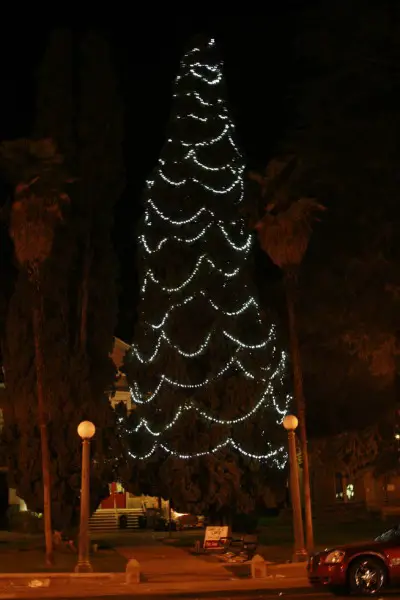
The day ended with the annual lighted parade through town, followed Hospice Services of Lake County's Light Up A Life tree lighting event in downtown.
E-mail Harold LaBonte at

{mos_sb_discuss:2}
The report, “SOS: California's Native Fish Crisis,” was written by Dr. Peter Moyle of the University of California, Davis – a renowned expert on California’s water systems and the fish that inhabit them – and released by California Trout Nov. 18.
It's the first-ever comprehensive report chronicling the status of each of California’s native fish species – salmon, steelhead and trout.
Moyle's findings are startling. He estimates that 65 percent of native salmon, steelhead and trout species may be extinct within 100 years.
He writes that the state’s native salmonids are in unprecedented decline and are teetering towards the brink of extinction – an alarm bell that signals the deteriorating health of the state’s rivers and streams that provide drinking water to millions of Californians.
“The fish don’t lie,” said Moyle. “The story they tell is that California’s environment is unraveling. Their demise is symptomatic of a much larger water crisis that, unless addressed, will severely impact every Californian.”
Sen. Patricia Wiggins (D-Santa Rosa), chair of the California Legislature’s Joint Committee on Fisheries and Aquaculture, said that Moyle's findings “mean that unless we make immediate, real changes to protect the environmental health of our rivers, streams and oceans, wild salmon as we know it will disappear from our dinner plates.”
“It wasn’t too long ago that salmon flourished throughout Northern and Central California. In just one generation we have lost significant salmon and steelhead runs in the Russian, the Eel and the Klamath rivers, as well as rivers in the Central Valley,” said Wiggins. “Our entire salmon fishing season was shut down last year. This is creating economic disasters for fishermen and the sport-fishing industry. Emergency relief funding will only last so long, and we cannot afford for fishing communities to lose their way of life.”
Moyle's report cites a number of key stressors on California’s native fish populations, many of which could be addressed through improved policy planning and better water and land management. Dams, agricultural and grazing practices, development, mining, railroads, logging, some recreational uses, illegal harvesting of native fish, reliance on fish hatcheries, and invasive species have all played a role in driving these species to the brink of extinction.
Global warming has perhaps played the most significant role in the alarming drop in numbers for many of these fish, as salmonids are particularly sensitive to changes in water temperature and rapidly shifting ocean conditions affect those that migrate between rivers and the ocean.
Thirty-two native fish taxa – species, subspecies, Evolutionary Significant Units, and Distinct Population Segments – are evaluated in the report. Each type of fish was evaluated according to the same criteria and given a score that indicates its likelihood of long-term survival under current conditions. A score of “one” indicates the species is “highly vulnerable to extinction in native range in the next 50 years” and a score of “four” or “five” was reserved for species with no extinction risk and expanding populations.
Of the 32 taxa analyzed in the report, one is extinct in California and an additional fourteen are listed as state and/or federally threatened or endangered. Pink and chum salmon, southern steelhead, and coho salmon face the greatest immediate threat of extinction.
Other species racing against the clock for survival include both summer and winter runs of the Northern California Coast steelhead; Central Valley, South/Central California Coast and Central Coast steelhead; Little Kern golden, Lahontan cutthroat, and Paiute cutthroat trout; and California Coast, Sacramento winter run, and Central Valley spring run Chinook salmon.
The report finds that identifying new and innovative funding streams for the state Department of Fish and Game (DFG) would allow the department to be a more effective steward of the state’s fishery resources. It also argues vigorously for a revitalized and strengthened DFG that would enable it to fulfill its role as chief guardian of California’s wild and native salmon, steelhead, and trout by partnering with local communities to protect regional fish populations and their habitats.
And it calls for immediate action on salmon, steelhead and trout recovery needs, such as addressing known challenges on the Shasta River and Trinity Rivers and continuing efforts to protect ground and surface water resources at the local and state levels.
Ongoing research and restoration efforts have shown that when flows are reinstated, migration barriers removed, and cool, clean, abundant water provided, our native fish show signs of recovery.
“This report is an important resource for anyone interested in protecting and restoring California’s magnificent native fish,” said CalTrout Executive Director Brian Stranko. “From local watershed groups working in communities, to the highest levels of state and federal governments, SOS: California’s Native Fish in Crisis provides the information, the roadmap, and the guidance for affecting change for California’s fish and the habitat that supports them.”
Last year, Gov. Arnold Schwarzenegger signed Wiggins' bill, SB 562, which supports salmon monitoring and restoration with nearly $5.3 million in funding. Wiggins said the money may enable California to secure up to $20 million in federal matching funds, which will go to basic science and the repair of specific problems on creeks and rivers.
While it's an important investment, Wiggins said more is needed.
“In January I will bring to the Legislature a package of bills to save our salmon,” she said. “I will need cooperation from fishermen, farmers, water users, the tribes, power companies, the governor’s office and my colleagues in the Legislature to pass these measures.”
She added, “California Trout calls the findings an ‘alarm bell that signals the deteriorating health of the state’s rivers and streams that provide drinking water to millions of Californians.’ They stress that water unfit for fish is a sign of water unfit for people. No less than a full recovery is necessary for our fishing and sport-fishing economy, for our responsibility to the species, and for great-tasting, healthy wild salmon – a continuing California tradition.”
{mos_sb_discuss:2}

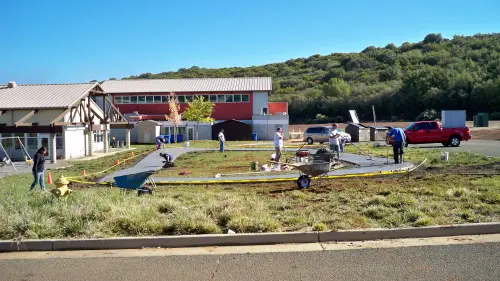
KELSEYVILLE – Riviera Elementary School recently held a ribbon cutting ceremony for its new kindergarten tricycle track.
During the 2006 and 2007 school years, the Riviera Parent Teacher Organization decided to make it a top priority to have a tricycle track put in next to the kindergarten playground.
After many months of planning, the group was able to break ground on the track this past August.
The hard work and generosity of many people made the track possible.
Those generous folks included Ayman Masri, who volunteered to bring in the machinery he needed to dig the track. Chris and Connie Biller, owners of Biller Construction Inc., donated their time to finish the project.
Other community members and businesses who stepped up to support the track project through donations, discounted materials and time include Clearlake Lava Inc., Kelseyville Lumber, KSO Construction, Four Corners, Tom Biller, Fred Hanson and Jim Schleif.
The result was a gift to the school's children that wouldn't have been possible otherwise.

{mos_sb_discuss:2}
The crash occurred on Gaddy Lane in front of the post office just after 6:30 p.m., according to a report from the California Highway Patrol.
A UHaul truck collided with the motorcycle, the CHP reported.
A witness who reported the crash stated that it looked bad, with the rider down and the vehicles blocking the roadway.
The motorcyclist, whose name was not available Saturday, ended up receiving minor injuries.
Two other collisions reported during the day – a two-vehicle crash on Soda Bay Road in Lakeport shortly before 7:30 p.m. and one at about 10:17 p.m. on Highland Avenue and Roland Drive in Lucerne – resulted in no injuries, the CHP reported.
E-mail Elizabeth Larson at
{mos_sb_discuss:2}